Price vs Cost: Understanding the Key Differences
Learn the critical distinctions between price, cost, and value to make smarter financial decisions.
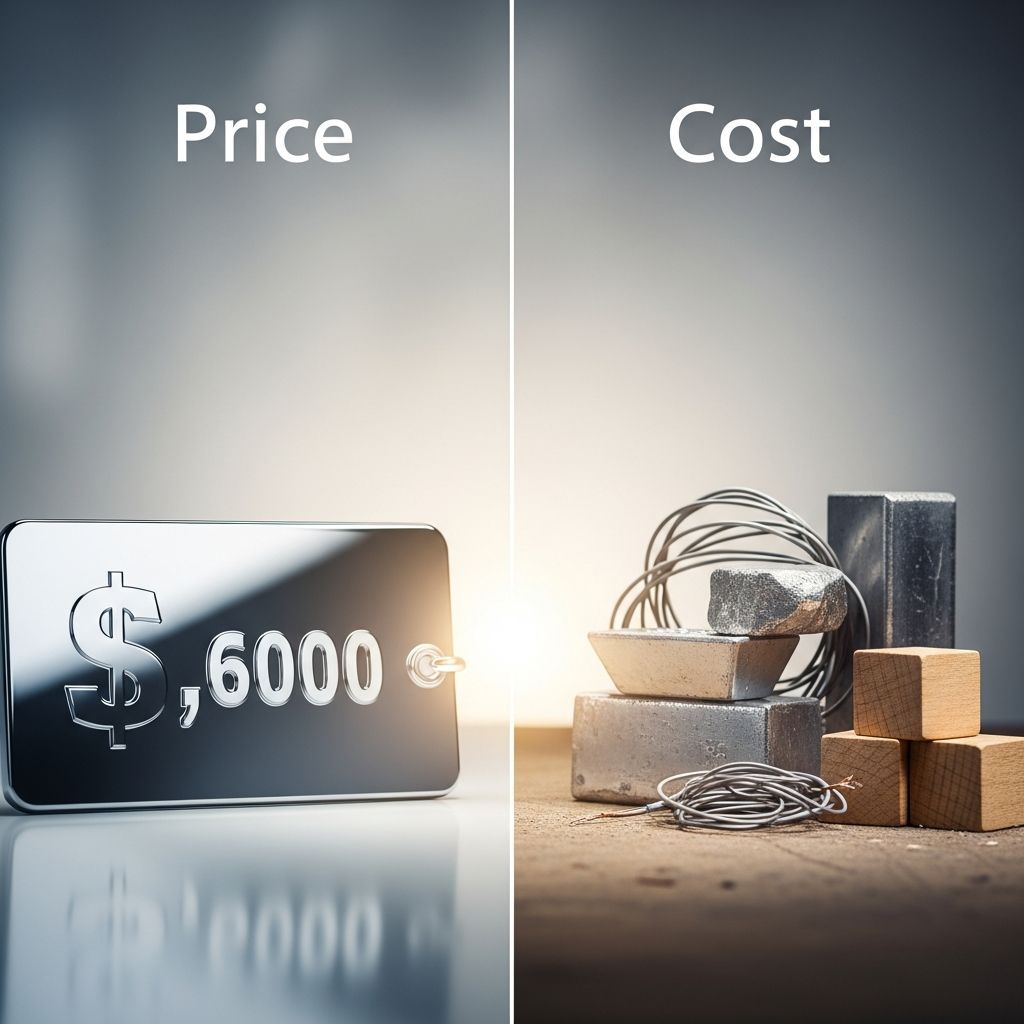
Understanding Price, Cost, and Value in Your Financial Life
In everyday conversation, we often use the words “price” and “cost” interchangeably, rarely stopping to consider whether we’re using the right terminology. However, these two financial terms have distinct meanings that can significantly impact how we approach purchasing decisions and understand our personal finances. While they are deeply intertwined in economic discussions, understanding the nuances between them can lead to more informed financial choices and better budgeting practices.
The confusion surrounding these terms is understandable because they frequently overlap in real-world scenarios. Yet, recognizing their differences is essential for anyone seeking to take control of their financial life and make more deliberate spending decisions. This distinction becomes particularly important when evaluating value and considering the true impact of a purchase on your budget.
The Core Definitions: Price vs. Cost
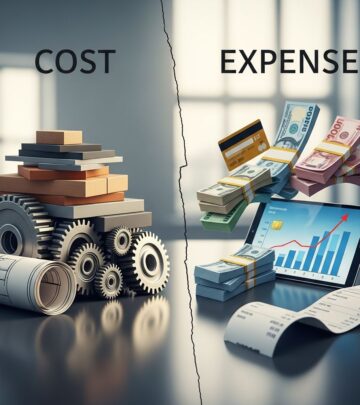
Cost represents the amount of money required to produce or acquire something. It reflects the expenses incurred by a producer or seller behind the scenes. When a manufacturer creates a product, the cost includes raw materials, labor, manufacturing overhead, and distribution expenses. This is what it actually takes to bring that item into existence.
Price, on the other hand, is the amount of money a consumer pays to purchase that product. It’s what you see on the price tag at the store or the checkout total online. Price is the point of sale figure that customers negotiate or accept when buying goods or services.
The critical distinction is this: cost is internal to the producer, while price is the external amount paid by the consumer. Prices are almost always higher than costs because businesses need to generate profit margins. If a retailer paid exactly what something cost to produce, they would make no profit and couldn’t sustain their business.
When Cost and Price Overlap: Real-World Examples
Interestingly, cost and price can refer to the same transaction depending on perspective. Consider an employee’s wage. From the employee’s viewpoint, the wage represents the price they receive for their labor—it’s the amount they’re paid. However, from the employer’s perspective, that same wage is a cost—it’s an expense the company must budget for to employ that worker.
Another practical example involves purchasing a car. When you ask a car dealership, “What is the price of that vehicle?” you’re inquiring about how much money you need to hand over to drive it home. But if you ask about the cost, you’re technically asking what the dealer paid to acquire that car, prepare it for sale, and cover associated business expenses. The dealer’s cost is significantly lower than the price they charge you, with the difference representing their profit margin.
This perspective-based distinction shows why language precision matters in finance. The same financial figure can be both a cost and a price depending on who’s speaking and from which side of the transaction they’re approaching.
How Pricing Reflects But Doesn’t Equal Cost
While prices often reflect the underlying costs of producing or acquiring goods, they maintain an important distinction: they are not one-to-one equivalents. Businesses deliberately mark up their costs to create profit margins. This markup covers not only the direct cost of producing the item but also overhead expenses like rent, salaries for non-production staff, marketing, utilities, and other operational costs.
Understanding this relationship helps explain why products cost what they do at retail. A manufacturer might produce a CD for between one and two dollars, but retailers typically sell that same CD for fifteen dollars or more. The difference isn’t just profit—though that’s certainly part of it. It includes the costs of distribution, storage, retail space, and the retailer’s own operational expenses.
This markup structure is why prices vary across different retailers even for identical products. Each business applies its own profit margin based on its operational costs, competitive positioning, and market strategy. Luxury retailers add larger markups than discount stores, reflecting their different cost structures and market positioning.
The Third Element: Value
Beyond cost and price lies a third crucial financial concept: value. Value represents the amount of money something is worth to you personally, which may differ significantly from both its cost and its price. Value is inherently subjective and personal, varying from individual to individual based on their circumstances, preferences, and experiences.
Consider a signed Jonas Brothers album purchased at their first concert in 2006 for fifteen dollars. The manufacturer’s cost to produce it was likely one to two dollars. The retail price was fifteen dollars. But for the person who owns it and has emotional memories attached, the value might be hundreds or even thousands of dollars—far exceeding its retail price. Someone might even refuse to sell that same album for two hundred dollars because the personal value exceeds what any buyer is willing to pay.
This subjective nature of value is why two people can view the same purchase completely differently. What represents excellent value to one consumer might seem overpriced to another. Your personal circumstances, needs, budget, and emotional attachment to a product all influence its perceived value.
Why Understanding the Distinction Matters
While these terms are used interchangeably in casual conversation—and most people won’t correct you for doing so—understanding their differences provides critical insight into your spending habits. When making purchasing decisions, financial experts recommend considering all three elements: cost, price, and value.
A common mistake consumers make is conflating personal value with price. You might see a product priced at fifty dollars and convince yourself that because you would pay up to one hundred dollars for it, you’re getting a great deal. However, that doesn’t mean fifty dollars represents the best use of your money in your overall financial picture. Just because something is worth more to you than its price doesn’t mean you should purchase it, especially if your budget is limited.
Similarly, understanding cost helps explain pricing strategies and market dynamics. When prices rise, it may reflect increased production costs, increased demand, inflation, or simply higher profit margins. Recognizing why prices move helps you distinguish between necessary price increases and pure profit-seeking behavior.
Practical Applications for Your Finances
Smart Shopping Strategy
When evaluating purchases, ask yourself these questions: What is the price I need to pay? What value will this purchase provide me? Is the personal value I’ll derive from this purchase worth the price? This framework helps move beyond impulsive decisions based solely on price and consider the fuller financial picture.
Budgeting and Planning
When budgeting, focus on prices—the actual amounts you’ll pay. Understanding costs helps you recognize why prices are set where they are, which can inform your decisions about where to shop and which brands to choose. Premium brands often have higher costs built into their business model, justifying their higher prices to some consumers.
Evaluating Value
Before making significant purchases, explicitly assess the value proposition. Will this purchase improve your life in meaningful ways? Does the personal value justify the price? This prevents the common trap of buying something merely because it’s a “good price” without considering whether you truly need it or will benefit from it.
Marketing and Consumer Psychology
Retailers and marketers understand the psychological differences between how consumers perceive cost, price, and value. They exploit these differences through strategic pricing tactics. Left-digit bias, where consumers focus disproportionately on the leftmost digit of a price, explains why prices often end in .99—consumers perceive $4.99 as significantly cheaper than $5.00, even though the difference is minimal.
Product bundling is another technique that manipulates value perception. When companies bundle multiple items together, consumers automatically assume they’re getting a deal, even if the bundled price remains identical to buying items separately. By understanding these tactics, you can make more intentional purchasing decisions.
The Bottom Line
Cost is the amount needed to produce something. Price is what you pay for it. Value is what it’s worth to you personally. While these terms are often used interchangeably in everyday speech, and that’s generally acceptable, the distinctions matter deeply for your financial health.
By understanding these differences, you become a more sophisticated consumer capable of making deliberate financial choices rather than reactive ones. You can better resist marketing manipulation, evaluate whether purchases truly serve your needs, and allocate your limited resources more effectively. These seemingly basic financial distinctions have outsized importance in shaping your long-term financial outcomes.
Frequently Asked Questions (FAQs)
Q: Can I use “price” and “cost” interchangeably?
A: In casual conversation, yes—most people won’t correct you. However, technically they have distinct meanings. Cost is what producers pay to make something; price is what consumers pay to buy it. For precise communication, especially in financial discussions, using the correct term matters.
Q: Why are prices always higher than costs?
A: Businesses must generate profit margins to survive. Prices need to cover production costs plus overhead expenses like rent, salaries, marketing, and utilities. The markup between cost and price represents a business’s profit and operational expenses.
Q: How does value differ from price?
A: Price is objective—it’s the amount on the tag. Value is subjective—it’s what something is worth to you personally. You might personally value something at $100 while its retail price is only $30, or vice versa. Personal circumstances and emotional attachment influence perceived value.
Q: Should I make purchasing decisions based on price alone?
A: No. Making purchases based solely on price leads to poor financial decisions. Consider the value you’ll receive and whether it aligns with your budget and needs. A low price for something you don’t need or won’t use isn’t actually a good deal.
Q: How can I avoid confusing value with price when shopping?
A: Before purchasing, ask yourself if the personal value justifies the price. Will this significantly improve your life? Do you need it? Is this the best use of your money right now? This prevents impulse purchases based on perceived value that doesn’t actually benefit you.
References
- Dollar Scholar Asks: What’s the Difference Between Cost and Price, and Does It Even Matter? — Money Magazine. 2024. https://money.com/dollar-scholar-price-vs-cost/
- Understanding Consumer Behavior and Marketing Psychology — Duke University Fuqua School of Business. https://www.fuqua.duke.edu/
- Price Endings and Consumer Perception — Academic Research on Pricing Strategies. 2022. https://scholar.google.com/
Similar Articles








Read full bio of medha deb