Price Per Square Foot in Real Estate
Master the essentials of price per square foot to make smarter real estate decisions in buying, selling, and investing.

Price per square foot (PSF) serves as a fundamental metric in real estate, enabling buyers, sellers, and investors to standardize property values based on size. This simple calculation divides a property’s total price by its square footage, yielding a comparable dollar amount per unit of space.
Defining Price Per Square Foot
In real estate, PSF quantifies the cost of each square foot of a property, whether for sale or lease. It transforms absolute prices into a relative measure, facilitating apples-to-apples comparisons across listings of varying dimensions. For residential properties like single-family homes or condos, it reflects livable space value; in commercial contexts, it often pertains to rentable or usable areas.
The abbreviation ‘PSF’ or ‘psf’ is standard in industry listings, appearing on platforms and agent reports to streamline discussions. While primarily used for sales prices, it applies equally to list prices or rental rates, adjusted for annual or monthly terms in leasing.
Step-by-Step Calculation Guide
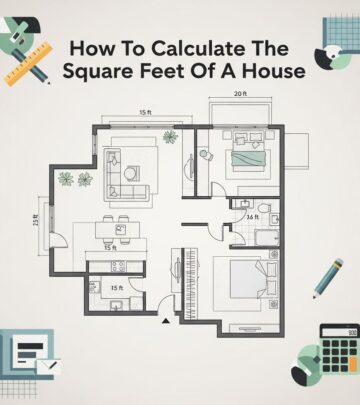
Computing PSF is straightforward using the formula: PSF = Total Price ÷ Total Square Footage. Accurate measurements are crucial—residential square footage typically includes finished, above-grade living areas, excluding basements, garages, or unfinished spaces unless specified.
Example for Residential: A 2,000 sq ft home sells for $400,000. PSF = $400,000 ÷ 2,000 = $200 per sq ft.
For commercial rentals, rates are often quoted annually per sq ft. A 2,000 sq ft office at $30 PSF/year totals $60,000 annually or $5,000 monthly. Always verify if the figure includes operating expenses like taxes, insurance, or maintenance (triple net leases exclude them).
| Property Type | Formula | Example |
|---|---|---|
| Residential Sale | Price / Sq Ft | $450,000 / 2,250 sq ft = $200 PSF |
| Commercial Lease (Annual) | Rate x Sq Ft | $15 PSF x 2,000 sq ft = $30,000/year |
| Per Unit (Multifamily) | Price / Units | $1M / 20 units = $50,000 per unit |
This table illustrates common variations, where multifamily properties may use price per unit or per key (room) instead of pure PSF.
Why PSF Matters in Property Deals
PSF empowers market participants to gauge value efficiently. Buyers spot overpriced listings if a home’s PSF exceeds local averages, prompting negotiation or alternatives. Sellers leverage it to price competitively, justifying premiums for superior locations or upgrades.
In negotiations, PSF highlights discrepancies: a larger home might carry a higher total price but lower PSF, signaling better value. Investors apply it to forecast returns, especially in commercial spaces where rental PSF correlates with income potential.
- Standardized Comparisons: Normalize sizes for fair evaluations.
- Market Trend Tracking: Monitor PSF shifts to predict appreciation.
- Budgeting Tool: Estimate costs for expansions or portfolios.
Residential Applications and Insights
For homes, PSF varies widely by region, condition, and features. Urban areas command higher rates due to land scarcity, while rural properties trend lower. A desirable neighborhood might average $250 PSF, versus $150 in suburbs.
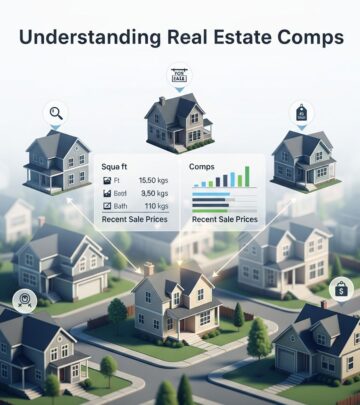
Buyers should compare PSF among similar comps—recent sales of comparable homes nearby. Larger homes often have lower PSF due to economies of scale in construction and land use. Premium elements like gourmet kitchens or pools inflate PSF beyond basics.
Regional Snapshot (U.S. Averages, 2023-2025):
- Northeast metros: $250-$400+ PSF
- South: $150-$250 PSF
- West Coast: $300-$600 PSF (high-demand cities)
- Midwest: $120-$200 PSF
These ranges draw from aggregated market data; local MLS reports provide precise comps.
Commercial Real Estate and PSF Nuances
Commercial PSF emphasizes income generation. Office spaces might lease at $20-50 PSF annually, retail at $25-60, influenced by foot traffic and tenant quality. Investors calculate cap rates alongside PSF: Net Operating Income ÷ (Price PSF x Sq Ft).
Rentable square footage (RSF) differs from usable space, including common areas proportionally. Leases specify base rent PSF plus escalations for inflation or pass-through expenses. For purchases, PSF benchmarks market alignment—e.g., industrial warehouses at $80-150 PSF.
Key Metrics Comparison:
| Metric | Office | Retail | Industrial |
|---|---|---|---|
| Avg. Lease PSF/Year | $25-45 | $20-50 | $8-23 |
| Purchase PSF | $200-400 | $250-500 | $100-200 |
U.S. averages vary by market saturation.
Limitations and Common Pitfalls
Despite utility, PSF isn’t flawless. It ignores quality variances: a dated fixer-upper at $150 PSF might outvalue a modern home at $200 if renovations are factored. Location trumps size—prime views or schools boost PSF disproportionately.
Apples-to-oranges risks arise when comparing vastly different sizes or styles; PSF decreases with scale. Basements or attics skew residential totals if inconsistently measured. Commercial ignores lease terms like free rent periods.
Refine with adjustments: segment by age, bedrooms, or amenities for robust comps. Median PSF from 5-10 sales yields reliable baselines over outliers.
Practical Strategies for Buyers and Sellers
For Buyers: Compile comps within 0.5 miles, same bedrooms/baths. If target PSF exceeds median by 20%, negotiate citing data. Factor total costs: taxes, HOA, utilities.
For Sellers: Highlight value-adds justifying higher PSF. Stage to maximize appeal, price at market median PSF plus premiums.
Investor Tips: Project NOI against PSF for cap rate viability. Diversify by submarket PSF trends.
Use tools like spreadsheets for custom calcs:
function calculatePSF(price, sqFt) { return price / sqFt;}// Example: calculatePSF(450000, 2250) // Returns 200Current Market Trends and Forecasts
As of 2026, U.S. residential PSF rises 4-7% annually in growing metros, driven by inventory shortages. Commercial recovers post-pandemic, with industrial PSF surging 10%+ due to e-commerce. Monitor Fed rates; hikes temper PSF growth.
Frequently Asked Questions
What square footage is used for PSF calculations?
Livable, above-grade areas for homes; rentable sq ft for commercial.
Is higher PSF always better?
No—lower can indicate value if quality/location aligns.
How does PSF differ for rentals vs. sales?
Rentals quote annual/monthly PSF; sales use total price.
Can PSF predict home value changes?
It tracks trends but adjust for variables like interest rates.
Why avoid comparing very different property sizes?
PSF declines with size, distorting value perceptions.
References
- Understanding Price Per Square Foot: How It’s Calculated and Why It’s Important — CompMort. 2023. https://www.compmort.com/understanding-price-per-square-foot-how-its-calculated-and-why-its-important/
- What is Price per Square Foot? | Real Estate Definition — Gimme Shelter. 2024. https://www.gimme-shelter.com/price-per-square-foot-home-50003/
- How to Calculate Price per Square Foot — Zillow. 2025-02-15. https://www.zillow.com/learn/how-to-calculate-price-per-square-foot/
- What Does PSF Stand for in Real Estate? — CommLoan. 2024. https://www.commloan.com/research/what-does-psf-stand-for-in-real-estate/
- Price Per Square Foot Valuation Method for Commercial Real Estate — Altus Group. 2023-11-01. https://www.altusgroup.com/insights/price-per-square-foot-valuation-method-for-commercial-real/
- Price per Square Foot Explained: Smart Buyer’s Guide — Tracy Bourgeois. 2024. https://tracybourgeois.com/blog/demystifying-price-per-square-foot-a-buyers-guide
- What Does $ Per Square Foot Mean in Commercial Real Estate? — LevRose. 2025. https://www.levrose.com/post/what-does-per-square-foot-mean-in-commercial-real-estate
Similar Articles








Read full bio of Sneha Tete