Using Price Per Square Foot to Determine Home Values
Learn how to use price per square foot as a tool to evaluate and compare home values effectively.
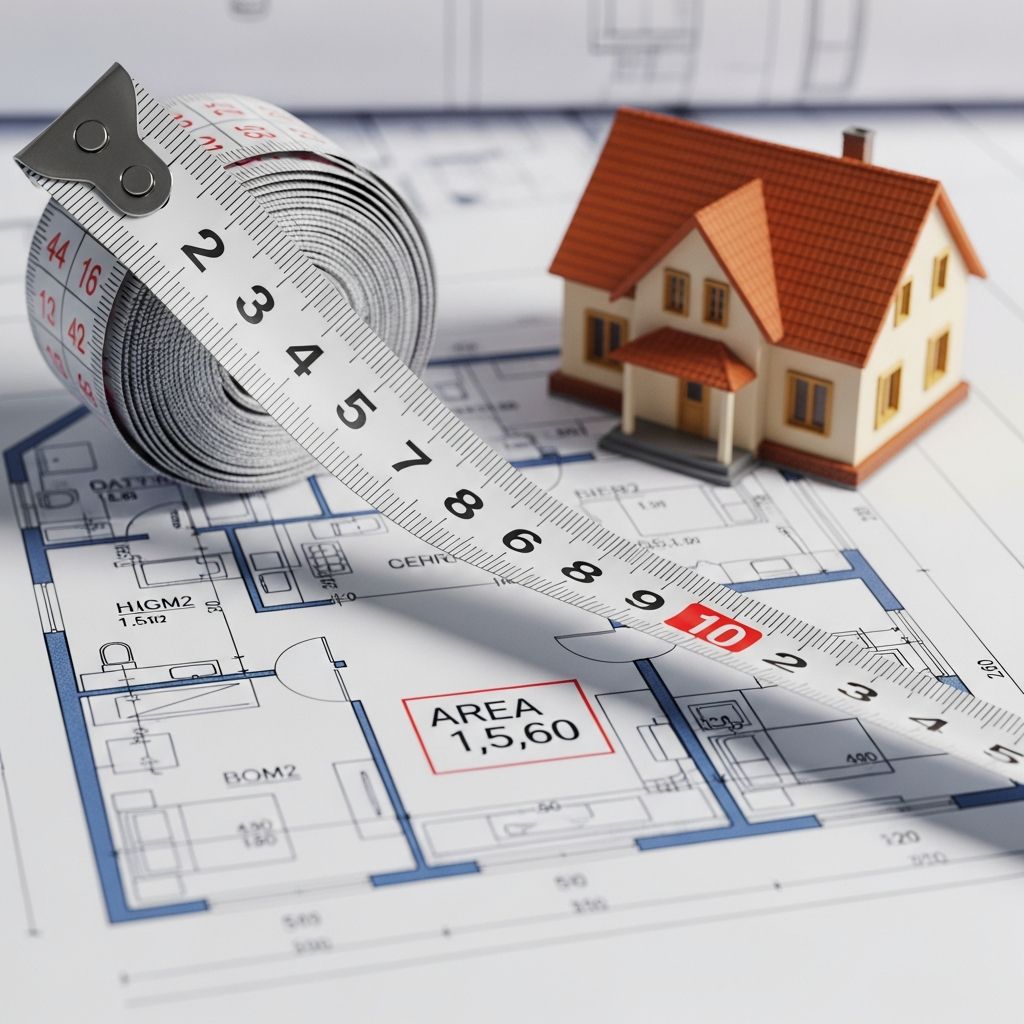
When evaluating real estate investments or making a home purchase decision, understanding property valuation methods is essential. One commonly used metric in the real estate industry is price per square foot (PPSF). This metric offers a straightforward way to compare properties and assess whether a home is fairly priced relative to similar homes in the area. However, while price per square foot can be a useful tool, it has both advantages and significant limitations that homebuyers and investors should understand before relying on it exclusively for valuation decisions.
What Is Price Per Square Foot?
Price per square foot is a valuation metric that represents the cost of a property divided by its total living space measured in square feet. This metric allows buyers and sellers to normalize property prices, making it easier to compare homes of different sizes within the same market or across different neighborhoods. Rather than just looking at the absolute price of a home, which can vary dramatically based on size alone, price per square foot provides a standardized measurement that accounts for the property’s living area.
The metric focuses specifically on the home’s living space—the interior areas that are heated and cooled, such as bedrooms, bathrooms, kitchens, and living areas. Notably, price per square foot excludes unfinished spaces like basements, garages, decks, patios, and yards, even though these features may contribute to the overall value of the property.
How to Calculate Price Per Square Foot
Calculating price per square foot is a straightforward process that requires only two pieces of information: the property’s sale price and its total living square footage. The formula is simple and easy to apply.
Price Per Square Foot (PPSF) = Property Sale Price ÷ Total Square Footage
To calculate price per square foot, follow these steps:
Step 1: Determine the Purchase Price — Find the property’s market value or actual sale price. This figure represents what the property sold for or is listed at in the current market. For valuation purposes, the current market value is typically more relevant than the original purchase price, as it reflects present market conditions.
Step 2: Measure Total Square Footage — Identify the total living space of the property in square feet. This measurement should include only the heated and cooled interior living areas. Be sure to exclude unfinished basements, garages, decks, and other non-living spaces. Most property listings include this information, so you typically won’t need to measure the property yourself.
Step 3: Divide Price by Square Footage — Divide the property’s sale price by its total square footage to arrive at the price per square foot.
Price Per Square Foot Example
Let’s work through a practical example. Suppose you’re evaluating a residential property with 2,000 square feet that sold for $400,000. Using the formula:
$400,000 ÷ 2,000 sq. ft. = $200 per square foot
This means the property’s price per square foot is $200. If another comparable home in the same neighborhood sold for $450,000 and has 2,000 square feet, that property would have a price per square foot of $225, indicating it sold at a premium to the first property.
Comparing Multiple Properties Using Price Per Square Foot
One of the primary uses of price per square foot is comparing multiple properties to understand relative market values. By calculating the PPSF for several comparable homes in a neighborhood, you can identify which properties represent good values and which may be overpriced.
| Property | Sale Price | Square Footage | Price Per Sq. Ft. |
|---|---|---|---|
| Home 1 | $500,000 | 2,000 sq. ft. | $250 |
| Home 2 | $550,000 | 2,300 sq. ft. | $239 |
| Home 3 | $525,000 | 1,900 sq. ft. | $276 |
| Home 4 | $490,000 | 2,100 sq. ft. | $233 |
In this comparison, Home 4 has the lowest price per square foot at $233, while Home 3 has the highest at $276. This suggests that Home 4 may represent a better value relative to its size, though other factors beyond square footage should be considered before making a final determination.
Finding Average Price Per Square Foot in Your Area
Understanding the average or median price per square foot in your neighborhood helps establish baseline expectations for property values. Several methods can be used to determine this figure.
Using the Average Method
To calculate the average price per square foot in an area, gather price per square foot data for multiple comparable homes that have sold recently—typically within the last 90 days. Add all the individual price per square foot figures together, then divide the total by the number of homes in your sample. For example, if 10 comparable homes in your neighborhood have an average price per square foot of $250, this gives you a baseline for evaluating new listings.
Using the Median Method
The median price per square foot represents the middle value when all comparable properties’ price per square foot figures are arranged in order. The median is often more useful than the average because it’s not skewed by outlier properties with unusually high or low prices per square foot. For instance, if one home in your neighborhood has ultra-luxury finishes and sold for significantly more than comparable homes, its elevated price per square foot could artificially inflate the average, whereas the median would remain more representative of typical market conditions.
According to federal data, the median listing price per square foot of a home in the U.S. was $224 as of November 2024, though this varies significantly by region and market conditions.
Benefits of Using Price Per Square Foot
Price per square foot offers several valuable advantages for real estate analysis and home valuation:
Standardized Comparison — By normalizing prices to a per-square-foot basis, this metric allows meaningful comparison between properties of vastly different sizes. A 1,500-square-foot home and a 3,000-square-foot home can be fairly compared using PPSF in ways that absolute prices cannot.
Quick Market Assessment — Calculating or checking price per square foot takes only seconds, making it useful for quickly screening properties and identifying potential bargains or overpriced listings.
Market Trend Analysis — By tracking average price per square foot over time, you can identify whether a neighborhood’s real estate values are appreciating or depreciating, helping inform long-term investment decisions.
Negotiation Tool — Knowing the market’s typical price per square foot gives buyers leverage during negotiations. If a listing is significantly above the neighborhood average, you have data to support a lower offer.
Investment Analysis — For real estate investors and developers, price per square foot helps evaluate the cost-effectiveness of renovation projects and development opportunities.
Limitations of Price Per Square Foot
While price per square foot is useful, it has significant limitations that can lead to flawed valuations if used as the sole basis for property assessment. Understanding these limitations is crucial for making sound real estate decisions.
Excludes Important Property Features
Price per square foot focuses exclusively on living space and ignores many features that substantially impact home value. A home’s lot size, yard quality, garage space, outdoor structures like decks or patios, and other non-living amenities are completely excluded from the calculation. A property with a large, well-landscaped yard may be significantly more valuable than a similar-sized home on a small lot, but this wouldn’t be reflected in the PPSF metric.
Doesn’t Account for Condition and Quality
Two homes with identical square footage can have vastly different values based on their condition and construction quality. A newly renovated home with premium finishes will command a higher price than an older home in need of repairs, yet their price per square foot might differ significantly despite similar sizes. Price per square foot alone cannot distinguish between these quality variations.
Location Variations Are Minimized
Location is among the most important determinants of home value, yet price per square foot doesn’t adequately capture neighborhood differences. A home in a highly desirable neighborhood with excellent schools might have a significantly higher price per square foot than a similar home in a less desirable area, but the metric doesn’t explain why.
Affected by Outlier Properties
When calculating average price per square foot, outlier properties with unusual characteristics can skew results. A luxury home with premium finishes and high-end amenities could have a price per square foot dramatically higher than typical homes in the area, potentially distorting market analysis if the average is used without consideration of the median.
Doesn’t Reflect Market Dynamics
Price per square foot is a static metric that doesn’t reflect dynamic market factors like supply and demand, interest rates, market inventory levels, or buyer sentiment. During a hot seller’s market, prices per square foot may be artificially inflated, while during a buyer’s market, they may be depressed.
Inconsistent Measurement Standards
Different listing services and appraisers may measure square footage differently, including or excluding certain spaces like finished basements, bonus rooms, or partially finished areas. This inconsistency can lead to misleading price per square foot comparisons across different data sources.
What Factors Actually Influence Home Value?
While price per square foot provides a quick snapshot, numerous factors influence actual home value beyond living space:
Location and Neighborhood — School district quality, proximity to amenities, crime rates, neighborhood reputation, and community development plans significantly impact value.
Number of Bedrooms and Bathrooms — The specific bedroom and bathroom count affects functional utility and appeal to different buyer demographics.
Age and Condition — Newer homes or well-maintained properties command premiums over older homes requiring extensive repairs.
Lot Size and Outdoor Space — Larger lots and quality outdoor spaces add substantial value independent of house size.
Unique Features and Improvements — Updated kitchens, bathrooms, HVAC systems, roofing, flooring, and smart home technology can significantly increase value.
Market Conditions — Interest rates, housing inventory, buyer demand, and economic conditions all influence what buyers are willing to pay.
Comparable Sales Data — Recent sales prices of genuinely comparable homes provide more accurate valuation than price per square foot alone.
Best Practices for Using Price Per Square Foot
To maximize the utility of price per square foot while minimizing reliance on a flawed metric, follow these best practices:
Use as One Tool Among Many — Treat price per square foot as one valuation tool among many, not as the definitive measure of home value. Combine it with comparable sales analysis, professional appraisals, and neighborhood research.
Compare True Comparables — Only compare price per square foot between genuinely comparable homes—similar age, condition, location, size, and features. Comparing a luxury home to an average home skews the analysis.
Use Median Over Average — When analyzing neighborhood trends, use the median price per square foot rather than the average to avoid distortion from luxury or distressed properties.
Account for Market Conditions — Consider current market conditions, interest rates, and inventory levels when interpreting price per square foot data.
Verify Measurement Standards — Ensure square footage is measured consistently across all properties being compared, excluding or including the same types of spaces.
Frequently Asked Questions
Q: Can I rely solely on price per square foot to determine if a home is fairly priced?
A: No. While price per square foot is a useful starting point for comparison, it should be combined with other valuation methods including comparable sales analysis, professional appraisals, location assessment, and condition evaluation. A home might have a typical price per square foot but be overpriced due to poor location or deferred maintenance.
Q: Why do homes in my neighborhood have different prices per square foot?
A: Differences in price per square foot reflect variations in location within the neighborhood, home condition, age, amenities, lot size, upgrades, and market conditions. Even homes of similar size can have significantly different prices per square foot based on these factors.
Q: Should I use average or median price per square foot when analyzing my market?
A: The median price per square foot is typically more reliable because it’s less affected by outlier properties with unusually high or low prices. The average can be distorted by luxury homes or distressed properties that don’t represent typical market conditions.
Q: Does price per square foot include garage and basement space?
A: Generally, price per square foot is calculated using only heated and cooled living space. Garages, unfinished basements, decks, and outdoor spaces are typically excluded from the square footage calculation, though finished basements are sometimes included depending on measurement standards.
Q: How recently should comparable properties have sold to use their price per square foot?
A: Property sales from the last 90 days are typically most relevant for market analysis. Older sales may not accurately reflect current market conditions, especially in markets with rapidly changing prices or market dynamics.
References
- Price Per Square Foot (PPSF) | Formula + Calculator — Wall Street Prep. 2025. https://www.wallstreetprep.com/knowledge/price-per-square-foot/
- Understanding Price Per Square Foot: How It’s Calculated and Why It’s Important — CompMort. 2025. https://www.compmort.com/understanding-price-per-square-foot-how-its-calculated-and-why-its-important/
- Price per Square Foot: How to Calculate It and Why It’s Important — Experian. 2025. https://www.experian.com/blogs/ask-experian/price-per-square-foot/
- Price per square foot: Why it matters and how it’s calculated — Rocket Mortgage. 2025. https://www.rocketmortgage.com/learn/price-per-square-foot
- Price Per Square Foot: How And Why To Use It — Bankrate. 2025. https://www.bankrate.com/real-estate/price-per-square-foot/
- Federal Reserve Economic Data (FRED) — Federal Reserve Bank of St. Louis. 2024-11. https://fred.stlouisfed.org/
Similar Articles








Read full bio of medha deb