Price Per Square Foot: Complete Guide to Home Valuation
Master price per square foot calculations to make informed home buying decisions and compare property values accurately.
Price Per Square Foot: How and Why to Use It
When evaluating whether a home represents a good investment, one of the most commonly referenced metrics is price per square foot. This measurement provides a standardized way to compare property values across different locations and market conditions. However, understanding how to properly calculate and interpret this figure is essential, as it can sometimes be misleading if not considered alongside other important factors. Price per square foot serves as a useful comparison tool for determining a home’s value, but it’s a concept that requires careful analysis to avoid drawing incorrect conclusions about a property’s true market worth.
Understanding Price Per Square Foot
Price per square foot is a fundamental metric in real estate that expresses the cost of a property relative to its size. Rather than evaluating a home solely based on its total purchase price, this metric normalizes that price by the property’s square footage, allowing for more meaningful comparisons between homes of different sizes. The national median listing price per square foot in the United States was $224 as of November 2024, according to data from the Federal Reserve Bank of St. Louis. However, this figure varies dramatically depending on geography, with locations like New York City averaging over $1,500 per square foot, while more affordable markets like Utah average around $259 per square foot.
How to Calculate Price Per Square Foot
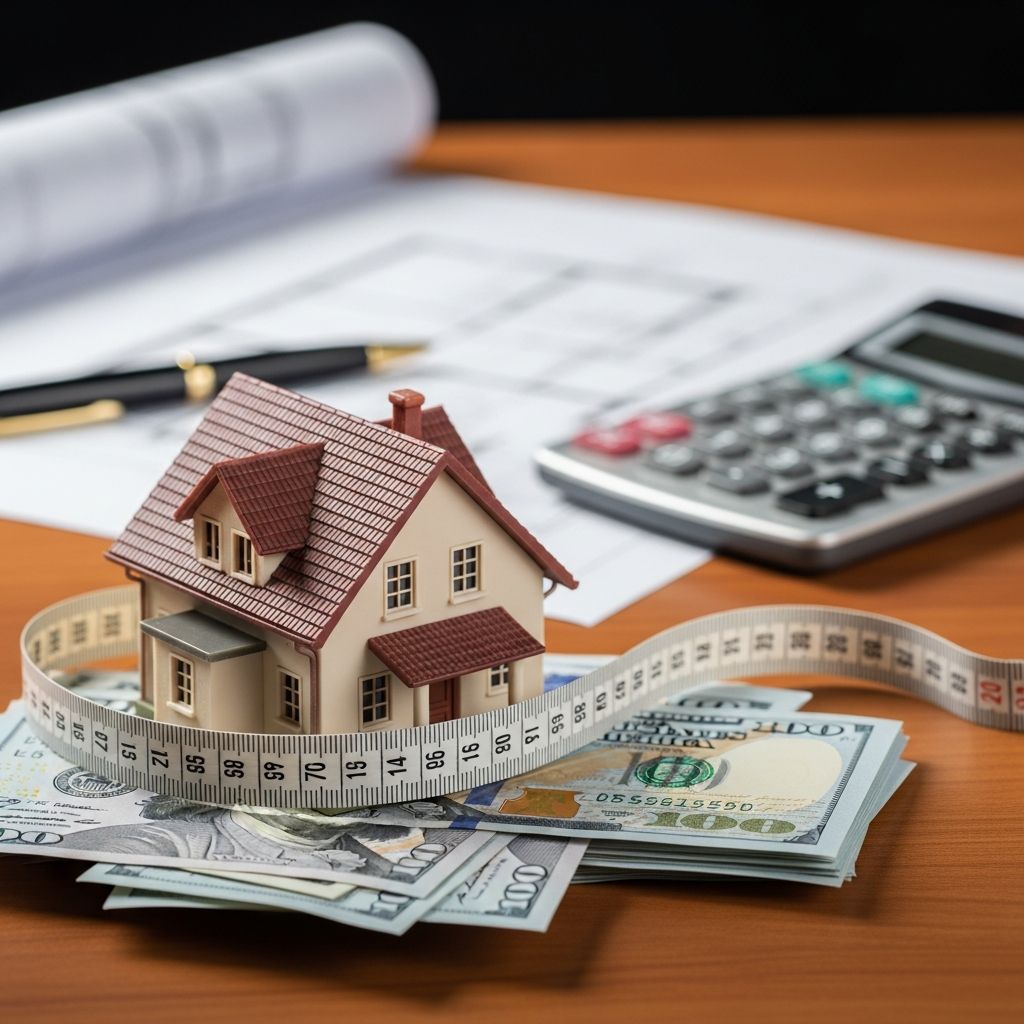
Calculating price per square foot is remarkably straightforward, requiring only two pieces of information that are readily available on any property listing: the home’s asking price and its total square footage. To determine a home’s price per square foot, you simply divide the home’s list price by its total square footage. The formula is expressed as:
Price Per Square Foot = Home List Price ÷ Total Square Footage
For example, if a home is listed at $425,000 and contains 2,000 square feet of living space, the calculation would be $425,000 ÷ 2,000 = $212.50 per square foot. While this calculation is simple, it’s important to note that a home’s price per square foot multiplied by its square footage doesn’t necessarily equal an accurate fair market value. Other considerations must be factored into the equation when determining whether a property is fairly priced.
What Determines the Price Per Square Foot of a House?
Every house is unique, and numerous factors influence each property’s price per square foot. Understanding these determining factors helps explain why two homes in the same city might have significantly different price-per-square-foot values.
Location and Neighborhood Characteristics
Perhaps the most influential factor affecting price per square foot is location. Prime neighborhoods with desirable amenities, highly-rated schools, and convenient proximity to shopping, dining, and entertainment typically command higher prices per square foot. Waterfront properties and homes in areas with scenic views often attract premium pricing. The overall desirability of a neighborhood, driven by factors such as safety, community reputation, and local economic conditions, plays a substantial role in determining what buyers will pay per square foot.
Property Features and Condition
The size and characteristics of the lot itself significantly impact pricing. Larger lots generally command higher prices per square foot, particularly if they feature views, professionally landscaped grounds, or unique outdoor amenities. The condition and age of the property are equally important. Newer homes or recently renovated properties with modern features, updated systems, and contemporary finishes typically command higher prices per square foot than older homes with outdated systems and worn components. Homes requiring significant repairs or updates generally fall on the lower end of the price-per-square-foot spectrum.
Market Conditions
Current market conditions substantially influence price per square foot throughout any given region. In competitive markets characterized by limited inventory and high demand, this metric tends to rise. This effect is particularly pronounced in affluent areas where buyer demand significantly outpaces the available supply of homes. Conversely, in buyer’s markets with abundant inventory and lower demand, price per square foot typically remains more modest. Economic factors, interest rates, and local job market conditions all contribute to these broader market dynamics that ultimately affect individual property pricing.
Average Versus Median Price Per Square Foot
When researching price per square foot in your target area, you may encounter two different statistics: average and median price per square foot. Understanding the difference between these measurements is important, as they can yield different results.
The median price per square foot represents the price point that falls exactly in the middle of all home prices being compared. If you’re analyzing 20 recently sold homes, the median would be the price of the 10th or 11th home on the list when arranged from lowest to highest price. In this scenario, half of the homes sold for more than the median price, while half sold for less. The median is often considered a more reliable indicator for comparing home values because it isn’t skewed by extremely high or low outliers.
The average price per square foot, by contrast, is calculated by adding all prices per square foot together and dividing by the number of homes. This means that if a few exceptionally expensive or inexpensive homes are included in the dataset, they can disproportionately affect the average. For this reason, many real estate professionals prefer to reference median figures when discussing typical market prices.
How to Use Price Per Square Foot in Your Home Search
Price per square foot serves multiple practical purposes throughout the home buying process. Understanding how to effectively leverage this metric can help you make more informed purchasing decisions and negotiate better offers.
Researching Market Conditions
When beginning your home search, analyze the price per square foot of your target areas to develop a realistic understanding of what constitutes a fair price in those locations. This research provides valuable context for evaluating individual listings. By examining recently sold homes in your target neighborhoods, you establish baseline expectations and can identify properties that are priced unusually high or low relative to comparable properties. Real estate listing websites typically display price per square foot information, making this research accessible and straightforward.
Making Competitive Offers
When you’re ready to make an offer on a specific property, price per square foot can inform your offer strategy. By comparing your target home’s price per square foot against recently sold comparable properties (known as “comps”), you can determine an appropriate offer price. Working closely with a real estate agent is essential during this phase. Agents possess deep expertise in their local markets and can help you select the right price for a competitive, winning offer. They understand how local market conditions, recent comparable sales, and property-specific features should factor into your offer price calculation.
Avoiding Overpayment
Price per square foot serves as a valuable tool for identifying potentially overpriced properties. If a home’s price per square foot significantly exceeds that of similar homes in the same area, this signals that the seller may be asking more than the market will bear. Conversely, if a property is priced notably below comparable homes, this might indicate either an excellent opportunity or that the home has issues warranting investigation. Either way, understanding price per square foot helps you avoid making emotional purchasing decisions that could lead to overpaying.
Important Limitations and Considerations
While price per square foot is a valuable comparison tool, it has important limitations that must be understood. A home’s listed price per square foot multiplied by its square footage provides only a rough ballpark estimate of fair market value, not an exact calculation. Homes with unique features—such as pools, tennis courts, premium finishes, or exceptional views—often command higher prices per square foot even if they’re smaller than comparable homes without these amenities. Additionally, intangible factors such as neighborhood prestige, school district reputation, and proximity to employment centers can significantly affect price per square foot beyond what the square footage alone would suggest.
There is no universal “good” price per square foot, as prices vary significantly from market to market and are impacted by features that extend far beyond the home’s actual square footage. Instead, a good price per square foot is one that aligns with the surrounding market’s recent sales comparables. What represents fair pricing in one city might be dramatically different in another region.
Finding Your Area’s Price Per Square Foot
To calculate your area’s average price per square foot, begin by searching online for listings from homes sold in your target area over the past 90 days. Most real estate listing websites include a field displaying price per square foot for each property. Gather this information for all recently sold homes in your area, add all figures together, then divide by the total number of homes. This calculation yields the average price per square foot for your market. For a more conservative estimate, consider using the median rather than the average, as this better accounts for outliers and provides a more representative figure.
Frequently Asked Questions
Q: Does price per square foot accurately reflect a home’s market value?
A: The extent to which price per square foot aligns with a home’s actual market value depends on various factors, including the home’s specific features, location, and recent comparable sales in the area. While price per square foot multiplied by square footage can provide a ballpark price estimate, it will not be exact. Many other factors beyond square footage significantly influence a property’s true market value.
Q: What was the national median listing price per square foot in 2024?
A: According to data from the Federal Reserve Bank of St. Louis, the national median listing price per square foot was $224 in November 2024. However, this figure varies considerably based on geographic location, with prices ranging from under $100 per square foot in affordable markets to over $1,500 per square foot in expensive urban centers.
Q: How can I determine if a price per square foot is good for my area?
A: A good price per square foot for your area is one that falls in line with recent sales comparables in your specific market. Research homes that sold in your target neighborhoods during the past 90 days, note their price per square foot, and calculate the average or median. A price near this figure represents fair market value for your area.
Q: Can price per square foot be used to estimate construction costs?
A: Price per square foot can provide a rough estimate, though construction costs typically range between $150 and $300 per square foot depending on location, materials, and complexity. However, purchase price per square foot differs from construction cost per square foot, as the latter excludes land costs, financing, and market appreciation premiums.
Q: Why do different areas have such dramatically different prices per square foot?
A: Price per square foot varies dramatically based on location, demand, available inventory, local economic conditions, neighborhood desirability, school quality, and proximity to employment centers. Urban areas with high demand typically have much higher prices per square foot than rural or suburban markets.
References
- Price Per Square Foot: How And Why To Use It — Bankrate. November 2024. https://www.bankrate.com/real-estate/price-per-square-foot/
- Federal Reserve Bank of St. Louis Economic Data (FRED) — Federal Reserve Bank of St. Louis. 2024. https://fred.stlouisfed.org/
- How To Calculate The Square Feet Of A House — Bankrate. February 2025. https://www.bankrate.com/real-estate/determine-square-footage-of-home/
- What’s The Average Square Footage Of A House — Bankrate. 2024. https://www.bankrate.com/real-estate/average-square-feet-of-a-house/
- How much does it cost to build a house in 2026? — Autodesk Digital Builder. 2025. https://www.autodesk.com/blogs/construction/how-much-does-it-cost-to-build-a-house-in-2026/
- Real Estate Trends Then and Now: 80s Edition — Blueprint Title. 2024. https://blueprinttitle.com/infographic-real-estate-trends-then-and-now-80s-edition/
Similar Articles








Read full bio of Sneha Tete