Price Elasticity: Understanding Demand and Revenue
Master price elasticity to optimize pricing strategy and maximize profitability.
Understanding Price Elasticity of Demand
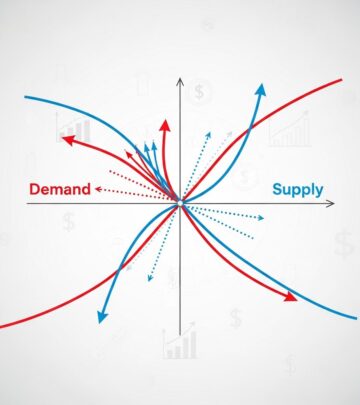
Price elasticity of demand is a fundamental economic concept that measures the responsiveness of consumers to changes in the price of a product or service. In simpler terms, it quantifies how sensitive customers are to price fluctuations and how these changes influence their purchasing decisions. For businesses operating in competitive markets, understanding price elasticity is not merely an academic exercise—it is a critical strategic tool that directly impacts revenue generation, profit margins, and long-term business sustainability.
The concept emerged from classical economic theory and has become increasingly relevant in today’s data-driven business environment. Companies that accurately assess and apply price elasticity principles can make informed decisions about pricing strategies, product positioning, and market expansion. Whether a business is introducing a new product, entering a new market, or optimizing existing product lines, price elasticity analysis provides the quantitative framework necessary for sound decision-making.
The Definition and Formula of Price Elasticity
Price elasticity of demand is formally defined as the percentage change in quantity demanded divided by the percentage change in price. Mathematically, this relationship can be expressed as:
Price Elasticity = (% Change in Quantity Demanded) / (% Change in Price)
In most cases, the elasticity coefficient will be a negative number, reflecting the inverse relationship between price and quantity demanded—when prices rise, demand typically falls, and vice versa. However, economists focus primarily on the absolute value of this number to classify goods as elastic or inelastic.
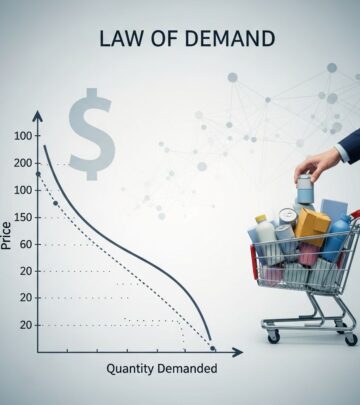
The sign convention in price elasticity analysis reveals important market dynamics. A negative elasticity coefficient confirms the law of demand, which states that price and quantity demanded move in opposite directions. Understanding this relationship helps businesses predict customer behavior and adjust their pricing accordingly.
Elastic versus Inelastic Demand
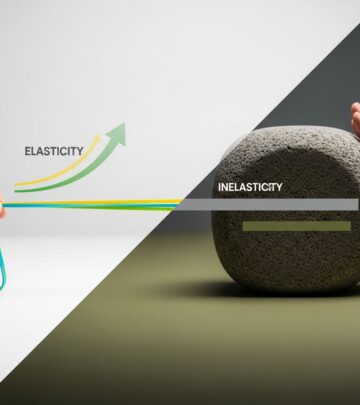
The classification of goods into elastic and inelastic categories represents one of the most practical applications of price elasticity analysis. This distinction determines how sensitive consumers are to price changes and guides strategic pricing decisions.
Inelastic Demand
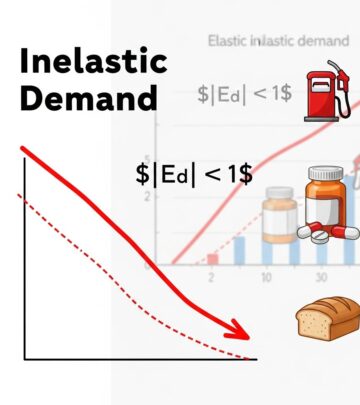
Inelastic demand occurs when the price elasticity coefficient falls between zero and one. In these situations, consumers demonstrate relatively low sensitivity to price changes. Even when prices increase substantially, customers continue purchasing similar quantities of the product. This occurs because the product is essential, has few substitutes, or represents a small portion of the consumer’s total budget.
Common examples of inelastic goods include prescription medications, basic utilities, and essential food items. When a pharmaceutical company increases the price of a life-saving medication, patients continue purchasing it because alternatives may not exist or may be inadequate. Similarly, utility companies can implement modest price increases with minimal impact on consumption patterns because consumers cannot easily reduce their usage of electricity or water.
For businesses selling inelastic goods, price increases often generate higher revenue without sacrificing significant sales volume. However, this advantage must be balanced against potential regulatory scrutiny, consumer backlash, and long-term brand loyalty concerns.
Elastic Demand
Elastic demand exists when the price elasticity coefficient exceeds one, indicating that consumers are highly sensitive to price changes. In elastic markets, a modest price increase can trigger substantial reductions in quantity demanded as customers shift to substitute products or defer purchases.
Automobiles exemplify products with elastic demand. When a car manufacturer significantly increases prices, consumers readily explore alternative brands, consider used vehicles, or postpone their purchase. The automotive market exhibits elasticity because multiple substitutes exist, and vehicles represent a major purchasing decision that consumers carefully evaluate.
For businesses operating in elastic markets, aggressive price increases can actually reduce total revenue because the loss of customers outweighs the additional margin per unit sold. Consequently, companies in these sectors must employ more sophisticated pricing strategies that balance margin optimization with volume preservation.
Key Factors Influencing Price Elasticity
Several structural and behavioral factors determine whether a product exhibits elastic or inelastic demand characteristics:
Availability of Substitute Goods
The existence and accessibility of substitute products represent perhaps the most influential determinant of price elasticity. When consumers have readily available alternatives, they will quickly curtail purchases if a competitor raises prices. This dynamic creates elastic demand. Conversely, when substitutes are scarce or nonexistent, consumers exhibit inelastic demand patterns.
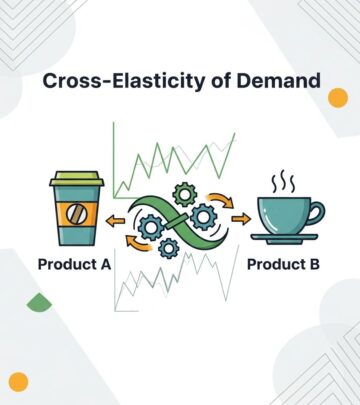
For instance, coffee shops operate in an environment with numerous substitutes—consumers can choose between different coffee vendors, prepare coffee at home, or select alternative beverages. This abundance of options makes coffee demand relatively elastic. By contrast, gasoline buyers have fewer alternatives in the short term, making fuel demand more inelastic despite significant price volatility.
Proportion of Budget
The share of a consumer’s total spending represented by a product substantially affects price sensitivity. Goods that constitute a major portion of household budgets trigger more careful price comparisons and purchasing deliberation. This heightened scrutiny makes demand more elastic.
Consider housing expenses, which typically consume 25-35% of household budgets. Consumers carefully compare rental prices, mortgage rates, and property values before making housing decisions. In contrast, a 50% price increase on toothpaste—which represents a negligible portion of household spending—would likely generate minimal demand reduction because the absolute dollar impact is minimal.
Consumer Necessity and Preferences
Essential goods and services demonstrate inelastic demand because consumers require them regardless of price fluctuations. Necessary medical care, basic food staples, and utility services exhibit lower price sensitivity. Conversely, luxury goods and discretionary purchases display more elastic demand as consumers can forgo or postpone these purchases when prices rise.
Brand Loyalty and Switching Costs
Strong brand loyalty and high switching costs reduce price elasticity by making customers less likely to abandon established products for competitors. Conversely, undifferentiated commodities and low switching costs increase elasticity as customers readily compare options based on price.
Time Horizon Considerations
Price elasticity frequently varies across different time periods. In the short term, demand may appear relatively inelastic because consumers have limited alternatives and cannot quickly adjust consumption patterns. Over longer timeframes, elasticity typically increases as consumers discover substitutes, adjust their preferences, and modify purchasing habits.
Practical Applications for Business Strategy
Understanding price elasticity enables businesses to optimize pricing strategies and maximize profitability through several mechanisms:
Revenue Optimization
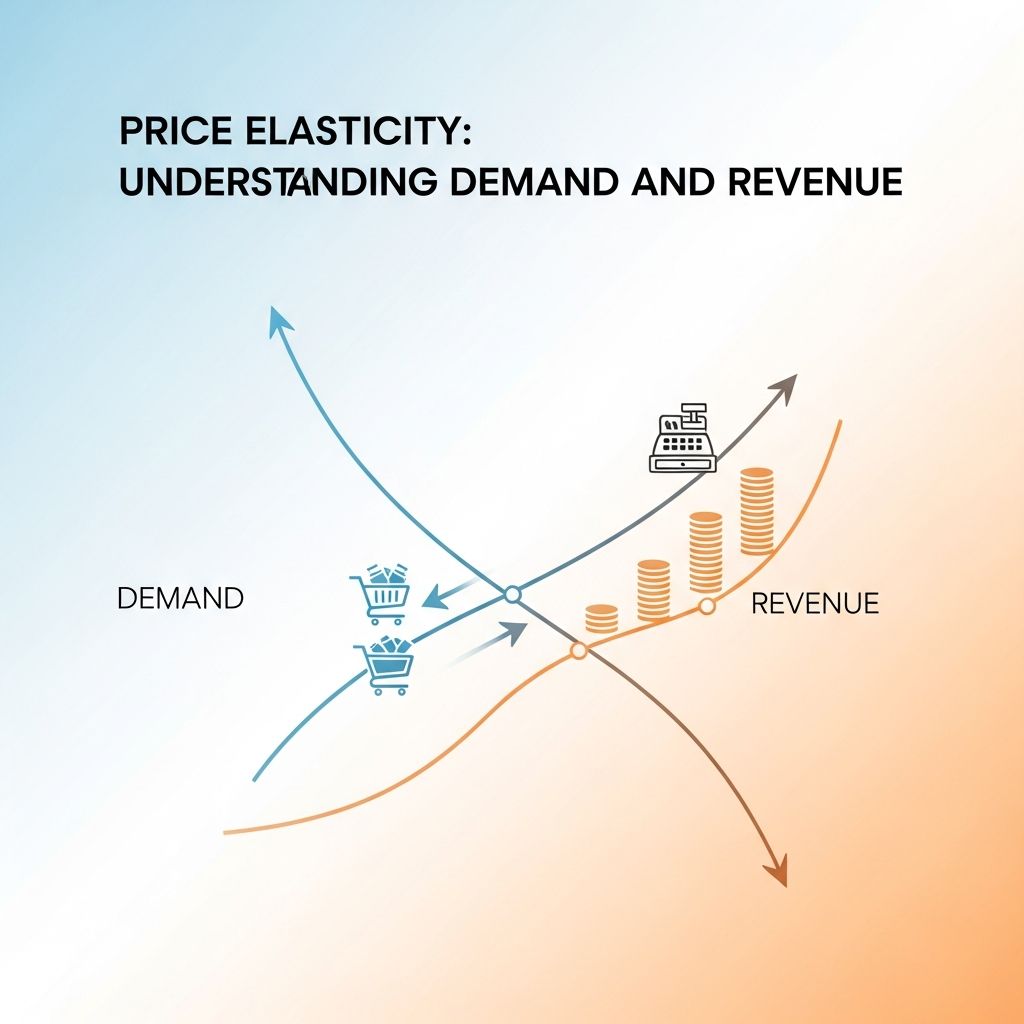
For inelastic goods, price increases often boost total revenue because the percentage increase in price exceeds the percentage decrease in quantity demanded. Conversely, for elastic goods, price reductions can increase revenue by attracting sufficient additional customers to offset lower per-unit margins.
Market Positioning
Price elasticity analysis informs decisions about market positioning, target segments, and competitive differentiation. Products with inelastic demand can support premium positioning and higher margins, while elastic goods may require competitive pricing and volume strategies.
Promotional Strategy
Recognizing elasticity patterns helps businesses allocate promotional resources effectively. Elastic goods benefit from aggressive discounting and volume promotions, while inelastic goods may respond better to brand-building and quality communication.
New Market Entry
Elasticity assessment guides pricing decisions when entering new markets. Conservative pricing strategies work better in elastic markets where market share establishment is paramount, while premium pricing may be viable in inelastic markets.
Real-World Examples of Price Elasticity
Transportation services effectively illustrate the elasticity concept. Public transportation riders typically have limited alternatives to buses and trains, especially in dense urban areas where personal automobile ownership is impractical or expensive. Consequently, moderate fare increases generate relatively little impact on ridership patterns, indicating inelastic demand. However, when transit agencies implement substantial fare increases, some price-sensitive riders may resort to carpooling, walking, or purchasing bicycles, suggesting some elasticity at extreme price points.
The airline industry demonstrates sector-wide elasticity variations. Business travelers, who prioritize schedule convenience and reliability, display relatively inelastic demand for flights. Leisure travelers, conversely, exhibit more elastic demand, carefully comparing fares across carriers and potentially shifting travel dates or destinations based on pricing.
Frequently Asked Questions About Price Elasticity
Q: What is the difference between price elasticity and income elasticity?
A: Price elasticity measures demand sensitivity to price changes, while income elasticity measures how demand responds to consumer income changes. Income elasticity helps identify whether products are normal goods (demand increases with income) or inferior goods (demand decreases with income).
Q: How can businesses accurately measure price elasticity?
A: Businesses can measure price elasticity through historical sales data analysis, controlled pricing experiments, surveys, focus groups, and econometric modeling. Advanced analytics and A/B testing enable real-time elasticity assessment.
Q: Why do luxury goods typically have elastic demand?
A: Luxury goods represent discretionary purchases that consumers can easily postpone or forgo when prices rise. They also face numerous substitute options and occupy significant portions of budgets, making consumers price-sensitive.
Q: Can price elasticity change over time?
A: Yes, elasticity shifts as market conditions evolve. New competitors emerge, substitute products develop, consumer preferences change, and income levels fluctuate—all factors that alter elasticity coefficients over time.
Q: How does price elasticity affect profit maximization?
A: For inelastic goods, profit typically increases with price increases since revenue gains exceed cost increases. For elastic goods, profit maximization often requires competitive pricing to maintain market share and volume.
Q: What industries face the most elastic demand?
A: Industries with numerous competitors, undifferentiated products, low switching costs, and discretionary consumer spending typically exhibit elastic demand. Examples include retail, quick-service restaurants, and consumer electronics.
Conclusion
Price elasticity of demand represents a cornerstone concept in economic theory and business practice. By understanding how consumers respond to price changes, businesses can make strategic decisions that balance revenue generation with market share preservation. While products with inelastic demand offer opportunities for price premium strategies, those with elastic demand require volume-focused approaches. Ultimately, successful businesses continuously monitor and reassess elasticity patterns as market conditions evolve, enabling them to maintain competitive advantages and optimize profitability across economic cycles.
References
- Price Elasticity of Demand — Investopedia. 2024. https://www.investopedia.com/terms/p/priceelasticity.asp
- Price Elasticity and Consumer Response — Economics Online. 2024. https://www.economicsonline.co.uk/
- Demand Elasticity in Microeconomics — OECD Statistics. 2024. https://stats.oecd.org/
- Consumer Behavior and Price Sensitivity — Harvard Business School Publishing. 2023. https://www.hbsp.harvard.edu/
Similar Articles








Read full bio of Sneha Tete