Presidential Eras: Key Economic Milestones
Discover how U.S. presidents shaped the nation's financial landscape through policies, crises, and reforms across decades.
The economic trajectory of the United States has been profoundly influenced by the policies and circumstances encountered during each presidential administration. From establishing foundational financial systems to navigating global crises and implementing sweeping reforms, presidents have played crucial roles in shaping markets, employment, and growth. This article traces these developments chronologically, highlighting major initiatives, challenges, and outcomes.
Foundational Years: Building the Economic Framework
In the nation’s earliest days, presidents focused on creating stable financial institutions amid post-independence uncertainties. George Washington prioritized manufacturing and economic independence, laying groundwork for self-sufficiency. His administration recognized the need for domestic production to reduce reliance on foreign goods.
Thomas Jefferson and subsequent early leaders grappled with debt management and banking establishments. The establishment of the First Bank of the United States under Alexander Hamilton’s influence during Washington’s tenure provided a central mechanism for fiscal stability.
Civil War and Reconstruction: Fiscal Pressures of Conflict
Abraham Lincoln’s presidency (1861-1865) was defined by the Civil War, which necessitated innovative financing. The Legal Tender Act of 1862 introduced paper currency, known as greenbacks, to fund the Union effort without depleting gold reserves. This marked a shift from specie-backed money to fiat currency during emergencies.
Post-war, Ulysses S. Grant (1869-1877) oversaw Reconstruction-era economics, including the Specie Resumption Act of 1875, which aimed to return the dollar to the gold standard by 1879, stabilizing inflation expectations.
Progressive Era and World Wars: Regulation and Mobilization
Theodore Roosevelt (1901-1909) advanced trust-busting and regulatory reforms, targeting monopolies to foster competition. His administration’s Square Deal emphasized fair economic practices, influencing antitrust laws like the Sherman Act enforcement.
Woodrow Wilson’s Federal Reserve Act of 1913 created the central banking system, addressing banking panics and providing elastic currency supply. During World War I, this system supported war financing through Liberty Bonds.
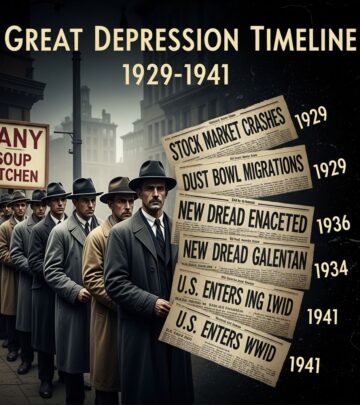
Franklin D. Roosevelt’s New Deal (1933-1945) transformed the economy amid the Great Depression. Programs like the Banking Act of 1933 established FDIC insurance, restoring public confidence in banks. The Social Security Act of 1935 introduced old-age pensions, while massive public works under the WPA employed millions, jumpstarting recovery. World War II further mobilized the economy, with GDP surging due to defense spending.
Post-War Boom: Growth and Cold War Economics
Harry Truman (1945-1953) navigated reconversion from wartime production, facing strikes and inflation. The Employment Act of 1946 committed the government to full employment policies, creating the Council of Economic Advisers.
Dwight D. Eisenhower (1953-1961) invested in infrastructure via the Federal-Aid Highway Act of 1956, building the Interstate System that boosted commerce and suburban growth.
| President | Key Policy | Economic Impact |
|---|---|---|
| Harry Truman | Employment Act 1946 | Established economic advisory framework |
| Dwight Eisenhower | Highway Act 1956 | Enhanced national transport efficiency |
1960s-1970s: Expansion, Inflation, and Stagflation
Lyndon B. Johnson (1963-1969) oversaw robust growth with low unemployment and high income gains, bolstered by Great Society programs. However, Vietnam War spending contributed to inflationary pressures.
Richard Nixon (1969-1974) suspended gold convertibility in 1971, ending the Bretton Woods system and ushering in floating exchange rates. His administration faced oil shocks, exacerbating inflation.
Gerald Ford (1974-1977) dealt with high unemployment and inflation, implementing wage-price controls temporarily. Jimmy Carter (1977-1981) experienced high GDP growth but record inflation and unemployment amid energy crises. Gold prices soared during Carter’s term due to stagflation and dollar weakness.
- High inflation: Peaked in early 1980.
- Oil shocks: Iranian revolution tightened supply.
- Gold surge: Climbed steadily, reflecting economic uncertainty.
1980s-1990s: Deregulation, Booms, and Tech Surge
Ronald Reagan’s Reaganomics (1981-1989) featured tax cuts and deregulation, curbing inflation via tight monetary policy. Gold prices fell sharply post-1980. Unemployment dropped after initial recession.
George H.W. Bush (1989-1993) managed the 1990-1991 recession, with high poverty rates but efforts toward budget balancing. Bill Clinton (1993-2001) benefited from tech boom and fiscal discipline, achieving surpluses through 1993 tax hikes and spending restraint. Low inflation and unemployment marked his terms.
2000s: Recessions, Housing Bubble, and Financial Crisis
George W. Bush (2001-2009) faced the dot-com bust and 9/11, followed by housing crash. GDP contracted, unemployment peaked, but inflation was minimal during the Great Recession. Housing policies highlighted risks from lax lending.
Barack Obama (2009-2017) inherited the crisis, implementing stimulus via the American Recovery Act. Quantitative easing supported recovery, with GDP growth improving and deficits narrowing over time despite added debt. Poverty remained elevated.
2010s-2020s: Trade Wars, Pandemic, and Recovery
Donald Trump’s first term (2017-2021) enacted the 2017 Tax Cuts and Jobs Act, spurring manufacturing via bonus depreciation and lower corporate rates. Unemployment was moderate, inflation low, but pandemic recession hit in 2020. Tariffs aimed at reshoring production.
Joe Biden (2021-present) passed the Infrastructure Investment and Jobs Act, funding modern infrastructure to aid supply chains. High GDP growth post-2021 contrasted with elevated inflation reminiscent of Carter era. Unemployment stayed low.
| President | GDP Growth Rank | Unemployment Rank | Inflation Notes |
|---|---|---|---|
| Trump (2017-21) | 4th highest | 5th highest | 2nd lowest (1.4%) |
| Biden (2021-) | 2nd highest | 4th lowest | High post-pandemic |
| Carter (1977-81) | Highest | 3rd highest | Highest |
Patterns in Presidential Economic Legacies
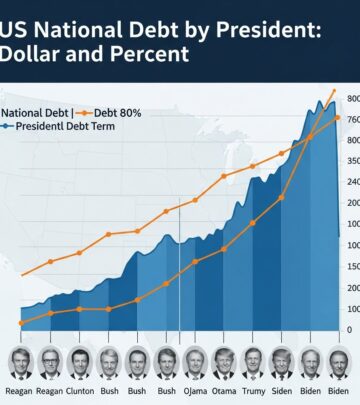
Historical data reveals Democrats often oversee recoveries and job gains, while Republicans inherit expansions but face recessions—10 of 11 since 1953 started under GOP presidents. Growth averages higher under Democrats, but causation is debated; external factors like business cycles dominate.
Manufacturing policies evolved from Washington’s independence push to Trump’s tariffs and Biden’s infrastructure. Gold prices reflect uncertainty, surging in crises like Carter’s stagflation.
Modern Implications for Investors
Understanding these eras aids investment strategies. Tax reforms boost equities short-term but may inflate deficits. Infrastructure spending enhances long-term productivity. Pandemics and wars underscore diversification needs.
Recent terms highlight policy unpredictability: Trump’s tax cuts spurred investment, Biden’s acts targeted resilience. Investors monitor fiscal deficits, Fed actions, and trade policies for signals.
Frequently Asked Questions
Which president had the highest GDP growth?
Jimmy Carter recorded the highest GDP growth, though paired with high inflation.
How did Reaganomics impact the economy?
It reduced inflation through tax cuts and monetary tightening, leading to gold price declines and eventual expansion.
What role did FDR play in economic recovery?
The New Deal introduced banking reforms and relief programs, stabilizing the Depression-era economy.
Do parties significantly differ in economic performance?
Statistics show partisan patterns in growth and recessions, but business cycles explain much variance.
How has manufacturing policy changed?
From early self-reliance to modern tariffs and infrastructure under Trump and Biden.
References
- Presidential Policies That Shaped American Manufacturing — Mills Machine Works. 2025-01-30. https://www.millsmachineworks.com/blog/2025/1/30/presidential-policies-that-shaped-american-manufacturing
- A timeline of US presidential terms and gold prices — S&P Global. N/A. https://www.spglobal.com/market-intelligence/en/news-insights/research/a-timeline-of-us-presidential-terms-and-gold-prices
- How the Economy Performed Under Each President — Nasdaq. N/A. https://www.nasdaq.com/articles/lbj-biden-how-economy-performed-under-each-president
- Presidents as Economic Managers — National Affairs. N/A. https://www.nationalaffairs.com/publications/detail/presidents-as-economic-managers
- U.S. economic performance by presidential party — Wikipedia (references primary data). N/A. https://en.wikipedia.org/wiki/U.S._economic_performance_by_presidential_party
- Changing Economic Policies — Bay Path University. N/A. https://open.baypath.edu/his115/chapter/changing-economic-policies/
Similar Articles








Read full bio of Sneha Tete