President Lyndon Johnson’s Economic Policies
Exploring LBJ's transformative Great Society programs and their lasting economic impact.
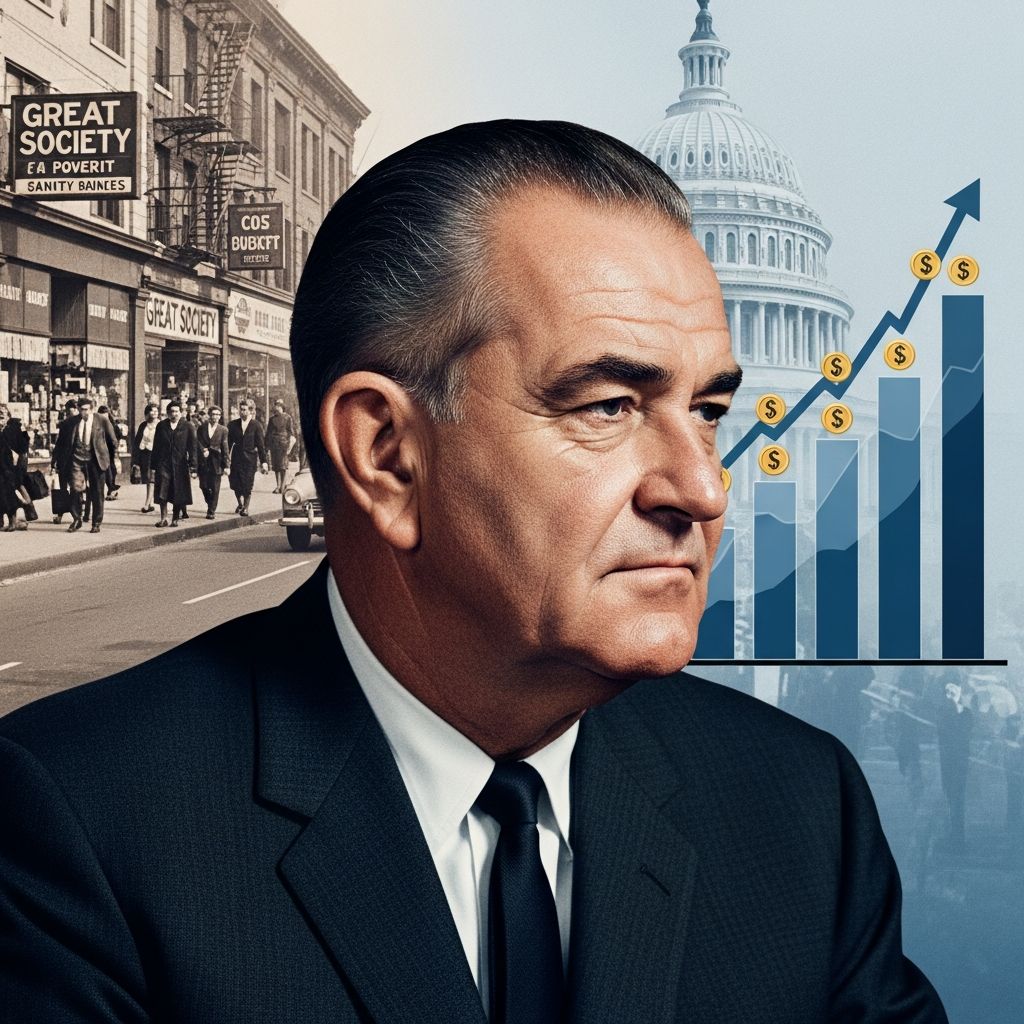
President Lyndon Johnson’s Economic Policies: Building the Great Society
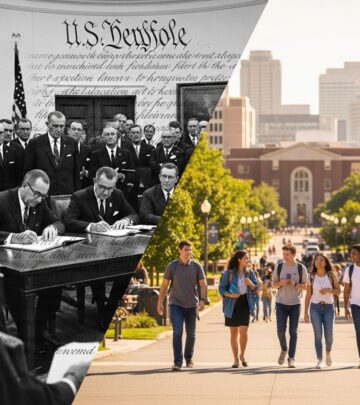
President Lyndon B. Johnson’s tenure in office marked one of the most ambitious periods of domestic economic policy in American history. Following his assumption of the presidency after John F. Kennedy’s assassination in 1963, Johnson embarked on an expansive agenda that would fundamentally reshape the role of the federal government in American economic life. His vision, known as the Great Society, represented the largest expansion of the welfare state since Franklin D. Roosevelt’s New Deal programs of the 1930s. This comprehensive approach to economic policy combined tax cuts, targeted spending increases, and innovative social programs designed to address poverty, inequality, and social dysfunction across the nation.
The Foundation: Kennedy’s Tax Cut and Economic Growth
Before Johnson could fully implement his ambitious agenda, he first had to secure passage of President Kennedy’s proposed $11 billion tax cut. This stimulus measure had been advocated by Kennedy’s Council of Economic Advisers since 1962 and represented a critical foundation for the broader economic vision that would follow. Johnson recognized that a booming economy was essential to generate the resources necessary for his poverty programs and to build political support for social legislation, particularly civil rights initiatives. The tax cut worked as intended, with the economy growing at an average rate of nearly 5 percent per year, providing the fiscal space for Johnson’s subsequent expansion of federal spending.
Johnson navigated a delicate political balance to achieve this outcome. Conservative fiscal hawks in Congress, particularly Senator Harry Byrd, demanded that any tax reduction be accompanied by corresponding cuts in government expenditures. Johnson masterfully negotiated this constraint by committing to hold federal spending at approximately $101.5 billion. However, he found creative solutions to fund his anti-poverty initiatives within this constraint, including modest reductions in defense spending that Secretary of Defense Robert McNamara helped facilitate. This political maneuvering allowed Johnson to launch his War on Poverty while maintaining fiscal credibility with conservative lawmakers.
The Great Society: Scope and Vision
Introduced in January 1965, Johnson’s Great Society agenda represented an extraordinary scope of domestic ambition. The program encompassed aid to education, medical care expansion, Medicare and Medicaid creation, urban renewal initiatives, environmental protection, beautification projects, conservation efforts, development of economically depressed regions, comprehensive anti-poverty measures, and efforts to combat crime and protect voting rights. Johnson believed that America was wasting tremendous human potential through poverty, discrimination, and inadequate access to basic services. His vision extended beyond merely providing financial assistance; he sought to affirm the value of every human life and strengthen the nation by strengthening its individual citizens.
Congress, often augmenting or amending Johnson’s recommendations, rapidly enacted the administration’s proposals. The speed and scope of legislative achievement during this period remained remarkable. The Great Society became so vast that nearly all administration initiatives could be fit within its framework, and conversely, almost any subsequent societal challenge could be attributed to it. This expansiveness gave Johnson a powerful marketing concept for his domestic agenda while simultaneously providing his critics with a convenient target for blame.
The War on Poverty: A Multi-Fronted Campaign
While numerous laws and programs composed the Great Society, the centerpiece of Johnson’s plan was the eradication of poverty in the United States. In his 1964 State of the Union address, Johnson asked Congress to declare an “unconditional war on poverty,” aiming “not only to relieve the symptom of poverty, but to cure it and, above all, to prevent it.” This War on Poverty was fought on multiple fronts with diverse legislative instruments and administrative programs.
Housing and Urban Development Initiatives
The 1965 Housing and Urban Development Act provided crucial resources for urban renewal and housing improvement. This legislation offered grants to improve city housing and established subsidized rent programs for poor families. The complementary Model Cities program provided additional funding for urban development projects and the construction of public housing, recognizing that poverty in urban areas required comprehensive approaches addressing multiple dimensions of deprivation simultaneously.
Rural Poverty and Agricultural Programs
The Economic Opportunity Act (EOA) specifically targeted rural poverty by providing low-interest loans to farmers and entrepreneurs seeking to improve their agricultural operations or start new businesses. EOA funds were also allocated to provide housing and education for migrant farm workers, a particularly vulnerable population. Special legislation created employment opportunities in Appalachia, one of America’s poorest regions, and established programs benefiting Indian reservations. One notable success was the Rough Rock Demonstration School on the Navajo Reservation, which balanced respect for Navajo traditions and culture while simultaneously training individuals for careers and economic opportunities beyond the reservation.
Healthcare Expansion: Medicare and Medicaid
Among the most enduring achievements of Johnson’s economic agenda was the creation of Medicare and Medicaid. The 1965 Medicare amendment to the Social Security Act provided comprehensive health coverage for elderly Americans, fundamentally transforming healthcare access for seniors. Millions of elderly people found substantial relief through this program. Medicaid, enacted simultaneously, extended health coverage to low-income individuals and families, creating a dual system that addressed healthcare needs across different demographics. These programs represented watershed moments in American social policy, establishing the principle that healthcare access was a legitimate concern of federal economic policy.
Measuring Economic Impact and Results
The financial commitment to Johnson’s agenda was substantial and grew significantly over time. Government funding devoted to assisting the poor increased dramatically during the Johnson administration. Between 1965 and 1968, expenditures targeted at poverty programs doubled from $6 billion to $12 billion annually, then doubled again to reach $24.5 billion by 1974. These massive increases reflected Johnson’s commitment to deploying federal resources on an unprecedented scale to address systemic poverty.
The results of these efforts were measurable and significant. Partly as a result of these targeted initiatives—and also due to the booming economy sustained by the initial tax cut—the poverty rate in America declined substantially during the Johnson years. The percentage of Americans living below the poverty line decreased from 20 percent in 1964 to 12 percent by 1974. Millions of Americans raised themselves above the poverty line, and the composition of poverty shifted notably. While more people of color than whites continued to live in poverty, the percentage of poor African Americans decreased dramatically, reflecting the particular benefits these programs provided to African American communities historically disadvantaged by racial segregation and discrimination.
Employment, Education, and Social Benefits
Job training and job placement programs proved particularly effective during this period. The billions of dollars devoted to employment initiatives created meaningful employment opportunities and equipped workers with skills needed for economic participation. These programs complemented the broader safety net expansion through increased Social Security benefits and expanded welfare payments that improved living standards for millions. Federal funding for education increased substantially, enabling more Americans than ever before to attend college and pursue higher education, creating long-term human capital benefits that extended far beyond the Johnson administration itself.
Political Controversy and Conservative Criticism
Despite measurable success in reducing poverty, Johnson’s economic agenda generated significant political controversy. Conservative critics argued that expanding federal government responsibilities for caring for the poor actually harmed both taxpayers and impoverished individuals themselves. This critique rested on concerns that government aid would create dependency, discouraging self-reliance and personal initiative. While many found these arguments intuitively compelling, conclusive empirical evidence supporting this perspective remained lacking.
Conservative opponents also accused Johnson of saddling the United States with mounting debt through deficit spending financed by government borrowing. The expansion of federal expenditures, even when partially offset by tax revenues and modest spending reductions elsewhere, contributed to concerns about long-term fiscal sustainability. These criticisms, while not preventing program enactment, contributed to growing political polarization regarding the appropriate scope of federal economic responsibility.
Assessment of the Great Society’s Legacy
Although the Great Society failed to eliminate poverty entirely or expand civil rights to the full extent Johnson envisioned, it made demonstrably significant differences in millions of American lives. The creation of Medicare and Medicaid, expansion of Social Security benefits, welfare payment increases, and substantially increased federal funding for education produced lasting improvements in living standards, healthcare access, and educational opportunity. These programs created institutional structures that persisted beyond Johnson’s presidency, continuing to shape American economic and social policy for decades.
The controversy surrounding the War on Poverty and Great Society programs contributed to Democratic political defeats in 1968 and fostered deep antagonism from racial, fiscal, and cultural conservatives. These programs represented a fundamental expansion of federal government involvement in American economic life that challenged traditional assumptions about limited government and individual responsibility. The debate they generated continued to structure American political discourse regarding the proper role of government in addressing social and economic problems.
Frequently Asked Questions
Q: What was the primary goal of Lyndon Johnson’s Great Society?
A: The primary goals of the Great Society were to eliminate racial inequality and bring an end to poverty. Johnson advocated massive new spending programs for equal education, medical care, urban renewal, rural poverty reduction, and infrastructure improvement to address systemic deprivation and create opportunity for all Americans.
Q: How much did Johnson increase spending on anti-poverty programs?
A: Government funding devoted to the poor increased dramatically during Johnson’s tenure. Between 1965 and 1968, expenditures targeted at poverty doubled from $6 billion to $12 billion, then doubled again to $24.5 billion by 1974, demonstrating unprecedented federal commitment to poverty reduction.
Q: What were the most successful Great Society programs?
A: Among the most successful were Medicare and Medicaid, which provided healthcare access to elderly and low-income Americans; job training and placement programs; federal education funding increases that enabled college attendance; and housing programs that improved living conditions for poor families.
Q: Did the Great Society achieve its poverty reduction goals?
A: While the Great Society did not eliminate poverty entirely, it achieved substantial reductions. The percentage of Americans living below the poverty line decreased from 20 percent in 1964 to 12 percent by 1974, lifting millions of Americans above poverty thresholds.
Q: How did Johnson balance tax cuts with increased spending?
A: Johnson implemented Kennedy’s $11 billion tax cut while controlling overall federal spending growth through modest defense spending reductions. This allowed him to maintain fiscal credibility with conservative lawmakers while deploying resources toward his anti-poverty agenda.
Q: What was the War on Poverty?
A: The War on Poverty was Johnson’s comprehensive, multi-pronged attack on poverty, encompassing housing programs, rural development, job training, healthcare expansion, education funding, and targeted assistance to specific impoverished regions including Appalachia and Indian reservations.
References
- Lyndon B. Johnson — White House Archives. Accessed November 2025. https://obamawhitehouse.archives.gov/1600/presidents/lyndonbjohnson
- Lyndon Johnson and the Great Society — Florida State College at Jacksonville. Accessed November 2025. https://fscj.pressbooks.pub/modernushistory/chapter/lyndon-johnson-and-the-great-society/
- Lyndon B. Johnson: Domestic Affairs — Miller Center for Public Affairs. Accessed November 2025. https://millercenter.org/president/lbjohnson/domestic-affairs
- How Johnson Fought the War on Poverty: The Economics and History of the War on Poverty — National Institutes of Health. Accessed November 2025. https://pmc.ncbi.nlm.nih.gov/articles/PMC4266933/
- The War on Poverty, the Budget, and LBJ’s Economic Vision — University of California Davis, Center for Poverty Research. Accessed November 2025. https://poverty.ucdavis.edu/
- Great Society Speech — Teaching American History. Accessed November 2025. https://teachingamericanhistory.org/document/great-society-speech-2/
Similar Articles








Read full bio of medha deb