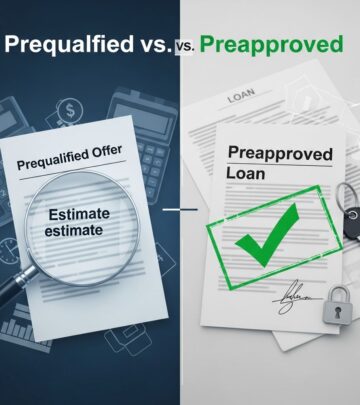
Pre-qualified vs Pre-approved: Understanding Mortgage Terms
Learn the critical differences between mortgage pre-qualification and pre-approval to make informed decisions.

When embarking on the journey to purchase a home, understanding the distinctions between mortgage pre-qualification and pre-approval is essential. These two terms are often used interchangeably, yet they represent significantly different stages in the mortgage lending process. Each carries distinct implications for both borrowers and sellers, affecting everything from your buying power to the strength of your offer in a competitive market.
What Does Pre-qualified Mean?
Pre-qualification is the initial step in the mortgage process and represents an informal assessment of your potential borrowing capacity. When you become pre-qualified, a lender provides an estimate of how much money you might be able to borrow based on information you provide directly. This process requires minimal documentation and is typically conducted over the phone, via email, or through an online questionnaire.
During pre-qualification, the lender asks about your income, debts, assets, and general credit history. However, they do not verify this information with independent sources such as banks, employers, or credit bureaus. The pre-qualification letter you receive is based entirely on your self-reported financial details, making it a preliminary estimate rather than a binding commitment.
Key Characteristics of Pre-qualification:
- Informal and quick process requiring minimal documentation
- Based on unverified information provided by the borrower
- No credit check or hard inquiry conducted
- Provides an estimate of borrowing capacity
- Non-binding and subject to change
- Typically free or low-cost
- Useful for understanding your general budget range
Pre-qualification serves as a helpful starting point for prospective homebuyers to understand what price range they might target. However, it should not be considered a guarantee of loan approval or an indication of actual purchasing power, as the information provided has not been verified.
Understanding Pre-approval
Pre-approval represents a more formal and rigorous stage in the mortgage process. When you obtain pre-approval, a lender has verified your financial information through official channels and conducted a thorough assessment of your creditworthiness. This process involves extensive documentation, credit checks, and verification of your income, employment, and assets.
During pre-approval, the lender obtains your credit report, verifies your employment with your employer, confirms bank statements and asset information, and reviews your financial obligations. This comprehensive evaluation allows the lender to make a more accurate determination of your actual borrowing capacity and the terms you qualify for.
Key Characteristics of Pre-approval:
- Formal process requiring substantial documentation
- Includes verification of all financial information
- Hard inquiry conducted on your credit report
- Based on verified income, employment, and assets
- More accurate reflection of actual borrowing capacity
- Generally valid for 60 to 90 days
- Provides a specific loan amount you are qualified to borrow
- Subject to final appraisal and underwriting approval
A pre-approval letter carries significantly more weight than a pre-qualification letter. Sellers view pre-approved offers more favorably because they represent a tangible commitment from a lender that has already verified the buyer’s financial credentials. This makes pre-approval particularly valuable in competitive real estate markets where sellers can choose between multiple offers.
Key Differences Between Pre-qualified and Pre-approved
| Aspect | Pre-qualified | Pre-approved |
|---|---|---|
| Documentation Required | Minimal or self-reported | Extensive and verified |
| Credit Check | Typically not performed | Hard inquiry conducted |
| Verification | Self-reported information only | Independent verification required |
| Accuracy | Estimate only | Specific amount verified |
| Time Required | Minutes to hours | Several days to weeks |
| Validity Period | Generally no expiration | Typically 60-90 days |
| Market Impact | Minimal weight in offers | Significant competitive advantage |
Benefits of Pre-qualification
Pre-qualification offers several advantages for homebuyers just beginning their search. First, it provides a quick and easy way to understand your approximate purchasing power without committing significant time or resources. This allows you to establish a realistic price range and narrow your property search accordingly.
Additionally, pre-qualification requires minimal documentation and no credit inquiry, so there is no impact on your credit score. This makes it an ideal starting point if you are still in the exploratory phases of home buying and want to gather basic information about your options. Pre-qualification is also typically free or very inexpensive, making it an accessible first step for all prospective buyers.
Benefits of Pre-approval
Pre-approval provides substantially greater advantages when you are seriously ready to make an offer on a property. A pre-approval letter demonstrates to sellers that your financial information has been thoroughly verified and that a lender is committed to funding your purchase. This significantly strengthens your position in negotiations, particularly in seller’s markets where multiple offers are common.
Pre-approval also streamlines the later mortgage process by eliminating many verification steps that would otherwise occur during the formal application stage. Since the lender has already confirmed your financial details, the underwriting process typically moves more quickly, potentially allowing you to close on your home faster. Furthermore, pre-approval gives you a clearer picture of the exact amount you can borrow and the specific interest rate and terms you qualify for, enabling more precise financial planning.
The Mortgage Application Process: From Pre-approval to Final Approval
Understanding where pre-approval fits within the broader mortgage application process helps clarify its importance. After obtaining pre-approval and identifying a property, you will submit a formal mortgage application. This application triggers the underwriting process, where the lender thoroughly reviews all documentation, orders a property appraisal, and verifies all information one final time.
During underwriting, any discrepancies or issues discovered can potentially delay or affect your loan approval. However, if nothing has changed materially since your pre-approval and the property appraises at or above the purchase price, your path to final approval is typically straightforward. This is why pre-approval is so valuable—it suggests a high probability of final approval, provided the transaction terms remain consistent with the pre-approval conditions.
What Can Affect Your Pre-approval Status?
Several factors can alter or invalidate your pre-approval between the time you receive it and when you close on your home. Understanding these potential issues helps you maintain your pre-approved status:
- Changes in employment status: A job loss or unexpected employment change can jeopardize your pre-approval, as your income verification becomes outdated.
- Significant increase in debt: Taking on new loans or substantially increasing credit card balances can negatively impact your debt-to-income ratio.
- Late payments or credit problems: Missing payments on existing obligations or encountering collection actions will damage your credit score and pre-approval status.
- Large unexplained deposits or withdrawals: Unusual account activity can raise red flags during the verification process.
- Property appraisal issues: If the property appraises below the purchase price, the lender may reduce the loan amount or withdraw approval entirely.
- Changes in interest rates or market conditions: Significant market shifts can affect the terms or availability of your loan.
How to Obtain Pre-qualification
Obtaining pre-qualification is straightforward and can typically be completed quickly. You can contact banks, mortgage brokers, online lenders, or credit unions to initiate the process. Most lenders provide online questionnaires where you enter basic financial information. Be prepared to provide estimates of your annual income, current debts, savings, and a general sense of your credit history. Within minutes to hours, you should receive an estimate of your pre-qualification amount.
How to Obtain Pre-approval
Obtaining pre-approval requires more active engagement and preparation. You will need to complete a formal mortgage application and gather documentation including recent pay stubs, tax returns from the previous two years, bank statements, employment verification, and a detailed account of existing debts. The lender will order your credit report and may contact your employer directly to verify employment information. This process typically takes several days to a week or longer, depending on the lender’s workload and how quickly you provide required documentation.
Frequently Asked Questions
Q: Can I use a pre-qualification letter to make an offer on a home?
A: While technically you can submit an offer with only a pre-qualification letter, it significantly weakens your negotiating position. In competitive markets, sellers typically prioritize offers from pre-approved buyers. A pre-qualification letter suggests you have not yet seriously committed to the purchase, whereas pre-approval demonstrates verified financial capacity.
Q: Does pre-approval guarantee I will receive the loan?
A: Pre-approval does not guarantee final loan approval. It indicates that based on verified information at that time, a lender is willing to lend you a specific amount. However, the final approval is contingent on the property appraisal, final underwriting, and verification that nothing has changed materially in your financial situation. If the property appraises below the purchase price or significant negative changes occur in your finances, final approval could be denied or modified.
Q: How long does pre-approval take?
A: Pre-approval typically takes anywhere from three to seven business days, though some lenders advertise faster turnaround times. The exact duration depends on how quickly you provide documentation, the lender’s processing speed, and whether any issues require clarification or additional documentation.
Q: Will pre-approval hurt my credit score?
A: Pre-approval involves a hard inquiry on your credit report, which may temporarily lower your credit score by a few points. However, most credit scoring models treat multiple mortgage inquiries within a short window as a single inquiry, minimizing the impact if you shop around with different lenders within two weeks.
Q: Can I be pre-approved for more than one loan amount?
A: Some lenders provide pre-approval for a range, allowing you flexibility in the amount you ultimately borrow. This can be helpful if you are still exploring different price points. However, the maximum pre-approved amount represents the ceiling for what you qualify to borrow, and you can always choose to borrow less.
Q: What is the difference between pre-approval and conditional approval?
A: Conditional approval is a lender’s commitment to lend subject to certain conditions being met, such as receiving final verification documents or confirmation that nothing has changed since pre-approval. It is essentially a step between pre-approval and final approval.
Making the Most of Your Pre-approval
Once you obtain pre-approval, use it strategically. Shop with confidence in properties within your pre-approved range, knowing your exact purchasing power. When submitting an offer, prominently feature your pre-approval letter to demonstrate to sellers that your financing is essentially guaranteed, contingent only on the property appraisal. Be careful to avoid the common mistakes that jeopardize pre-approval status: do not make significant purchases, change jobs without ensuring income verification, or accumulate new debt. Maintaining the same financial profile that secured your pre-approval increases the likelihood of smooth final approval when you find the right property.
References
- Mortgage Pre-Approval and Pre-Qualification: What’s the Difference? — Consumer Financial Protection Bureau (CFPB). 2023. https://www.consumerfinance.gov/
- Understanding Mortgage Pre-Approval and Pre-Qualification — U.S. Department of Housing and Urban Development (HUD). 2023. https://www.hud.gov/
- Freddie Mac: Mortgage Lending Standards and Requirements — Freddie Mac Official Documentation. 2024. https://sf.freddiemac.com/
- Credit Score Impact of Mortgage Inquiries — Experian. 2024. https://www.experian.com/
- Home Buyer’s Guide: Pre-Approval Process — Federal Reserve Financial Education Resources. 2024. https://www.federalreserve.gov/
Similar Articles








Read full bio of Sneha Tete