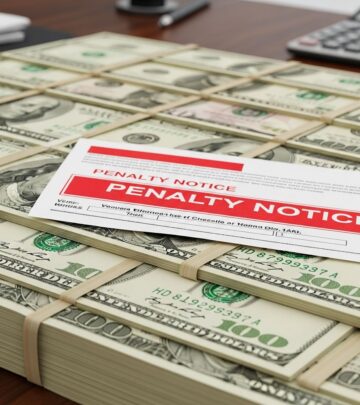
Prepayment Penalties In Mortgages: How To Avoid Costly Fees
Understand mortgage prepayment penalties, their costs, triggers, and strategies to avoid unexpected fees when paying off loans early.

Mortgage prepayment penalties are fees imposed by lenders when borrowers repay part or all of their loan ahead of schedule. These charges help lenders recover lost interest income but can surprise homeowners planning to refinance, sell, or accelerate payments.
Defining Prepayment Penalties and Their Purpose
A prepayment penalty occurs when a borrower reduces or eliminates their mortgage balance before the term ends, typically through full payoff, refinancing, or large principal payments. Lenders include these clauses to protect against revenue shortfalls from early repayments, which disrupt their expected interest earnings over the loan’s life.
While common in older loans, modern regulations have curtailed their use, especially on standard mortgages. Borrowers must review loan documents for these terms, as they are disclosed upfront.
Types of Prepayment Penalties
Penalties fall into two main categories: hard and soft. Hard penalties apply to major actions like full repayment or refinancing, often blocking favorable moves without cost. Soft penalties are milder, triggered only by exceeding annual prepayment limits without penalizing sales or standard refinances.
- Hard Penalty: Activated by selling the home, refinancing, or paying off the full balance early. This can lock borrowers into unfavorable rates.
- Soft Penalty: Limited to over-limit prepayments, allowing flexibility for home sales or rate drops.
When Do Prepayment Penalties Apply?
Triggers vary by loan type but commonly include:
- Full mortgage payoff within the penalty period (often 1-3 years).
- Refinancing to a new loan.
- Exceeding annual prepayment thresholds, like 20% of the balance.
- Home sales leading to loan termination.
Small extra payments usually evade penalties, but large lump sums do not. Always confirm with your lender.
How Prepayment Penalties Are Calculated
Calculations differ by mortgage type and lender formulas. Common methods include percentages of the remaining balance or multiples of interest payments.
Percentage-Based Penalties
Often 1-2% of the outstanding principal. U.S. law caps this at 2% in year one, 1% in year two, and none after year three for qualified loans.
| Year of Loan | Max Penalty (% of Balance) | Example on $300,000 Balance |
|---|---|---|
| 1 | 2% | $6,000 |
| 2 | 1% | $3,000 |
| 3+ | 0% | $0 |
Interest-Based Penalties
Typically 3 months’ interest on the prepaid amount. For variable-rate loans, this uses the current rate or prime rate.
Example: On a $10,000 overpayment at 5% interest, penalty = ($10,000 × 0.05 / 12) × 3 ≈ $125.
Interest Rate Differential (IRD) for Fixed-Rate Loans
IRD compares your contract rate to current market rates, multiplied by remaining balance and term months, then divided by 12. Higher original rates yield bigger penalties if rates have fallen.
IRD Example: $400,000 balance, 2% differential, 36 months left: Monthly IRD = ($400,000 × 0.02)/12 ≈ $667; Total = $667 × 36 ≈ $24,000 (capped at 3 months’ interest if higher).
U.S. Regulations Governing Prepayment Penalties
The Dodd-Frank Act restricts penalties on most consumer mortgages to the first three years, with declining caps. Qualified mortgages (QM) often prohibit them entirely. Non-QM or subprime loans may still include them.
Penalties cannot apply to small incremental payments. Lenders must disclose terms clearly in the Truth in Lending Act statement.
Prepayment Penalties on Fixed vs. Variable-Rate Mortgages
| Mortgage Type | Typical Penalty | Calculation Basis |
|---|---|---|
| Fixed-Rate (Closed) | Higher of 3 months’ interest or IRD | Contract vs. current rates |
| Variable-Rate (Closed) | 3 months’ interest | Prepaid amount × rate |
Fixed-rate penalties protect against rate drops; variable ones focus on immediate interest loss.
Real-World Penalty Examples
Consider a $200,000 loan at 5% after 19 months, balance $180,000.
- 2% Penalty: $3,600 fee on full payoff.
- 3 Months’ Interest: ($180,000 × 0.05 / 12) × 3 = $2,250.
- Large Prepayment: $40,000 (20% threshold) at 5%: ~$500.
Refinancing amid falling rates could add thousands to closing costs.
Strategies to Avoid or Minimize Penalties
Proactive steps include:
- Choose Penalty-Free Loans: Opt for open mortgages or those without clauses.
- Stay Within Limits: Adhere to 15-20% annual prepayments.
- Wait Out the Period: Delay major actions until year 3+.
- Review Documents: Scrutinize disclosures before signing.
- Shop Lenders: Compare terms; many offer no-penalty options.
Selling your home often triggers penalties unless specified otherwise.
Impact on Common Homeowner Decisions
Refinancing
Rate drops tempt refinancing, but penalties can offset savings. Calculate break-even: If monthly savings exceed penalty over time, proceed.
Selling Your Home
Proceeds cover penalties at closing. Factor this into net gains.
Accelerated Payoff
Extra payments build equity but watch thresholds to avoid fees.
Frequently Asked Questions (FAQs)
What is a mortgage prepayment penalty?
A fee for early loan repayment, compensating lenders for lost interest.
Are prepayment penalties legal in the U.S.?
Yes, but regulated: capped at 2%/1% in years 1-2, banned on many QMs after year 3.
How much is a typical prepayment penalty?
1-2% of balance or 3 months’ interest, varying by loan.
Do FHA or VA loans have prepayment penalties?
No, government-backed loans prohibit them.
Can I negotiate out of a prepayment penalty?
Sometimes with lenders, especially near term end, but it’s contractual.
Key Takeaways for Borrowers
Prepayment penalties safeguard lenders but can hinder borrower flexibility. Scrutinize loan terms, prioritize no-penalty products, and plan actions around penalty windows. Consulting a mortgage expert ensures informed decisions aligned with your financial goals.
References
- Prepayment Penalty: How Much It Costs, How to Avoid It — NerdWallet. 2023. https://www.nerdwallet.com/ca/p/article/mortgages/prepayment-penalty-cost-to-end-a-mortgage-early
- What Is A Mortgage Prepayment Penalty? — Bankrate. 2024-10-15. https://www.bankrate.com/mortgages/prepayment-penalty/
- Prepayment Penalty: What it is & How it Works — Chase. 2025. https://www.chase.com/personal/mortgage/education/financing-a-home/prepayment-penalty
- Prepayment penalty: What it is and how to avoid it — Rocket Mortgage. 2024. https://www.rocketmortgage.com/learn/prepayment-penalty
- What You Should Know About Prepayment Penalties — NCHFA (.gov). 2023. https://www.nchfa.com/what-you-should-know-about-prepayment-penalties
- Prepayment Penalty — Cornell Law School Legal Information Institute (.edu). 2025-03. https://www.law.cornell.edu/wex/prepayment_penalty
- What is a prepayment penalty? — Consumer Financial Protection Bureau (.gov). 2024. https://www.consumerfinance.gov/ask-cfpb/what-is-a-prepayment-penalty-en-1957/
Similar Articles








Read full bio of medha deb