Prepayment: Understanding Early Loan and Mortgage Payoff
Learn how prepayment works, its benefits, costs, and impact on loans and mortgages.
What Is Prepayment?
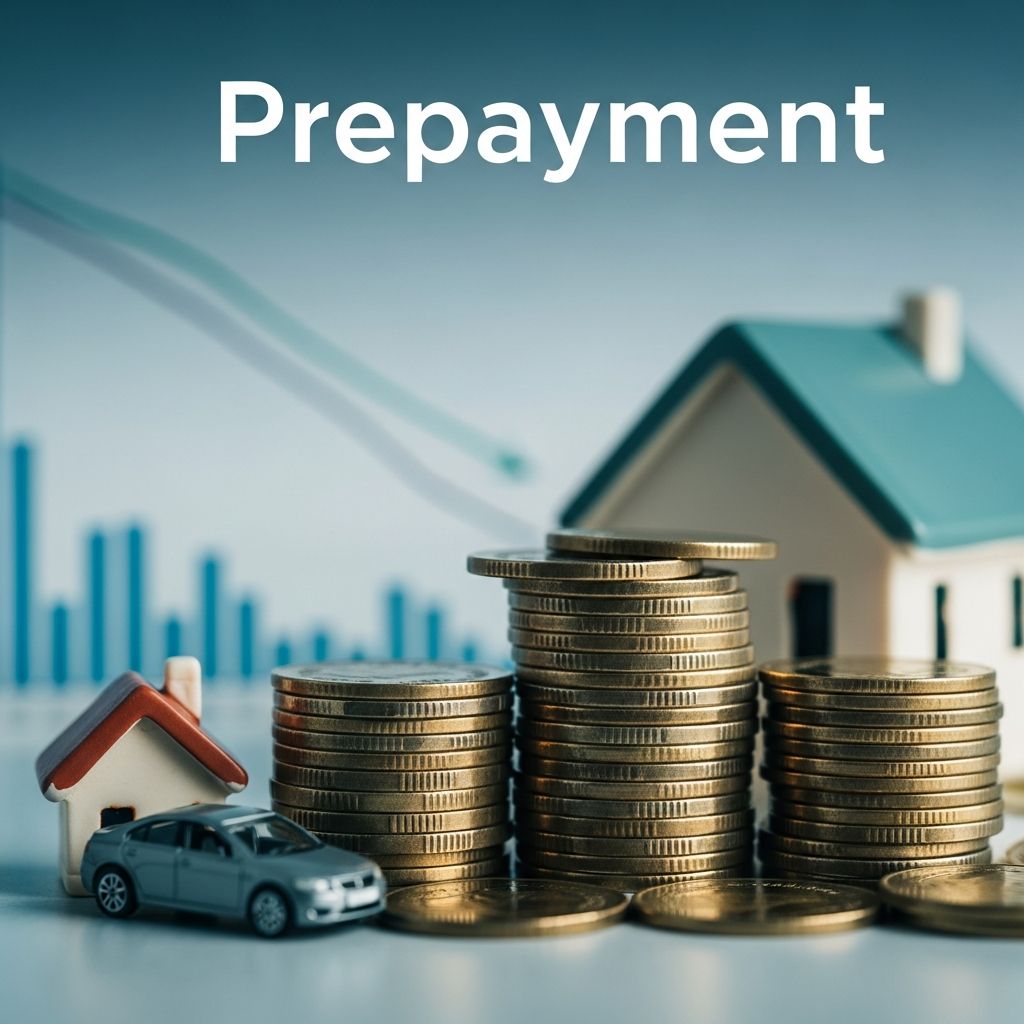
Prepayment refers to the early satisfaction of a debt obligation before its scheduled maturity date or due date. When a borrower makes a prepayment, they are essentially paying off part or all of a loan, mortgage, bond, or other debt instruments ahead of time. This financial action can have significant implications for both the borrower and the lender, affecting the total interest paid, the loan term, and various financial strategies.
In essence, prepayment is a proactive approach to debt management that allows borrowers to take control of their financial obligations. Whether it’s paying off a mortgage years before the scheduled payoff date or making extra payments on a personal loan, prepayment represents a commitment to reducing debt faster than originally agreed upon.
How Prepayment Works
Understanding the mechanics of prepayment is essential for anyone considering this approach to debt repayment:
- Partial Prepayment: The borrower makes additional payments toward the principal balance without paying off the entire debt. These extra payments reduce the outstanding balance and decrease the total interest accrued over the life of the loan.
- Full Prepayment: The borrower pays off the entire remaining balance of the loan in one lump sum, typically before the maturity date specified in the loan agreement.
- Scheduled Payments Plus Extra: Many borrowers continue making regular monthly payments while simultaneously adding extra amounts to accelerate payoff, especially effective for mortgages where small increases in monthly payments can shorten the loan term significantly.
When a borrower prepays a loan, the extra funds typically go directly toward reducing the principal balance. Since interest is usually calculated on the outstanding principal, reducing the principal quickly can substantially decrease the amount of interest paid over the life of the loan. This is particularly impactful in the early years of a mortgage when most payments go toward interest rather than principal.
Prepayment Penalties
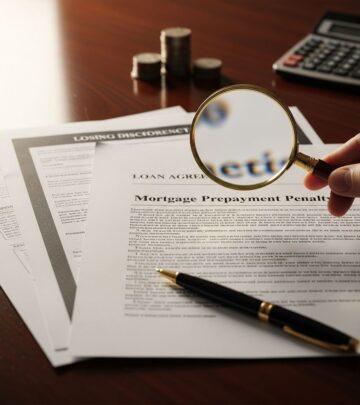
One of the most critical considerations when contemplating prepayment is the possibility of prepayment penalties. Some lenders impose fees on borrowers who pay off their loans early, effectively penalizing early repayment. These penalties serve as compensation to the lender for the lost interest income they would have received had the borrower maintained the loan for its full term.
Types of Prepayment Penalties
- Hard Prepayment Penalty: This type prohibits any prepayment without penalty, either through direct restrictions or by imposing substantial fees that make prepayment economically impractical.
- Soft Prepayment Penalty: These penalties apply only under certain circumstances, such as when the property is sold or refinanced within a specific timeframe, but may not apply if the borrower simply makes larger payments.
- Percentage-Based Penalty: Calculated as a percentage of the remaining loan balance, typically ranging from 1% to 5% depending on the loan terms.
- Interest-Based Penalty: Charges the borrower a specific number of months of interest as a penalty for early repayment, often called an “interest rate differential.”
Before committing to prepayment, borrowers should carefully review their loan documents to understand whether prepayment penalties apply and under what circumstances they may be triggered. Many modern loans, particularly mortgages, have limited or no prepayment penalties after a certain period.
Advantages of Prepayment
Despite potential penalties, prepayment offers numerous financial benefits for borrowers who can afford it:
- Interest Savings: The most significant advantage is the reduction in total interest paid over the life of the loan. Even modest extra payments can save thousands of dollars over a 15- or 30-year mortgage.
- Faster Debt Freedom: Prepayment accelerates the timeline to becoming completely debt-free, providing psychological relief and financial security sooner.
- Building Equity Faster: For homeowners, prepayment increases home equity faster, providing greater security and financial flexibility.
- Improved Cash Flow: Once a loan is paid off, monthly payments cease, freeing up cash for other financial goals, investments, or savings.
- Risk Reduction: Eliminating debt reduces financial vulnerability and improves creditworthiness, potentially leading to better interest rates on future borrowing.
- Peace of Mind: Being debt-free provides emotional security and reduces financial stress.
Disadvantages of Prepayment
While prepayment offers clear advantages, there are situations where paying off debt early may not be the optimal financial strategy:
- Prepayment Penalties: If the loan includes prepayment penalties, the cost of early repayment may exceed the interest savings, making prepayment economically counterproductive.
- Opportunity Cost: Money used for prepayment could potentially earn higher returns if invested elsewhere, particularly in market conditions offering substantial investment returns.
- Liquidity Concerns: Large lump-sum prepayments reduce available cash reserves, which may be problematic if unexpected emergencies arise requiring liquid funds.
- Tax Implications: Mortgage interest may be tax-deductible, so prepayment reduces available deductions that could lower tax liability.
- Inflation Benefits: Inflation effectively reduces the real value of the debt over time, so paying off fixed-rate loans early may miss out on this natural wealth transfer.
- Low Interest Rate Environment: If the loan carries an interest rate lower than potential investment returns, the opportunity cost becomes more significant.
Prepayment in Different Loan Types
Mortgages
Prepayment is most commonly discussed in the context of mortgages. Homeowners can make extra principal payments, pay biweekly instead of monthly, or make lump-sum payments when possible. Many modern mortgages have minimal or no prepayment penalties, making this an attractive strategy for reducing the overall cost of homeownership and building equity faster.
Personal Loans
Personal loans often allow prepayment without penalty, making them good candidates for early repayment if the borrower has extra funds. The relatively short terms of personal loans mean prepayment can save substantial interest charges.
Auto Loans
Most auto loans permit prepayment without penalty. Borrowers who receive bonuses or tax refunds often use these funds to pay down their auto loans, reducing both the interest paid and the length of the loan term.
Bonds
For callable bonds, prepayment refers to the issuer’s option to repay bondholders before maturity. This feature is more advantageous to the issuer than the bondholder, as issuers typically call bonds when interest rates decline, forcing bondholders into a lower-yielding reinvestment scenario.
Student Loans
Federal student loans generally do not penalize prepayment, and many borrowers strategically prepay these loans, especially if they have high interest rates. However, federal loan forgiveness programs may make early repayment less attractive for some borrowers.
Prepayment Strategies
Borrowers interested in prepayment should consider these strategic approaches:
- Bi-weekly Payment Plans: By making payments every two weeks instead of monthly, borrowers make 26 half-payments (equivalent to 13 full payments) annually instead of 12, accelerating loan payoff.
- Rounding Up Payments: Increasing regular payments by rounding to the nearest hundred dollars adds principal reduction without feeling like a dramatic change in budget.
- Lump-Sum Prepayments: Using bonuses, tax refunds, inheritance, or other unexpected funds for prepayment can significantly reduce loan balance.
- Annual or Semi-Annual Prepayments: Designating a specific portion of annual income for prepayment creates a systematic approach to debt reduction.
- Refinancing Considerations: In some cases, refinancing into a shorter-term loan (such as converting a 30-year mortgage to a 15-year mortgage) may be more beneficial than making sporadic prepayments.
Key Considerations Before Prepaying
Before deciding to prepay, borrowers should evaluate several important factors:
- Review loan documents for prepayment penalties and restrictions
- Compare interest rates on the loan with potential investment returns
- Ensure sufficient emergency fund reserves before committing large sums to prepayment
- Consider tax implications, particularly for mortgages with deductible interest
- Evaluate whether alternative debt repayment strategies might be more effective
- Assess personal financial goals and priorities
- Review current interest rate environment and economic conditions
Frequently Asked Questions (FAQs)
Q: Will prepaying my mortgage hurt my credit score?
A: No, prepaying your mortgage will not hurt your credit score. In fact, paying down debt responsibly can help your credit over time by lowering your debt-to-income ratio and demonstrating responsible financial management.
Q: Can I prepay my student loans without penalty?
A: Most federal student loans have no prepayment penalties, meaning you can pay extra toward principal at any time. However, you should consider whether student loan forgiveness programs may benefit you before prepaying.
Q: Is it better to prepay my mortgage or invest the money?
A: This depends on your circumstances. If your mortgage interest rate exceeds potential investment returns and you have a sufficient emergency fund, prepayment may be prudent. Conversely, if investment opportunities offer higher returns, investing might be better strategically.
Q: What is a soft prepayment penalty?
A: A soft prepayment penalty applies only under specific circumstances, such as when a property is sold or a loan is refinanced, but typically does not apply to regular early payments made by the borrower.
Q: How much can I save by prepaying my mortgage?
A: Savings depend on the loan amount, interest rate, and prepayment strategy. Extra payments toward principal can save tens of thousands of dollars in interest over the life of a 30-year mortgage.
Q: Are there any tax disadvantages to prepaying my mortgage?
A: Yes, prepayment reduces mortgage interest deductions if you itemize deductions, potentially increasing your tax liability. However, this must be weighed against the interest savings and personal financial goals.
Q: Can I make prepayments on my auto loan?
A: Most auto loans allow prepayment without penalty. Making extra payments toward principal accelerates loan payoff and reduces total interest paid.
Q: What should I do if my loan has prepayment penalties?
A: Calculate whether interest savings from prepayment exceed the penalty costs. If penalties are substantial, consider waiting until they expire, making smaller payments, or exploring refinancing options.
References
- Mortgage Prepayment and Penalties — U.S. Consumer Financial Protection Bureau. 2024. https://www.consumerfinance.gov/ask-cfpb/what-is-prepayment-penalty-en-1974/
- Prepayment Penalties in Mortgages — Federal Trade Commission. 2023. https://consumer.ftc.gov/articles/0152-mortgages
- Understanding Loan Prepayment: Benefits and Considerations — Board of Governors of the Federal Reserve System. 2024. https://www.federalreserve.gov/
- Student Loan Prepayment Guide — U.S. Department of Education Federal Student Aid. 2024. https://studentaid.gov/
- Prepayment Penalties and Loan Terms — SEC.gov Office of Investor Education and Advocacy. 2023. https://www.sec.gov/investor/alerts-bulletins
- Mortgage Interest Deduction and Tax Planning — Internal Revenue Service. 2024. https://www.irs.gov/publications/p936
Similar Articles








Read full bio of medha deb