Maximizing Premium Flight Access Through Strategic Mileage Optimization
Unlock business class seats using advanced miles redemption and booking tactics
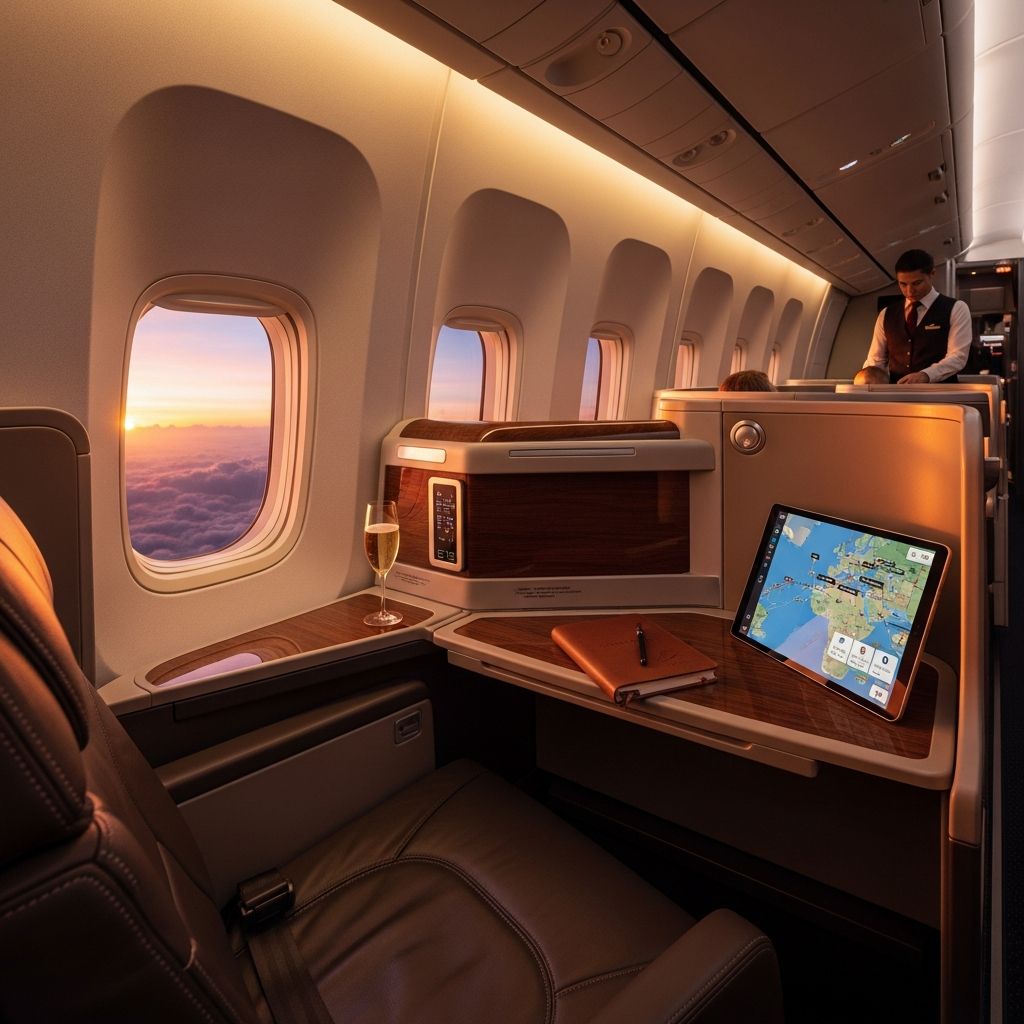
Aspiring premium travelers often view business and first class as unattainable luxuries reserved for those with unlimited budgets. However, savvy frequent flyers have discovered that airline miles represent a powerful currency when deployed strategically. Rather than accepting the standard redemption rates airlines offer, sophisticated travelers employ advanced techniques to stretch their mileage accounts significantly further, transforming modest point balances into premium cabin experiences across international routes.
Understanding the Foundation: Timing Your Premium Redemptions
The fundamental principle underlying successful premium flight bookings revolves around recognizing that airline pricing operates on complex algorithms influenced by demand patterns, booking windows, and seasonal variations. Booking early remains paramount when pursuing business class availability at reasonable mileage rates. Most airlines release premium cabin inventory gradually, with the lowest redemption rates typically appearing 2-3 months before departure, before climbing substantially as travel dates approach.
Conversely, last-minute opportunities occasionally emerge when airlines face unexpected capacity challenges or route-specific demand fluctuations. The key involves monitoring multiple channels simultaneously—airline websites, partnership programs, and specialized travel platforms—to identify these fleeting windows before they close.
Beyond early booking, understanding seasonal demand patterns provides crucial advantages. Travel during off-peak periods such as school holidays fundamentally alters premium seat availability and mileage requirements. When business travel typically slows during these windows, airlines struggle to fill premium cabins through standard channels, forcing them to release seats at discounted redemption rates to maintain cabin load factors.
Strategic Flexibility: The Multiplier Effect on Available Inventory
Premium seat inventory expands dramatically when travelers embrace flexibility across multiple dimensions. Rather than fixating on specific dates, using flexible search tools allows comparison across entire months, revealing which days within your target window feature significantly lower mileage requirements. This approach transforms what appears as limited availability into abundant options, often revealing 20-30% savings on premium redemption rates by shifting travel dates merely 2-3 days.
Day-of-week patterns demonstrate pronounced variations that remain consistent across airline networks. Mondays and Fridays represent peak business travel, creating artificial scarcity in premium cabins. Conversely, Tuesdays, Wednesdays, and Saturdays typically show superior availability and lower redemption rates, reflecting genuine demand imbalances that sophisticated travelers routinely exploit.
Geographic flexibility introduces another powerful dimension to mileage optimization strategies. Rather than departing from your home airport, considering alternative departure cities can unlock substantial savings. A business class round-trip ticket originating from a secondary European hub might cost 40% fewer miles than the identical routing from a major international gateway, simply reflecting different pricing dynamics across regional markets and competitive landscapes.
Advanced Booking Architectures: Reconstructing Your Journey
Sophisticated frequent flyers employ creative ticketing strategies that reconstruct journey components in ways that reduce total mileage requirements. One powerful approach involves nested ticketing, also known as back-to-back booking. This technique involves creating two separate round-trip reservations instead of booking a single itinerary. For travelers with minimum-stay requirements exceeding their actual travel duration—particularly on shorter trips lasting 5-6 days—this approach neutralizes those restrictions while maintaining identical flight segments.
The mechanics involve booking two overlapping round-trips: one outbound and returning before your actual return date, combined with another round-trip departing after your initial return. This construction satisfies minimum-stay rules associated with discounted premium fares while accommodating your true travel schedule, often resulting in 15-25% mileage reductions compared to standard point-to-point redemptions.
Related strategies include split-ticket approaches that break journeys into separate segments at advantageous connection points. Rather than booking a single premium redemption across multiple flight legs, identifying intermediate hubs where premium redemption rates decrease substantially allows travelers to book segments individually, capturing aggregate savings that compound across longer itineraries.
Positioning Flights: Accessing Superior Redemption Economics
One overlooked optimization technique involves deliberately positioning yourself in cities with superior business class redemption rates before beginning your actual journey. Consider a scenario where business class pricing from London to Hong Kong requires substantially more miles than identical cabin access from Amsterdam. Booking an inexpensive economy or premium economy flight from London to Amsterdam, followed by a business class redemption from Amsterdam, frequently costs fewer total miles than directly booking business class from your home airport.
This strategy requires careful mathematical evaluation, as positioning flight costs must not exceed projected mileage savings. However, when discrepancies between regional markets prove substantial—often reflecting currency valuations, competitive dynamics, or airline-specific corporate strategies—positioning flights provide genuine arbitrage opportunities that reduce overall program costs.
Cabin Class Optimization: Selective Premium Positioning
Not every flight segment warrants premium cabin redemptions. Sophisticated travelers strategically apply mileage to journeys where premium cabin value concentrates most effectively. On multi-leg international itineraries, distinguishing between short domestic connections and long-haul international segments enables intelligent allocation strategies.
Consider a Minneapolis-New York-Berlin routing. Economy cabin on the domestic leg provides similar comfort to business class given limited flight duration, but the transatlantic segment justifies premium investment. By reserving economy for shorter legs and business class exclusively for long-haul segments, travelers maximize subjective value while dramatically reducing total mileage requirements. Critically, booking these mixed-cabin itineraries under single reservations often unlocks superior pricing on premium segments compared to segmented reservations.
Upgrade Strategies: Converting Existing Inventory
An alternative approach to premium redemptions involves booking economy fares at discounted rates, then upgrading to business class using mileage. While seemingly counterintuitive, this approach frequently delivers superior value mathematics when executed strategically. Airlines typically charge fewer miles to upgrade existing reservations compared to direct business class bookings, reflecting different inventory allocation policies across booking channels.
Timing significantly influences upgrade availability and associated costs. Calling the airline’s preferred customer line immediately after booking economy fares allows early upgrade applications before extensive inventory depletion. Airlines seeking to maximize cabin revenue rather than force paid upgrades sometimes offer surprisingly favorable mileage-to-upgrade conversions when availability appears abundant.
Upgrade auctions represent another valuable channel, with airlines emailing qualified members 3-7 days before departure with fixed pricing on available premium seats. Rather than speculating on upgrade availability at check-in, these advance offers provide certainty while maintaining competitive positioning.
Corporate and Partnership Leverage
Many employers negotiate corporate discount agreements with airline partners, often including reduced mileage requirements on premium cabin redemptions. Few employees systematically explore their company’s travel partnerships, leaving substantial value unclaimed. Reviewing corporate travel policies and alliance agreements often reveals premium cabin mileage discounts ranging from 10-25% compared to standard frequent flyer pricing.
Premium credit cards offer complementary advantages, with select offerings providing periodic two-for-one promotions on business and first class tickets. Strategic credit card selection aligned with projected premium travel can substantially reduce out-of-pocket costs, particularly for premium cabin segments booked with cash rather than miles.
Specialized Booking Channels and Consolidators
Standard airline websites and mainstream booking engines represent only partial visibility into available inventory and pricing variations. Specialized business class consolidators maintain access to unpublished premium fares unavailable through conventional channels, often undercutting standard market rates by 20-50%. These specialists negotiate directly with airlines, capturing fares specifically designed for corporate travel agencies and consolidator partnerships.
Geographic arbitrage through consolidators reflects local economic conditions, currency valuations, and airline pricing strategies targeting specific markets. By accessing consolidator networks, individual travelers can capture pricing advantages traditionally reserved for corporate buyers and travel agencies.
Maximizing Status and Frequent Flyer Benefits
Airline status levels dramatically influence premium seat availability and redemption flexibility. Elite members receive early access to premium cabin inventory during booking, often before general member availability, capturing superior routing options and lower mileage requirements. Additionally, status members frequently qualify for mileage discounts on premium redemptions, with elite tiers offering 10-25% reductions compared to standard member rates.
Check-in timing influences premium seat allocation, with early check-in candidates receiving priority consideration when complimentary upgrades become available. Setting phone reminders to check in precisely when airline check-in systems open—typically 24 hours before departure—ensures optimal positioning for upgrade consideration relative to competing passengers.
Comparative Strategy Assessment
| Optimization Technique | Typical Savings | Complexity Level | Best Application |
|---|---|---|---|
| Flexible Date Selection | 15-25% | Low | Short to medium trips |
| Nested Ticketing | 15-25% | High | Short trips with minimum stay requirements |
| Positioning Flights | 20-40% | High | Long-haul international routes |
| Cabin Class Mixing | 25-35% | Medium | Multi-leg international itineraries |
| Upgrade Auctions | 30-50% | Low | Flexible travelers with airline status |
| Consolidator Access | 20-50% | Medium | Cash purchases from secondary markets |
Practical Implementation Framework
Successful premium flight optimization requires systematic evaluation rather than random strategy application. Begin by establishing clear parameters: target destinations, acceptable travel windows, total available mileage, and flexibility constraints. This foundation enables prioritization among competing techniques based on your specific situation.
For each prospective redemption, calculate total cost across multiple optimization scenarios: standard direct booking, flexible date searching, alternative departure city positioning, and cabin-mixing arrangements. Comparing these calculations reveals which approach maximizes value for your particular itinerary.
Maintain organized tracking of premium redemption opportunities, airline status information, and corporate travel partnerships. This consolidated view prevents overlooking valuable discounts embedded in complex corporate or credit card programs.
FAQ Section
How far in advance should I book premium cabin flights?
Optimal redemption rates typically appear 60-90 days before departure. However, monitoring continuously for dynamic pricing adjustments identifies occasional earlier opportunities when airlines release premium inventory.
Can nested ticketing create problems with my luggage or connections?
Nested ticketing involves separate reservations, so luggage typically requires rechecking at connection points, and missed connections create complications. This technique works best when connection cities serve as logical transfer points rather than forced connections.
What happens if my positioning flight is delayed?
Positioning flight delays that cause missed premium connections constitute significant risks. Build sufficient connection time into positioning strategies and consider travel insurance protecting against missed connections.
Do all airlines allow cabin class mixing on international itineraries?
Most major carriers permit mixed-cabin bookings under single reservations, but specific policies vary. Verify with your airline before constructing complex multi-cabin itineraries.
How do I access business class consolidator pricing?
Research consolidators specifically focusing on premium cabin bookings. Request formal quotations detailing ticket terms, change policies, and refund conditions before committing.
Conclusion: Strategic Integration for Maximum Value
Premium cabin access need not require overwhelming mileage expenditures when travelers deploy sophisticated optimization strategies systematically. Combining flexible scheduling, geographic arbitrage, advanced booking architectures, and specialized channel access creates compounding benefits that fundamentally transform premium travel economics. Success requires abandoning conventional booking approaches in favor of strategic analysis identifying which optimization techniques deliver maximum value for your specific travel patterns and accumulated mileage balances. By implementing these proven strategies, even modest frequent flyer accounts can access premium cabin experiences that previously seemed financially unattainable.
References
- Tips for booking the cheapest First & Business Class ticket — The Luxury Travel Expert. https://theluxurytravelexpert.com/tips-for-booking-the-cheapest-first-business-class-ticket/
- Advanced Booking Tricks for Cheap Business Class Flights — Premium Flights. https://premium-flights.com/advanced-booking-tricks-for-cheap-business-class-flights/
- How to Get Cheap Business Class Tickets (8 techniques) — Cook Travel. https://www.cooktravel.net/how-to-get-cheap-business-class-tickets-8-techniques/
- 5 expert tips for booking business class air tickets — Navan. https://navan.com/uk/blog/5-expert-tips-for-booking-business-class-tickets
- How to fly business class for cheap — Skyscanner US. https://www.skyscanner.com/tips-and-inspiration/how-to-find-the-cheapest-business-class-flights
- Fly in style: How to get cheap Business Class tickets — KAYAK. https://www.kayak.com/news/how-to-get-cheap-business-class-tickets/
Similar Articles








Read full bio of medha deb