Pre-Tax vs. After-Tax Investing Guide
Discover how pre-tax and after-tax strategies shape your retirement savings with tax advantages now or later.
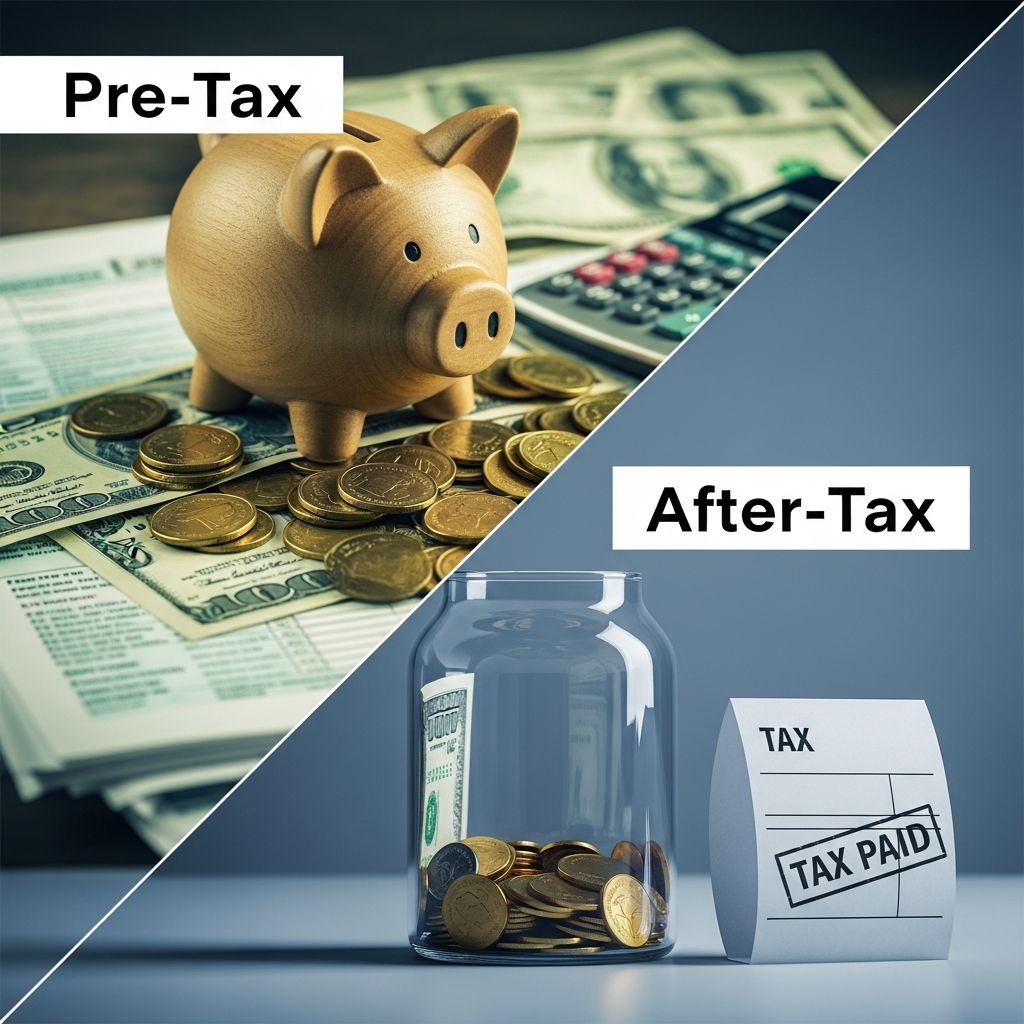
Choosing between pre-tax and after-tax investing fundamentally influences your retirement outcomes by determining when you pay taxes on your savings. Pre-tax options defer taxes until withdrawal, allowing larger initial investments, while after-tax approaches enable tax-free distributions later, potentially maximizing net returns based on your future tax situation.
Fundamentals of Pre-Tax Contributions
Pre-tax investing involves directing income into accounts before federal and state income taxes are withheld. This method lowers your current taxable income, providing immediate relief during peak earning years when tax rates are often highest.
For instance, contributions to traditional 401(k) plans or IRAs come directly from gross pay via payroll deductions. If you earn $100,000 annually and contribute $10,000 pre-tax, your taxable income drops to $90,000, saving you taxes at your marginal rate—potentially thousands of dollars upfront.
Key Advantages of Deferring Taxes
- Immediate Tax Reduction: Lowers adjusted gross income, easing current-year tax burdens especially for higher earners.
- Compounding on Larger Sums: More money invests initially since no upfront taxes reduce the principal.
- Employer Matching Incentives: Many plans match pre-tax contributions, amplifying savings without additional personal cost.
This approach shines when you anticipate a lower tax bracket in retirement compared to now, as deferred taxes are paid at potentially reduced rates.
Understanding After-Tax Investment Vehicles
After-tax investing uses money already taxed, such as from take-home pay deposited into Roth IRAs or taxable brokerage accounts. Taxes on contributions are settled upfront, but qualified withdrawals—including earnings—often escape further taxation.
Roth accounts, for example, require after-tax dollars but offer tax-exempt growth. Contributions can be withdrawn anytime penalty-free, providing flexibility, while earnings become accessible tax-free after age 59½ and a five-year holding period.
Benefits of Paying Taxes Early
- Tax-Free Withdrawals: Ideal for tax-free income streams in retirement, avoiding brackets pushed higher by required distributions.
- No RMDs for Roth IRAs: Unlike pre-tax accounts, no mandatory withdrawals at age 73, preserving wealth for heirs.
- Flexible Access: Brokerage accounts have no age restrictions or penalties, though gains face capital gains taxes.
This strategy excels if you expect higher taxes in retirement due to substantial nest eggs or rising rates.
Tax Bracket Dynamics: When Each Wins
Your current versus future tax bracket is pivotal. Pre-tax saves more if retirement taxes are lower; after-tax prevails if they’re higher.
| Scenario | Pre-Tax Outcome | After-Tax Outcome |
|---|---|---|
| Current 25% Bracket, Retirement 15% | $18,641 net after 10 years at 5% on $13,333 | $16,289 net |
| Current 15% Bracket, Retirement 25% | $14,373 net | $16,289 net |
These examples assume $10,000 effective investment, 5% annual return over 10 years. Pre-tax invests the full pre-tax amount, taxed on withdrawal; after-tax invests net amount with tax-free growth.
Account Types and Rules Breakdown
Popular Pre-Tax Options
- Traditional 401(k)/403(b): High limits ($23,000 in 2024, plus catch-up), employer matches, RMDs at 73.
- Traditional IRA: Deductible contributions up to $7,000, income limits apply.
Leading After-Tax Choices
- Roth IRA: $7,000 limit, income phase-outs, tax-free qualified withdrawals.
- Roth 401(k): Same limits as traditional, employer matches (often pre-tax), portable to Roth IRA.
- Taxable Brokerages: Unlimited contributions, long-term capital gains rates (0-20%), no withdrawal penalties.
Consider asset location: place tax-inefficient investments (bonds) in pre-tax accounts, tax-efficient ones (index funds) in after-tax.
Strategic Portfolio Diversification
Diversify across both types to hedge tax uncertainties. A mix mitigates risks like RMD tax spikes or contribution limit exhaustion.
Start with employer plans for matches, then fill Roth IRAs. High earners might prioritize Roth conversions in low-tax years. Model scenarios using rates of return, inflation, and bracket projections.
Penalties, Limits, and Long-Term Planning
Pre-tax early withdrawals before 59½ incur 10% penalties plus ordinary income taxes. After-tax offers more leniency but earnings may tax if rules unmet.
2024 limits: 401(k) $23,000 under 50, $30,500 with catch-up; IRAs $7,000/$8,000. Phase-outs apply for deductibility/eligibility.
Frequently Asked Questions
Which is better for most people?
It depends on tax trajectory. Pre-tax suits those expecting lower retirement brackets; after-tax for higher or tax-free goals.
Can I do both?
Yes, many plans offer both. Employer matches typically go pre-tax, boosting pre-tax balances.
What about Roth conversions?
Convert pre-tax to Roth paying taxes now, gaining tax-free future growth—strategic in low-income years.
How do capital gains factor in?
After-tax brokerages benefit from 0-20% long-term rates versus ordinary income (up to 37%) on pre-tax withdrawals.
Impact of employer matches?
Matches are usually pre-tax, making traditional contributions optimal to capture free money.
Investment Growth Projections
Assume 7% annual return over 30 years:
| Initial Investment | Pre-Tax (25% now/15% retire) | After-Tax (25% now/15% retire) |
|---|---|---|
| $10,000 effective | $761,226 gross → $647,042 net | $522,000 net (tax-free) |
Pre-tax wins here due to lower exit tax. Reverse brackets favor after-tax.
Integrate these into holistic planning: emergency funds first, then max tax-advantaged accounts, diversify holdings, consult advisors for personalized math.
References
- Understanding Pretax vs. After-Tax Investment Benefits — SmartAsset. 2023-10-15. https://smartasset.com/taxes/understanding-pre-tax-vs-after-tax-investment-benefits
- Pretax vs. After-Tax Investing: Which Is Better? — Experian. 2024-05-20. https://www.experian.com/blogs/ask-experian/pretax-vs-after-tax-investing/
- Pre-tax and after-tax retirement savings accounts — Protective Life. 2023-11-01. https://www.protective.com/learn/understanding-the-difference-between-pre-tax-and-after-tax
- Pre-tax vs. Roth (after-tax) contributions — Cook County Department of Corrections. 2024-02-10. https://www.cookcountydc.com/rsc-preauth/investing/pre-tax-vs-roth/
Similar Articles








Read full bio of medha deb