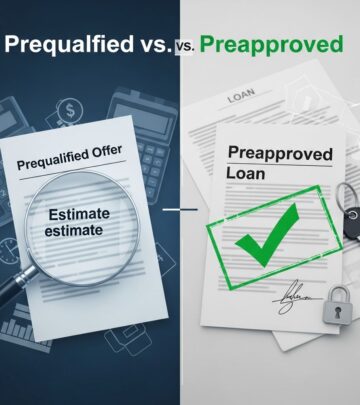
Pre-Qualified vs Pre-Approved: Key Differences
Understand the nuances between pre-qualified and pre-approved credit offers to make smarter borrowing decisions without risking your credit score.
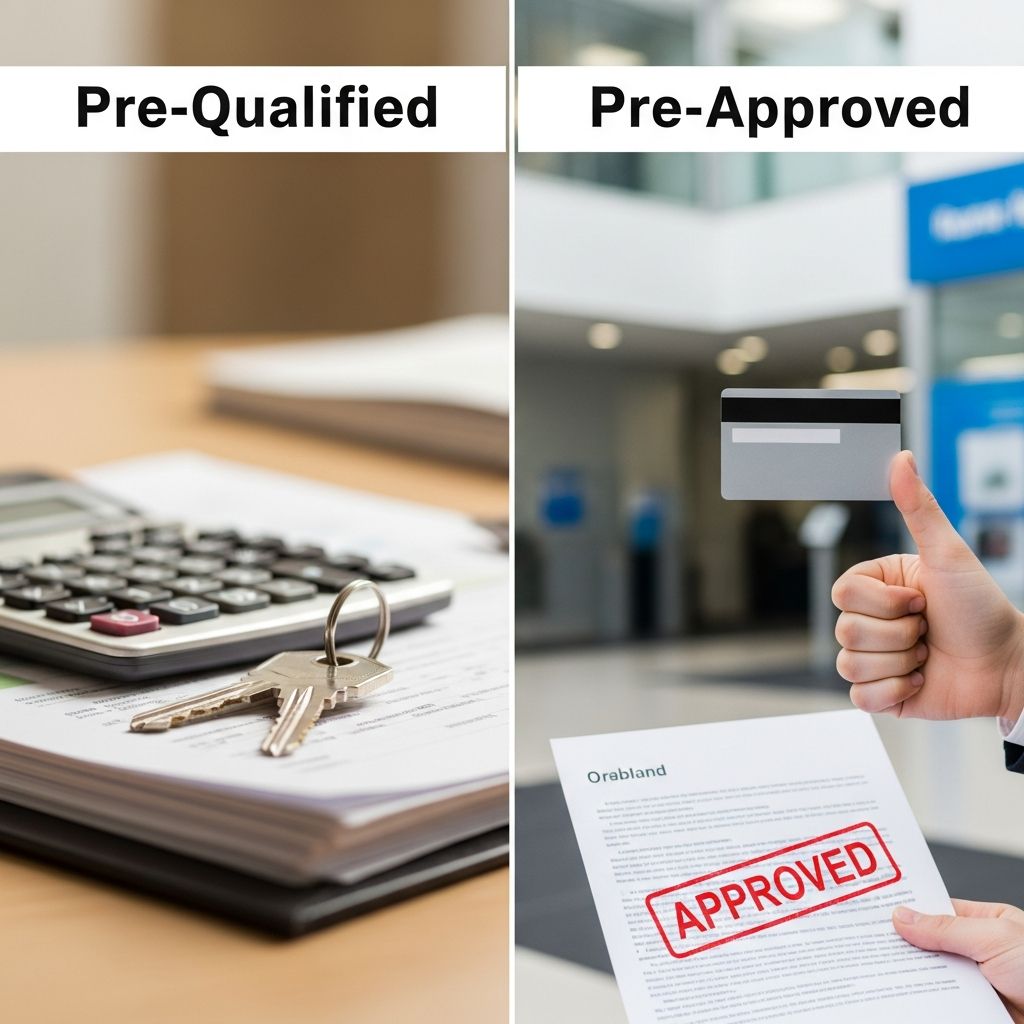
Navigating credit offers can be confusing, especially when terms like pre-qualified and pre-approved appear in mailers or online ads. These preliminary assessments help gauge your eligibility for credit cards, auto loans, or mortgages without committing to a full application. While often used interchangeably by lenders, they differ in process rigor, initiation, and reliability of approval odds. Pre-qualification typically involves a quick, soft check of basic info, while pre-approval signals a deeper review, often by the lender first.
Understanding Credit Pre-Qualification
Pre-qualification serves as an initial screening to estimate your fit for a product. You or the lender starts it by reviewing self-reported details like income, address, and partial SSN. A soft credit inquiry—visible only to you—checks your report without score impact.
This step gives a rough idea of potential terms, such as interest rates or limits, but lacks guarantees. For credit cards, issuers like Capital One use it to flag likely candidates via basic criteria. It’s ideal for shopping multiple options risk-free.
- Quick and user-initiated in many cases.
- No credit score ding from soft pulls.
- Basic info suffices; no deep docs needed.
- Less precise; final approval may vary.
Decoding Pre-Approval Offers
Pre-approval indicates the lender has proactively reviewed your profile, often pulling from credit bureaus using firm criteria. It’s common in mailed credit card offers or mortgage commitments. Though still using soft inquiries for cards, it implies higher approval confidence.
For instance, Discover notes pre-approval as more thorough, initiated by creditors screening broadly. If terms match upon application, lenders must honor them under regulations. However, full applications trigger hard inquiries and verifications.
- Lender-initiated, targeting pre-screened profiles.
- Stronger approval signal than pre-qual.
- Same soft inquiry protection for cards.
- May require SSN or income for confirmation.
Comparing Processes Across Products
Differences sharpen by product. Credit cards treat both lightly with soft checks, but loans diverge sharply.
| Aspect | Pre-Qualified | Pre-Approved |
|---|---|---|
| Credit Check | Soft inquiry (no score impact) | Soft for cards; hard for loans/mortgages |
| Documentation | Basic self-reported info | Full financials, tax returns |
| Initiation | Often consumer-driven | Lender-driven |
| Approval Odds | Estimate only | Higher confidence |
| Guarantee | None | None, but binding terms if matched |
For credit cards, both are preliminary; Citi explains issuers may swap terms, with pre-approval slightly more rigorous. Mortgages demand pre-approval: Zillow details full credit pulls, docs for a commitment letter specifying amounts and rates. Auto loans follow suit, per Horizon Credit Union.
Credit Score Implications
Neither hurts scores initially—soft inquiries don’t count against you. But applying does: hard pulls drop scores 5-10 points temporarily, lingering 1-2 years. Limit to 1-2 per shopping window (14-45 days) to minimize via scoring models.
Pre-qual tools on bank sites let you test multiple cards at once, aggregating pulls softly. Experian confirms this strategy preserves scores.
Strategic Use for Credit Cards
Spot offers via mail (“pre-approved”) or tools (pre-qual). Steps:
- Check eligibility without SSN if possible.
- Compare rates, rewards matching your spend.
- Apply to top 1-2; track hard pulls.
- Verify terms post-approval match offer.
Capital One advises pre-approval boosts confidence for applications. Avoid over-applying; space 3-6 months.
Navigating Loans and Mortgages
Mortgage pre-qual is casual chat-based; pre-approval needs pay stubs, W-2s, bank statements for verified letters. PNC emphasizes pre-approval’s reliability over self-reported pre-qual. Sellers favor it, locking rates amid volatility.
Auto loans mirror: pre-qual estimates payments; pre-approval sets firm amounts. Get multiple pre-approvals; negotiate dealer financing against them.
Common Pitfalls to Avoid
- Mistaking for Approval: Both need full apps.
- Ignoring Hard Pulls: Loans trigger them early.
- Overlooking Terms: Rates shift; confirm.
- Multiple Uncoordinated Apps: Tanks scores.
Shop within windows; use VantageScore/FICO simulators first.
Boosting Your Odds
Strong profiles shine: scores 670+, low utilization (<30%), stable income. Pay down debt; dispute errors via AnnualCreditReport.com. Time apps post-positive changes like raises.
FAQs
Does pre-qualification hurt my credit?
No, soft inquiries don’t affect scores.
Is pre-approved better than pre-qualified?
Often yes, more thorough review.
Can I get pre-approved without income docs?
For cards, yes; loans/mortgages, no.
How long is a pre-approval valid?
30-90 days; re-verify after.
Are mailed offers firm?
If terms match application, yes.
Final Thoughts on Smart Borrowing
Leverage pre-qual/pre-approval to shop efficiently. Prioritize pre-approval for big loans; use cards’ softness for testing. Track via free reports weekly (post-2022 rules). This approach maximizes approvals, minimizes score hits, and secures best terms.
References
- Pre-Qualified vs. Pre-Approved: Compared — Capital One. 2025. https://www.capitalone.com/learn-grow/money-management/credit-card-pre-approval-pre-qualification/
- Pre-Qualified vs. Pre-Approved: Learn the Differences — Discover. 2025. https://www.discover.com/credit-cards/card-smarts/prequalified-vs-preapproved-differences/
- Pre-Qualified vs. Pre-Approved: What’s the Difference? — Citi. 2025-12-19. https://www.citi.com/credit-cards/understanding-credit-cards/prequalified-vs-preapproved-credit-card
- Being Pre-Qualified vs. Being Pre-Approved — Horizon Credit Union. 2025. https://advice.hzcu.org/home-ownership/mortgage/article/being-pre-qualified-vs-being-pre-approved
- Prequalified vs. Preapproved: What’s the Difference? — Experian. 2025. https://www.experian.com/blogs/ask-experian/pre-approved-vs-pre-qualified-whats-the-difference/
Similar Articles








Read full bio of Sneha Tete