A Practical Guide to Building a CD Ladder
Learn how CD ladders work, how to build one, and when this savings strategy makes the most sense for your financial goals.

Certificates of deposit (CDs) can offer higher yields than many standard savings accounts, but they usually require locking up your money for a fixed term. A CD ladder is a strategy that helps you earn competitive CD rates while still keeping regular access to part of your savings.
This guide explains what a CD ladder is, how it works, how to build one step by step, and how to decide whether this approach fits your financial goals.
What Is a CD Ladder?
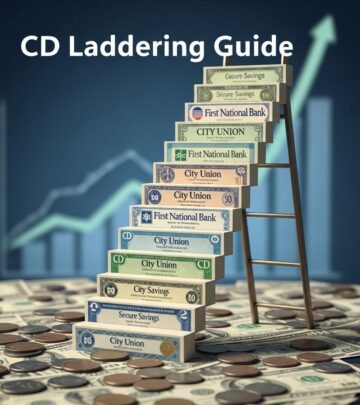
A CD ladder is a savings strategy in which you divide your money across multiple CDs that mature at different times instead of putting everything into a single CD with one maturity date. Each CD is like a “rung” on a ladder, and the staggered terms create a regular schedule when some of your money becomes available.
For example, instead of placing $10,000 into one 5-year CD, you might:
- Put $2,000 into a 1-year CD
- Put $2,000 into a 2-year CD
- Put $2,000 into a 3-year CD
- Put $2,000 into a 4-year CD
- Put $2,000 into a 5-year CD
Each year, one CD matures, and you can either cash out that portion or roll it into a new long-term CD to keep the ladder going.
Key Features of a CD Ladder
- Multiple CDs instead of one large CD
- Different maturities (for example, 1–5 years)
- Regular access to a portion of your funds as CDs mature
- Potentially higher yields by using longer-term CDs as part of the ladder
How CD Ladders Work
The basic idea is to start with several CDs that mature at scheduled intervals, then reinvest each maturing CD into a new long-term CD. Over time, the ladder shifts toward higher-yielding terms while still providing periodic liquidity.
Step-by-Step Example
Assume you have $5,000 and you build a simple 5-rung ladder:
- $1,000 in a 1-year CD
- $1,000 in a 2-year CD
- $1,000 in a 3-year CD
- $1,000 in a 4-year CD
- $1,000 in a 5-year CD
| Year | What Happens | Your Choices |
|---|---|---|
| Year 1 | 1-year CD matures | Withdraw funds or reinvest into a new 5-year CD |
| Year 2 | 2-year CD matures | Again, withdraw or roll into a new 5-year CD |
| Years 3–5 | Each year another CD matures | Continue the pattern of cashing out or reinvesting |
After five years, if you consistently roll maturing CDs into 5-year terms, all CDs in the ladder will be 5-year CDs, but one will still mature every year. This structure helps you capture the generally higher rates paid on longer-term CDs while maintaining periodic access to your money.
Why Ladders Can Boost Returns
Longer-term CDs often pay more than shorter-term CDs because you are committing to leave your money on deposit for a longer period. A ladder allows you to gradually shift more funds into those higher-yield CDs without giving up all flexibility.
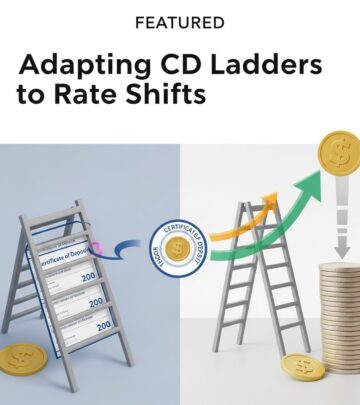
In a rising-rate environment, the staggered maturities also mean you can reinvest at potentially higher rates as each CD comes due.
Benefits of a CD Ladder
CD ladders are popular because they address a few common problems savers face: low yields, limited access to funds, and uncertainty about future interest rates.
1. Balance Between Yield and Liquidity
- Higher yields than standard savings accounts in many cases, because part of your money is in longer-term CDs.
- Regular access to cash when each rung matures, instead of having every dollar locked up for five years.
2. Protection and Predictability
- FDIC or NCUA insurance usually protects CD deposits up to applicable limits when held at insured banks or credit unions.
- Predictable returns because CDs offer fixed interest rates for the term, regardless of market swings.
3. Helps Manage Interest Rate Risk
- In rising rate environments, maturing CDs can be reinvested at higher yields.
- In falling rate environments, longer-term rungs may preserve higher rates you locked in earlier.
4. Encourages Disciplined Saving
- Funds are less tempting to spend because early withdrawals typically incur penalties.
- The structure supports planned goals like down payments, tuition, or other medium-term objectives.
Potential Drawbacks and Risks
CD ladders are not ideal for every situation. Before you build one, consider the trade-offs.
Limited Liquidity Between Maturities
- Accessing funds before a CD matures often triggers an early withdrawal penalty, which may reduce or even erase interest earned.
- For true emergencies, a regular savings or money market account is usually more appropriate.
Inflation Risk
- If inflation rises faster than CD yields, the real purchasing power of your returns may decline.
- CDs can be a conservative component of a portfolio, but they may not keep pace with long-term inflation by themselves.
Opportunity Cost
- Funds in CDs are not available for potentially higher-return investments, such as diversified stock or bond portfolios.
- This trade-off may be significant for long-term goals like retirement, especially for investors with higher risk tolerance.
How to Build a CD Ladder
Setting up a CD ladder involves several decisions about timing, amount, and the institutions you use. Here is a step-by-step overview.
1. Define Your Goal and Time Horizon
Start by clarifying why you are using a ladder. Common goals include:
- Saving for a home down payment in 3–5 years
- Funding college costs in a few years
- Setting aside money you do not want invested in the stock market
- Creating regular access to cash for future planned expenses
Your time horizon helps determine how many rungs you need and how long the longest CD should be.
2. Choose the Ladder Structure
Decide how many CDs you will open and the maturity schedule. Popular formats include:
- Short-term ladder: 3-month, 6-month, 9-month, and 12-month CDs for frequent access.
- Standard ladder: 1-, 2-, 3-, 4-, and 5-year CDs for a balance of yield and liquidity.
- Longer ladder: Multiple 5-year CDs opened at intervals for maximum yield focus.
Next, decide how to allocate funds:
- Equal allocation: Divide your total savings equally across each rung (for example, $20,000 into four CDs of $5,000 each).
- Weighted allocation: Place more money in longer-term CDs if you want to emphasize yield, or more in shorter terms if liquidity is more important.
3. Shop and Compare CD Rates
Different banks and credit unions may offer significantly different CD rates for the same terms. When shopping, compare:
- Annual percentage yield (APY) for each term
- Minimum deposit required to open the CD
- Early withdrawal penalties and policies
- Whether the institution is FDIC or NCUA insured
Check both large national institutions and smaller banks or credit unions, as rates can vary widely.
4. Open Your CDs and Track Maturities
Once you have determined terms and found competitive rates:
- Open each CD with the amount and term you selected.
- Record the maturity date and rate for each rung in a spreadsheet, budgeting app, or calendar.
- Set reminders a few weeks before each maturity date to decide whether you will reinvest or withdraw.
5. Decide What to Do at Each Maturity
As each CD matures, you generally have a brief grace period (often around 7–10 days) to make changes before it renews automatically.
- If you still have the same savings goal and do not need the cash, you can roll the funds into a new long-term CD (for example, another 5-year CD).
- If your needs have changed, you can withdraw some or all of the funds instead.
Types of CD Ladders
While the basic concept is always the same, you can adjust the ladder design based on how frequently you want access and how much risk you are willing to accept.
Traditional (1–5 Year) CD Ladder
This is the most common approach, using annual maturities from 1 through 5 years. It works well for savers who:
- Want higher yields than short-term cash accounts
- Can wait up to a year for the next maturity
- Have medium-term goals such as major purchases
Short-Term CD Ladder
Some savers prefer more frequent access. A short-term ladder may use maturities like 3, 6, 9, and 12 months.
- Provides access to a portion of your funds multiple times per year
- Useful when you anticipate near-term expenses
- Generally offers lower yields than ladders with longer terms
Long-Term or “Maximum Yield” Ladder
A yield-focused ladder might concentrate heavily on 3- to 5-year CDs, opening new ones as older CDs mature. This can be suitable if:
- You have strong emergency reserves elsewhere
- You do not expect to need the ladder funds soon
- You want to lock in higher rates for as long as possible
CD Ladder vs. Single CD vs. Savings Account
To understand the trade-offs, it helps to compare a ladder with putting all your money in a single CD or keeping everything in a high-yield savings account.
| Option | Main Advantage | Main Drawback |
|---|---|---|
| CD Ladder | Balances higher yields with scheduled access to funds | Less flexible than a savings account between maturities |
| Single Long-Term CD | May offer the highest rate on the entire balance | All funds are locked until maturity unless you pay penalties |
| High-Yield Savings | Full liquidity and variable rate that can rise with markets | Often lower yields than longer-term CDs, and rates can fall |
Is a CD Ladder Right for You?
CD ladders generally work best for savers with short- to medium-term goals who value stability more than maximum growth.
When a CD Ladder May Be a Good Fit
- You have cash you will not need for at least a year, and possibly longer.
- You want predictable returns and principal protection.
- You are uncomfortable with stock market volatility for this particular portion of your savings.
- You like the idea of scheduled access to funds without having everything locked into one maturity date.
When You Might Consider Other Options
- You do not have a separate emergency fund; you may need instant access to all your savings.
- Your primary goals are long-term (decades away), and you are comfortable with market risk; a diversified investment portfolio may be more appropriate.
- You prefer complete flexibility and are willing to accept lower, variable rates in a savings account.
Practical Tips for Managing a CD Ladder
- Keep records: Track each CD’s amount, term, rate, and maturity date so you do not miss your decision window.
- Review rates periodically: Before reinvesting, compare rates from several institutions to ensure your ladder remains competitive.
- Revisit your goals: As life changes, you may need to shorten or lengthen your ladder or redirect maturing funds.
- Stay within insurance limits: If you have large balances, consider spreading deposits across institutions to remain within FDIC or NCUA coverage caps.
Frequently Asked Questions (FAQs)
Q: How much money do I need to start a CD ladder?
A: You can start a CD ladder with relatively modest amounts, as long as you meet each institution’s minimum deposit requirement. Some banks and credit unions offer CDs with minimums as low as a few hundred dollars, while others may require $1,000 or more. What matters most is dividing your balance across the rungs in a way that fits your goals.
Q: Can I add new money to a CD ladder later?
A: Yes. You can expand your ladder by opening additional CDs or adding new rungs as you save more. Some people add new CDs at the longest term in their ladder each year, gradually increasing the total invested while keeping the maturity schedule intact.
Q: What happens if I need my money before a CD matures?
A: In most cases, you can access funds before maturity but will pay an early withdrawal penalty, typically forfeiting some interest. The exact penalty depends on the institution and the CD term. A ladder reduces the likelihood of needing early access, since some portion of your funds becomes available at each maturity.
Q: Are CD ladders safe?
A: CDs issued by FDIC-insured banks or NCUA-insured credit unions are generally considered very low-risk as long as you stay within insurance limits. The main risks involve inflation outpacing your yield and the opportunity cost of not investing in higher-risk, potentially higher-return assets.
Q: How often should I review my CD ladder?
A: At minimum, review your ladder as each CD approaches maturity so you can shop for new rates and reassess your goals. It is also wise to revisit your overall strategy annually or whenever there is a major change in interest rates, your financial situation, or your time horizon.
References
- What is a CD ladder and how can it make you money? — Old National Bank. 2025-01-02. https://www.oldnational.com/resources/insights/what-is-a-cd-ladder-and-how-can-it-make-you-money/
- CD Ladder: What It Is and How to Build One — Bankrate. 2024-08-16. https://www.bankrate.com/banking/cds/cd-ladder-guide/
- How To Build a CD Ladder: A Step-by-Step Guide — Core Bank. 2024-04-10. https://corebank.com/how-to-build-a-cd-ladder/
- The Beginner’s Guide to Building CD Ladders — Peoples Bank. 2023-11-06. https://www.peoples-ebank.com/about/blog/the-beginners-guide-to-building-cd-ladders
- How can I get the most out of my CD ladder? — Federal Deposit Insurance Corporation (FDIC Consumer News, archived for educational use). 2012-06-01. https://www.fdic.gov/resources/consumers/consumer-news/2012-06.html
Similar Articles








Read full bio of Sneha Tete