Practical Example Of A Budget That Really Works
Learn how to build a simple, realistic monthly budget with examples, tips, and FAQs you can start using immediately.

Creating a simple, realistic budget is one of the most effective ways to take control of your money and move toward your financial goals. A budget is not about restriction; it is a spending plan that tells your money where to go instead of wondering where it went.
In this guide, you will walk through a practical example of a monthly budget, see how to structure your own plan, and learn how to adapt it to your income, lifestyle, and goals using a popular framework: the 50/30/20 budget rule.
What Is A Budget And Why You Need One
A budget is a written or digital plan that matches your income with your expenses, savings, and debt payments over a set period, usually a month. It helps you make intentional decisions with your money instead of reacting to bills as they arrive.
According to the Consumer Financial Protection Bureau, building a budget gives you a clearer picture of where your money goes and helps you prioritize essential expenses and savings goals. Having this clarity is especially important when your income changes, when you are paying off debt, or when you are trying to build savings.
- Clarity: You see exactly how much comes in and where it goes.
- Control: You choose your spending instead of letting habits or impulses decide.
- Progress: You align daily decisions with long-term goals like debt freedom or retirement.
Research from the Federal Reserve shows that many households struggle with unexpected expenses, and even a few hundred dollars in emergency savings can make a difference in financial resilience. A budget is the tool that helps you free up money to build that cushion.
Step 1: Review Your Income
Start by writing down all sources of monthly income. This gives you the top number you will use to plan your spending. If your income varies (for example, from freelance work or side hustles), many experts recommend budgeting based on the lowest reliable estimate so you are not depending on uncertain money.
Common income sources include:
- Salary or wages from your main job (after taxes if you budget with take-home pay)
- Side hustle income
- Business income you pay yourself as a salary
- Benefits (for example, certain government benefits or stipends)
Example: Imagine your average monthly take-home income is:
- Main job: $3,000
- Side hustle: $500
Total monthly income: $3,500
Step 2: List Your Monthly Expenses
Next, list every monthly expense you can think of. Use bank statements, card statements, and receipts from the last 1–3 months to make this list as accurate as possible. The Bureau of Labor Statistics data on consumer expenditures shows that people often underestimate discretionary spending categories like dining out, entertainment, and small daily purchases. Capturing these is critical.
Group your expenses into broad categories:
- Housing: Rent or mortgage, property taxes (if not in mortgage), renter’s or homeowner’s insurance
- Utilities: Electricity, gas, water, trash, internet, phone
- Transportation: Car payment, fuel, public transit, insurance, maintenance
- Food: Groceries, dining out, coffee shops
- Debt payments: Credit cards, student loans, personal loans
- Insurance: Health, life, disability (if not deducted from paycheck)
- Personal & family: Childcare, school costs, clothing, personal care, subscriptions
- Fun & entertainment: Streaming, hobbies, travel, events
- Savings & investing: Emergency fund, sinking funds, brokerage or retirement contributions (if not taken directly from paycheck)
Do not worry yet about whether the totals are “good” or “bad.” At this stage, you are simply collecting information.
Step 3: Understand The 50/30/20 Budget Rule
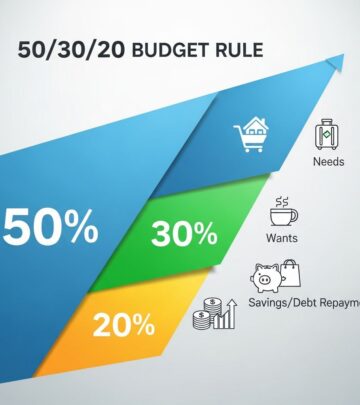
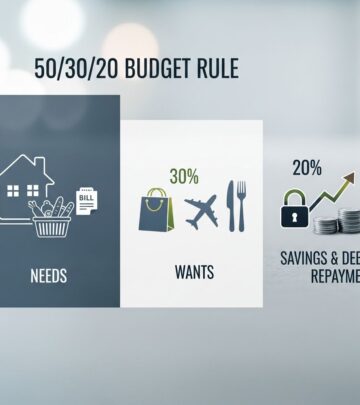
Once you know your income and expenses, you can apply the 50/30/20 budget rule. This popular guideline suggests dividing your after-tax income into three main categories:
- 50% for Needs – essential expenses you must pay to live and work
- 30% for Wants – non-essential but enjoyable spending
- 20% for Savings & Debt Repayment – building savings and paying down debt faster
According to the original framework popularized in consumer finance literature, the 50/30/20 rule is a starting point, not a strict law. You can adjust the percentages to fit your situation (for example, higher cost of living may push “needs” above 50%, or aggressive debt payoff may raise savings/debt to 30% or more).
What Counts As Needs?
Needs are expenses that are essential for basic living and safety. If you stopped paying them, you would quickly face serious consequences.
- Rent or mortgage
- Utilities (electricity, water, basic internet, heating/cooling)
- Groceries (basic food at home)
- Transportation to work or school
- Health insurance and medically necessary expenses
- Minimum debt payments (to avoid default)
On a $3,500 monthly income, 50% for needs would be:
Needs budget: 0.50 × $3,500 = $1,750
What Counts As Wants?
Wants are things that improve your quality of life but are not necessary for survival or basic functioning. You can reduce or pause them without immediate harm, even if it feels uncomfortable.
- Dining out and takeout
- Trips, vacations, and weekend getaways
- Gym memberships beyond basic fitness options
- Streaming services and entertainment subscriptions
- Hobbies and non-essential shopping (clothes beyond basics, gadgets, decor)
On a $3,500 income, 30% for wants would be:
Wants budget: 0.30 × $3,500 = $1,050
What Counts As Savings And Debt Repayment?
The savings and debt repayment category is where long-term progress happens. This includes money you set aside for future needs and money you use to pay down debt faster than required.
- Emergency fund contributions
- Retirement savings (IRAs, workplace plans, or other accounts if they are not already withheld from your paycheck)
- Extra payments on credit cards, student loans, or personal loans
- Sinking funds for future large expenses (car replacement, moving, wedding, etc.)
On a $3,500 income, 20% for savings and extra debt would be:
Savings & debt budget: 0.20 × $3,500 = $700
Step 4: A Sample Monthly Budget Breakdown
Below is an example of how a $3,500 monthly income could be divided using the 50/30/20 rule. This is only an illustration; you should adapt the numbers to your actual life and costs.
| Category | Subcategory | Amount (USD) | Notes |
|---|---|---|---|
| Needs (50% max) Target: up to $1,750 | Rent | $1,100 | One-bedroom apartment |
| Utilities (electric, water, internet) | $180 | Average of recent bills | |
| Groceries | $300 | Home cooking focus | |
| Transportation (gas/transit) | $120 | Commuting costs | |
| Insurance (health, renter’s share) | $50 | Portion not covered via payroll | |
| Minimum debt payments | $150 | Required card and loan minimums | |
| Wants (30% max) Target: up to $1,050 | Dining out & coffee | $250 | Restaurants, cafes |
| Streaming & entertainment | $80 | Subscriptions, movies | |
| Shopping & personal care | $200 | Clothes, beauty, haircuts | |
| Hobbies | $100 | Books, crafts, sports | |
| Travel fund | $200 | Sinking fund for future trips | |
| Savings & Debt (20%+) Target: at least $700 | Emergency fund | $250 | Building 3–6 months of expenses |
| Extra credit card payment | $250 | Above the minimum payment | |
| Retirement IRA contribution | $150 | Long-term investing | |
| Goal-specific savings | $50 | For a future car or class |
In this example, the total stays close to the 50/30/20 guideline while leaving some flexibility to adjust categories month to month.
Step 5: Balance And Adjust Your Budget
After you draft your budget, compare your planned spending to the 50/30/20 targets. If one category is much higher than the guideline, you can look for ways to adjust.
Use this quick checklist:
- Are your needs at or below 50%? If not, can you reduce housing, transportation, or other essentials over time?
- Are your wants crowding out savings? Could you temporarily cut back on dining out, subscriptions, or non-essential shopping?
- Are you putting at least 20% toward savings and debt payoff? If not, can you redirect some “wants” to this category?
If your fixed needs are very high relative to income (common in expensive cities), you may choose an adapted formula such as 60/20/20 or 70/20/10 for a time, while working on longer-term changes like moving, sharing housing, or increasing income.
Step 6: Turn Budgeting Into A Monthly Habit
A budget only works if you use it consistently. Financial educators often emphasize making budgeting a repeated routine rather than a one-time event. The goal is not perfection but staying aware and making small adjustments.
A simple monthly budgeting routine might look like this:
- At the start of the month: List expected income, assign amounts to each category based on your priorities and the 50/30/20 rule.
- Weekly check-ins: Spend 10–15 minutes comparing actual spending against your plan. Adjust the remaining weeks as necessary.
- End-of-month review: Look at what went well, where you overspent, and what you will change for next month.
Tracking can be done with a spreadsheet, a notebook, an app, or a printable budget worksheet. The best tool is the one you will actually use.
Tips To Customize This Budget Example To Your Life
Everyone’s financial situation is unique. Use this budget example as a template, then adapt it based on your priorities and constraints.
- Start with your goals: Decide what you want your money to do – pay off debt, build an emergency fund, save for a home, or increase retirement contributions. Allocate to these goals early in your plan.
- Be realistic: Underestimating categories like food or transportation leads to constant “budget failure.” Use real spending histories to make your estimates.
- Plan for irregular expenses: Create sinking funds for things like annual insurance premiums, holidays, and car maintenance. Divide the yearly cost by 12 and set aside that amount each month.
- Adjust with life changes: If your income changes or you reach a goal, revisit the percentages. For example, once high-interest debt is paid off, you can redirect those payments to savings or investing.
- Use automation: Automatic transfers to savings or extra debt payments can help you “pay yourself first” before money is spent elsewhere.
Frequently Asked Questions (FAQs)
Q: Is the 50/30/20 budget rule right for everyone?
A: No single rule works for every person or every life stage. The 50/30/20 rule is a helpful starting benchmark, especially when you are new to budgeting. If your cost of living is high or your income is low, needs may exceed 50%. In that case, you can temporarily shift the percentages while still aiming to protect some money for savings and debt payoff.
Q: Should I budget with my gross income or my take-home pay?
A: Most people find it easier to budget with take-home pay, meaning the money that actually arrives in your bank account after taxes and mandatory deductions. If you have retirement contributions or health insurance premiums deducted before you are paid, you can either treat those as part of your savings and needs or simply budget based on the net amount you receive.
Q: How often should I change my budget?
A: Your categories and percentages provide a core structure, but the exact numbers will likely change every month. Adjust for upcoming events, travel, or irregular bills. A monthly review lets you refine your plan without starting from scratch each time.
Q: What if I am in debt and cannot reach 20% savings and extra payments yet?
A: If money is tight, start smaller. Even a small amount toward savings or extra debt each month matters, and research on household finances shows that having even a modest emergency fund can reduce financial stress and the likelihood of missed payments. Over time, look for ways to reduce expenses or increase income so you can raise this percentage.
Q: Do I need special apps to follow this budget example?
A: No. You can use a spreadsheet, paper planner, or a simple digital note. Apps can be convenient, but what matters most is consistency. Choose a method that fits your habits and is easy to update.
References
- Track your spending — Consumer Financial Protection Bureau. 2023-01-10. https://www.consumerfinance.gov/consumer-tools/budgeting/track-your-spending/
- Report on the Economic Well-Being of U.S. Households in 2023 — Board of Governors of the Federal Reserve System. 2024-05-21. https://www.federalreserve.gov/publications/2024-economic-well-being-of-us-households-in-2023-budgeting-and-planning.htm
- Consumer Expenditures in 2023 — U.S. Bureau of Labor Statistics. 2024-09-10. https://www.bls.gov/news.release/cesan.nr0.htm
- Why you need a budget — Consumer Financial Protection Bureau. 2022-06-15. https://www.consumerfinance.gov/consumer-tools/budgeting/why-you-need-a-budget/
Similar Articles








Read full bio of medha deb