Timeline for Post-Graduation Job Applications
Master the optimal timing strategy for launching your professional career after graduation.
Transitioning from academic life to professional employment represents one of the most significant decisions in a student’s career journey. The timing of when you begin your job search can substantially influence your prospects for securing meaningful employment that aligns with your professional objectives. Rather than waiting until after graduation ceremonies conclude, strategic planning months in advance positions you to compete effectively in the job market and potentially start your career with minimal gaps between education and employment.
Understanding the Critical Window for Job Search Initiation
The decision about when to launch your job search requires understanding both employer hiring cycles and your own readiness level. Most career advisors and recruitment professionals recommend beginning your formal job applications three to six months before your anticipated graduation date. This timeframe provides sufficient opportunity to research potential employers, refine your application materials, and participate in interviews while you maintain your academic commitments.
However, the specific timeline can vary significantly depending on several factors including your field of study, industry sector, geographic location, and the types of positions you’re targeting. Technology companies, financial institutions, and large corporations frequently initiate recruitment cycles earlier than smaller organizations or nonprofit sectors. Understanding these industry-specific patterns allows you to align your job search efforts with when employers are actively seeking talent.
Starting your search during this optimal window ensures you’re not competing solely against your graduating class but rather positioning yourself among the first candidates employers encounter during their recruitment season. This early positioning increases your likelihood of securing interviews and receiving offers before your peers who delay their applications until after graduation.
The Strategic Advantage of Early Preparation
Beginning your job search months in advance offers multiple advantages beyond simply applying for positions earlier. This extended timeline allows you to:
- Conduct thorough research into companies, organizational cultures, and industry trends without time pressure
- Develop a comprehensive list of target organizations that genuinely align with your career aspirations and values
- Craft tailored application materials for each position rather than submitting generic documents
- Build meaningful professional connections through networking events, LinkedIn outreach, and informational interviews
- Practice and refine your interview technique through multiple conversations with hiring managers
- Request strong recommendation letters from professors and mentors while they clearly remember your work
Research indicates that networking accounts for approximately 70 percent of successful entry-level placements. An extended job search timeline provides ample opportunity to develop these critical professional relationships before positions are formally filled. Students who begin networking during their final semesters gain substantial advantages through relationship-building that translates directly into job leads and interview opportunities.
Tailoring Your Timeline by Academic Calendar
Your specific graduation timeline influences when you should initiate your job search. Consider these scenarios based on when your graduation occurs:
Spring and Summer Graduations
If you’re graduating in spring or summer, begin your formal job search during the preceding fall or winter months. This positions you to apply for positions when many organizations launch their annual recruitment initiatives. Several large employers and leadership development programs have application deadlines in December, making autumn and early winter critical application periods for spring graduates.
Fall and Winter Graduations
For those graduating in fall or winter, initiate your job search during the preceding spring or early summer. This timing aligns with mid-year recruitment cycles and allows you to complete the hiring process while still in school, enabling immediate employment transitions upon graduation.
Summer Employment and Internships
If you’re seeking summer positions, begin your search as early as January through March to alert potential employers to your availability. This early notification helps employers plan their summer staffing and increases your chances of securing competitive positions.
Month-by-Month Strategic Action Plan
Breaking your job search into monthly milestones creates manageable goals and ensures consistent progress toward employment:
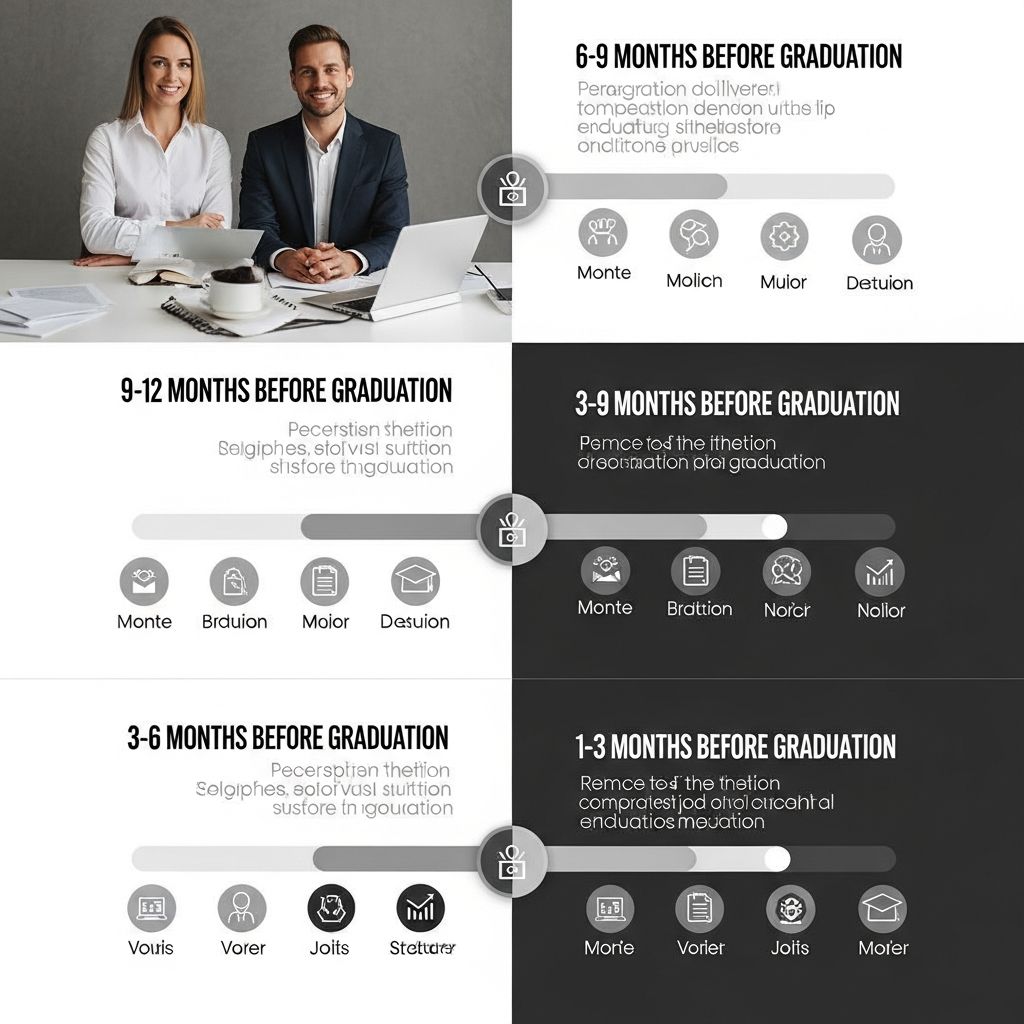
August and September: Foundation Building
Begin by assessing your skills, accomplishments, and career objectives. Identify 15-20 companies where you’d like to work. Update your resume to reflect recent achievements, projects, and developing expertise. Optimize your LinkedIn profile with a professional photo, compelling headline, and comprehensive summary. Set specific, measurable job search goals such as targeting 5-10 applications per week or attending two career fairs.
October: Research and Networking Initiation
Deep dive into research about your target organizations. Attend fall career fairs to meet recruiters face-to-face and learn about positions directly from hiring managers. Connect with college alumni working at companies you’re interested in joining. Schedule 2-3 informational interviews with professionals in your desired field to gain insights into daily responsibilities and organizational cultures.
November: Application Materials Refinement
Develop a master cover letter template that you can customize for each application. Create a professional portfolio showcasing your best work, projects, and achievements. Document success stories highlighting specific problems you’ve solved and measurable results you’ve achieved. These stories become valuable during interviews when explaining your qualifications and potential contributions.
December: Strategic Application Submissions
This is peak season for applying to leadership development programs, government positions, and roles at large technology companies and financial institutions. Submit applications to positions with upcoming deadlines. Follow up with career fair connections to express continued interest. Practice common interview questions and refine your responses.
January and Beyond: Sustained Momentum
Implement weekly application targets to maintain consistent effort. Create a tracking system documenting where you’ve applied, submission dates, and follow-up activities. Expand your network to second-degree LinkedIn connections. Attend winter and spring career events. Conduct interviews with multiple employers to gain experience and increase your chances of receiving offers.
Industry-Specific Recruitment Timing
Different industries operate on distinct recruitment schedules that influence your application timeline:
| Industry Sector | Primary Recruitment Period | Recommended Application Window |
|---|---|---|
| Technology and Software | Fall and Winter | August through December |
| Financial Services | Fall and Winter | September through January |
| Government and Public Sector | Fall and Winter | October through December |
| Healthcare and Pharmaceuticals | Spring and Fall | June-August and September-November |
| Consulting Firms | Fall and Winter | September through December |
| Nonprofit and Education | Spring through Fall | Year-round with peaks in Spring and Summer |
| Retail and Hospitality | Summer and Holiday Season | Spring for summer; August for holiday |
Maximizing Your Final Semester While Job Searching
Your senior year or final academic period is inherently busy with completing degree requirements, attending final classes, and preparing for graduation ceremonies. Balancing these obligations with an active job search requires strategic time management:
Dedicate specific blocks of time to job search activities rather than attempting sporadic efforts. Many successful graduates allocate 5-10 hours weekly to applications, networking, and interview preparation while maintaining their academic commitments. Use technology to streamline your efforts—set up job alerts from career boards, create calendar reminders for application deadlines, and use scheduling tools to coordinate networking conversations.
Leverage your existing academic connections and experiences. Professors who’ve taught you in your major can provide detailed recommendation letters demonstrating your expertise and work ethic. If you’ve completed internships, use those experiences as bridges into permanent positions—many interns receive offers from their summer employers for post-graduation roles.
Understanding Employer Expectations for Recent Graduates
Most employers recruiting for entry-level positions understand that candidates are completing their degrees. Many positions are specifically designed for recent graduates and don’t require you to have started before graduation. Employers often provide flexible start dates, allowing you to complete your final exams and participate in graduation ceremonies before beginning employment.
When interviewing or negotiating offers, don’t hesitate to discuss your graduation timeline. Professional employers anticipate this and structure their hiring processes accordingly. Some positions offer delayed start dates specifically for new graduates, while others expect you to begin work immediately. Understanding these expectations helps you evaluate whether positions align with your needs.
Frequently Asked Questions About Graduation Job Timelines
Is three months before graduation too early to start applying?
Three months represents the minimum recommended timeline but isn’t excessive. Many positions open during this period, and starting this early gives you competitive advantage. Earlier application provides additional time for interviews before graduation.
Can I start my job search while still completing my final courses?
Absolutely. Most graduates successfully balance final coursework with job searching. The key is allocating dedicated time and maintaining organized systems to track applications and interviews without letting either responsibility suffer.
What if I don’t receive offers during my final semester?
Many graduates receive offers after graduation. Continuing your search post-graduation is perfectly normal. Having already completed months of preparation and networking means you’ll be positioned for positions opening after graduation with minimal ramp-up time.
Should I apply to positions requiring experience I haven’t gained yet?
Entry-level positions are designed for recent graduates without extensive work experience. Your education, internships, and relevant projects demonstrate capability. Apply to positions where you meet the core qualifications rather than dismissing yourself prematurely.
How important is networking compared to online applications?
Networking is significantly more impactful for entry-level placement. Direct connections often bypass formal application processes and provide valuable insights into companies. Combine online applications with active networking for comprehensive coverage of opportunities.
Key Takeaways for Your Job Search Timeline
- Begin your job search 3-6 months before graduation to align with most employer recruitment cycles and maximize opportunities
- Start preparation even earlier—9 months before graduation allows time for comprehensive preparation without rushing
- Tailor your timeline to your graduation date, launching your search during the recruitment season preceding your graduation
- Prioritize networking alongside applications, as personal connections account for the majority of successful placements
- Use your final semester strategically, balancing job search with academic commitments through organized time management
- Customize applications for each position, increasing your interview chances significantly compared to generic submissions
- Research industry-specific recruitment patterns to time applications for when employers are actively hiring in your field
- Maintain momentum throughout the process, understanding that most successful offers come 1-2 months before graduation through consistent effort
Moving Forward With Confidence
Your job search timeline represents an investment in your professional future. By beginning three to six months before graduation and following a strategic, organized approach, you position yourself to secure meaningful employment that launches your career on your terms. The process requires dedication, but the return—securing employment before graduation and starting your professional journey with minimal gaps—justifies the effort invested during your final academic year.
References
- When Should I Start Applying for Jobs? (FAQ Guide) — Indeed Career Advice. 2024. https://www.indeed.com/career-advice/finding-a-job/when-should-i-start-applying-for-jobs
- When is the best time to start looking for jobs for after graduation? — CareerVillage.org. 2024. https://www.careervillage.org/questions/40241/when-is-the-best-time-to-start-looking-for-jobs-for-after-graduation
- When to Start Applying for Jobs Senior Year of College — Honor Society. June 2023. https://www.honorsociety.org/articles/when-start-applying-jobs-senior-year-college
- When to Start Your Job Search: Advice for College Seniors — Barton Associates Careers. 2024. https://www.bartonassociates.com/careers/blog/when-to-start-your-job-search-college-seniors/
- The Ultimate New Graduate Job Search Timeline — The Interview Guys. 2024. https://blog.theinterviewguys.com/the-ultimate-new-graduate-job-search-timeline/
Similar Articles








Read full bio of Sneha Tete