The Positive And Negative Effects Of Inflation
Understand how inflation hurts and helps your money, and learn practical ways to protect your budget and build wealth.
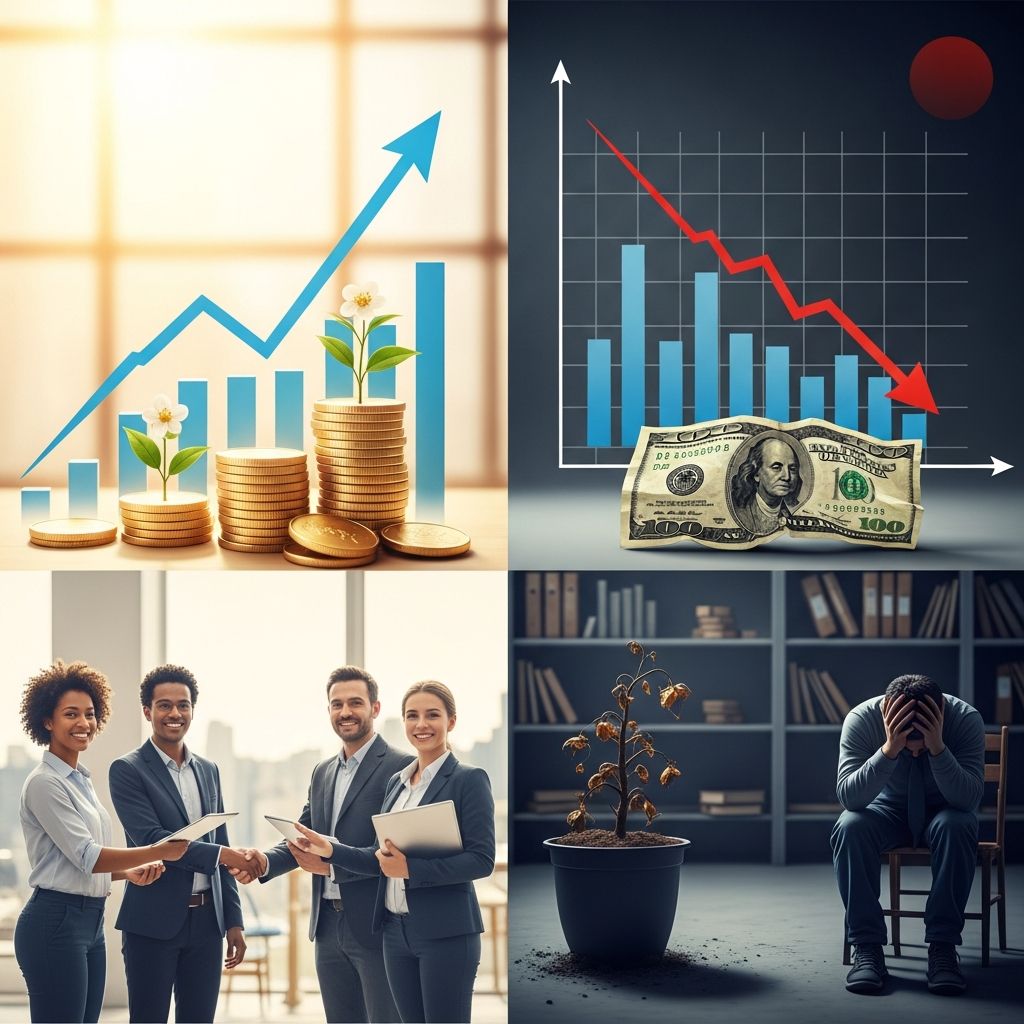
Inflation is one of the most important forces shaping your money life. When prices rise across the economy, every dollar you earn buys a bit less than before. At the same time, moderate inflation can help rebalance the economy and even create opportunities to build wealth if you understand how it works.
This guide explains the positive and negative effects of inflation, how inflation is measured, and how it affects your daily spending, savings, debt, and long-term financial goals. You will also learn practical ways to adapt your budget and money strategy so you can work with inflation instead of against it.
What is inflation and why does it matter?
Inflation is the general increase in prices of goods and services over time. When inflation is positive, the same amount of money buys fewer goods and services than it did before. Economists often describe this as a loss of purchasing power.
Central banks, like the U.S. Federal Reserve, typically aim for a low and stable inflation rate, often around 2% per year in advanced economies. At that level, prices rise slowly enough that households and businesses can plan, while the economy keeps growing.
High or unpredictable inflation, however, creates uncertainty, squeezes household budgets, and can slow economic growth.
How does inflation impact daily life and how is it measured?
You experience inflation every time you notice your groceries, rent, or gas getting more expensive, even though your habits have not changed. Over time, these changes add up and can transform your day-to-day financial reality.
How inflation is measured: the Consumer Price Index (CPI)
In many countries, including the United States, one of the main tools used to measure inflation is the Consumer Price Index (CPI). The CPI tracks the average change over time in the prices paid by consumers for a fixed “basket” of goods and services, such as food, housing, clothing, transportation, and medical care.
- The CPI basket is designed to reflect typical household spending patterns.
- Prices for the items in the basket are collected regularly from many locations.
- The data is combined to calculate how much the overall cost of the basket has changed.
The percentage change in the CPI over a given period (usually 12 months) is commonly referred to as the inflation rate.
Average inflation rate vs. individual prices
When you hear that the inflation rate is, for example, 8%, that does not mean every price has increased exactly 8%. The CPI is an average, so:
- Some prices may rise much faster than the average (e.g., certain foods, used cars, or rent).
- Other prices may rise more slowly, stay flat, or even fall.
- Your personal “inflation rate” depends on what you spend most of your money on.
| Aspect | What it means for you |
|---|---|
| Headline CPI inflation | Average price change across a broad basket of goods and services. |
| Your personal inflation | Depends on your specific spending (for example, heavy rent or fuel expenses). |
| Core inflation | Inflation excluding volatile food and energy prices, used for long-term trends. |
The negative effects of inflation
Most people feel the downsides of inflation first. Rising prices make it harder to cover essentials, and borrowing tends to become more expensive. Here are the main negative effects you are likely to notice.
1. Loans get more expensive
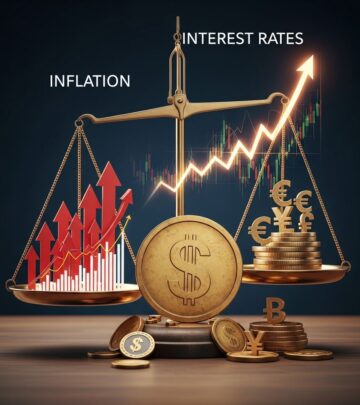
When inflation rises, interest rates on new loans often rise as well. Central banks typically respond to high inflation by raising policy interest rates to slow demand and bring inflation back down.
As a result:
- New borrowing becomes more expensive. Mortgages, car loans, and personal loans carry higher interest rates.
- Variable-rate debt (like some adjustable-rate mortgages or lines of credit) can see monthly payments increase.
- Businesses may delay or cancel new investments because financing costs are higher.
For households, higher interest rates mean that buying a home or refinancing debt can cost significantly more over the life of the loan.
2. Wages and salaries may not keep up
Another negative effect of inflation is when wage growth lags behind price increases. If your income does not rise at least as fast as inflation, your real (inflation-adjusted) income falls.
This can show up in several ways:
- Annual raises that are smaller than the inflation rate.
- No cost-of-living adjustments (COLAs), especially in smaller companies.
- Bonuses or variable pay that do not fully offset rising costs.
The effect on your finances is similar to getting an invisible pay cut: your paycheck is the same on paper, but it buys less food, less fuel, and covers fewer bills each month.
3. The cost of essentials rises (rent, food, gas, etc.)
The most visible negative effect of inflation is the rising cost of necessities. Items like rent, groceries, utilities, and transportation usually make up the largest share of a household budget, so even modest price increases can strain your finances.
You may notice that:
- Rent or housing payments rise when leases renew.
- Grocery bills increase even if you buy the same items.
- Gas and electricity bills creep up, especially during extreme weather months.
- Public transportation or commuting costs rise due to higher fuel prices.
Because these are non-negotiable expenses, you have less money left over for saving, investing, or discretionary spending.
4. Savings can lose purchasing power
If inflation is higher than the interest rate you earn on your savings, the real value of your savings declines over time. For example, if your savings account pays 2% interest but inflation is 5%, your money grows in nominal terms but loses purchasing power in real terms.
This is especially important for:
- Emergency funds kept in low-yield accounts.
- Short-term savings for goals like a car, vacation, or down payment.
- Retirees who hold large cash balances.
5. Small businesses may struggle
Inflation can be particularly challenging for small businesses that lack the pricing power and financial buffers of larger companies. Their input costs (materials, wages, shipping) may rise faster than they can raise prices for customers, squeezing profit margins.
- Businesses may face higher borrowing costs for working capital or expansion.
- Uncertainty about future costs can make planning and investing more difficult.
- Some may cut jobs, hours, or services to stay afloat.
The positive effects of inflation
Although inflation has many drawbacks, there are also potential benefits at both the macroeconomic and personal levels. Understanding these can help you find opportunities even in challenging times.
1. Your existing debt becomes a better deal
One of the most important positive effects of inflation is that it can erode the real burden of fixed-rate debt. When your income eventually rises but your loan payment stays the same in nominal terms, you are effectively repaying your debt with “cheaper” dollars.
This is most helpful if you have:
- Fixed-rate mortgages locked in before interest rates jumped.
- Fixed-rate student loans or personal loans.
- Long-term debt with predictable monthly payments.
As long as your wage growth eventually catches up, the share of your income needed to cover those fixed payments can shrink over time.
2. Interest rates on savings accounts can increase
When central banks raise policy rates to fight inflation, financial institutions often increase the interest they pay on savings accounts, certificates of deposit (CDs), and money market accounts as well.
While savings rates do not always match inflation, higher rates can still help you:
- Earn more interest on your emergency fund.
- Grow short-term savings faster than during low-rate periods.
- Benefit from high-yield savings or short-term government securities.
Actively shopping around for better rates can be particularly rewarding when inflation and interest rates are elevated.
3. Unemployment can be lower when inflation is moderate
In the short run, there is often a trade-off between inflation and unemployment. Research on the so-called Phillips curve suggests that, at times, lower unemployment can be associated with somewhat higher inflation, especially when the economy is running near full capacity.
In practical terms:
- Strong demand for workers can reduce unemployment.
- More job openings may give workers leverage to negotiate pay and benefits.
- Households might find it easier to change jobs or industries.
While this relationship is not fixed and can shift over time, periods of growth with moderate inflation often coincide with relatively healthy labor markets.
4. Asset prices and investments may rise
Inflation can be good news for certain types of assets and investments. Over long periods, many real assets tend to rise in nominal value, sometimes outpacing inflation.
Examples include:
- Real estate: Property values and rents can increase with price levels.
- Stocks: Companies may pass higher costs on to consumers and grow revenues, supporting higher share prices over the long term.
- Inflation-linked bonds: Certain government securities adjust principal or interest payments with inflation indexes.
Investors who hold diversified portfolios often use these assets to help preserve or grow purchasing power during inflationary periods.
Expert tip: Make inflation work for you
Inflation is largely outside your control, but your response is not. The key is to adjust your financial strategy so that you protect your essentials while taking advantage of higher rates and investment opportunities where possible.
Practical strategies for dealing with inflation
- Review and rebalance your budget: Track where your money is going and prioritize essentials. Look for ways to reduce discretionary spending and negotiate recurring bills.
- Increase your income: Consider negotiating a raise, upskilling for a higher-paying role, freelancing, or adding a side income stream.
- Pay down high-interest debt: Focus on credit cards and other high-rate loans that can become even more expensive as rates rise.
- Take advantage of higher savings rates: Move idle cash into competitive high-yield accounts or short-term, low-risk instruments.
- Invest for the long term: Use a diversified investment strategy to help outpace inflation over time, aligned with your risk tolerance and goals.
Frequently Asked Questions (FAQs)
Q: What negative effects of inflation will I notice immediately?
The first negative effects most people notice are higher prices for everyday goods and services, such as food, rent, transportation, and utilities. Your regular shopping trips and monthly bills become more expensive, even if your habits stay the same. If your income has not increased, your budget may feel tighter almost right away.
Q: What are the biggest negatives of inflation overall?
The biggest negatives of inflation are the loss of purchasing power and the pressure it puts on household finances. Prices for essentials rise while wages may lag, loans become more expensive, and savings can lose real value if returns do not keep up with inflation. Small businesses can also struggle with higher costs and uncertain demand.
Q: Can inflation ever be a good thing?
Yes. Moderate inflation can be healthy for the economy. It is associated with growing demand, can help reduce the real burden of fixed-rate debt over time, and often coincides with lower unemployment. Higher interest rates during inflationary periods can also benefit savers and some investors, especially those with diversified portfolios.
Q: How can I protect my money from inflation?
To protect your money from inflation, focus on a few key steps: strengthen your budget, prioritize paying off high-interest debt, use high-yield savings for your cash, and invest for the long term in a diversified mix of assets that have historically outpaced inflation. Consider seeking personalized guidance from a qualified financial professional as needed.
Q: Does inflation affect everyone the same way?
No. Inflation affects people differently depending on their income, spending patterns, savings, debt types, and location. For example, someone who spends a large share of their income on rent and food may feel more pressure than someone who owns a home with a fixed mortgage and benefits from rising asset prices. Understanding your personal situation is crucial.
References
- How does inflation impact your savings? — U.S. Bureau of Labor Statistics & Board of Governors of the Federal Reserve System (synthesis of official materials summarised in educational content). Accessed 2024-2025. https://www.federalreserve.gov/education.htm
- Why does inflation matter? — International Monetary Fund. 2022-04-28. https://www.imf.org/en/Blogs/Articles/2022/04/28/why-does-inflation-matter
- Consumer Price Index: Frequently Asked Questions — U.S. Bureau of Labor Statistics. Updated 2023-09-29. https://www.bls.gov/cpi/questions-and-answers.htm
- Monetary Policy and the Federal Reserve: Current Policy and Issues — Congressional Research Service. 2023-01-06. https://crsreports.congress.gov/product/pdf/R/R46411
- Inflation and Savings — Federal Deposit Insurance Corporation (FDIC) Consumer News. 2022-11-01. https://www.fdic.gov/resources/consumers/consumer-news/2022-11.html
Similar Articles








Read full bio of medha deb