POS Fees Definition: Understanding Point of Sale Charges
Complete guide to POS fees: Learn how point-of-sale transaction charges work and impact your business.
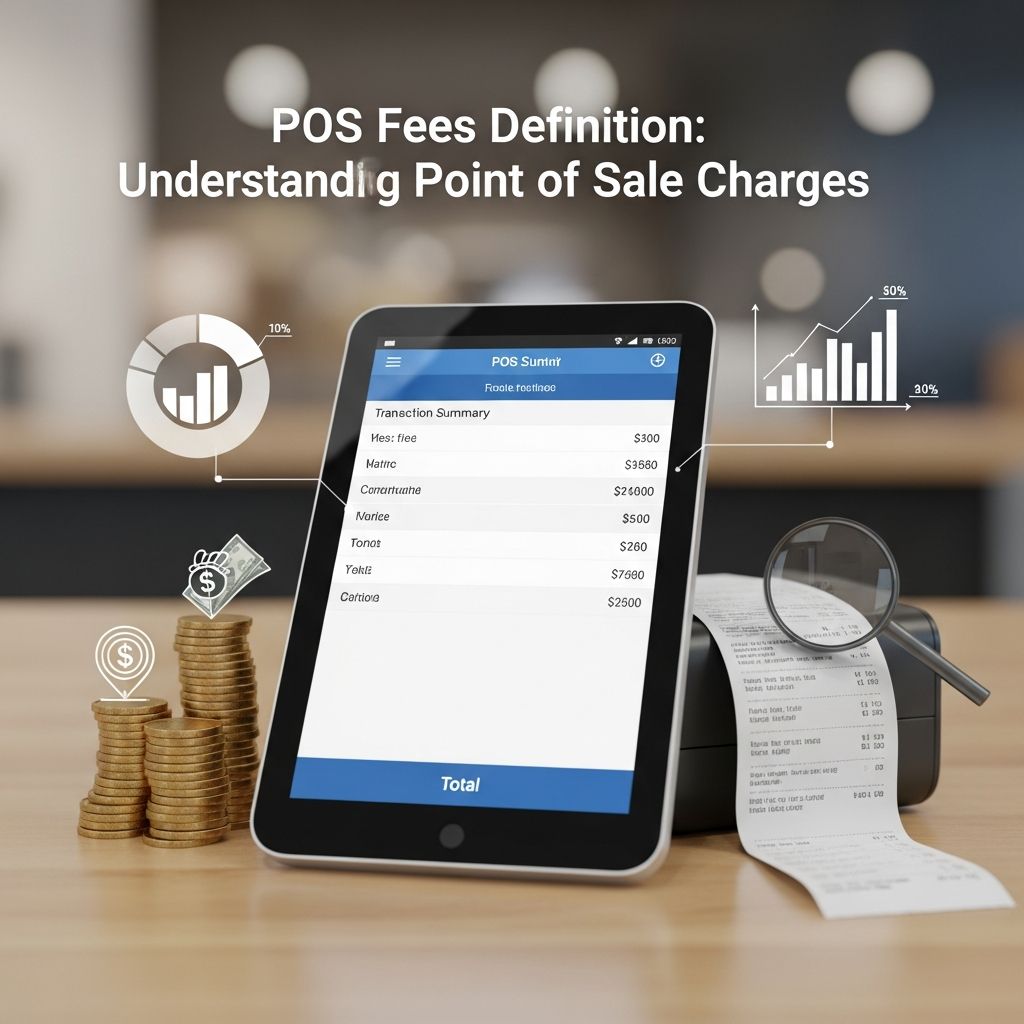
Understanding POS Fees: Definition and Point of Sale Charges
Point of sale (POS) fees, also known as merchant fees or transaction fees, represent the costs your business incurs every time a customer makes a payment using a credit or debit card at your POS terminal. These fees are fundamental to the payment processing ecosystem and are charged by multiple parties involved in facilitating card transactions. Understanding how POS fees work is essential for business owners, as these charges can significantly impact your bottom line.
POS fees are not a single charge but rather a combination of fees from different parties in the payment processing chain. Each party—from the card issuer to the card network to the payment processor—takes a portion of the transaction value to cover their operational costs and generate revenue. For most retail businesses, credit card processing fees typically range between 1.5% and 3.5% per transaction, though this can vary considerably based on numerous factors.
How POS Fees Are Determined
Credit card fees are determined through a complex system involving multiple parties in the payment processing ecosystem. These fees can vary based on several factors, including the type of business, the method of accepting payments, the card networks involved, and the payment processing provider.
For retailers, POS fees are typically decided by three primary parties involved in processing customer card transactions:
Card Issuers
Card issuers, such as Bank of America, Chase, or other financial institutions, charge interchange fees to cover the costs of processing transactions between customers and businesses. These fees compensate the issuing bank for the risk and cost of facilitating the transaction. The interchange fee varies greatly depending on the type of card being used by customers, but it is usually a percentage of the total transaction amount.
Card Networks
Card networks like Visa and Mastercard charge assessment fees to cover the operating costs of their networks. These fees are negotiated percentages charged by credit card companies and vary depending on several factors, including card type and transaction volume. Assessment fees are typically lower than interchange fees, with major networks’ average credit card assessment fees falling around 0.14%.
Payment Processors
Payment processors charge fees for using their products—namely, the payment hardware and software that allow you to accept card payments. In exchange for these services, payment processors charge a fee, usually a flat fee or a percentage of the transaction value. Payment processors offer various pricing models, including flat-rate, tiered, and interchange-plus pricing. Fees can be charged as a percentage of the transaction, as monthly fees, and in some cases through hidden fees.
Types of POS Fees
Understanding the different types of POS fees helps you better manage your payment processing costs and choose the right payment solution for your business.
Interchange Fees
Interchange fees are the largest component of credit card processing fees. Every time a customer pays with a credit or debit card, the acquiring bank (your business account) pays an interchange fee to the card-issuing bank (your customer’s account). This fee is typically a percentage of the purchase amount plus a fixed fee. The way these fees are calculated depends on the type of card and type of transaction. Card issuers use interchange fees to mitigate their risk and cover transaction processing costs.
Assessment Fees
Assessment fees are charged monthly based on your total monthly sales volume, rather than on individual transactions as with interchange fees. These fees are usually lower than interchange fees and are set by the credit card networks. The amount you pay in assessment fees can vary depending on the card network, whether a credit or debit card is used, and your transaction volume.
Payment Processor Fees
Payment processor fees are charged by your payment processor for providing their services. There’s a common misconception that all of the payment processor’s markup goes directly to their bottom line. However, some payment processors, like those offering all-in-one solutions with embedded payments, reinvest revenue generated from payment processor fees back into the product to ensure capabilities and features evolve to meet business needs.
Factors That Impact POS Fee Costs
Beyond the three primary parties determining fees, several other factors significantly impact your credit card processing fees.
Transaction Type
Credit card processing fees can differ based on the transaction type. Card-present (CP) transactions, which are most common for retail businesses and include face-to-face transactions where the physical card is swiped, tapped, or inserted into a card reader at your store, typically have lower fees due to lower fraud risk. Conversely, card-not-present (CNP) transactions—such as online sales through your e-commerce store or phone orders—may have higher fees because of increased fraud risk.
Card Type
Credit card issuers offer various types of cards, such as rewards cards or corporate cards, each with its own interchange rate. Businesses may face higher fees when processing premium or corporate cards because these cards often have higher interchange rates than standard consumer cards.
Merchant Category Code (MCC)
Your business’s Merchant Category Code plays a role in determining your processing fees. Different industries are assigned different risk profiles, which can affect the rates you pay.
Transaction Volume and Size
Larger transaction volumes and higher transaction amounts can influence negotiation power with payment processors. Businesses with higher transaction volumes may qualify for better rates and more favorable terms.
POS Pricing Models Explained
Understanding different pricing models helps you choose the most cost-effective option for your business needs.
Flat-Rate Fees
A flat-rate fee is a single rate applied to all transactions, making it simple and predictable. For example, some payment processors offer flat-rate fees, charging a consistent percentage for all transactions, regardless of card type. This model benefits businesses that want simplicity and predictability in their costs.
Percentage-Based Fees
With percentage-based fees, you pay a percentage of each sale, which can vary depending on the card type and transaction. This model means your costs fluctuate with your sales volume—higher sales result in higher fees in absolute terms, though the percentage remains consistent.
Interchange-Plus Fees
The interchange-plus model is a more transparent pricing approach where you pay the actual interchange rate set by the credit card networks plus a fixed markup. This model can offer savings for businesses with higher transaction volumes, as it’s more closely tied to the true cost of processing. With this structure, you can see exactly what you’re paying to card networks and what markup your processor is taking.
Hidden and Additional POS Costs
Beyond transaction fees, several hidden costs can accumulate and significantly impact your total cost of acquiring a POS system.
Setup and Installation Fees
Many POS providers charge setup fees to get your system configured and operational. These one-time costs can vary widely depending on the complexity of your setup.
Monthly Software Fees
Subscription-based POS models charge monthly fees for software access and usage. This is the most common pricing model and provides access to core POS functionality.
Hardware Costs
POS hardware comes with various pricing options. Some providers use subscription-based models where you pay a monthly fee, while others offer one-time purchase options, which might be more budget-friendly in the long run. Installment options are also available with some providers since the upfront price can be substantial.
Premium Features and Upgrades
As your business grows or depending on the complexity of your operations, you might need advanced features, which could cost extra. Premium functionality such as advanced reporting, employee management, or inventory optimization often comes with additional fees.
Early Termination Fees
Some POS providers include early termination fees in their contracts. These penalties can add up significantly if you need to switch providers before your contract expires.
Hardware Pricing Models
Understanding your options for hardware acquisition helps you find the most budget-friendly solution.
Subscription-Based Hardware
This is the most common model—you pay a monthly fee for the hardware and software use. This approach spreads costs over time and often includes support and upgrades.
One-Time Purchase
Less common but available, some systems offer a one-time purchase option, which might be more budget-friendly in the long run for businesses planning to use the same hardware for many years.
Installment Plans
Installment options are available with some providers. These allow you to spread the hardware cost over several months, making it more manageable for businesses with limited upfront capital.
Software Licensing Models
POS software can be structured through different licensing approaches.
Subscription-Based Software
You pay a monthly fee for the use of the software. This model provides continuous access to current features and updates.
License-Based Software
You pay a one-time license fee for the software, usually limited by seats, similar to how QuickBooks operates. This model works well for businesses with defined user needs.
Freemium Model
With freemium models, you don’t pay for the software’s base experience but need to pay more if you want to access additional tools and advanced features.
Calculating Your Effective POS Fee Rate
To understand your true cost of accepting credit card payments, calculate your effective rate using this formula:
Effective rate percentage = (Total amount deducted for processing / Total monthly sales) × 100
This calculation shows the actual percentage you’re paying across all transactions and helps you compare different payment processors fairly.
Managing and Reducing POS Fees
While you cannot eliminate POS fees entirely, several strategies can help reduce them.
Negotiate With Your Processor
If you have high transaction volumes, you may have negotiating power with your payment processor to reduce rates.
Credit Card Surcharging
Aside from negotiating your pricing with your payment processor, it’s also possible to pass on your credit card processing fees to your customers through a credit card surcharge. The most common practice is charging a percentage that reflects the payment processing fee percentage charged by your payment processor. However, before implementing surcharges, research the legalities in your area, as some states cap surcharges at a certain percentage.
Cash Discounting
Dual pricing or cash discounting offers customers a discount at the register when they pay with cash, helping avoid credit card fees altogether. This method is legal in all 50 states, improves cash flow, reduces fraud risk, and can encourage faster payment collection.
Understanding POS Debit Charges
A POS debit charge occurs when a customer pays for goods or services using a debit card at a POS terminal. POS debit charges refer specifically to card payments from debit cards, sometimes called ATM cards. These transactions typically have different fee structures than credit card transactions and may be subject to different regulations.
Frequently Asked Questions About POS Fees
Q: What is the average POS fee for small businesses?
A: Most small businesses pay between 1.5% and 3.5% per transaction, depending on their payment processor, card types processed, and transaction volume.
Q: Can I avoid paying POS fees?
A: No, POS fees are unavoidable when accepting card payments. However, you can reduce fees through negotiation, choosing appropriate pricing models, or passing some costs to customers through surcharging.
Q: Are POS fees tax-deductible?
A: Yes, POS fees are generally considered business expenses and may be tax-deductible. Consult with your accountant for specific guidance.
Q: Why are card-not-present transactions more expensive?
A: Card-not-present transactions have higher fees due to increased fraud risk. Without the physical card present, there’s greater potential for unauthorized charges.
Q: What’s the difference between interchange and assessment fees?
A: Interchange fees are charged per transaction by card issuers, while assessment fees are monthly charges by card networks based on total volume. Assessment fees are typically lower than interchange fees.
Q: How can I compare payment processors effectively?
A: Calculate your effective rate using the formula provided above. Compare total costs including transaction fees, monthly fees, setup fees, and any hidden charges across different processors.
Conclusion
POS fees are an inevitable part of accepting card payments in modern commerce. By understanding how these fees are determined, what types exist, and which factors influence them, you can make informed decisions about your payment processing strategy. Whether you choose flat-rate, percentage-based, or interchange-plus pricing, the key is selecting a payment processor that aligns with your business model and transaction patterns. Regularly reviewing your effective fee rate and exploring cost-reduction strategies can help maintain healthy profit margins while providing convenient payment options for your customers.
References
- Understanding POS Pricing: Costs, Fees and ROI Calculation — Helcim. 2025. https://www.helcim.com/guides/Understanding-POS-Pricing/
- Credit Card Processing Fees: The Ultimate Guide For Retailers — Lightspeed HQ. 2025. https://www.lightspeedhq.com/blog/credit-card-processing-fees/
- Passing On Credit Card Fees to Customers: A Guide for Small Businesses — POSNation. 2025. https://www.posnation.com/blog/passing-credit-card-fees-customers
- Understanding POS Debit and Point of Sale Charges — Stax Payments. 2025. https://staxpayments.com/blog/understanding-pos-debit-charges/
Similar Articles








Read full bio of medha deb