Porter’s Five Forces: Strategic Framework for Competitive Analysis
Master competitive strategy using Porter's Five Forces framework for industry analysis.
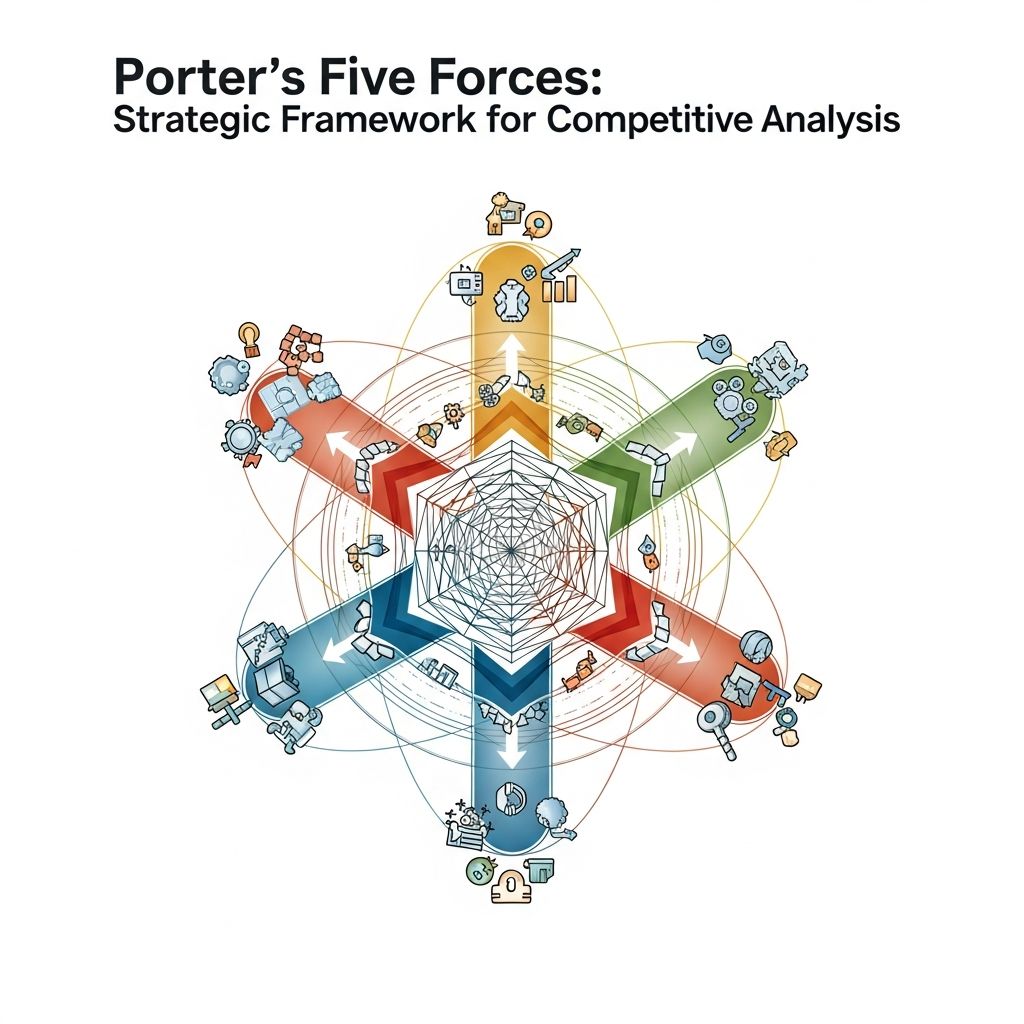
Understanding Porter’s Five Forces Framework
Porter’s Five Forces is a comprehensive strategic framework designed to analyze the competitive intensity and attractiveness of an industry or market. Introduced in 1979 by Harvard Business School professor Michael E. Porter, this model has become a cornerstone of strategic planning and competitive analysis for organizations worldwide. The framework examines five central competitive forces that shape industry dynamics, helping businesses identify opportunities, navigate threats, and develop differentiated value propositions that drive sustainable profitability.
By understanding the forces affecting your industry, companies can adjust their strategy, boost profitability, and stay ahead of the competition. This powerful analytical tool encourages organizations to look beyond direct competitors and consider broader environmental forces when assessing strategy, enabling more informed decision-making and strategic positioning.
The Five Core Forces Explained
1. Threat of New Entrants
The threat of new entrants refers to how easily new competitors can enter your market and establish themselves. This force directly impacts industry profitability and competitive intensity. When barriers to entry are low, new competitors can quickly capitalize on opportunities, increasing competitive pressure and potentially driving down prices and profits.
Key factors that determine the threat of new entrants include:
- Capital requirements and initial investment needed
- Economies of scale achieved by existing competitors
- Brand loyalty and customer switching costs
- Regulatory hurdles and licensing requirements
- Access to distribution channels
- Proprietary technology and intellectual property
Industries with high barriers to entry, such as pharmaceuticals or telecommunications, experience lower threat levels from new competitors. Conversely, industries with minimal entry barriers face continuous competitive threats from newcomers.
2. Bargaining Power of Suppliers
Supplier power examines how much influence suppliers have to dictate prices, terms, and conditions. When suppliers have significant bargaining power, they can increase input costs, reduce profit margins, and control the quality of materials your business receives. Understanding supplier dynamics is critical for managing costs and ensuring supply chain stability.
Factors affecting supplier power include:
- Concentration of suppliers in the market
- Availability of substitute inputs
- Importance of your industry to suppliers
- Switching costs associated with changing suppliers
- Threat of forward integration by suppliers
Businesses can manage supplier power by developing multiple sourcing options, creating strategic supplier alliances, or pursuing vertical integration to reduce dependency on external suppliers.
3. Bargaining Power of Buyers
Buyer power represents the strength of customers to influence prices and terms in their favor. Strong buyer power allows customers to demand lower prices, higher quality, or better service, directly impacting your profitability. This force is particularly significant in industries with concentrated customer bases or easily substitutable products.
Key determinants of buyer power include:
- Concentration and size of customer base
- Availability of alternative products and suppliers
- Product price sensitivity and price elasticity
- Switching costs for customers
- Customer access to information about prices and alternatives
Companies can reduce buyer power by enhancing product differentiation, increasing switching costs through loyalty programs, or targeting less price-sensitive customer segments that value quality and service over cost alone.
4. Threat of Substitute Products or Services
The threat of substitutes refers to the likelihood that customers will switch to alternative products or services that fulfill the same need. Substitutes can come from unexpected sources and fundamentally alter industry dynamics. This force limits the prices companies can charge and the profits they can generate.
Factors influencing substitute threats include:
- Availability of alternative products with similar functionality
- Price-to-performance ratio of substitute products
- Switching costs for customers moving to alternatives
- Customer perception and acceptance of substitutes
- Innovation in related industries creating new alternatives
To mitigate substitute threats, companies should innovate continuously, improve product quality and features, enhance customer loyalty programs, and create strong brand differentiation that makes switching to alternatives unattractive.
5. Competitive Rivalry
Competitive rivalry examines the intensity of competition among existing firms in the industry. In highly competitive markets with aggressive price wars and substantial marketing campaigns, profitability suffers as companies fight for market share. This force is particularly intense when competitors are numerous, products are undifferentiated, or industry growth is slow.
Elements affecting competitive rivalry include:
- Number and strength of competitors
- Industry growth rates and market maturity
- Level of product differentiation
- Fixed versus variable cost structures
- Exit barriers preventing competitors from leaving
- Strategic importance of the market to competitors
Companies can navigate competitive rivalry by focusing on niche markets, forming strategic alliances, competing on factors beyond price such as quality and service, or pursuing innovation to create sustainable competitive advantages.
Practical Applications of Porter’s Five Forces
Entering a New Industry or Market
When planning to enter a new industry or market, Porter’s Five Forces helps you understand the competitive dynamics, potential barriers to entry, and the industry profitability outlook, enabling informed decision-making. Before committing significant resources, conducting a thorough Five Forces analysis reveals whether the market presents attractive opportunities or excessive competitive threats.
Analyzing Your Existing Competitive Landscape
You can use Porter’s Five Forces to analyze the intensity of current competition, the power dynamics among suppliers and buyers, and the threat of substitutes, helping you identify potential strategic adjustments. Regular analysis ensures your strategy remains aligned with changing market conditions and emerging competitive threats.
Developing Robust Business Strategy
When crafting a new business strategy, Porter’s Five Forces provides a structured approach to evaluate external competitive forces, ensuring that a robust and aligned strategy emerges. This framework forces strategic planners to think comprehensively about all competitive dimensions rather than focusing narrowly on direct competitors.
Evaluating Mergers and Acquisitions
Before pursuing mergers or acquisitions, Porter’s Five Forces helps assess the attractiveness and risks associated with the target industry. Understanding the competitive forces in a target market reveals whether an acquisition will strengthen competitive position or expose the company to excessive competitive pressures.
Responding to Market Disruption
In times of significant market disruption, Porter’s Five Forces help identify the implications of these changes and guide strategic responses to maintain competitive advantage. When industries experience technological disruption or market shifts, this framework provides a systematic way to reassess competitive positioning.
Strategic Response Strategies
After analyzing the five forces, companies can develop targeted strategies to strengthen their competitive position:
| Force | Challenge | Strategic Response |
|---|---|---|
| Threat of New Entrants | Low barriers enable competitors to enter | Increase capital requirements, achieve economies of scale, enhance brand loyalty, create regulatory barriers |
| Supplier Power | Suppliers control prices and terms | Develop multiple sourcing options, create alliances, pursue vertical integration, invest in supplier relationships |
| Buyer Power | Customers demand lower prices and better terms | Enhance differentiation, increase switching costs, develop loyalty programs, target less price-sensitive segments |
| Substitute Threats | Customers switch to alternative products | Innovate features, improve quality, create loyalty programs, build strong brand identity and customer loyalty |
| Competitive Rivalry | Intense competition erodes profitability | Focus on niche markets, form alliances, compete on quality and service, pursue innovation and differentiation |
Key Benefits of Porter’s Five Forces Analysis
Clear Industry Structure Understanding
Porter’s Five Forces helps businesses understand the structure of their industry and the different competitive forces at play. This comprehensive view reveals how various factors interact to create the competitive environment, providing clarity that pure competitor analysis cannot offer.
Identifying Profitability Drivers
The model identifies the key drivers of profitability within the industry, enabling businesses to focus on critical areas where strategic adjustments can significantly improve margins and overall financial performance. Rather than addressing all competitive challenges equally, companies can prioritize efforts where they yield maximum return.
Enhanced Negotiation Power
By understanding the power dynamics between suppliers and buyers, businesses can enhance their negotiating position and secure better terms and conditions that lead to cost savings and improved supply chain stability. Armed with knowledge of relative power positions, negotiators can pursue more favorable agreements.
Strategic Decision-Making Foundation
The framework provides a foundation for more informed strategic decisions by identifying areas for improvement and helping companies redefine strategies to enhance and strengthen competitive position in the market. This structured approach reduces the risk of overlooking important competitive factors.
Profitability Assessment
By analyzing all five forces together, companies gain insights into overall industry attractiveness and long-term profitability potential. An industry with significant competitive intensity, powerful suppliers and buyers, low barriers to entry, and numerous substitutes may be less attractive and offer limited profit opportunities.
Frequently Asked Questions
Q: Who developed Porter’s Five Forces framework?
A: Michael E. Porter, a Harvard Business School professor, introduced this framework in 1979 in his groundbreaking work on competitive strategy. It has since become one of the most widely used strategic analysis tools globally.
Q: How often should companies conduct Porter’s Five Forces analysis?
A: Companies should conduct regular Five Forces analysis, especially when entering new markets, experiencing significant market changes, or responding to competitive disruptions. Annual reviews ensure strategies remain aligned with evolving competitive dynamics.
Q: Can Porter’s Five Forces be used for non-profit organizations?
A: Yes, the framework can be adapted for non-profits, though the terminology may shift. For example, “suppliers” might represent funding sources, and “buyers” might represent beneficiaries or donors, making it a versatile tool across organizational types.
Q: What is the relationship between Porter’s Five Forces and competitive advantage?
A: Porter’s Five Forces analysis reveals competitive vulnerabilities and opportunities. Companies use these insights to develop strategies that create competitive advantages through differentiation, cost leadership, or focus strategies that address specific force pressures.
Q: How does digital transformation affect Porter’s Five Forces?
A: Digital transformation typically lowers barriers to entry, increases buyer power through information access, creates new substitutes, and intensifies competitive rivalry. Companies must reassess the five forces in light of digital disruption to maintain strategic relevance.
References
- Porter’s Five Forces Framework: Explanation & Uses — Quantive. 2025. https://quantive.com/resources/articles/porters-5-forces
- Porter’s Five Forces – The Framework Explained — Mind Tools. 2025. https://www.mindtools.com/at7k8my/porter-s-five-forces/
- The Five Forces — Harvard Business School Institute for Strategy and Competitiveness. 2025. https://www.isc.hbs.edu/strategy/business-strategy/Pages/the-five-forces.aspx
Similar Articles







Read full bio of Sneha Tete