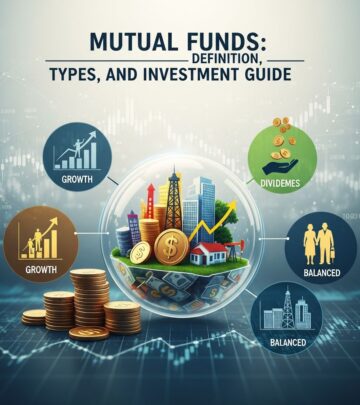
Pooled Investment Strategies: A Comprehensive Guide
Master the fundamentals of collective investing and grow your wealth strategically

Understanding Collective Investment Vehicles
A collective investment vehicle represents one of the most accessible pathways for individuals to participate in financial markets without requiring extensive knowledge or significant capital. At its core, this investment structure consolidates money from numerous investors into a single managed portfolio, which professional specialists then deploy across various asset categories. This collaborative approach democratizes investing by allowing even modest contributions to gain exposure to asset classes and opportunities that would otherwise remain financially unreachable for individual participants.
The fundamental concept operates similarly to a cooperative arrangement where multiple parties combine resources to achieve a shared objective. Each participant receives a proportional claim on the underlying holdings, typically represented through units or shares. If you invest $5,000 into a fund with a total value of $1 million, your ownership stake would amount to 0.5% of all underlying securities and their accumulated value. This ownership structure ensures that your financial interests align directly with the fund’s performance trajectory.
The Mechanics Behind Pooled Investment Operations
Understanding how these investment vehicles function operationally provides crucial insight into what happens with your contributed capital. When you purchase shares in a pooled investment structure, your money enters a consolidated account managed by specialized financial professionals. These investment specialists leverage their expertise, analytical capabilities, and market research to make strategic decisions regarding which securities to acquire, maintain, or liquidate.
The pricing mechanism for these investments operates through a calculation known as net asset value, commonly abbreviated as NAV. This figure represents the total value of all holdings within the portfolio, minus any operational expenses, divided by the total number of outstanding units. If a fund holds securities worth $10 million, maintains $100,000 in expenses, and has issued 1 million units, each unit would be valued at $9.90. This valuation refreshes at the conclusion of each trading session, ensuring that prices reflect current market conditions.
Investors generate returns through two primary mechanisms. Income generation occurs when underlying securities distribute dividends or interest payments directly to the fund, which subsequently passes these earnings to shareholders. Capital appreciation develops when securities increase in value over time. If a fund acquires technology stocks that appreciate significantly, or sells bonds at prices exceeding their original purchase cost, these gains are typically distributed to unitholders.
Primary Categories of Pooled Investment Structures
The landscape of collective investment vehicles encompasses several distinct categories, each designed to accommodate different investor preferences, risk tolerances, and timeline horizons.
Equity-Focused Investment Funds
Equity funds concentrate their portfolios primarily on stock holdings, making them the most prevalent variety of pooled investment structures. These funds may specialize in particular investment philosophies such as pursuing capital growth, identifying undervalued securities, or focusing on established corporations versus emerging enterprises. Geographic diversification represents another specialization strategy, with some funds emphasizing domestic securities, regional investments, or globally distributed holdings. An equity fund might concentrate exclusively on technology sector companies, healthcare providers, financial institutions, or energy enterprises, allowing investors to align their portfolio composition with their sector preferences.
Fixed-Income Investment Vehicles
These structures allocate capital primarily toward bonds and other debt instruments issued by governmental entities, municipalities, and corporations. Fixed-income vehicles appeal to investors seeking consistent income streams with potentially reduced volatility compared to equity-focused alternatives. The fund managers evaluate credit quality, interest rate environments, and duration considerations to optimize yields while managing default risks.
Monetary Market Investment Options
Money market funds operate with a conservative mandate, investing exclusively in high-grade, short-duration debt securities including Treasury instruments, certificates of deposit, and commercial paper. These vehicles prioritize capital preservation and stability over aggressive growth, making them suitable for investors with shorter investment horizons or heightened risk aversion. While returns typically range between modest percentages annually, the stability and liquidity characteristics make them attractive for emergency reserves or temporary capital parking.
Balanced Portfolio Structures
Hybrid or multi-asset funds combine multiple investment categories within a unified portfolio, typically blending equities, fixed-income securities, and money market instruments. The allocation between these categories may remain static according to a predetermined formula, or managers may adjust proportions dynamically based on market conditions and outlook assessments. This balanced approach provides moderate growth potential with reduced volatility compared to purely equity-focused vehicles.
Comprehensive Advantages of Pooled Investment Participation
Selecting pooled investment vehicles offers numerous compelling benefits that explain their widespread adoption among individual investors globally.
Diversification Through Aggregated Resources
Diversification represents perhaps the most significant advantage of pooled investment structures. A minimal initial investment, often as little as $1,000, provides immediate exposure to hundreds of individual securities across various geographic regions and economic sectors. This extensive diversification substantially reduces the risk concentration associated with individual stock ownership. Rather than bearing the entire performance volatility of a single company, your investment risk distributes across numerous holdings, thereby cushioning against any single entity’s adverse developments.
Access to Professional Management Services
Pooled vehicles grant individual investors access to sophisticated investment management capabilities that would otherwise prove prohibitively expensive to obtain independently. Professional managers conduct extensive market research, analyze financial statements, monitor economic indicators, and execute strategic trading decisions on investors’ behalf. Their experience, analytical capabilities, and market insights potentially enhance returns while implementing risk management strategies that individual investors might struggle to execute alone.
Liquidity and Redemption Flexibility
Open-ended pooled investment structures provide exceptional liquidity characteristics, permitting investors to redeem their units and access their capital rapidly. Unlike certain alternative investments requiring extended holding periods, these vehicles allow selling positions at the prevailing net asset value within approximately 10 business days, providing meaningful financial flexibility.
Reduced Entry Barriers and Accessibility
The pooled structure dramatically reduces the capital requirements necessary to construct adequately diversified portfolios. Individual investors would require substantially larger capital commitments to acquire sufficient securities for proper diversification. By pooling resources, even modest investors can achieve exposure to premium securities and geographically dispersed markets.
Structural Variations and Classification Frameworks
Pooled investment vehicles exist in multiple structural configurations, each offering distinct operational characteristics and benefits.
Open-Ended Structures
Open-ended pooled vehicles can continuously issue new units and redeem existing ones as investor demand fluctuates. These structures maintain flexibility, allowing new investors to enter and existing participants to exit without constraining the fund’s operations. Pricing occurs at daily intervals, reflecting current net asset values and providing transparency regarding investment valuations.
Closed-Ended Structures
Alternatively, certain investment schemes operate as closed-ended vehicles, issuing a fixed quantity of units that trade on secondary markets similar to individual stocks. Once the initial offering concludes, no additional units are created, and existing shareholders must transact with other investors rather than directly with the fund managers.
Income Generation and Wealth Accumulation Mechanisms
Understanding how returns materialize within pooled investment structures clarifies the wealth-building potential these vehicles provide.
Collective investment vehicles generate earnings through multiple pathways. When underlying securities pay dividends or interest, these distributions flow directly to shareholders proportional to their ownership stakes. Capital gains materialize when fund managers sell securities at appreciated values or when portfolio holdings increase in market valuation. When a fund’s total capital gains exceed realized losses, the net gains are distributed to unitholders, enhancing investment returns.
Investors benefit through both immediate income distributions and potential appreciation of their unit values. Some investors prioritize income-generating funds yielding regular distributions, while others favor growth-oriented vehicles that reinvest earnings, allowing compound accumulation of returns.
Strategic Selection Considerations for Investors
Choosing appropriate pooled investment vehicles requires evaluating several critical dimensions aligned with individual circumstances and objectives.
- Investment timeline: Longer horizons typically support equity-focused strategies with higher growth potential but increased volatility, while shorter timeframes favor conservative options like money market vehicles.
- Risk tolerance: Aggressive investors may pursue equity-focused or specialized sector funds, while conservative investors should prioritize balanced or fixed-income alternatives.
- Financial objectives: Growth-focused investors need different fund categories than those prioritizing current income generation.
- Fee structures: Expense ratios and management fees vary significantly across funds, directly impacting long-term returns.
- Historical performance: While past results don’t guarantee future outcomes, examining how funds performed during various market conditions provides valuable insight into manager capabilities.
- Investment philosophy: Some funds emphasize sustainable investments, others focus on specific sectors, and some pursue value strategies.
Frequently Asked Questions Regarding Pooled Investment Vehicles
What constitutes the minimum initial investment for pooled vehicles?
Most pooled investment structures establish minimum investments ranging from several hundred to a few thousand dollars. Some platforms offer lower minimums, while others serving institutional clients maintain substantially higher thresholds. Minimum requirements vary significantly across different fund families and share classes.
How frequently are investment prices updated?
Net asset values typically refresh once daily following market closure, with purchases executed at the subsequent day’s closing price if orders are placed after market hours. This daily pricing transparency allows investors to monitor their holdings and make informed decisions.
What expenses are associated with pooled investment structures?
Funds maintain various expense categories including management fees, administrative costs, and potentially sales charges. These expenses are incorporated into net asset value calculations, reducing investor returns. Expense ratios typically range from modest percentages for index-tracking funds to higher percentages for actively managed vehicles offering intensive professional oversight.
Can investors redeem investments at any time?
Open-ended pooled vehicles permit redemptions at designated intervals, typically daily or within reasonable timeframes. However, specific redemption policies vary by fund and jurisdiction. Most funds process redemptions within approximately 10 business days.
How do pooled vehicles differ from direct security ownership?
Pooled vehicles provide instant diversification, professional management, reduced capital requirements, and simplified operations compared to assembling and managing individual securities. However, investors surrender direct control over specific holdings and incur management expenses offset by the advantages these professional services provide.
Conclusion: Embracing Collective Investment Strategies
Pooled investment vehicles represent foundational instruments for individuals seeking to build wealth systematically without requiring extensive market knowledge or substantial capital reserves. Through professional management, diversification, and accessibility, these structures democratize investment opportunities previously available exclusively to wealthy individuals and institutions. Whether pursuing growth, income, or balanced objectives, appropriate pooled investment vehicles exist to support virtually any investor profile and financial aspiration.
References
- Understanding Mutual Funds — Investment Company Institute. PDF Guide. https://www.ici.org/system/files/attachments/pdf/g2understanding.pdf
- What is a Mutual Fund? — Vanguard Investor Resources. https://investor.vanguard.com/investor-resources-education/mutual-funds/what-is-a-mutual-fund
- How to Invest in Mutual Funds: A Guide for Beginners — Bankrate. https://www.bankrate.com/investing/guide-to-mutual-funds/
- Beginners Guide to Investing in Mutual Funds — Standard Chartered. https://www.sc.com/ke/investments/learn/understanding-mutual-funds-for-beginners/
- The Best Mutual Funds and How to Start Investing — NerdWallet. https://www.nerdwallet.com/investing/learn/how-to-invest-in-mutual-funds
Similar Articles








Read full bio of medha deb