Planned Urban Development: Definition & How It Works
Master the fundamentals of PUDs: mixed-use communities reshaping neighborhoods.
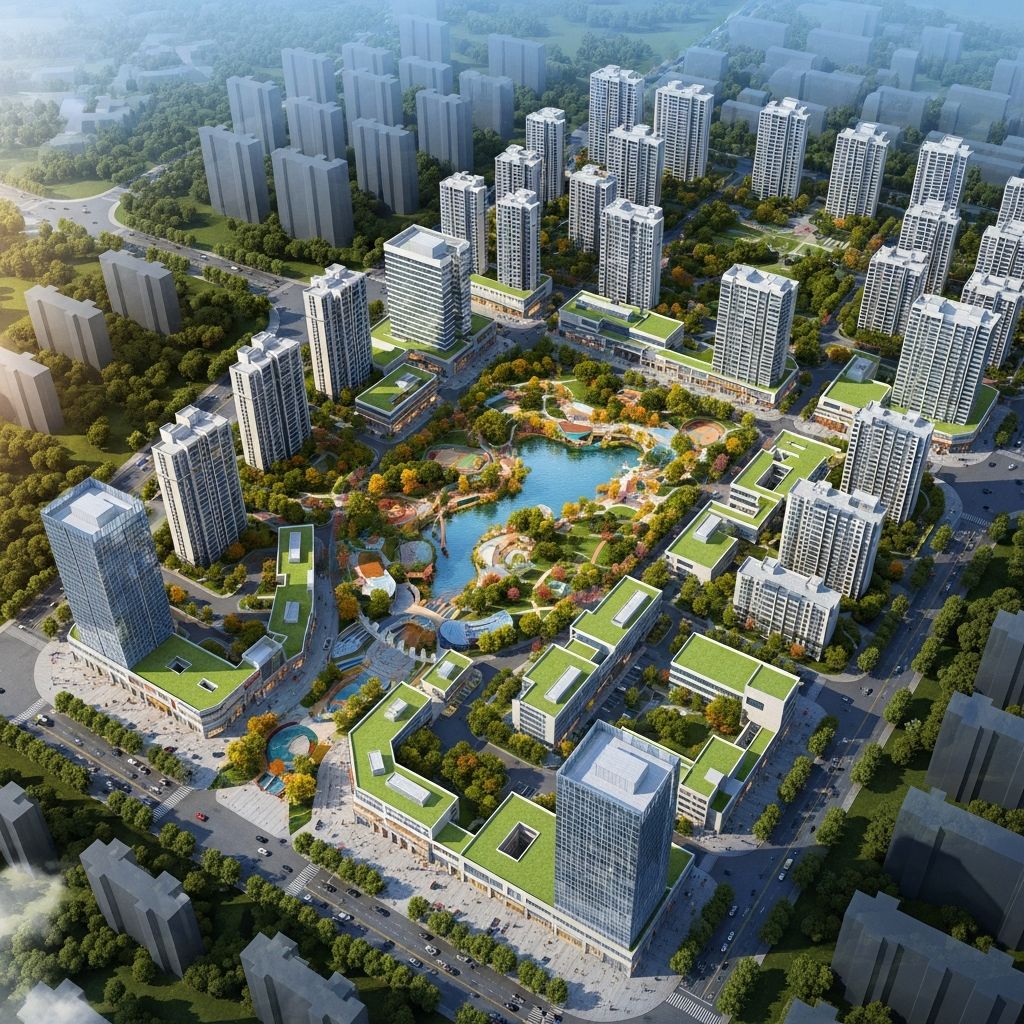
A Planned Urban Development (PUD), also known as a Planned Unit Development, represents a fundamental shift in how communities are designed and developed. Rather than adhering strictly to traditional zoning requirements that segregate residential, commercial, and recreational uses, a PUD is a flexible, mixed-use development approach that creates cohesive, master-planned neighborhoods. These developments combine residential housing, commercial spaces, recreational facilities, and open green areas within a single, unified project governed by comprehensive planning and regulatory frameworks.
PUDs have emerged as a practical solution to modern urban challenges, allowing developers and municipalities to collaborate on creating vibrant, walkable communities that meet contemporary lifestyle expectations while maximizing land efficiency and economic returns.
Understanding Planned Unit Developments
Definition and Core Characteristics
A Planned Urban Development is fundamentally different from conventional real estate projects. Unlike traditional subdivisions where each lot must conform to predetermined zoning regulations, a PUD operates as a flexible, non-Euclidean zoning device that redefines land uses within a stated area. This flexibility allows developers to cluster buildings, mix diverse uses, and preserve green space while meeting overall community standards established through negotiation with local authorities.
At its essence, a PUD consists of unitary site plans that promote the creation of open spaces, mixed-use housing, environmental preservation, and development flexibility. The development typically includes:
- Single-family homes, townhouses, and apartments
- Commercial spaces and retail centers
- Recreation facilities such as parks, playgrounds, and walking trails
- Community amenities like clubhouses, pools, and fitness centers
- Shared open spaces and natural preservation areas
- Educational institutions and schools
- Industrial parks or office complexes in larger developments
The Regulatory Framework
As a regulatory process, a PUD represents a means of land regulation that promotes large-scale, unified land development through mid-range, realistic programs aimed at addressing social, economic, and physical deficiencies in landscapes and city infrastructure. This process requires developers to navigate a specialized approval pathway distinct from standard zoning applications.
The regulatory framework emphasizes several key principles: upfront completion of comprehensive project plans before development begins, innovative mixtures of land uses that exceed standard zoning ordinances, clustering of residential uses to preserve public open space, environmental protection of sensitive lands such as wetlands and hills, and enhanced bargaining processes between developers and municipal governments.
How Planned Unit Developments Work
Governance and Homeowner Responsibilities
In a PUD, property ownership operates differently than in traditional subdivisions. Each homeowner owns their individual property outright, but they also acquire mandatory membership in a Homeowners Association (HOA) and a share of common areas. This dual ownership structure ensures that community-wide amenities and shared spaces receive proper maintenance and governance.
The HOA functions as the governing body responsible for enforcing community rules, maintaining common areas, collecting fees, and ensuring the development maintains its planned character. Homeowners typically pay HOA fees that fund landscaping, security, facility maintenance, and improvements to shared amenities.
The Approval Process
Obtaining approval for a PUD is more complex than standard zoning applications. The process typically involves three distinct stages:
| Stage | Description | Key Activities |
|---|---|---|
| Pre-Preliminary Conference | Initial consultation phase | Developer provides basic information, physical features assessment, schematic drawings showing private and public uses |
| Preliminary Approval | Detailed planning submission | Comprehensive site plans, infrastructure designs, public hearings, environmental reviews, community input sessions |
| Final Approval | Formal authorization | Final plan modifications, performance bond posting, infrastructure guarantees, zoning approval |
Throughout this process, local planning commissions negotiate conditions such as infrastructure improvements, affordable housing requirements, environmental protections, and community benefit agreements. Developers may be required to post performance bonds to ensure the PUD is built according to approved plans, which protects the city and residents if the developer fails to complete promised improvements.
Infrastructure and Design Standards
PUDs must meet specific infrastructure and design requirements established by local authorities. Streets within residential and commercial areas must comply with city standards, while adequate space for playgrounds and parks must be reserved on-site or made accessible off-site. Additionally, permits and easements must be available for the repair, maintenance, and expansion of public utilities serving the development.
Communities emphasize the importance of detailed guarantees regarding maintenance of parks and other common amenities, ensuring that promised features remain properly managed throughout the development’s lifecycle.
Financial Structure and Investment Dynamics
Capital Requirements and Funding Models
PUDs represent big upfront investments with the expectation of long-term payoffs. Building comprehensive infrastructure—including roads, sewers, parks, utilities, and community facilities—requires significant capital before any homes are sold or commercial spaces are leased. Developers often finance these initial investments through borrowed capital, similar to how municipalities issue bonds to fund infrastructure projects.
The developer essentially borrows money against the future value of the completed project, then recoup costs as the development sells homes, leases commercial properties, and generates ongoing revenue streams over many years.
Risk Mitigation Through Diversification
One significant advantage of PUDs is their mixed-use composition, which creates predictable returns and reduces risk. A completed PUD with hundreds of homes, retail spaces, and office buildings represents a steady stream of future property sales, HOA fees, and tax revenue. This diversification means a PUD is less risky than single-use developments, protecting the developer’s investment if one market segment declines.
For example, if the housing market experiences a downturn, the retail or office components can help support the project’s financial viability, and vice versa. This complementary income structure appeals to investors and lenders, who view completed PUDs as relatively stable, bond-like investments once fully developed.
Return on Investment
Investors in PUDs benefit from multiple revenue streams: land sales, home sales, commercial lease income, HOA fees, and appreciation of the underlying property. The public-private partnership aspect of PUDs—often involving upfront developer commitments in exchange for flexible zoning—creates predictable financial outcomes that justify the substantial initial capital requirements.
Benefits for Communities and Investors
Economic and Community Benefits
Successful PUDs deliver substantial benefits that attract buyers, developers, and municipal support. Economic uplift and new investment represent primary advantages, as PUDs can revitalize areas or create entirely new economic hubs. By attracting new residents and businesses, a PUD injects fresh tax revenue and consumer spending into a locality. Large-scale projects often result in an influx of new capital and residents, creating a burgeoning community that benefits the broader city economy.
PUDs also promote:
- Creation of walkable, livable communities where residents can live, work, and shop in proximity
- Preservation of environmental features and sensitive lands that might otherwise be developed
- Increased population density with reduced street widths and infrastructure costs
- Enhanced availability of community amenities like bike trails, recreation centers, and natural open spaces
- Opportunities for affordable housing integration within mixed-income communities
- Environmental conservation through clustering and green space preservation
Why PUDs Are Rising in Popularity
Changing zoning attitudes have made mixed-use development increasingly popular among planners and policymakers. Many municipalities now seek to recreate the feel of traditional towns where homes, shops, and workplaces are closer together—an urban design philosophy that PUDs embody perfectly. This shift reflects broader recognition that sprawling, single-use development patterns create automobile dependency, longer commutes, and reduced community cohesion.
PUDs represent a practical mechanism to achieve traditional neighborhood character within modern zoning codes. Additionally, PUDs are on the rise because they align with what both residents and cities seek: convenient, well-planned neighborhoods that attract investment and sustainable growth.
Types of Planned Unit Developments
Scale and Scope Variations
PUDs range significantly in size and complexity. Small-scale PUDs might consist of clusters of houses combined with shared open spaces and basic amenities. However, master-planned communities (MPCs) represent PUDs on a large scale, covering 2,500 acres at minimum but ranging to over 10,000 acres in some cases, potentially containing between 100 and 50,000 homes. Think of an MPC as a small but self-contained city with comprehensive infrastructure, diverse housing types, and extensive commercial and recreational facilities.
Regardless of scale, all PUDs share the fundamental characteristic of integrated planning that creates cohesive communities rather than fragmented, single-use zones.
Frequently Asked Questions (FAQs)
Q: What is the primary difference between a PUD and a traditional subdivision?
A: Unlike traditional subdivisions that strictly follow predetermined zoning regulations separating residential, commercial, and recreational uses, a PUD operates with flexible zoning that allows mixed uses, clustering of buildings, and creative design while meeting overall community standards negotiated with local authorities.
Q: Is HOA membership mandatory in a PUD?
A: Yes, membership in the HOA is mandatory for all property owners in a PUD. This ensures proper governance, maintenance of common areas, and enforcement of community standards that preserve the development’s character and property values.
Q: How long does the PUD approval process typically take?
A: The approval process varies by jurisdiction but generally involves three stages: pre-preliminary conference, preliminary approval, and final approval. The entire process can take several months to over a year, depending on complexity, community input, and local regulatory requirements.
Q: What happens if a developer fails to complete promised improvements in a PUD?
A: Developers are typically required to post performance bonds to ensure the PUD is built according to approved plans. If the developer fails to complete promised improvements, the bond can be used to fund completion or provide compensation to residents and the municipality.
Q: Are PUDs more expensive to maintain than traditional neighborhoods?
A: PUDs require HOA fees to maintain common areas and amenities, which may result in additional costs beyond property taxes. However, the enhanced amenities, environmental preservation, and community benefits often justify these expenses for residents and create property value appreciation.
Q: Can affordable housing be included in PUDs?
A: Yes, many municipalities require or encourage developers to include affordable housing components within PUDs. The flexible zoning framework allows for mixed-income communities where various housing types serve different demographic groups.
Conclusion
Planned Urban Developments represent a sophisticated approach to community building that combines the foresight of urban planning with financial structuring principles. By allowing investment in community-building through flexible zoning and mixed-use design, PUDs create vibrant neighborhoods that appeal to residents while generating steady returns for developers and tax revenue for municipalities.
When executed effectively, a PUD can uplift an area, provide homes and amenities people value, and yield stable financial returns—making them increasingly attractive to all stakeholders in the real estate and urban development sectors. Their growing popularity reflects broader recognition that thoughtfully designed, mixed-use communities represent the future of sustainable, livable urban development.
References
- Planned Unit Developments: Investing in Communities — Frontline Advisory Group. 2024. https://frontlineadvisorygroup.com/planned-unit-developments/
- What is a Planned Unit Development (PUD)? — City of Green Bay. https://www.greenbaywi.gov/FAQ.aspx?QID=188
- Planned unit development — Wikipedia. https://en.wikipedia.org/wiki/Planned_unit_development
- Planned Unit Developments (PUDs) — California Builder Services. https://cabuilderservices.com/planned-unit-development/
- Planned Unit Developments in Real Estate — National Association of Realtors. https://www.nar.realtor/residential-real-estate/planned-unit-developments
- What is a PUD (planned unit development)? — Rocket Mortgage. https://www.rocketmortgage.com/learn/what-is-a-pud
Similar Articles








Read full bio of Sneha Tete