5 Pitfalls to Avoid When Closing a Checking Account
Closing a checking account seems simple, but small mistakes can trigger fees, missed payments and credit hassles.
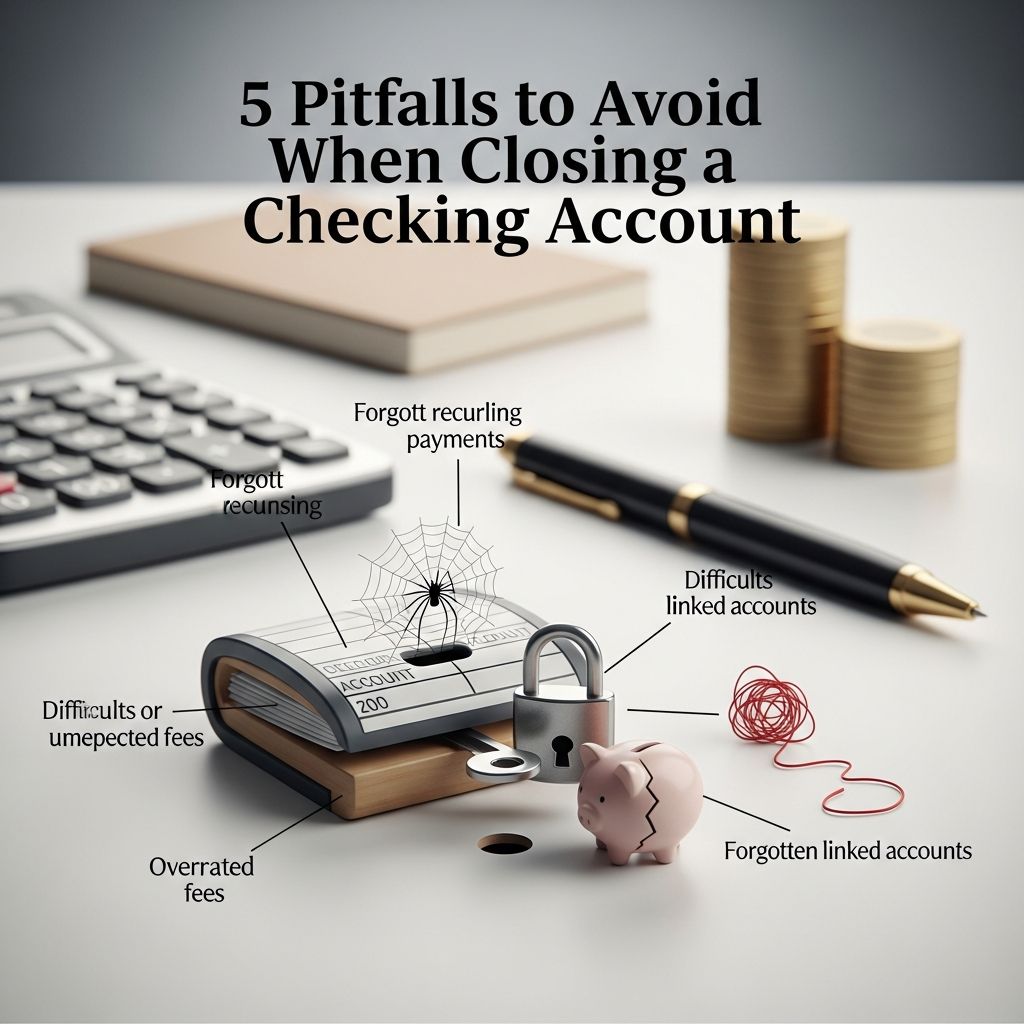
Closing a checking account looks easy: move your money, sign a form and walk away. In reality, a rushed or poorly planned closure can trigger overdraft fees, missed payments, returned deposits and even make it harder to open new bank accounts in the future.
This guide explains five major pitfalls to avoid when closing a checking account and how to switch banks smoothly while protecting your cash flow and your financial reputation.
Why People Close Checking Accounts
There are plenty of legitimate reasons to close a checking account and move to a new bank. Common motivations include:
- High monthly maintenance or overdraft fees
- Poor digital banking tools or inconvenient branch locations
- More competitive interest rates or better account features elsewhere
- Promotional bonuses offered by another bank
- Combining finances with a partner or simplifying multiple accounts
Research from consumer banking sites shows that lower fees and better interest rates are major drivers of switching banks. Before you close an account, list your reasons and make sure your new bank truly solves those issues.
Do You Need to Worry About Your Credit Score?
One common concern is whether closing a bank account will hurt your credit. According to major credit reporting agencies, closing a checking or savings account in good standing does not directly impact your credit score. Banks typically do not report account closures to credit bureaus.
The risk comes from what can happen around the closure:
- Leaving a negative balance that is eventually sent to collections
- Missing payments on bills because automatic debits failed
- Overdrawing the old account with late charges or forgotten subscriptions
These indirect effects can lead to collection accounts or missed payments on your credit report, both of which can lower your score for years.
The 5 Biggest Pitfalls When Closing a Checking Account
Closing an account without a clear plan can create problems that surface weeks or even months later. Here are the five key pitfalls to watch for and how to avoid each one.
1. Leaving Unpaid Bills and Automatic Payments Behind
The most common and costly mistake is closing your checking account before updating every recurring payment and withdrawal. Many people forget how many bills are on autopay until something fails.
Typical automatic debits include:
- Rent or mortgage payments
- Utilities (electricity, water, gas, internet, phone)
- Insurance premiums (auto, home, health, life)
- Student loan and other loan payments
- Streaming services and digital subscriptions
- Gym memberships and club dues
- Cloud storage, apps and software subscriptions
If the old bank account is closed or empty, these payment attempts can fail. That can mean:
- Late fees and penalty interest from billers
- Service disruptions or cancellations
- Returned-payment fees from your bank or the biller
- Potential negative marks if the debt goes unpaid long enough
How to Avoid This Pitfall
- Open your new account first and keep the old one open during the transition.
- Download or print the last 6–12 months of statements and list every recurring debit you see.
- Update each debit with your new account or card information and confirm the change in writing or via email.
- Monitor both accounts for at least one full billing cycle to ensure all payments are pulling from the new account.
2. Forgetting to Redirect Direct Deposit
Direct deposit errors can create cash-flow crises. If your paycheck or benefits still point to your old account, closing that account too soon can delay your income.
According to consumer banking guidance, it is important to ensure all direct deposits are successfully rerouted before shutting the old account. Employers and government agencies often need one or more pay cycles to process a new direct deposit request.
Common Sources of Direct Deposit
- Employer payroll
- Government benefits (Social Security, disability, unemployment)
- Pensions and annuities
- Regular transfers from investment or brokerage accounts
How to Avoid This Pitfall
- Submit new direct deposit forms with your routing and account numbers for the new bank.
- Confirm with HR or the paying agency when the change will take effect.
- Wait until you see at least one or two deposits successfully arrive in the new account before closing the old one.
- Keep a small buffer in your old account during this overlap period in case deposits are still routed there.
3. Closing with a Negative Balance or Pending Transactions
Another major pitfall is closing or abandoning an account that is overdrawn or has pending charges. Banking experts note that negative balances that are not repaid can be sent to collection agencies.
Once in collections, the debt can be reported to the three major credit bureaus, potentially lowering your credit score and remaining on your report for up to seven years.
Sources of Negative Balances
- Overdrafts from debit card purchases or checks
- Automatic payments that hit after you moved most of your funds
- Monthly maintenance or overdraft protection transfer fees
- Returned check fees or non-sufficient funds (NSF) fees
How Pending Transactions Cause Problems
Even if your current balance looks positive, outstanding checks and card holds can still clear after you initiate closure. If you empty the account too soon, those items may push the balance negative. Guidance from consumer banking resources recommends tracking outstanding checks and recurring payments until they have all cleared before fully closing an account.
How to Avoid This Pitfall
- Bring the account to a zero or slightly positive balance before requesting closure.
- Stop using the old account for new transactions several weeks before closing.
- Track all checks you have written and wait for them to clear.
- Review recent transactions for card holds (such as gas stations, hotels or rentals) that may settle later.
- Ask the bank representative to confirm that no pending items remain.
4. Ignoring Banking Reports Like ChexSystems
Even if a closure does not reach your credit report, it can still affect your ability to open accounts at other banks. Many institutions rely on specialty consumer reporting agencies such as ChexSystems to review your banking history.
According to ChexSystems and consumer finance guidance, these reports may include information about:
- Accounts closed with unpaid negative balances
- Frequent overdrafts and bounced checks
- Involuntary account closures
- Suspected or confirmed fraud activity
Multiple negative marks can make banks less willing to open new checking accounts for you.
How Problems Get on Your Banking Report
Issues that may lead to negative entries include:
- Leaving an overdrawn account unpaid long enough to be written off
- Repeated overdrafts that violate account terms
- Accounts closed by the bank due to misuse or unpaid fees
- Fraudulent activity, including when you are a victim and do not report it promptly
How to Avoid This Pitfall
- Resolve any negative balances and outstanding fees before closing the account.
- Request written confirmation that the account was closed in good standing.
- Obtain a copy of your ChexSystems report and dispute any errors, similar to how you would correct credit report inaccuracies.
5. Rushing the Process and Assuming Closure Is Automatic
The final pitfall is simply moving too fast or assuming that an account will automatically close when you stop using it. Consumer banking guidance suggests that people should expect some friction when moving from one bank to another, especially if they live paycheck to paycheck and cannot comfortably maintain two balances during the transition.
Risks of Rushing
- Overlooking a yearly subscription or infrequent bill that tries to charge the old account months later
- Failing to confirm that the bank actually processed the closure
- Leaving a small unpaid fee that snowballs into overdrafts and collections
How to Avoid This Pitfall
- Overlap accounts for at least one full billing cycle, and ideally two.
- Keep a modest cushion in the old account until you are sure all transactions have cleared.
- Formally request closure in writing, by phone or in person, following the bank’s procedure.
- Ask for a closure confirmation letter or email and save it with your financial records.
Step-by-Step Checklist for Closing a Checking Account Safely
To tie all these points together, use this step-by-step checklist to close your account with minimal risk.
| Step | Action | Why It Matters |
|---|---|---|
| 1 | Open your new checking account | Ensures you have a place for income and bill payments before you move money. |
| 2 | List all automatic payments and deposits | Helps you avoid missed bills and delayed paychecks. |
| 3 | Redirect direct deposits | Prevents income from going to a closed or nearly empty account. |
| 4 | Update all automatic bill payments | Reduces the risk of late fees and overdrafts caused by failed debits. |
| 5 | Stop using the old account for new transactions | Gives pending items time to clear and stabilizes the balance. |
| 6 | Confirm all checks and card holds have cleared | Prevents unexpected negative balances after closure. |
| 7 | Bring the balance to zero or slightly positive | Ensures you are not leaving unpaid amounts that could go to collections. |
| 8 | Request closure through your bank | Formally closes the account instead of letting fees accumulate. |
| 9 | Get written confirmation | Provides proof of closure in good standing for future disputes. |
Best Practices Before and After You Switch Banks
Beyond avoiding specific pitfalls, a few broader habits can make the transition smoother and protect you from future issues.
Before You Close Your Account
- Compare total costs: Look at monthly fees, overdraft policies and ATM access at your new bank.
- Understand fee schedules: Make sure you know how overdrafts, minimum balance requirements and out-of-network withdrawals work.
- Plan your cash flow: If funds are tight, map out when each bill and deposit hits to avoid gaps during the switch.
After You Close Your Account
- Monitor your new account closely for the first few months to ensure every bill and deposit behaves as expected.
- Check your mail and email for any notices from the old bank about remaining fees or adjustments.
- Review your ChexSystems or similar banking report if you encounter issues opening new accounts.
Frequently Asked Questions (FAQs)
Q: Does closing a checking account hurt my credit score?
A: Closing a checking account that is in good standing does not directly affect your credit score, because banks normally do not report closures to credit bureaus. However, if you leave a negative balance or miss payments on bills linked to that account, the resulting collections or late payments can damage your credit.
Q: How long should I keep my old account open when switching banks?
A: Many consumer banking experts recommend keeping your old account open for at least one full billing cycle, and sometimes longer, so all checks, automatic payments and deposits have time to transition to the new account. During this period, monitor both accounts and maintain a small buffer in the old one.
Q: What happens if I close an overdrawn bank account?
A: If you close or abandon an account with a negative balance and do not repay what you owe, the bank may turn the debt over to a collection agency. The collection agency can report the unpaid debt to credit bureaus, which can lower your credit score and stay on your report for years.
Q: Can a closed account affect my ability to open a new one?
A: Yes. Banks often use systems like ChexSystems to review your banking history. If your previous bank closed your account involuntarily or you left unpaid negative balances, those issues may appear on your ChexSystems report and make some institutions reluctant to open new accounts.
Q: Is it better to close unused checking accounts or leave them open?
A: If an account charges fees or is difficult to monitor, closing it carefully can be safer than leaving it open and forgotten. Unmonitored accounts are at higher risk of unnoticed overdrafts or fraud. If you decide to close an account, follow the checklist above to avoid missed payments, negative balances and reporting problems.
References
- 5 Risks You’re Taking When Closing a Checking or Savings Account — GOBankingRates. 2023-08-10. https://www.gobankingrates.com/banking/banking-advice/the-dangers-of-closing-a-bank-account/
- Does Closing a Bank Account Hurt Your Credit? — Bankrate. 2024-04-12. https://www.bankrate.com/banking/does-closing-bank-accounts-hurt-credit/
- What Should I Do If I Was Denied for a Checking Account? — MoneyRates. 2024-06-18. https://www.moneyrates.com/checking/denied-for-a-checking-account.htm
- Reasons to Switch Banks: Guide to Better Banking — MoneyRates. 2024-05-22. https://www.moneyrates.com/banks/reasons-to-switch-banks.htm
- Monitor Your Checking Account: Stay Ahead of Fraud and Fees — MoneyRates. 2023-11-03. https://www.moneyrates.com/checking/benefits-of-monitoring-your-checking-account.htm
Similar Articles








Read full bio of Sneha Tete