Pigouvian Tax: Definition, Examples & How It Works
Understanding Pigouvian taxes: How governments correct market failures through strategic taxation.
What Is a Pigouvian Tax?
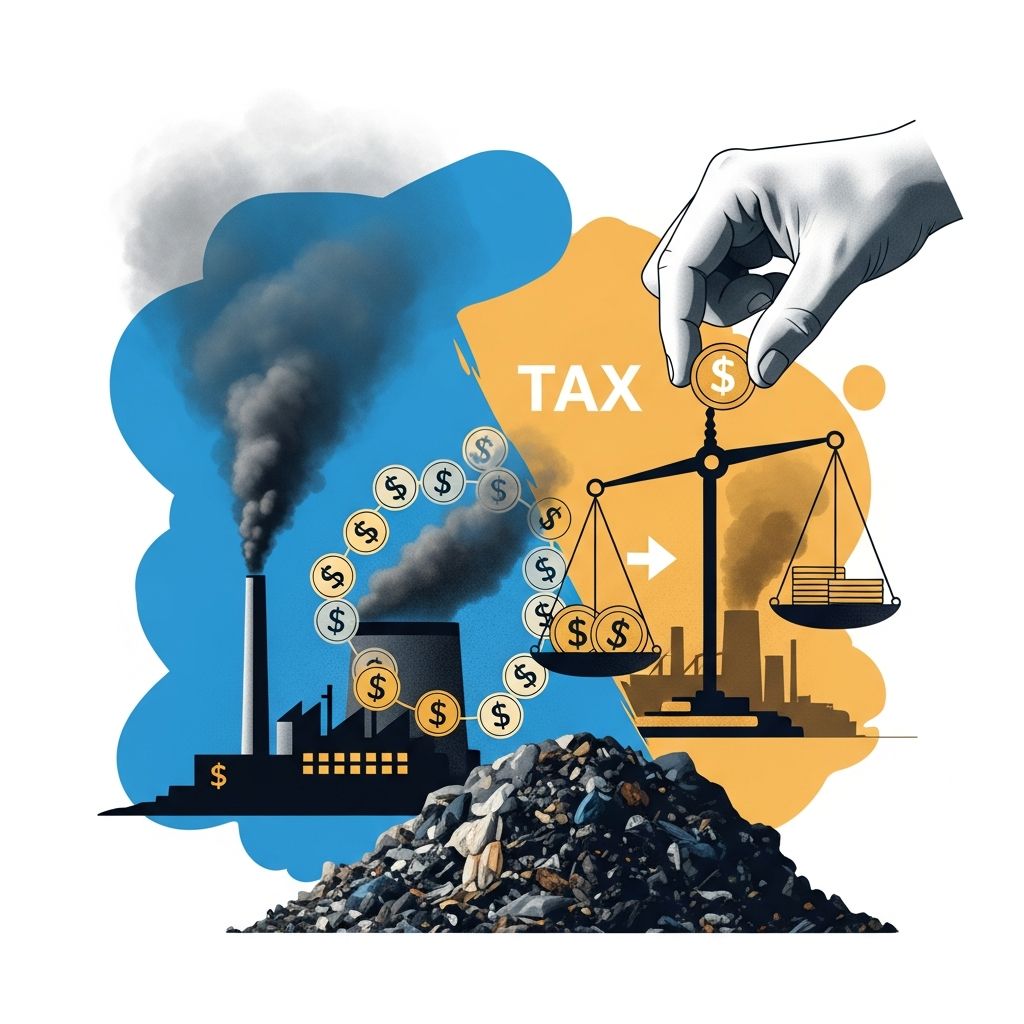
A Pigouvian tax is a tax imposed on economic activities that generate negative externalities—costs borne by third parties who are not directly involved in the transaction. Named after British economist Arthur Cecil Pigou, who developed the concept in the 1920s, this tax mechanism aims to correct market failures by making producers and consumers bear the full social cost of their economic decisions.
The fundamental principle behind a Pigouvian tax is straightforward: when an economic activity creates costs that society must bear—such as pollution, congestion, or public health expenses—the market price does not reflect the true cost to society. By imposing a tax equal to these external costs, the government can “internalize the externality,” ensuring that the final price consumers pay includes both private costs and social costs.
The Economic Theory Behind Pigouvian Taxes
Understanding Pigouvian taxes requires grasping the concept of market efficiency. In an unregulated free market, equilibrium occurs where supply equals demand. However, when negative externalities exist, this equilibrium is not socially efficient. Producers do not naturally account for the harm their activities cause to others, leading to overproduction of harmful goods and underproduction of beneficial ones.
Pigou’s solution involves adjusting prices through taxation to reflect the marginal external cost. When a Pigouvian tax is properly implemented, it shifts the supply curve upward by the amount of the externality. This reduces both the quantity demanded and supplied, moving the market toward social efficiency where the marginal social cost equals the marginal social benefit.
The beauty of this approach lies in its elegance: rather than government dictating specific production levels or imposing heavy-handed regulations, the tax allows market forces to adjust naturally. Producers and consumers respond to price signals, changing their behavior without direct government intervention.
Pigou’s Original Factory Example
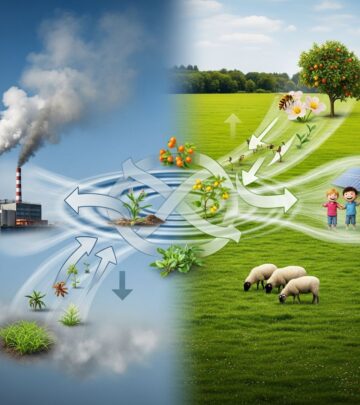
To illustrate his concept, Pigou provided a compelling example: a contractor building a factory in a crowded neighborhood. While the factory generates private profits for the contractor, it imposes significant costs on nearby residents who bear no responsibility for its creation. These external costs include:
- Air and water pollution affecting respiratory and overall health
- Increased traffic congestion from factory operations and deliveries
- Loss of natural light for neighboring properties
- Reduced property values due to proximity to industrial activity
- Noise pollution disrupting daily life and peace
In this scenario, the factory owner profits from the venture but doesn’t pay for the damage caused to neighbors. A Pigouvian tax would require the factory owner to pay a tax equivalent to the external costs imposed, effectively forcing them to account for the harm their business creates. This increased cost would either reduce production or incentivize the adoption of cleaner technologies.
Pigouvian Tax on Alcohol: A Historical Perspective
Pigou used alcohol taxation as another key example of his theory in practice. He observed that while alcohol producers earned profits from sales, they did not bear the external costs associated with alcohol consumption. These costs include:
- Police services required to handle alcohol-related crime and disturbances
- Healthcare expenses for treating alcohol-related illnesses and injuries
- Prison costs for incarcerating individuals convicted of alcohol-related crimes
- Loss of productivity in the workplace due to alcoholism
- Social services supporting families affected by substance abuse
By taxing alcohol, governments could raise revenue to fund these services while simultaneously discouraging excessive consumption through higher prices. Most countries already employed alcohol taxes when Pigou wrote, suggesting that policymakers intuitively understood this principle even before the formal economic theory was developed.
Real-World Examples of Pigouvian Taxes
Carbon and Environmental Taxes
Carbon taxes represent one of the most prominent modern applications of Pigouvian tax theory. By taxing greenhouse gas emissions or fossil fuels, governments aim to internalize the costs of climate change and environmental degradation. Carbon taxes encourage businesses to reduce emissions, invest in renewable energy, and adopt cleaner production processes. Other environmental taxes include fuel taxes, which address both pollution and traffic congestion.
Sin Taxes on Tobacco and Sugary Drinks
Taxes on tobacco and sugary beverages exemplify Pigouvian taxes targeting health-related externalities. Tobacco taxes account for passive smoking effects and public health costs from smoking-related diseases. Similarly, taxes on sugary drinks address obesity, diabetes, and other health conditions, with proceeds often funding public health initiatives.
Congestion Charges
Urban congestion charges, implemented in cities like London and Singapore, tax drivers during peak hours. These charges internalize the external costs of congestion—including time lost, increased emissions, and infrastructure wear—encouraging alternative transportation methods and reducing urban traffic.
Other Contemporary Examples
Modern Pigouvian taxes extend beyond traditional categories. Meat taxes address environmental costs from livestock production. Plastic bag taxes reduce litter and ocean pollution. Noise taxes encourage quieter operations in industrial areas. Cannabis taxes address public health and social costs. Luxury taxes, while sometimes justified by different rationales, can also serve Pigouvian purposes by taxing resource-intensive consumption.
How Pigouvian Taxes Function in Practice
The mechanism of a Pigouvian tax involves several steps. First, government identifies an economic activity generating negative externalities and estimates the marginal external cost per unit of activity. Second, it imposes a tax equal to this cost, which effectively increases the supply price by the amount of the externality. Third, consumers and producers respond by reducing quantity demanded, as the higher price reflects the true social cost.
For example, consider a factory producing steel with significant air pollution. If the pollution damages neighboring properties and health at a cost of $100 per ton of steel produced, the government might impose a $100 tax per ton. This forces the factory owner to decide: pay the tax, reduce production, invest in pollution-control technology, or relocate. Most likely, they choose a combination of these options, resulting in less pollution than would occur without the tax.
Pigouvian Subsidies: The Flip Side
While Pigouvian taxes address negative externalities, Pigouvian subsidies handle positive externalities—benefits enjoyed by third parties without compensation. If a good produces external benefits yet remains underconsummed in a free market, the government can subsidize it to increase consumption toward the socially optimal level. Examples include subsidies for education, vaccination programs, and renewable energy development. Just as a Pigouvian tax makes people pay for external costs they impose, a Pigouvian subsidy compensates people for external benefits they provide.
Advantages of Pigouvian Taxes
Economists widely support Pigouvian taxes for several compelling reasons. First, they represent a minimally invasive policy tool. Rather than government mandating specific production levels or technology requirements, Pigouvian taxes work through price signals, allowing markets to find efficient solutions. This preserves economic freedom while correcting market failures.
Second, Pigouvian taxes generate government revenue. Unlike command-and-control regulations that impose costs without generating income, Pigouvian taxes raise funds that governments can redirect toward addressing the externality or reducing other distortionary taxes like income taxes. This creates a “double dividend”—correcting the market failure while improving overall economic efficiency.
Third, Pigouvian taxes incentivize innovation. By making pollution, congestion, or harmful consumption more expensive, they encourage businesses to develop cleaner technologies and more efficient processes. This dynamic benefit often exceeds the static efficiency gains from simple quantity reductions.
The Pigou Club
The Pigou Club comprises prominent economists supporting widespread use of Pigouvian taxes to correct market failures. Notable members include Greg Mankiw, former chairman of the President’s Council of Economic Advisers, and numerous other leading economists across the political spectrum. This bipartisan support reflects the theoretical soundness of Pigouvian tax principles and their practical effectiveness in addressing market failures.
Challenges and Practical Limitations
Despite their theoretical elegance, Pigouvian taxes face significant implementation challenges. Accurately measuring external costs proves difficult. How much is pollution worth? What is the precise health cost of a sugary drink? Different estimates lead to different tax levels, and setting the tax too low fails to correct the market failure while setting it too high creates deadweight loss in the opposite direction.
Additionally, determining whether to tax quantity, emissions percentage, or other metrics significantly affects outcomes. A tax per unit of output may differ from a tax per unit of pollution, creating different incentives for technological change. Political considerations also complicate implementation—industries subject to Pigouvian taxes often lobby against them, and public resistance to “sin taxes” can limit effectiveness.
Comparison Table: Common Pigouvian Taxes and Their Targets
| Tax Type | Primary Externality | Implementation |
|---|---|---|
| Carbon Tax | Climate change, pollution | Tax per ton of CO2 emissions |
| Tobacco Tax | Public health, passive smoking | Tax per cigarette pack or percentage of price |
| Congestion Charge | Traffic congestion, pollution | Fee for driving in congested areas during peak hours |
| Sugar Tax | Obesity, diabetes, health costs | Percentage tax on beverages with added sugars |
| Plastic Bag Tax | Litter, ocean pollution | Fee per plastic bag at point of purchase |
Frequently Asked Questions
Q: What is the primary goal of a Pigouvian tax?
A: The primary goal is to internalize negative externalities by making the price of a good reflect its true social cost, including the costs borne by third parties. This corrects market failure and moves the economy toward socially efficient equilibrium.
Q: Who benefits from Pigouvian taxes?
A: Society benefits through reduced external costs and improved resource allocation. The government benefits from generated revenue. Consumers may benefit through reduced consumption of harmful goods. Producers face incentives to innovate and develop cleaner alternatives.
Q: How do Pigouvian taxes differ from other environmental regulations?
A: Unlike command-and-control regulations that dictate specific outcomes, Pigouvian taxes use price signals to incentivize behavior change. They preserve market mechanisms while correcting failures, typically generating revenue in the process.
Q: Can Pigouvian taxes be too high?
A: Yes. If a tax exceeds the marginal external cost, it creates its own inefficiency by overcorrecting the market failure. Setting the tax too high reduces production below socially optimal levels and creates deadweight loss.
Q: Are Pigouvian taxes progressive or regressive?
A: This depends on consumption patterns. Taxes on luxury goods tend to be progressive (burden higher-income households more), while taxes on necessities tend to be regressive (burden lower-income households more). Alcohol and tobacco taxes, for instance, disproportionately affect lower-income consumers.
Conclusion
Pigouvian taxes represent an elegant economic solution to a fundamental market problem: when producers and consumers don’t bear the full cost of their decisions, they make socially suboptimal choices. By correctly calibrating taxes to match external costs, governments can correct these market failures while preserving economic efficiency and generating revenue for public purposes. From carbon taxes addressing climate change to sin taxes targeting public health, Pigouvian taxes remain among the most theoretically sound and practically useful policy tools available to policymakers seeking to align private incentives with social welfare.
References
- Pigovian Tax — Economics Help. Retrieved November 29, 2025. https://www.economicshelp.org/blog/glossary/pigovian-tax/
- Pigouvian Tax – Overview, How it Works, Advantages — Corporate Finance Institute. Retrieved November 29, 2025. https://corporatefinanceinstitute.com/resources/economics/pigouvian-tax/
- Pigouvian Tax — Wikipedia. Retrieved November 29, 2025. https://en.wikipedia.org/wiki/Pigouvian_tax
- What is a Pigouvian Tax? — Altertax Avocats. Retrieved November 29, 2025. https://www.altertax-avocats.com/en/pigouvian-tax/
- Pigouvian Taxation Challenges — Sustainability Directory. Retrieved November 29, 2025. https://pollution.sustainability-directory.com/term/pigouvian-taxation-challenges/
- Shaping Preferences with Pigouvian Taxes — Texas A&M Law Scholarship. 2024. https://scholarship.law.tamu.edu/facscholar/2157/
Similar Articles








Read full bio of medha deb