Physical Capital: Definition, Examples, and Economic Importance
Understanding physical capital: tangible assets that drive production and economic growth.
What Is Physical Capital?
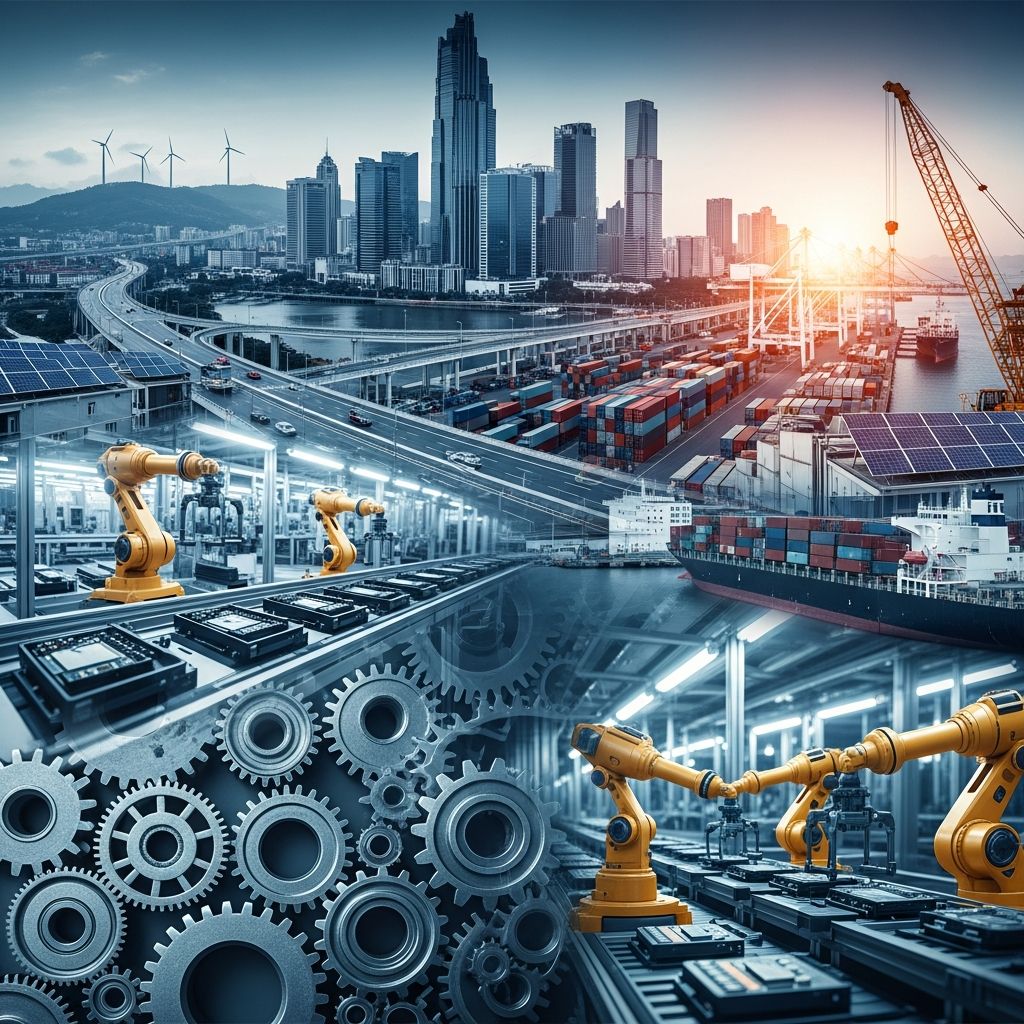
Physical capital represents one of the three primary factors of production in economics, serving as the tangible foundation upon which businesses build their operations. In essence, physical capital consists of man-made goods and structures that directly support and facilitate the production of other goods and services. These are the concrete, touchable assets that companies invest in to generate output and maintain competitive advantage in their respective markets.
The term “physical” is deliberately used to distinguish this form of capital from other types of capital that exist in the modern economy. While financial capital refers to money and investment funds, and human capital encompasses the skills, knowledge, and experience of workers, physical capital specifically denotes the machinery, buildings, vehicles, and equipment that enable production processes to occur. Understanding the distinction between these capital types is essential for business leaders, investors, and economists seeking to comprehend how modern enterprises function.
Definition and Core Characteristics
Physical capital can be formally defined as the tangible, man-made assets used in the production of goods and services. According to economic theory, these assets represent fixed capital and are essential inputs in any production function. The defining characteristics of physical capital include:
- Tangibility: Physical capital must be something you can see, touch, and measure. It has a physical presence in the material world.
- Man-made origin: Unlike natural resources, physical capital is created by human effort and investment. It does not occur naturally.
- Productive capacity: Physical capital must contribute directly or indirectly to the production of goods and services that generate economic value.
- Durability: Physical capital assets typically have a useful life spanning multiple accounting periods, allowing companies to depreciate them over time.
- Ownership: Physical capital can be owned by individuals, corporations, or governments, and ownership rights can be transferred or sold.
Common Examples of Physical Capital
Physical capital manifests in various forms across different industries and business sectors. Understanding concrete examples helps clarify how companies deploy these assets in their operations.
Manufacturing and Industrial Assets
Manufacturing facilities represent perhaps the most obvious form of physical capital. Factories contain machinery, assembly lines, conveyor systems, and specialized equipment designed to transform raw materials into finished products. These assets often represent substantial investments, sometimes costing millions of dollars. Additionally, warehouses that store raw materials, work-in-progress inventory, and finished goods constitute important physical capital for manufacturing enterprises.
Transportation and Logistics
Vehicles of all types serve as crucial physical capital. Delivery trucks, cargo planes, shipping containers, and rail cars enable companies to transport goods to customers and suppliers. Fleet management represents a significant capital investment for logistics companies, retailers, and service providers. Port facilities and transportation infrastructure also qualify as physical capital.
Commercial and Residential Real Estate
Land and buildings represent some of the most valuable physical capital assets. Office buildings house administrative functions and customer-facing operations. Retail stores provide locations where products are displayed and sold to consumers. Manufacturing plants process materials into finished goods. Warehouses store inventory. Residential properties generate rental income. Real estate investments often constitute the largest portion of a company’s physical capital.
Technology and Computing Infrastructure
In the modern digital economy, computer servers, networking equipment, data centers, and telecommunications infrastructure constitute essential physical capital. Software may be considered either physical capital or intangible capital depending on how it’s deployed, but the hardware infrastructure underlying digital operations clearly qualifies as physical capital.
Other Physical Capital Examples
Additional examples include cash registers and point-of-sale systems, furniture and fixtures, tools and hand equipment, livestock on farms, leasehold improvements, and specialized equipment for specific industries. Essentially, any tangible asset that a business uses to generate revenue qualifies as physical capital.
Physical Capital vs. Other Forms of Capital
The modern economy recognizes multiple forms of capital, each playing distinct roles in production and value creation. Understanding the differences proves essential for comprehensive business analysis.
| Capital Type | Nature | Examples | Measurability |
|---|---|---|---|
| Physical Capital | Tangible, man-made assets | Machinery, buildings, vehicles, equipment | Easily quantified on balance sheets |
| Human Capital | Intangible skills and knowledge of workers | Education, experience, expertise, creativity | Difficult to quantify; estimated through efficiency ratios |
| Financial Capital | Money and investment funds | Cash, stocks, bonds, bank accounts | Precisely measured in monetary units |
| Natural Capital | Resources provided by nature | Land, forests, minerals, water, fossil fuels | Measured by quantity and market value |
Physical Capital in Production Functions
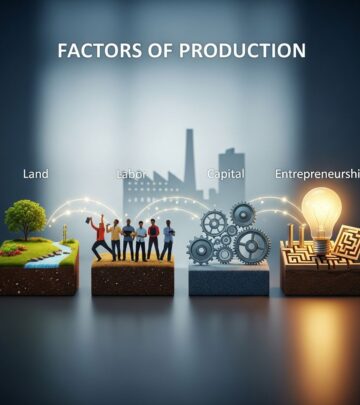
The production function, a fundamental concept in economics, describes the mathematical relationship between inputs used to produce goods and the quantity of output that results. Physical capital serves as one critical input variable in this function, working alongside labor, land, and organizational factors.
The basic production function can be expressed as:
Q = f(L, C, N)
Where Q represents the quantity of output, L represents labor input, C represents capital input, and N represents land or natural resources. In simplified two-factor models focusing on labor and capital, the production function becomes:
Q = f(L, C)
The production function demonstrates that output depends on the quantities of available inputs. As physical capital increases while other factors remain constant, output typically increases, demonstrating the productive contribution of capital assets. Conversely, with insufficient physical capital, even abundant labor and land cannot generate optimal production levels.
Technology significantly influences production functions. As technology advances, companies can achieve the same output with fewer inputs, or produce greater output from existing inputs. Technological innovation essentially shifts the production function upward, enabling greater efficiency and productivity.
Maximizing Returns Through Proper Capital Combination
Producers face the continuous challenge of combining factors of production most efficiently. The principle of equimarginal returns guides this optimization. This principle states that maximum production occurs when the marginal returns of all production factors are equal—that is, when the marginal product of land equals the marginal product of labor, which equals the marginal product of capital.
In practical terms, this means companies should adjust their factor combinations to achieve balance. If land is yielding higher marginal returns than capital, producers should shift resources toward additional land investment until returns equalize. This optimization principle helps companies maximize profit while minimizing costs through ideal factor combinations.
Physical Capital in Financial Accounting
Accountants and financial analysts track physical capital primarily through balance sheet reporting. Physical capital appears as a tangible asset on the balance sheet, recorded at historical cost rather than current market value. This accounting convention means that assets purchased years ago appear at their original purchase price, adjusted for accumulated depreciation.
Balance Sheet Treatment
Physical capital is classified and ordered on balance sheets based on liquidity and solvency considerations. Fixed assets with longer useful lives appear separately from current assets. The detailed categorization helps stakeholders understand the composition of a company’s asset base and the durability of its productive capacity.
Historical Cost vs. Market Value
A critical distinction in accounting involves historical cost, which is what companies paid for assets, versus market value, which represents what those assets could sell for today. Book value—the historical cost minus accumulated depreciation—typically differs from market value. This divergence becomes particularly significant for real estate and other assets that appreciate or depreciate differently than their accounting treatment suggests.
Measuring Capital Investment Performance
Investors and managers measure the productivity of physical capital investments using key financial ratios. Return on Assets (ROA) indicates how efficiently a company uses its assets to generate earnings. Return on Equity (ROE) shows how effectively management deploys shareholder capital. These metrics help analysts assess whether capital investments are generating appropriate returns relative to their costs.
Physical Capital and Intangible Assets
While physical capital appears clearly on balance sheets, intangible assets like human capital and brand value remain more difficult to quantify and represent. Goodwill accounts for some intangible value when companies acquire other businesses, but much human capital value remains unmeasured in formal accounting statements, even though it significantly influences operational success.
Strategic Importance of Physical Capital Investment
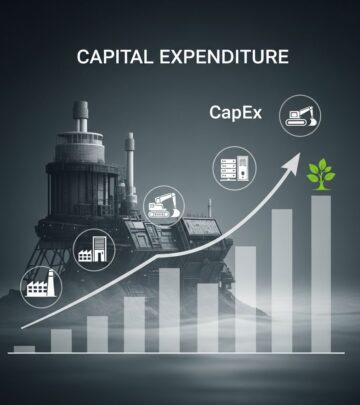
Physical capital investment decisions profoundly impact business strategy and competitive positioning. Companies must carefully evaluate capital expenditure decisions, considering factors such as expected useful life, maintenance costs, technological obsolescence risk, and alternative uses for invested funds.
Long-term competitive advantage often depends on maintaining an optimal physical capital base. Companies that under-invest in physical capital may struggle with outdated equipment and inefficient facilities. Conversely, over-investment in capital ties up resources that might generate better returns in other applications.
Strategic capital investment also influences a company’s ability to scale operations, enter new markets, or improve production efficiency. Industries with high capital requirements—such as manufacturing, utilities, and transportation—face particular challenges in capital allocation and must generate sufficient returns to justify substantial ongoing investments.
Depreciation and Capital Maintenance
Physical capital assets typically deteriorate over time through use and obsolescence. Companies must account for this through depreciation, which systematically allocates an asset’s cost over its expected useful life. Different depreciation methods—straight-line, accelerated, or units-of-production—affect how quickly costs flow through income statements.
Beyond accounting depreciation, companies must invest in maintenance and replacement to sustain their physical capital base. This ongoing capital investment represents a necessary expense to prevent operational decline and maintain productive capacity for future periods.
Frequently Asked Questions
Q: How does physical capital differ from current assets?
A: Physical capital typically consists of long-term fixed assets with useful lives exceeding one year, while current assets like inventory and cash are consumed or converted within a single accounting period. Physical capital appears as non-current assets on balance sheets.
Q: Can a company operate without physical capital?
A: Pure service businesses with minimal physical infrastructure might operate with relatively little physical capital, relying primarily on human capital. However, most companies require at least some physical capital to conduct operations effectively.
Q: How do companies finance physical capital acquisitions?
A: Companies finance capital purchases through retained earnings, debt financing (loans and bonds), equity financing (stock issuance), or leasing arrangements. The optimal financing approach depends on the company’s capital structure, cost of capital, and strategic objectives.
Q: What is the relationship between physical capital and productivity?
A: Generally, increased physical capital leads to higher productivity, enabling workers to produce more output per labor hour. However, productivity also depends on capital quality, maintenance, technological sophistication, and worker skill levels.
Q: How do technological advances affect physical capital requirements?
A: Technological advances often reduce physical capital requirements by enabling more efficient production processes. However, companies must often invest in new capital equipment to implement new technologies, creating initial capital expenditure needs.
Q: Can intellectual property be considered physical capital?
A: Intellectual property like patents and copyrights is classified as intangible capital rather than physical capital. The physical manifestation—such as a patented machine—would qualify as physical capital, but the intellectual rights themselves do not.
References
- Economics — N. Gregory Mankiw. Cengage Learning, 2020. https://www.cengage.com/
- Physical Capital and Economic Growth — World Bank. 2024. https://www.worldbank.org/
- Accounting for Fixed Assets — Financial Accounting Standards Board (FASB). 2024. https://www.fasb.org/
- Production Functions and Capital Theory — International Monetary Fund (IMF). 2024. https://www.imf.org/
- Principles of Microeconomics — OpenStax. Rice University, 2024. https://openstax.org/
Similar Articles








Read full bio of Sneha Tete