Personal vs. Business Bank Accounts: Financial Separation
Understand when you can mix finances and why separation matters for your business.
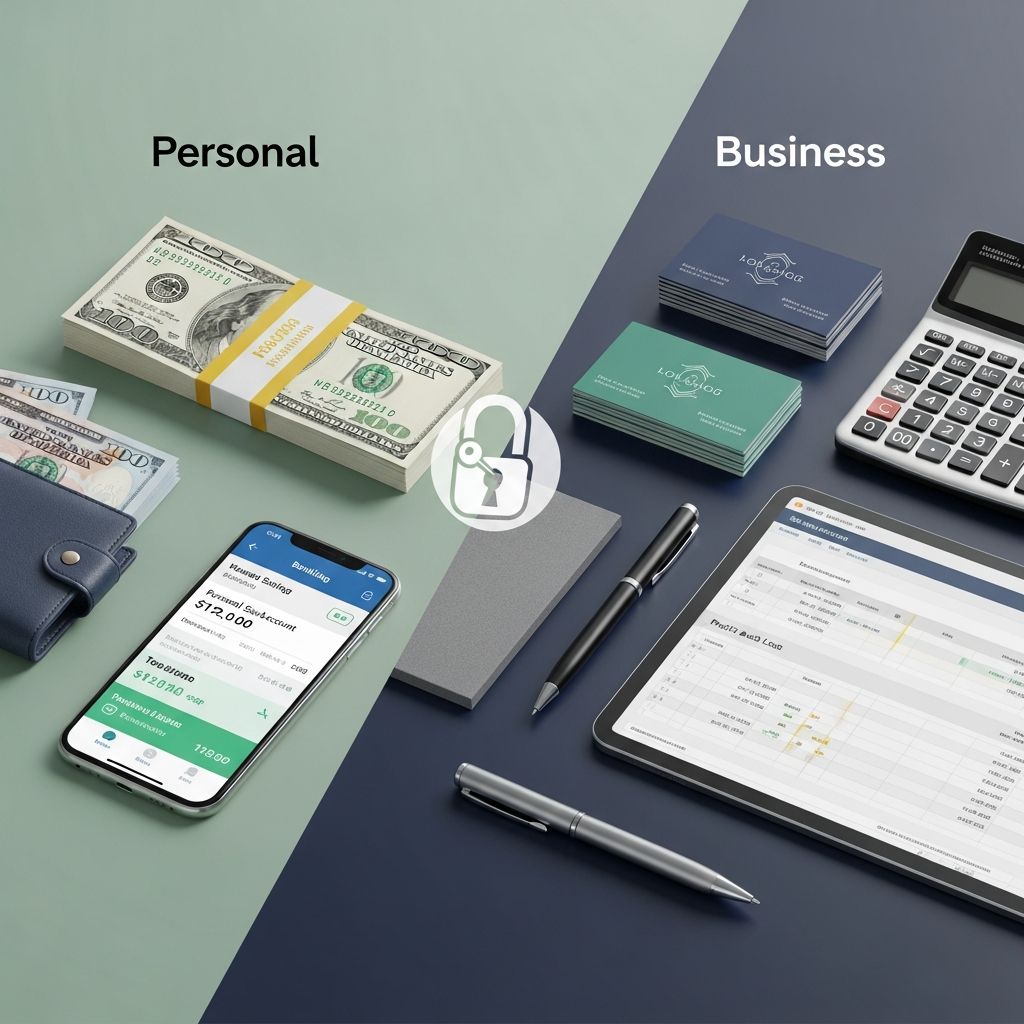
When starting a small business, one of the earliest decisions entrepreneurs face involves managing their finances. Many new business owners wonder whether they can simply deposit business revenue into their existing personal bank account rather than opening a separate business account. While this approach may seem convenient, the answer involves several important legal, tax, and financial considerations that vary depending on your business structure.
Understanding Your Business Structure and Banking Options
The relationship between your personal finances and business finances depends heavily on how you’ve organized your business legally. Different business structures—from sole proprietorships to corporations and limited liability companies—each have distinct requirements and implications regarding financial management.
For sole proprietors, the law treats you and your business as one entity. This fundamental characteristic means there is no legal separation between your personal identity and your business identity. Consequently, sole proprietors have more flexibility regarding banking arrangements. Unlike corporations or LLCs, sole proprietors are not legally required to maintain a separate bank account for their business operations. However, this legal permission does not necessarily mean it’s advisable.
In contrast, corporations and limited liability companies (LLCs) represent distinct legal entities separate from their owners. This separation creates what’s known as the “corporate veil,” which shields personal assets from business liabilities. When you establish an LLC or corporation, that legal entity must conduct its financial affairs through its own bank account to maintain this crucial distinction.
The Reality of Financial Commingling and Its Consequences
Even though sole proprietors technically can use personal accounts for business purposes, commingling personal and business funds creates significant problems that extend beyond mere administrative inconvenience.
Accounting and Record-Keeping Challenges
When business transactions occur in a personal account alongside personal expenses, distinguishing between the two becomes increasingly difficult. During tax season, separating business deductions from personal expenses requires extensive reconstruction of your financial history. The Internal Revenue Service specifically considers whether you “maintain accurate books and records” as one of nine key factors in determining whether your venture qualifies as a legitimate business or merely a hobby. Commingled accounts make demonstrating this compliance significantly harder.
The IRS may question your tax deductions, request additional documentation, or even initiate an audit if your records appear disorganized or if business and personal expenses are intertwined. This scrutiny can result in:
- Disallowed tax deductions you believed were legitimate business expenses
- Penalties and interest charges on underpaid taxes
- Extended audit periods requiring extensive documentation
- Complications in proving the business nature of your operations
Piercing the Corporate Veil
For business owners who have formed an LLC or corporation, commingling personal and business finances can undermine the liability protection that motivated them to form these entities in the first place. Legal professionals refer to this destruction of liability protection as “piercing the corporate veil.” When courts discover that a business owner has not maintained clear financial separation between personal and business accounts, they may determine that the corporate veil is invalid.
If the corporate veil is pierced, your personal assets become vulnerable in business-related lawsuits. A plaintiff suing your business could potentially access your personal savings, home equity, and other personal assets—the exact outcome that forming an LLC or corporation was intended to prevent.
Critical Reasons to Maintain Financial Separation
Asset Protection and Liability Shielding
The primary advantage of forming an LLC or corporation involves protecting personal assets from business liabilities. When customers sue your business, creditors pursue claims against it, or business-related debts accumulate, you want your personal finances to remain insulated from these obligations. Maintaining a separate business bank account demonstrates to courts and creditors that you treat your business as a distinct entity. This documentation becomes crucial evidence should you need to defend against claims that the corporate veil should be pierced.
Conversely, making business purchases directly from personal accounts signals that you do not maintain proper separation between personal and business operations. This practice creates evidence that could be used against you in litigation.
Tax Compliance and Audit Readiness
Separate business accounts simplify tax filing by creating clear audit trails for all business transactions. When the IRS or state tax authorities examine your returns, they can easily verify that your reported business income and expenses correspond to actual bank transactions. This transparency reduces audit risk and strengthens your position should questions arise.
Additionally, separate accounts make it far easier to calculate estimated quarterly tax payments, track deductible expenses, and substantiate business losses or credits claimed on your return.
Professional Credibility and Business Development
Operating a professional business account signals legitimacy to clients, vendors, and financial institutions. When you issue checks or invoices from a business bank account, it reinforces your professional image. This credibility matters when establishing relationships with suppliers who may offer better terms to established businesses, or when customers evaluate whether to hire you.
Furthermore, business bank accounts form the foundation of business credit history. Lenders, landlords, and vendors typically report business payment history to business credit bureaus. By establishing a business account, you begin building this separate credit profile. Over time, a strong business credit history qualifies you for:
- Business credit cards with favorable terms
- Trade credit from suppliers
- Small business loans at competitive rates
- Commercial lines of credit
Bank Policies and Account Restrictions
Beyond legal considerations, your personal bank may have specific terms regarding business use of personal accounts. Many banks restrict or prohibit using personal checking accounts for business purposes in their account agreements. Violating these terms could result in:
- Account suspension or closure without warning
- Forfeiture of funds in the account
- Difficulty opening future accounts with that institution
- Damage to your banking relationship
Before using your personal account for any business purposes, review your account agreement or contact your bank directly to understand their policies. The cost of opening a separate business account is typically minimal compared to the potential consequences of violating account terms.
Opening a Business Bank Account: What You’ll Need
Despite potentially requiring more documentation than personal accounts, opening a business bank account is a straightforward process. Different business structures require different documentation, but most banks ask for:
| Documentation Type | Purpose | Who Needs It |
|---|---|---|
| Employer Identification Number (EIN) | Federal tax identification for the business | Corporations, LLCs, partnerships; optional for sole proprietors |
| Social Security Number | Personal tax identification | Sole proprietors; can substitute for EIN |
| Business Formation Documents | Proof of legal business structure | LLCs, corporations, partnerships |
| Operating Agreement or Bylaws | Governance and ownership documentation | LLCs and corporations |
| Business License or DBA Certificate | Local business authorization | Varies by location and business type |
| Government-Issued ID | Personal identification | All account applicants |
The specific requirements vary by bank and business structure. Contact your preferred bank directly or visit their website to understand exactly what documentation you’ll need to provide. Most banks allow you to begin the process online or at a local branch.
Special Considerations for Different Business Structures
Sole Proprietors and Freelancers
Sole proprietors have the most flexibility regarding account choices. Since legally there is no separation between you and your business, using a personal account carries no legal prohibition. However, best practices still strongly favor separate accounts. The administrative benefits of maintaining clear financial records outweigh the convenience of using a single account. Additionally, many financial institutions now offer business accounts specifically designed for sole proprietors and freelancers at minimal cost.
Single-Member LLCs
Owners of single-member LLCs should note that while tax treatment may resemble a sole proprietorship (for federal tax purposes), the liability protection benefit of the LLC structure depends on maintaining corporate formalities—including financial separation. Using your personal account for an LLC essentially negates the primary reason for forming the LLC in the first place.
Multi-Member LLCs and Partnerships
These structures absolutely require separate business accounts. With multiple owners, there is no possibility of treating business finances as personal finances. Commingling funds creates accounting nightmares for tax purposes and makes partnership distributions virtually impossible to track.
Transitioning from Personal to Business Accounts
If you’ve been operating with a personal account and want to transition to a business account, the process is manageable. Most banks allow you to open a new business account once you have the necessary documentation. You can typically:
- Open the business account at your current bank or a different institution
- Gradually transition business transactions to the new account
- Close or convert the personal account once all business funds have been transferred
- Update customers, vendors, and billing services with the new account information
Many businesses maintain both accounts temporarily during the transition period to ensure continuity of operations.
Frequently Asked Questions
Is it legal to use a personal checking account for business?
Yes, particularly for sole proprietors. However, your bank may restrict this use in their account agreement, and doing so can create tax complications and undermine liability protection if you have an LLC or corporation.
What happens if I mix business and personal finances?
Mixing finances can complicate tax filings, trigger IRS scrutiny, result in denied deductions, cause the IRS to audit you, and potentially jeopardize the liability protection provided by an LLC or corporation structure.
Can I use a personal account for my LLC?
While technically possible, it is strongly inadvisable. Using a personal account undermines the limited liability protection that justifies forming an LLC. It can also result in courts piercing the corporate veil, leaving your personal assets vulnerable to business claims.
What documents do I need to open a business account as a sole proprietor?
Sole proprietors typically need their Social Security number (or EIN if obtained), a government-issued ID, proof of address, and possibly a business license or DBA certificate, depending on the bank and state requirements.
Can I switch from a personal to a business account later?
Yes. Most banks allow you to open a business account once you have the required documentation and can transition your finances from the personal account.
Will opening a business account help establish business credit?
Yes. A separate business account is the foundation of business credit history. Over time, consistent payment history through a business account can help you qualify for business credit cards, trade credit, and loans.
The Bottom Line
While sole proprietors may legally use personal bank accounts for business purposes, doing so creates unnecessary complications, tax risks, and potential liability exposure. A separate business account costs relatively little to establish and provides substantial protection and convenience in return. Whether you operate as a sole proprietor, have formed an LLC, or run a corporation, maintaining clear financial separation protects your personal assets, simplifies tax compliance, establishes professional credibility, and creates the foundation for building business credit. Opening a dedicated business account represents one of the most important financial decisions you can make as a business owner—and one that pays dividends long before your business becomes established.
References
- Can I Use a Personal Bank Account For My Small Business? — Experian. 2024. https://www.experian.com/blogs/ask-experian/can-i-use-personal-bank-account-for-my-small-business/
- Can I Use a Personal Checking Account for Business Purposes? — UpCounsel. 2024. https://www.upcounsel.com/can-a-business-use-a-personal-bank-account
- Can I Use My Personal Bank Account For Business? Key Tips — Wise. 2024. https://wise.com/us/blog/can-i-use-my-personal-bank-account-for-business
- Sole Proprietorship Bank Account Requirements — Novo. 2024. https://www.novo.co/blog/sole-proprietorship-bank-account-requirements
- Open a business bank account — U.S. Small Business Administration. 2024. https://www.sba.gov/business-guide/launch-your-business/open-business-bank-account
Similar Articles








Read full bio of medha deb