Personal Protective Equipment: Definition, Types, and Importance
Understanding PPE: Essential gear protecting workers from occupational hazards and risks.
What Is Personal Protective Equipment (PPE)?
Personal protective equipment, commonly referred to as PPE, represents any specialized clothing or equipment worn for protection against health and safety risks in the workplace. PPE serves as a critical barrier between workers and potentially hazardous conditions, ranging from physical injuries to chemical exposures, biological hazards, and environmental dangers. The primary objective of PPE is to reduce employee exposure to hazards when engineering controls and administrative measures prove inadequate to control occupational risks.
PPE is typically considered the last line of defense in the hierarchy of controls, which prioritizes eliminating hazards at their source first, followed by engineering controls, administrative measures, and only then personal protective equipment. However, in many workplace environments, PPE remains indispensable for maintaining worker safety and preventing potentially life-altering injuries or illnesses.
Types of Personal Protective Equipment
Personal protective equipment encompasses various categories of protective gear, each designed to protect specific body parts and defend against particular hazards. Understanding these different types helps workers and employers identify appropriate protection for their specific workplace environments.
Head and Face Protection
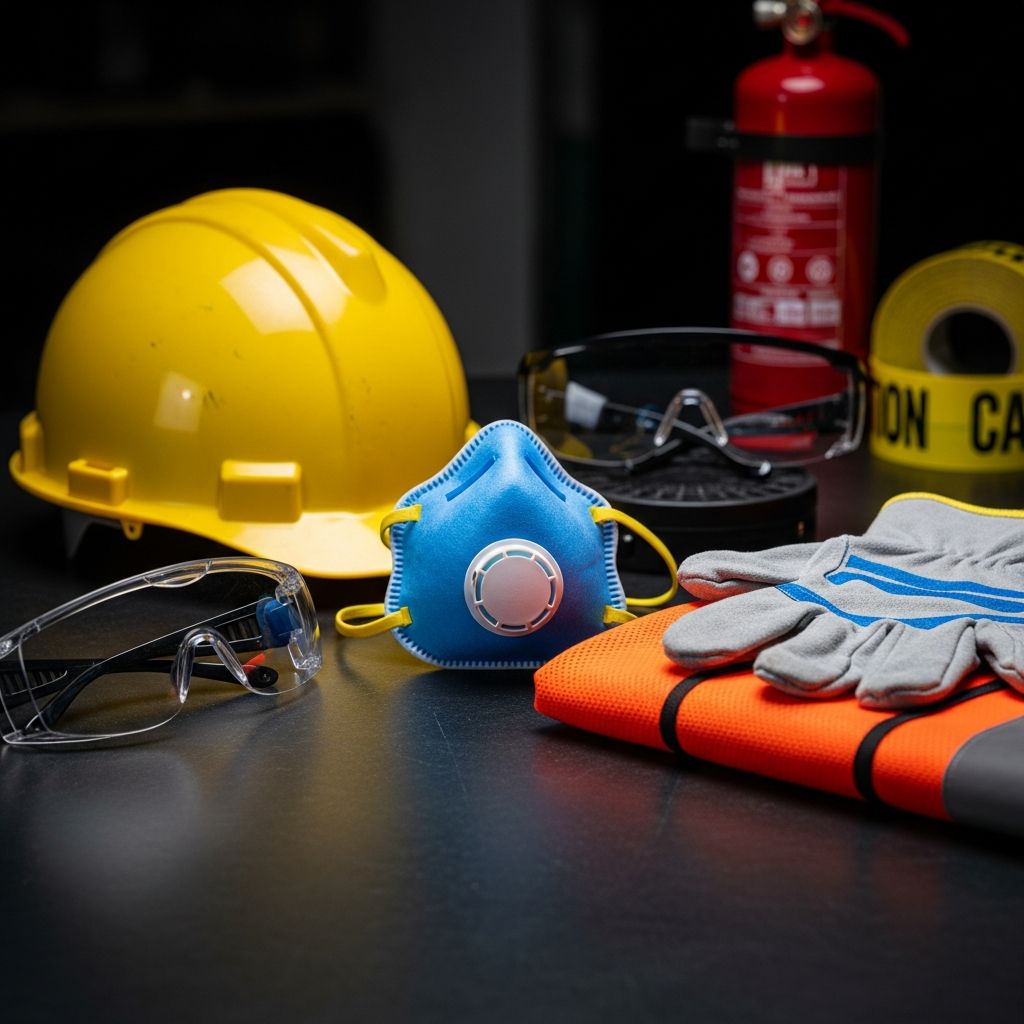
Head protection includes hard hats, helmets, and specialized headgear designed to protect workers from falling objects, electrical hazards, and impacts. Hard hats are commonly required in construction, mining, and manufacturing environments. Face protection equipment includes safety glasses, goggles, face shields, and welding masks that protect eyes and facial areas from chemical splashes, radiation, flying debris, and intense light exposure. Safety eyewear is among the most frequently required PPE across multiple industries.
Respiratory Protection
Respiratory protective equipment is essential in workplaces where air quality is compromised by dust, fumes, gases, or other airborne contaminants. Respirators range from simple dust masks to sophisticated supplied air respirators used in hazardous chemical environments. Proper fitting and regular maintenance of respiratory equipment is critical for effectiveness, as an ill-fitting respirator may allow hazardous substances to enter around the edges.
Hand and Foot Protection
Protective gloves safeguard workers’ hands from cuts, chemical burns, thermal injuries, and infectious materials. Different glove materials serve different purposes—latex for biological protection, nitrile for chemical resistance, leather for thermal protection, and specialized materials for electrical hazards. Safety footwear, including steel-toed boots and chemical-resistant shoes, protects feet from crushing injuries, puncture wounds, thermal exposure, and chemical contact.
Body and Torso Protection
Protective clothing includes laboratory coats, aprons, high-visibility vests, and full-body protective suits designed for specific hazards. Specialized garments protect against chemical splashes, electrical hazards, thermal burns, and visibility issues in transportation and construction environments. Body armor represents another category of protective equipment used in law enforcement and security settings.
Hearing Protection
Hearing protection equipment, such as earplugs and earmuffs, protects workers from noise-induced hearing loss in high-noise environments. These devices reduce sound exposure by attenuating loud noises while potentially allowing communication at normal levels, depending on the specific technology employed.
The Importance of PPE in the Workplace
Personal protective equipment plays a vital role in maintaining worker health and safety across numerous industries. The significance of PPE extends beyond individual worker protection to encompassing broader organizational benefits:
- Injury and Illness Prevention: PPE directly reduces the incidence and severity of workplace injuries and occupational illnesses by creating physical barriers between workers and hazards.
- Regulatory Compliance: OSHA and other regulatory bodies mandate appropriate PPE use in specific workplace environments, making compliance essential for legal operation.
- Reduced Healthcare Costs: By preventing injuries and illnesses, organizations reduce associated medical expenses, workers’ compensation claims, and lost productivity.
- Employee Morale: Providing appropriate safety equipment demonstrates employer commitment to worker well-being, improving job satisfaction and retention.
- Organizational Productivity: Healthy, protected workers experience fewer absences and maintain higher productivity levels compared to those suffering from preventable injuries.
PPE Selection and Implementation
Hazard Assessment
Proper PPE selection begins with comprehensive hazard assessment. Employers must identify specific workplace hazards, evaluate the nature and severity of potential exposures, and determine appropriate protective measures. This process involves reviewing job tasks, workplace conditions, and historical incident data to inform PPE requirements.
Proper Fit and Maintenance
Effective PPE requires proper fit for individual workers. Ill-fitting equipment compromises protection and may discourage consistent use. Organizations should establish procedures for fit testing, particularly for respiratory protective equipment. Regular maintenance, inspection, and replacement of damaged or worn equipment ensures continued effectiveness and worker safety.
Training and Education
Workers must receive comprehensive training on PPE use, including when specific equipment is required, how to properly don and doff protective gear, and maintenance procedures. Training should also address the limitations of specific PPE types and emphasize that protective equipment complements rather than replaces other safety measures.
Regulatory Requirements and Standards
In the United States, the Occupational Safety and Health Administration (OSHA) establishes and enforces standards governing PPE use across industries. OSHA regulations specify requirements for different workplace hazards, including standards for eye and face protection, head protection, foot protection, hand protection, and respiratory protection.
Different industries face specific PPE requirements based on their unique hazard profiles:
- Construction: Hard hats, safety footwear, and high-visibility clothing are standard requirements
- Healthcare: Gloves, masks, gowns, and eye protection protect against biological hazards and infectious materials
- Manufacturing: Goggles, hearing protection, and respiratory equipment address chemical and noise hazards
- Chemical Plants: Specialized suits, respirators, and gloves protect against toxic chemical exposures
- Mining: Hard hats, respiratory protection, and specialized clothing address unique underground environment hazards
PPE During Health Emergencies
The COVID-19 pandemic highlighted PPE’s critical importance during public health emergencies. Personal protective equipment, including face masks, respirators, face shields, and gloves, became essential for healthcare workers and essential personnel. The pandemic demonstrated both the necessity of adequate PPE stockpiles and the challenges of maintaining supply chains during crisis situations.
During health emergencies, PPE requirements often extend beyond traditional workplace settings to encompass community protection measures. Organizations and governments recognized that proper distribution and use of PPE could significantly impact disease transmission rates and healthcare system capacity.
Cost Considerations and Budget Planning
While PPE represents a significant operational expense for many organizations, the costs of workplace injuries and illnesses typically far exceed PPE investments. Organizations should evaluate PPE costs relative to potential injury expenses, insurance premiums, and regulatory penalties. Strategic PPE budgeting ensures adequate protection while maintaining fiscal responsibility.
Bulk purchasing of standard PPE items can reduce per-unit costs, while specialized equipment for specific hazards may require higher individual investments. Establishing relationships with reliable suppliers ensures consistent availability of appropriate equipment and may provide cost benefits through volume discounts.
Emerging PPE Technologies
Advances in materials science and engineering continue to improve PPE effectiveness and comfort. Smart protective equipment incorporating sensors and communication technology allows real-time monitoring of environmental conditions and worker exposure. Improved materials offer better protection with reduced weight and improved breathability, encouraging greater worker compliance and comfort during extended use.
Innovations include self-cooling protective clothing for thermal environments, respirators with voice communication capabilities, and protective equipment incorporating antimicrobial materials for biological hazard protection. These advancements make protective equipment more practical and effective for modern workplace environments.
Frequently Asked Questions About Personal Protective Equipment
Q: What is the difference between PPE and personal protection equipment?
A: These terms are used interchangeably. Both refer to specialized clothing or equipment worn to protect workers from workplace hazards and health risks.
Q: Who is responsible for providing PPE?
A: Generally, employers are legally responsible for providing appropriate PPE to employees at no cost. However, specific responsibilities vary by jurisdiction and industry regulations.
Q: How often should PPE be replaced?
A: Replacement frequency depends on the equipment type and usage. Some items like gloves may need daily replacement, while others like hard hats may last years if properly maintained. Always follow manufacturer recommendations and organizational policies.
Q: Can PPE completely eliminate workplace hazards?
A: No. PPE is the last line of defense and should be used alongside hazard elimination, engineering controls, and administrative measures. A comprehensive safety approach includes multiple protective layers.
Q: What should workers do if their PPE doesn’t fit properly?
A: Workers should immediately inform their supervisor or safety officer. Properly fitting equipment is essential for protection, so alternative sizes or styles should be provided until appropriate fit is achieved.
Q: Are there industry-specific PPE requirements?
A: Yes. Different industries face unique hazard profiles requiring specific PPE. OSHA maintains industry-specific standards addressing particular workplace dangers and appropriate protective measures.
Conclusion
Personal protective equipment represents an essential component of comprehensive workplace safety programs. By understanding PPE types, selection criteria, and proper usage, organizations can significantly reduce workplace injuries and illnesses while maintaining regulatory compliance. Effective PPE implementation requires hazard assessment, appropriate equipment selection, proper fit and maintenance, comprehensive training, and a culture emphasizing safety. While PPE should complement rather than replace other safety measures, its proper use provides critical protection for workers across all industries, ensuring they return home safely at the end of each workday.
References
- Occupational Safety and Health Standards: Personal Protective Equipment — U.S. Department of Labor, OSHA. 2024. https://www.osha.gov/pls/oshaweb/owadisp.show_document?p_table=standards&p_id=9777
- Personal Protective Equipment in the Workplace: A Comprehensive Review — Centers for Disease Control and Prevention (CDC). 2024. https://www.cdc.gov/niosh/topics/emres/chemagent.html
- Respiratory Protective Devices: Certification and Performance Standards — National Institute for Occupational Safety and Health (NIOSH). 2023. https://www.cdc.gov/niosh/topics/respirators/
- Global Personal Protective Equipment Market: Industry Analysis and Forecast — International Labour Organization (ILO). 2023. https://www.ilo.org/safework/
- Workplace Injury Prevention Through Protective Equipment Implementation — American Society of Safety Professionals (ASSP). 2024. https://www.assp.org/
Similar Articles








Read full bio of medha deb