Personal Loans vs Emergency Savings
Explore the financial trade-offs between borrowing and building emergency reserves

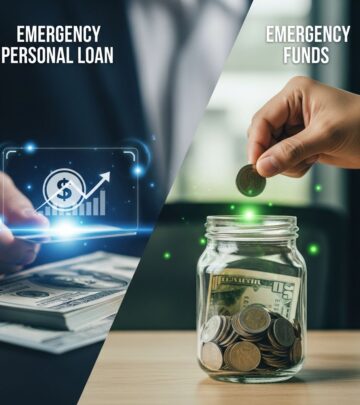
Financial emergencies strike without warning. A sudden medical bill, unexpected car repair, or job loss can quickly destabilize your finances if you’re unprepared. Two primary strategies exist for handling these situations: maintaining a dedicated emergency fund or accessing quick credit through a personal loan. While both approaches offer potential solutions, they come with vastly different implications for your long-term financial health and immediate cash flow. Understanding the nuances of each option helps you make an informed decision that aligns with your circumstances and risk tolerance.
Understanding the Core Difference
An emergency fund represents money you’ve accumulated specifically for unexpected expenses. This capital sits in an accessible account, typically earning minimal interest in a savings vehicle. In contrast, a personal loan involves borrowing money from a financial institution, which you must repay with interest over a fixed period. The fundamental distinction lies in ownership and obligation—your emergency fund is yours to use freely, while a personal loan creates a contractual debt requiring regular payments regardless of your financial circumstances.
The decision between these approaches isn’t simply about which one exists; rather, it’s about whether borrowing money to create an emergency safety net makes financial sense given interest rates, your creditworthiness, and your ability to repay.
The Financial Case for Emergency Savings
Eliminating Interest Expenses
The most compelling argument for maintaining an emergency fund centers on interest costs. When you borrow money through a personal loan, you pay interest on top of the principal amount. For individuals with average or poor credit scores, interest rates can exceed 20%, with some reaching into the triple digits depending on the lender and loan terms. Consider this practical example: a $10,000 emergency expense funded through a loan with an 11% interest rate over three years costs $1,772 in interest charges alone, bringing the total repayment to $11,772. If that rate climbs to 18%, the interest portion balloons to $2,948. By contrast, withdrawing from your emergency fund carries zero interest cost.
Speed and Accessibility
When a financial crisis emerges, time matters. Personal loans typically involve an application review process, credit checks, and approval procedures that can take days or even weeks before you receive funds. Emergency savings, conversely, sit in your bank account ready for immediate withdrawal. Most banks allow same-day or next-day access to your emergency fund, whereas waiting for loan approval during an urgent situation creates unnecessary stress and uncertainty.
Protecting Your Credit
Every loan application triggers a hard credit inquiry, which temporarily reduces your credit score. Additionally, taking on new debt increases your overall debt-to-income ratio, which credit bureaus use to calculate your creditworthiness. If you miss payments or struggle with the new loan obligation, your credit suffers long-term damage. Emergency fund withdrawal has no impact on your credit profile, allowing you to maintain your financial standing while addressing the crisis.
When Personal Loans Might Make Sense
Building Financial Security Immediately
Establishing a robust emergency fund requires discipline and time. Many people take months or years to accumulate three to six months of living expenses in savings. This extended timeline leaves them vulnerable to financial shocks during the accumulation phase. A personal loan, if obtained at favorable rates, can instantly create the safety net you need. If you have excellent credit and qualify for rates around 6%, the interest cost becomes more manageable, and the peace of mind from having accessible reserves might justify the expense.
Handling Expenses Beyond Fund Capacity
Some emergencies exceed typical emergency fund balances. A major medical procedure, substantial home repair, or significant job loss might deplete savings entirely. In these extreme situations where your accumulated reserves prove insufficient, a personal loan bridges the gap. Rather than facing the full emergency without resources, borrowing supplements your savings to cover the complete expense.
Avoiding Predatory Lending During Crisis
Interestingly, establishing a personal loan before an emergency occurs can actually protect you from worse debt traps. If you wait until crisis hits to seek funding, you may qualify only for extremely high-rate loans or find yourself forced toward payday loans, title loans, or other predatory lending vehicles. Securing a personal loan with favorable terms while your finances are stable ensures that if emergency strikes and you’ve exhausted savings, you have access to reasonable credit rather than desperation-driven borrowing at exploitative rates.
Comparing Financial Outcomes
| Factor | Emergency Fund | Personal Loan |
|---|---|---|
| Interest Costs | None (may earn minimal interest) | Significant, depending on credit and rate |
| Access Speed | Immediate (same day) | Several days to weeks |
| Credit Score Impact | None | Temporary reduction from inquiry |
| Monthly Obligations | None | Fixed payment required |
| Time to Establish | Months to years | Quick (hours to days) |
| Risk of Debt Spiral | Low | Moderate to high |
The Hidden Dangers of Loan-Funded Emergency Reserves
Monthly Payment Burden
Once you secure a personal loan, you’ve created a recurring financial obligation. Every month, a predetermined amount comes due regardless of your current financial situation. If you face subsequent emergencies or income disruption, this fixed payment can strain your budget significantly, potentially forcing you into additional debt to cover both the loan payment and new expenses. A study found that 53 percent of people maintain less than three months’ worth of emergency savings, suggesting many Americans are already financially stretched. Adding a loan payment to an already tight budget increases financial fragility rather than decreasing it.
Creating a Debt Dependency Pattern
Using personal loans to fund emergency reserves establishes a psychological pattern of turning to borrowing when faced with financial uncertainty. This habit can become self-reinforcing, with individuals increasingly comfortable using credit to solve problems rather than building resilience through savings. Over time, this approach replaces genuine financial security with the illusion of security, leaving you perpetually obligated to lenders.
Misalignment with the Fund’s Purpose
An emergency fund’s core purpose is providing freely available capital for true emergencies. When that fund consists of borrowed money, you’re not actually improving your financial position—you’re simply shifting the debt forward. The psychological benefit of “having reserves” disappears when you realize those reserves require repayment, defeating the peace-of-mind benefit many cite as a reason to fund this way.
Building True Financial Security
A Realistic Accumulation Strategy
Rather than using loans to accelerate fund-building, consider systematic saving strategies that create genuine wealth. Begin with a modest goal—perhaps $1,000 to cover minor emergencies—before expanding toward three to six months of living expenses. Automate transfers from each paycheck to a dedicated savings account, treating this money as non-negotiable as mortgage or rent payments. Over time, this approach builds both financial resources and spending discipline.
The Hybrid Approach for Severe Situations
For those facing particularly urgent circumstances, a hybrid strategy might apply: maintain whatever emergency savings you can while securing a low-rate personal loan as a backup resource. This combination provides immediate reserves while also establishing a safety net if savings prove insufficient. However, this approach works only if you genuinely commit to not using the loan except in extreme circumstances and if you can qualify for favorable interest rates.
Frequently Asked Questions
Can I get a personal loan with bad credit?
Yes, but expect significantly higher interest rates. Lenders view bad credit as higher risk and charge accordingly. Many subprime lenders offer triple-digit APRs, making the debt quite expensive. Before accepting such a loan, carefully evaluate whether the emergency truly justifies the cost, or whether alternatives exist.
What interest rates do personal loans typically carry?
Rates vary dramatically based on creditworthiness. Excellent credit might qualify you for rates around 6%, while average credit ranges from 10-20%, and poor credit can exceed 36% or higher. Always compare multiple lenders and avoid those guaranteeing automatic approval, as these often charge predatory rates.
How long does personal loan approval take?
Online lenders often provide approval within hours or a day, with funding arriving within 1-3 business days. Traditional banks may take longer. This speed, while potentially convenient, doesn’t match the immediate availability of emergency savings.
Should I use my emergency fund for non-emergency expenses?
Generally, no. Emergency funds serve a specific purpose—covering unexpected essential expenses. Using these reserves for discretionary purchases depletes your safety net exactly when protection matters most. If you need additional funds, explore alternatives like adjusting your budget or taking a personal loan for non-emergency purposes rather than raiding emergency savings.
What if I can’t repay a personal loan?
Missed payments damage your credit score, potentially trigger collection agencies, and create cascading financial problems. Unlike emergency fund withdrawal, loan default has serious long-term consequences. This risk underscores why relying on borrowed money as your only emergency backup poses genuine danger.
Making Your Decision
The choice between using a personal loan to fund emergency savings versus building reserves through gradual accumulation ultimately depends on your specific circumstances. If you have excellent credit, can secure a favorable interest rate below 8%, and genuinely cannot build savings through any other means, a low-rate loan might temporarily bridge the gap. However, for most people, the financial mathematics favor building an actual emergency fund through persistent saving.
The interest costs, credit impact, monthly payment obligations, and psychological trap of debt dependency typically outweigh the convenience of rapid funding. Instead, commit to the discipline of regular savings, even if progress feels slow. Your future self will appreciate the genuine financial security that earned reserves provide far more than the false confidence of borrowed emergency funds.
True financial stability emerges not from quick fixes through loans, but from deliberate choices to accumulate resources that belong entirely to you, requiring no repayment and carrying no risk of becoming another monthly obligation.
References
- Should You Use a Personal Loan as an Emergency Fund? — Experian. Accessed 2026-03-31. https://www.experian.com/blogs/ask-experian/should-you-use-personal-loan-as-emergency-fund/
- Emergency Personal Loan vs. Emergency Fund: Which is Best? — MoneyRates. Accessed 2026-03-31. https://www.moneyrates.com/personal-loans/emergency-personal-loan-vs-emergency-funds.htm
- Emergency Loans: Pros, Cons & Other Considerations — LendingTree. Accessed 2026-03-31. https://www.lendingtree.com/personal/pros-cons-emergency-loans/
- Emergency Savings or Personal Loan? How to Handle a Financial Crisis — Britannica Money. Accessed 2026-03-31. https://www.britannica.com/money/using-emergency-savings-emergency-loan
- Pros and Cons of Having an Emergency Fund — North Shore Bank. Accessed 2026-03-31. https://www.northshorebank.com/about-us/connecting-with-you/budgeting/pros-and-cons-of-having-an-emergency-fund
- Pros and Cons of Emergency Loans: When to Get One — Bankrate. Accessed 2026-03-31. https://www.bankrate.com/loans/personal-loans/pros-and-cons-of-emergency-loans/
- Is a Personal Loan Right for Emergency Expenses? — JG Wentworth. Accessed 2026-03-31. https://www.jgwentworth.com/resources/mp-is-a-personal-loan-right-for-emergency
Similar Articles








Read full bio of medha deb