Personal Loans vs. Credit Cards: Understanding Interest Rate Penalties
Explore how personal loans differ from credit cards when it comes to penalty interest rates and late payment consequences.
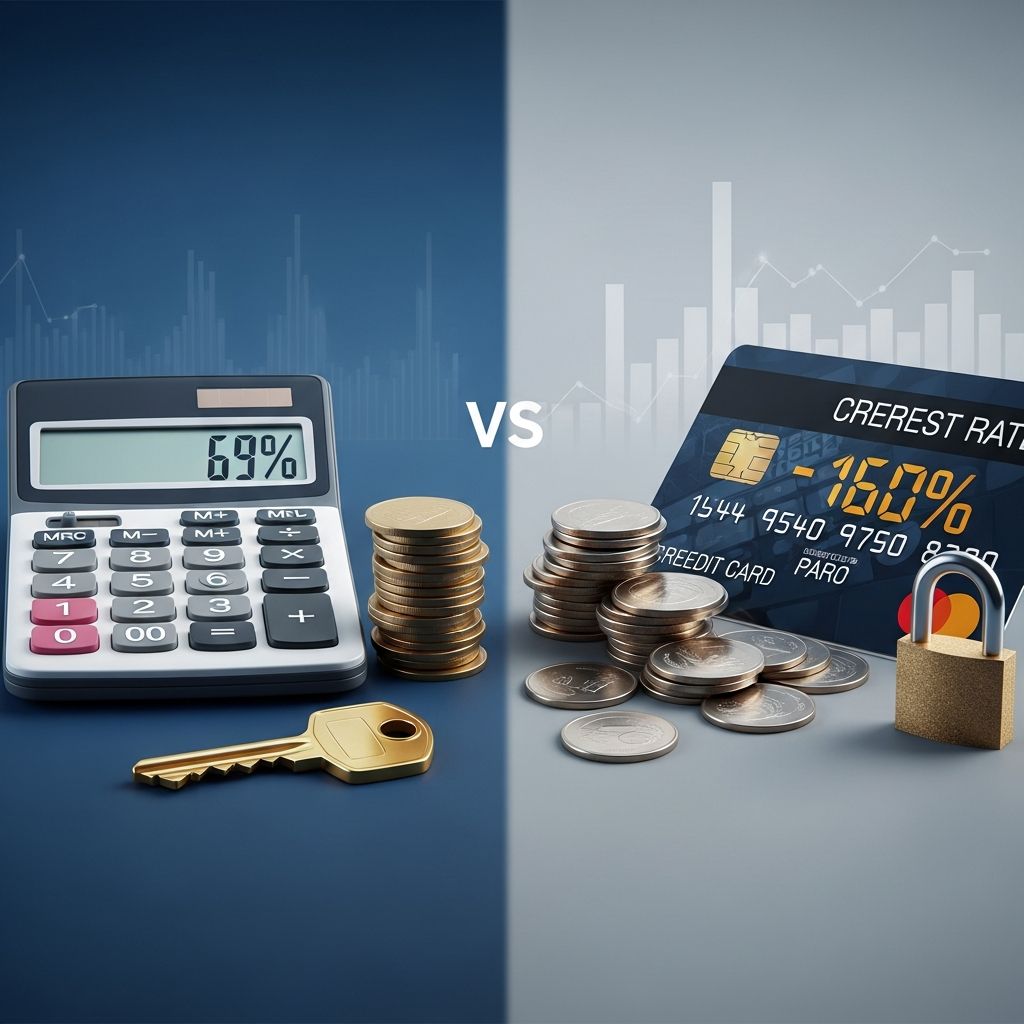
When considering borrowing options, many consumers wonder whether personal loans and credit cards operate under the same rules when it comes to interest rate increases following missed payments. While both are common forms of unsecured debt, they function quite differently when penalties come into play. Understanding these distinctions can help you make informed decisions about which borrowing product best suits your financial situation and risk tolerance.
How Personal Loans Treat Late Payments Differently
One of the most significant differences between personal loans and credit cards is how lenders respond to payment delinquency. Personal loans typically do not impose what is known as a penalty annual percentage rate (APR), which is the dramatic interest rate increase that credit card issuers can apply when you violate the terms of your account. This fundamental distinction means that if you take out a personal loan and experience temporary financial difficulties, you will not face the same escalating interest rate burden that credit card holders encounter.
Instead of applying a penalty APR, personal loan lenders address late payments through other mechanisms. When you miss a payment on a personal loan, you may be subject to a late fee—a flat charge assessed by the lender for the payment arriving after the due date. These fees typically range from a small percentage of your monthly payment to a fixed amount, depending on your loan agreement. This approach, while still costly, provides more predictability than the variable penalty rates associated with credit cards.
Understanding Penalty APRs and Their Primary Target
A penalty APR represents a substantially higher interest rate that lenders can apply to an account when specific conditions are triggered. This mechanism exists primarily within the credit card industry, where it serves as an enforcement tool for cardholders who breach their cardholder agreements. The penalty APR system is not a standard feature of personal loan products, which is a key point of differentiation between these two credit products.
The mechanism works as follows: when you carry a balance on a credit card and fail to make minimum payments according to the terms, the credit card issuer can replace your standard purchase APR with a much higher penalty rate. This new rate typically applies to both your existing balance and any future purchases you make on that card. The financial impact can be substantial, as penalty APRs frequently reach rates near 29.99%, compared to average credit card APRs around 19%.
What Happens When You Miss a Personal Loan Payment
When you fall behind on a personal loan, the consequences differ significantly from credit card delinquency. Your interest rate remains stable at the original agreed-upon percentage, even if you become several months behind on payments. This stability, however, does not mean there are no repercussions for missed or late payments.
The primary consequences of personal loan delinquency include:
- Late fees: Most personal loan agreements specify a late fee that accumulates when you miss a payment deadline. These fees vary by lender but are typically modest compared to the cumulative impact of a penalty APR.
- Credit score damage: Late payments are reported to credit bureaus and significantly harm your credit score. This damage begins affecting your creditworthiness immediately and can take years to recover from.
- Collection actions: If you remain delinquent for an extended period, typically 90 days or more, the lender may pursue collection activities or even legal action to recover the outstanding balance.
- Future borrowing difficulties: A history of late personal loan payments makes it substantially harder to qualify for additional credit products in the future, and any credit you do obtain will come at less favorable terms.
Comparing Interest Rate Structures Between Credit Products
| Feature | Personal Loans | Credit Cards |
|---|---|---|
| Standard APR Range | Typically 5-36%, depending on creditworthiness and lender | Average around 19%, but varies widely by issuer |
| Penalty APR Available | No | Yes, typically up to 29.99% |
| Late Payment Response | Late fees charged; interest rate remains unchanged | Penalty APR may be applied after 60 days delinquency |
| Grace Period | Varies by lender; typically no grace period on interest | Generally 21+ days interest-free by federal law |
| Rate Trigger | N/A | Missed payment, returned payment, or exceeding credit limit |
The Credit Card Penalty APR Framework
To fully appreciate why personal loans operate differently, it helps to understand the penalty APR structure applied to credit cards. Federal regulations establish specific rules governing when and how credit card issuers can implement penalty rates. Credit card companies cannot arbitrarily apply penalty APRs; they must follow prescribed procedures and timelines.
Credit card issuers can apply a penalty APR when you make a payment 60 or more days late, when your payment is returned due to insufficient funds, or when you exceed your credit limit. Before applying this rate, the issuer must provide you with written notice at least 45 days in advance, explaining the penalty rate and the reason for its application. The penalty APR typically replaces your standard APR entirely, affecting both existing balances and new transactions.
How Personal Loans Remain More Stable
Personal loans maintain fixed or variable interest rates throughout the life of the loan, regardless of payment behavior. When you obtain a personal loan, the lender establishes an interest rate based on factors including your credit score, income, debt-to-income ratio, loan amount, and loan term. This rate is contractually fixed (or variable according to a predetermined index) from the beginning of the loan.
Even if you experience financial hardship and make a late payment, this foundational rate does not change. Your lender cannot suddenly impose a penalty rate simply because you missed a payment. This stability provides a measure of protection compared to credit cards, where late payments can trigger dramatic interest rate increases that make debt repayment substantially more difficult.
Long-Term Financial Implications of Late Payments
While personal loans do not have penalty APRs, this does not mean late payments are without serious consequences. The long-term financial impact of defaulting on a personal loan can be severe, affecting multiple dimensions of your financial health.
Credit score damage represents one of the most significant consequences. Payment history accounts for approximately 35% of your FICO credit score calculation. A late payment on any credit account, including a personal loan, is reported to the three major credit bureaus and remains on your credit report for seven years. This negative mark makes it substantially more difficult to qualify for future credit at competitive rates.
Additionally, late payments can trigger higher interest rates on your other existing credit products. Many creditors review borrower accounts periodically and may increase rates based on negative credit history. Your credit utilization ratio may also suffer if late payments result in escalating balances, as creditors report current balances to credit bureaus.
Strategies for Avoiding Payment Problems
Whether you are borrowing through a personal loan or credit card, maintaining on-time payments is essential for protecting your financial health. Several practical strategies can help you stay current on obligations:
- Set up automatic payments: Configure your checking account to automatically transfer payment amounts on your loan’s due date each month. This eliminates the possibility of forgetting to pay.
- Use payment reminders: Set calendar alerts or smartphone notifications a few days before your payment due date to ensure timely submission.
- Budget for debt payments: Include all loan and credit card payments in your monthly budget, treating them as fixed expenses like rent or utilities.
- Communicate with lenders: If you anticipate difficulty making a payment, contact your lender proactively to discuss options before you become delinquent.
- Monitor your accounts: Check your loan statements regularly to verify that payments are being applied correctly and to catch any billing errors promptly.
The Importance of Reviewing Your Loan Terms
Before accepting a personal loan, carefully review the complete loan agreement to understand the specific terms that will govern your borrowing relationship. While personal loans do not feature penalty APRs, individual lenders may have varying policies regarding late fees, prepayment options, and other terms that affect the total cost of borrowing.
The loan agreement should clearly specify the interest rate you will pay throughout the loan term, any fees associated with the loan, and the consequences for late or missed payments. Understanding these terms upfront allows you to anticipate the true cost of the loan and determine whether it fits your budget and financial goals.
Protecting Your Credit Profile Long-Term
Your credit profile—encompassing your credit score, payment history, and account information—forms the foundation of your financial reputation. This profile influences not only whether you can obtain credit, but also the interest rates you receive on mortgages, auto loans, credit cards, and personal loans.
Maintaining a strong credit profile requires consistent, on-time payments across all of your credit obligations. While personal loans do not impose penalty APRs as a consequence of late payments, the credit reporting impact of delinquency is equally damaging as it would be for credit card accounts. Protecting your creditworthiness by paying all accounts on time provides long-term financial benefits that extend far beyond avoiding penalty rates.
Frequently Asked Questions
Can a personal loan interest rate increase if I miss a payment?
No. Personal loans do not feature penalty APRs, so your interest rate remains the same even if you miss a payment. However, you will likely incur a late fee, and your credit score will suffer, potentially affecting future borrowing opportunities.
What is the maximum penalty APR on a credit card?
Penalty APRs on credit cards typically reach rates near 29.99%, though the exact maximum varies by card issuer and state law. This represents a significant increase from the average credit card APR of approximately 19%.
How long does a penalty APR stay on a credit card account?
A penalty APR may remain in effect indefinitely unless the cardholder demonstrates responsible credit behavior. However, credit card issuers must review penalty APRs periodically and may reinstate the original rate if you make six consecutive on-time monthly payments.
Are late fees on personal loans tax-deductible?
Generally, late fees on personal loans are not tax-deductible. Only interest on qualifying debt, such as home mortgage interest and certain student loan interest, is deductible for federal tax purposes.
How does a late payment on a personal loan affect my credit score?
A late payment on any credit account significantly damages your credit score because payment history accounts for 35% of your FICO score. The damage is greatest for payments that are 60 days or more past due, and the negative impact can persist for seven years.
References
- Do Personal Loans Have Penalty APRs? — Experian. 2026. https://www.experian.com/blogs/ask-experian/do-personal-loans-have-penalty-aprs/
- What Is Penalty APR And How Do You Avoid It? — Bankrate. 2026. https://www.bankrate.com/credit-cards/zero-interest/what-is-penalty-apr/
- Understanding Penalty APR: What You Should Know — Chase Bank. 2026. https://www.chase.com/personal/credit-cards/education/basics/understanding-penalty-apr
- What Is a Penalty APR? — Experian. 2026. https://www.experian.com/blogs/ask-experian/what-is-a-penalty-apr/
- What is a penalty APR and why should you care? — Credit Karma. 2026. https://www.creditkarma.com/credit-cards/i/penalty-apr-late-payment
Similar Articles








Read full bio of medha deb