Personal Loans: Benefits and Drawbacks
Discover the key advantages and potential pitfalls of personal loans to make informed borrowing decisions for your financial needs.
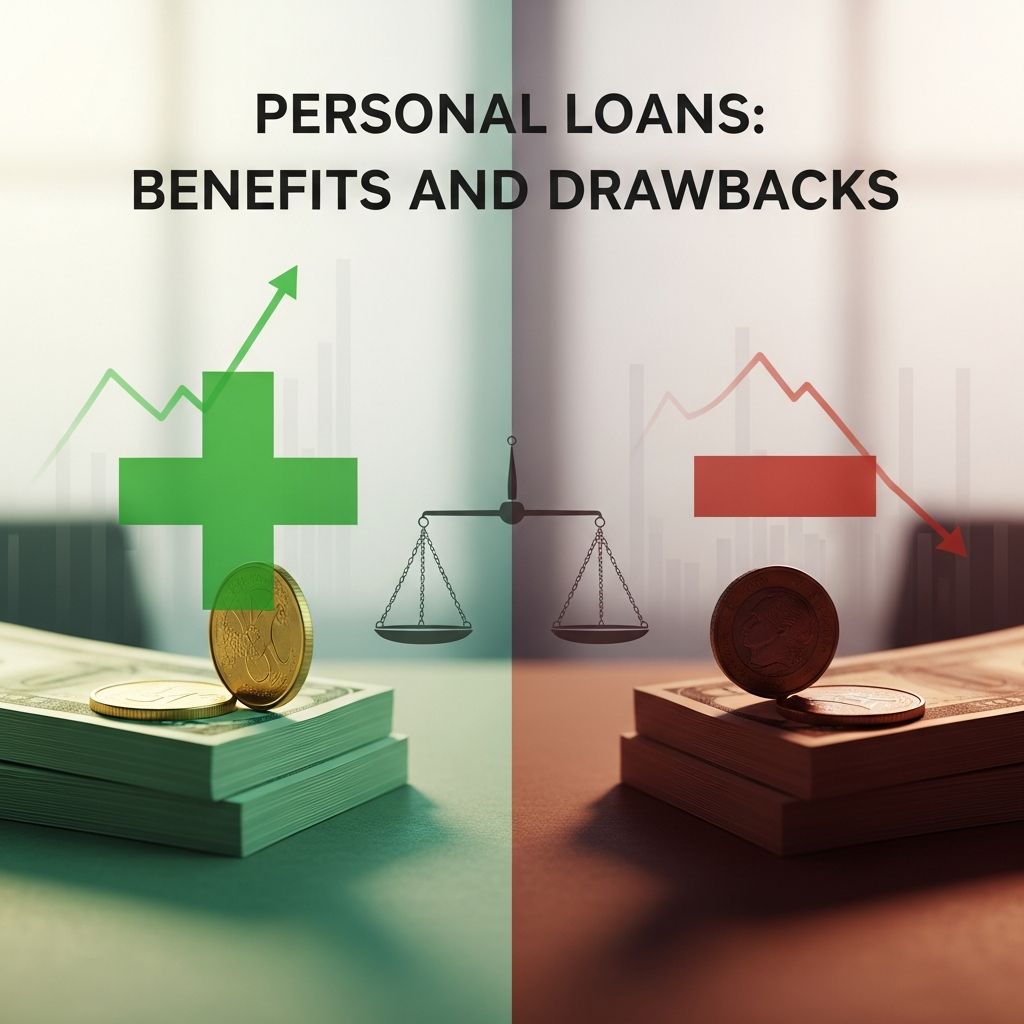
Personal loans offer a lump sum of money repaid in fixed installments, typically without collateral, making them a versatile tool for various financial needs. While they provide quick access to funds and potentially lower costs than alternatives like credit cards, they come with risks such as fees and credit requirements that demand careful evaluation.
Understanding Personal Loans and Their Core Features
These unsecured installment loans allow borrowers to access cash for almost any purpose, from emergencies to major purchases. Lenders assess eligibility based on credit history, income stability, and debt levels rather than requiring assets as security. Repayment terms often range from 12 to 84 months, with amounts varying from $1,000 to $100,000 depending on the provider and borrower’s profile. Fixed rates ensure predictable payments, aiding budgeting, but approval hinges on strong financial standing.
Key Advantages of Taking Out a Personal Loan
Personal loans shine in scenarios requiring immediate, flexible financing. Here’s a breakdown of their primary benefits:
- Versatile Usage: Unlike specialized loans, funds can cover weddings, medical bills, home repairs, or vacations without restrictions.
- Fixed Payments for Budgeting: Consistent monthly amounts simplify financial planning, avoiding the variability of revolving credit.
- Debt Consolidation Potential: Combine multiple high-interest debts into one lower-rate loan, reducing overall costs and streamlining payments.
- Swift Access to Funds: Many online lenders approve and disburse money within one business day, ideal for urgent needs.
- Credit Building Opportunity: On-time repayments boost credit scores by diversifying credit mix and payment history.
- No Asset Risk: Unsecured nature means no collateral loss if repayment falters, though credit suffers.
These features make personal loans appealing for those with solid credit seeking efficient borrowing.
Significant Disadvantages and Potential Risks
Despite attractions, personal loans aren’t ideal for everyone. Consider these drawbacks:
- Credit and Income Barriers: Lenders favor scores above 670 and stable income; weaker profiles face denials or steep rates.
- Added Debt Burden: New loans elevate debt-to-income ratios, complicating future borrowing.
- Upfront and Hidden Fees: Origination charges (1-12% of amount) and late penalties increase total costs.
- Higher Rates Than Secured Options: Without collateral, APRs can exceed those of home equity loans, reaching 36% for risky borrowers.
- Rigid Repayment: Fixed terms limit adjustments; high monthly payments strain budgets if overextended.
- Credit Inquiries Impact: Applications trigger hard pulls, temporarily dropping scores by 5-10 points.
Weighing these against benefits is crucial to avoid financial strain.
Comparing Personal Loan Rates to Other Borrowing Methods
Interest rates highlight why personal loans often outperform credit cards but lag secured alternatives. As of early 2026, average personal loan APRs hover around 12%, far below credit cards at 20%+. Borrowers with excellent credit (740+) may secure rates under 10%, while subprime applicants pay 30%+.
| Borrowing Option | Average APR (2026) | Secured? | Best For |
|---|---|---|---|
| Personal Loan | 12.27% | No | Flexible needs, good credit |
| Credit Card | 19.58%-25% | No | Small, revolving purchases |
| Home Equity Loan | 8-9% | Yes | Homeowners with equity |
| Payday Loan | 300%+ | Sometimes | Avoid; short-term traps |
This table, informed by Federal Reserve data, shows personal loans as a middle-ground choice.
Ideal Scenarios for Using Personal Loans Effectively
Personal loans excel when alternatives falter. Opt for them if:
- You need to consolidate debts above 15% APR into a single 10% loan, saving thousands long-term.
- Facing a one-time expense like auto repairs exceeding credit limits.
- Possessing good credit (FICO 670+) and debt-to-income under 36% for favorable terms.
- Seeking funds without pledging assets, preserving home or vehicle security.
Avoid if income is irregular or you’re maxed on credit, as rigidity amplifies risks.
Steps to Secure the Best Personal Loan Terms
To maximize upsides and minimize downsides:
- Check Credit Report: Dispute errors via AnnualCreditReport.com for accuracy.
- Prequalify Widely: Use soft-pull tools from multiple lenders to compare rates without dings.
- Calculate Affordability: Ensure payments fit 15-20% of take-home pay.
- Scrutinize Fees: Favor no-origination options; negotiate if possible.
- Choose Short Terms: Lower total interest, e.g., 36 vs. 60 months.
- Automate Payments: Prevent misses that harm scores.
Online platforms like those from major banks streamline this, often with same-day decisions.
Real-World Impact on Credit Scores
Responsible use enhances credit: Installment loans diversify mix (10% of FICO), and perfect history (35%) builds scores. Conversely, delinquencies tank scores via payment history and utilization spikes. A 2025 Federal Reserve report notes on-time personal loan users saw average 20-30 point gains over 12 months.
Frequently Asked Questions (FAQs)
Are personal loans better than credit cards?
Yes, for lump sums due to lower fixed rates vs. variable card APRs, but cards suit small, ongoing spends.
Can I get a personal loan with bad credit?
Possible via subprime lenders, but expect 25-36% APRs and smaller amounts; improve score first.
How fast can I receive personal loan funds?
Often same-day or next business day from online lenders, faster than many secured options.
Do personal loans affect credit scores?
Hard inquiries dip scores short-term; positive payments build long-term.
What’s the average personal loan amount?
$5,000-$50,000, varying by lender and borrower qualifications.
Final Thoughts on Smart Borrowing
Personal loans empower informed borrowers with flexibility and savings potential but demand discipline to sidestep pitfalls like fees and debt overload. Assess your situation thoroughly—strong credit unlocks prime benefits, while others may explore grants, savings, or family aid first.
References
- Consumer Credit – G.19 — Federal Reserve. 2026-03-11. https://www.federalreserve.gov/releases/g19/current/
- Pros and Cons of Personal Loans — NerdWallet. 2026. https://www.nerdwallet.com/personal-loans/learn/pros-and-cons-of-personal-loans
- Pros and Cons of Personal Loans — Bankrate. 2026-03. https://www.bankrate.com/loans/personal-loans/pros-cons-of-personal-loans/
- Pros and Cons of Personal Loans — Experian. 2026. https://www.experian.com/blogs/ask-experian/pros-cons-personal-loans/
- Personal Loan Pros and Cons — Rocket Loans. 2026. https://www.rocketloans.com/learn/financial-smarts/personal-loan-pros-cons
Similar Articles








Read full bio of medha deb