Understanding Personal Loan Costs Beyond Interest
Discover the extra charges that can inflate your loan repayment

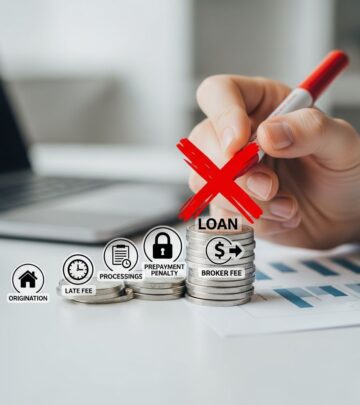
When evaluating personal loan offers, most borrowers focus primarily on the advertised interest rate and monthly payment amount. However, the true cost of borrowing extends far beyond these visible figures. Lenders embed numerous additional charges throughout the loan lifecycle that can increase your total repayment by as much as 10% above the advertised amount. These supplementary costs are often presented in fine print or technical loan documents, making them easy to overlook during the application process. Understanding each category of potential fees enables you to compare loan offers accurately and select the most affordable option for your financial situation.
The Initial Processing Charges That Reduce Your Funds
One of the first fees you’ll encounter when obtaining a personal loan is the processing fee, also known as an origination fee, administrative fee, or application fee. This one-time charge covers the lender’s cost of evaluating your application, verifying your information, and preparing loan documentation. Unlike interest, which compounds over time, processing fees represent a direct reduction in the amount of money you actually receive.
Processing fees typically range from 1% to 10% of your total loan amount, though the percentage varies significantly between lenders. Traditional banks generally charge between 2.5% and 5% of the loan amount, while non-bank financial institutions and digital lenders often charge between 1% and 4%. In practical terms, if you’re approved for a $20,000 personal loan with a 5% processing fee, you’ll receive only $19,000 in your bank account while remaining obligated to repay the full $20,000 plus interest.
Some lenders market zero processing fees as a competitive advantage, particularly for customers with pre-approved loan offers or established banking relationships. However, these institutions may incorporate their processing costs into higher interest rates, so comparing the total annual percentage rate (APR) across lenders remains essential rather than focusing solely on individual fee categories.
Tax Implications on Fees and Charges
In jurisdictions where goods and services tax (GST) or similar consumption taxes apply, these taxes are often levied on service-related fees but not on the interest portion of your loan. This means that even a modest processing fee can increase substantially once applicable taxes are added. For example, a $1,000 processing fee may become $1,180 after an 18% tax is applied, effectively raising the true cost of borrowing for borrowers in these regions.
The Penalty Structure for Early Repayment
Prepayment penalties represent another significant cost category that catches many borrowers by surprise. These fees are charged when you pay off your loan balance before the maturity date specified in your agreement. Lenders impose prepayment penalties because early repayment reduces the total interest income they collect from you over the life of the loan.
The prevalence and severity of prepayment penalties varies considerably across the lending landscape. Some major personal loan providers have eliminated prepayment penalties entirely, recognizing that borrowers increasingly expect this flexibility. However, other lenders, particularly those in specific geographic markets or serving less creditworthy borrowers, continue to impose these charges. The penalties might be structured as a percentage of the remaining loan balance or as a flat fee multiplied by the number of months remaining on your loan term.
Consider a practical scenario: you secure a $20,000 personal loan at 7% interest over 5 years, resulting in monthly payments of approximately $396. If your loan includes a 5% prepayment penalty, paying off the loan after 2 years would trigger a $1,000 charge based on your remaining balance. This penalty effectively reduces the interest savings you achieved by repaying early, potentially eliminating the financial benefit of accelerated repayment entirely.
Late Payment Fees and NSF Charges
Monthly payment obligations come with their own penalty structure if you fail to meet payment deadlines. Late payment fees, typically ranging from $25 to $40 per occurrence, are charged when your payment arrives after the grace period specified in your loan agreement. For borrowers who experience occasional cash flow challenges, these fees compound financial stress and increase total repayment costs.
Beyond late fees, if your lender attempts to automatically deduct a payment from your bank account but encounters insufficient funds, you may face non-sufficient funds (NSF) or returned check fees. These charges can originate from both your lender and your bank, potentially costing you $50 to $80 for a single missed or failed payment. In worst-case scenarios where multiple payments fail consecutively, accumulated penalties can quickly spiral into hundreds of dollars in additional costs.
Impact on Credit Profile
Beyond the direct financial cost of late fees, missing personal loan payments triggers negative reporting to credit bureaus, damaging your credit score and potentially affecting your ability to qualify for favorable interest rates on future borrowing. Late payments remain on your credit report for seven years, creating long-term financial consequences that extend far beyond the immediate penalty charge.
Optional Add-On Coverage That Increases Costs
Many lenders offer optional insurance products designed to protect borrowers against unexpected financial hardship. These add-ons, often presented as convenient extras during the loan approval process, include credit insurance, payment protection insurance, and loan protection plans. While these products serve legitimate purposes for some borrowers, they represent additional monthly or annual costs that aren’t always essential.
Credit insurance typically covers your outstanding loan balance if you experience job loss, disability, or death, with your beneficiaries or creditors receiving payment from the insurance provider. Payment protection insurance covers your monthly loan payment under similar circumstances. Though these products appear affordable when quoted as monthly amounts (often $10 to $30), they accumulate substantially over multi-year loan terms. A $20 monthly insurance premium on a 5-year loan totals $1,200 in additional borrowing costs.
Before accepting any optional insurance product, evaluate whether existing coverage through employer benefits, homeowner or auto insurance policies, or personal disability insurance already addresses these risks. Purchasing duplicate coverage represents unnecessary expense.
Comparing Total Cost Instead of Interest Rate Alone
The following table illustrates how various fees transform the true cost of borrowing compared to interest rates alone:
| Loan Component | Base Scenario (No Fees) | With Typical Fees | Cost Difference |
|---|---|---|---|
| Loan Amount | $20,000 | $20,000 | — |
| Interest Rate | 7% | 7% | — |
| Loan Term | 5 years | 5 years | — |
| Processing Fee (5%) | $0 | $1,000 | $1,000 |
| Monthly Loan Payment | $396.02 | $396.02 | — |
| Total Interest Over 5 Years | $3,761.20 | $3,761.20 | — |
| Total Repayment Amount | $23,761.20 | $24,761.20 | $1,000 |
| Effective APR | 7% | 9.5% | 2.5% |
This example demonstrates that a $1,000 processing fee alone raises your effective APR from 7% to 9.5% on the same loan amount—a significant increase that wouldn’t be immediately apparent if you only reviewed the advertised interest rate.
Strategic Steps to Minimize Your Total Borrowing Costs
Request Complete Fee Documentation
Before submitting a formal loan application, contact lenders directly and request comprehensive fee schedules in writing. Ask specifically about origination fees, application fees, late payment charges, prepayment penalties, and any optional add-ons. Legitimate lenders will provide detailed breakdowns without hesitation. Written confirmation protects you against verbal promises that contradict official loan documents.
Examine Truth in Lending Disclosures
Federal lending regulations require lenders to provide Truth in Lending Act (TILA) disclosures that itemize all charges and calculate the effective APR. Review these documents carefully before committing to any loan. The APR figure already incorporates various fees into a standardized rate, making it an ideal metric for comparing loans across different lenders.
Identify Prepayment Penalty Policies
Explicitly ask whether the loan includes prepayment penalties and request the exact formula for calculating such charges. Since prepayment penalties can eliminate your financial benefit from paying off a loan early, loans without this restriction are generally preferable, particularly if you anticipate receiving financial windfalls (inheritance, bonus, tax refund) that could enable accelerated repayment.
Compare Lenders Across Multiple Categories
Don’t limit your comparison to banks alone. Credit unions frequently offer lower fees than traditional banks. Online lenders and fintech platforms often feature competitive fee structures as well. Expanding your search across different lender types increases the likelihood of identifying genuinely affordable options.
Decline Optional Insurance Products
Unless you lack adequate coverage through existing insurance policies or employment benefits, declining optional insurance add-ons is generally the most cost-effective decision. You can reassess your insurance coverage independently and potentially purchase coverage directly at lower rates if genuinely needed.
Frequently Asked Questions About Personal Loan Fees
Can I negotiate personal loan fees?
Yes, particularly for origination fees. If you have strong credit and income, lenders may waive or reduce origination fees to secure your business. This negotiation works best when you present competing loan offers from other lenders, demonstrating that other institutions offer more favorable terms.
Are all lenders required to disclose fees?
Yes, federal lending regulations mandate that lenders disclose all material terms and costs before you commit to a loan. However, you must actively review the disclosure documents. Lenders aren’t obligated to highlight unfavorable terms—you must seek them out.
What’s the difference between APR and interest rate?
The interest rate reflects only the cost of borrowing the principal amount. The APR (annual percentage rate) incorporates interest plus origination fees, application fees, and other standard charges, providing a comprehensive picture of your true borrowing cost.
Should I choose a loan with higher interest but no fees?
Not necessarily. You must calculate the total cost under various scenarios. A loan with lower interest and moderate fees might ultimately cost less than one with higher interest and no origination fee, particularly if you plan to maintain the loan for its full term.
Making Your Final Decision
Personal loan shopping requires diligence beyond simply selecting the lowest advertised interest rate. By systematically investigating processing fees, prepayment penalties, late payment charges, and optional add-ons, you can identify the truly most affordable borrowing option. Request complete documentation from multiple lenders, carefully review Truth in Lending disclosures, calculate total repayment costs including all fees, and only then commit to a loan offer. This methodical approach typically saves borrowers hundreds or even thousands of dollars compared to hasty decisions based on interest rates alone.
References
- Hidden Charges in Personal Loan: Fees, Penalties & Foreclosure — Nihal Fintech. Accessed March 2026. https://www.nihalfintech.com/blog/hidden-charges-in-personal-loan/
- Hidden Personal Loan Fees to Watch Out For: Your Complete Guide to Borrowing Costs — Symple Lending. Accessed March 2026. https://symplelending.com/insights/hidden-personal-loan-fees-to-watch-out-for
- Hidden Personal Loan Fees – The Yukon Project — The Yukon Project. Accessed March 2026. https://theyukonproject.com/personal-loans/hidden-personal-loan-fees/
- 5 Hidden Costs of Personal Loans — Experian. Accessed March 2026. https://www.experian.com/blogs/ask-experian/hidden-costs-of-personal-loans/
Similar Articles








Read full bio of Sneha Tete