How Do I Get A Loan If I’m Self-Employed?
Discover essential steps, documentation, and strategies for self-employed individuals to secure personal loans despite income verification challenges.

It can be harder to find loans if you’re self-employed, but with proper preparation, approval is achievable. Lenders approve personal loans for self-employed applicants who demonstrate solid credit, consistent income, and a stable business. Self-employed individuals often need to provide more documentation than traditional employees, such as tax returns and bank statements, to verify income reliability.
Self-employment and personal loans pair logically—entrepreneurs frequently need capital for business growth or personal needs. However, the process differs from W-2 employees due to variable income patterns. Lenders view self-employed income as potentially less predictable, requiring extra proof. This guide covers requirements, documentation, strategies, top lenders, and FAQs to help you navigate the process effectively.
Personal Loan Income for Self-Employed
Proving income is the biggest hurdle for self-employed borrowers. Unlike salaried workers with pay stubs, freelancers, contractors, and business owners must use alternative documents. Lenders prioritize consistent, reliable income sufficient to cover loan payments.
Key factors lenders evaluate include:
- Credit score: Minimum typically 580–620, with higher scores (670+) unlocking better rates.
- Income stability: At least 1–2 years of self-employment history preferred; newer businesses may require personal guarantees.
- Debt-to-income (DTI) ratio: Ideally under 40%; calculated as monthly debts divided by gross income (e.g., $1,500 debts on $5,000 income = 30% DTI).
- Business health: Thriving industries and steady revenue streams boost approval odds.
Personal loan amounts range from $1,000 to $75,000+, with terms of 2–7 years. APRs span 6.6%–35.99%, influenced by credit, income, and DTI. Self-employed applicants may face slightly higher rates if income appears irregular.
What Documentation Do Self-Employed Borrowers Need?
Expect to submit extensive paperwork. Common requirements include:
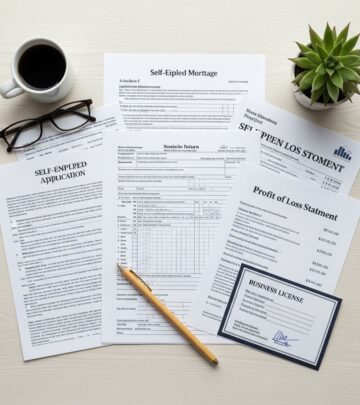
- Two years of federal tax returns (Form 1040) with all schedules, especially Schedule C for sole proprietors.
- Recent bank statements (3–12 months) showing deposits and cash flow.
- Profit and loss statements or 1099 forms for freelancers.
- Business licenses, invoices, or client contracts to demonstrate ongoing revenue.
- Proof of identity, credit report authorization, and sometimes a business plan for startups.
For example, Upgrade requires two recent tax returns; Upstart needs the prior year’s tax return plus recent income proof like invoices. Approval timelines extend 1–2 days longer for self-employed due to verification. Digital uploads speed the process at most online lenders.
Best Personal Loans for Self-Employed Borrowers
Several lenders specialize in or accommodate self-employed applicants. Here’s a comparison table of top options based on 2026 data:
| Lender | Est. APR | Loan Amount | Min. Credit Score | Self-Employed Docs | Min. Income |
|---|---|---|---|---|---|
| Upgrade | 7.74%–35.99% | $1,000–$50,000 | 580 | 2 tax returns | $25,000 |
| Upstart | 6.60%–35.99% | $1,000–$75,000 | 620 | 1 tax return + invoices | $12,000 |
| Best Egg | ~8%–35% | $2,000–$50,000 | 600 | Tax returns + bank statements | $3,500 |
Note: Rates and terms vary by applicant profile. Prequalify without credit impact.
These lenders offer competitive rates without mandating W-2s, focusing on alternative income verification.
How to Qualify for a Personal Loan When Self-Employed
Follow these steps to maximize approval chances:
- Prequalify widely: Check rates from 3–5 lenders to compare APRs, terms, and fees without dinging your credit.
- Boost your credit score: Pay down debts, dispute errors; aim for 670+.
- Lower DTI: Pay off high-interest debts first; target under 36%.
- Gather documents early: Organize tax returns and statements digitally.
- Consider cosigners or secured loans: Adds a safety net for weaker profiles.
- Verify loan purpose fits: Most allow debt consolidation, home improvement; some restrict business use.
Established self-employed (2+ years) fare best; newer borrowers may need collateral like home equity.
Challenges and Alternatives for Self-Employed Borrowers
Common pitfalls include inconsistent income documentation leading to denials or high rates. Variable earnings from gig work complicate DTI calculations.
Alternatives if personal loans fall short:
- Secured personal loans: Pledge assets for better terms.
- Home equity loans/HELOCs: Larger amounts if you own property.
- Business loans or lines of credit: SBA-backed options for established firms.
- Cosigner loans: Use a creditworthy partner’s profile.
- Family/friends loans: Interest-free but formalize with agreements.
Avoid payday loans or high-fee options; stick to reputable lenders.
Are Personal Loans Safe for Self-Employed?
Yes, from licensed lenders. Verify legitimacy via CFPB database, read reviews, and avoid upfront fees. Personal loans build credit if paid on time, unlike credit cards. Risks include overborrowing—ensure payments fit your cash flow.
Frequently Asked Questions (FAQs)
Can freelancers get personal loans?
Yes, with 1–2 years of tax returns, 1099s, and bank statements proving regular income. Minimums as low as $3,500/year at some lenders.
Are rates higher for self-employed?
Not automatically, but irregular income may increase perceived risk, leading to higher APRs. Strong credit mitigates this.
How long to be self-employed for a loan?
Ideally 2 years; shorter histories possible with strong docs and credit.
What’s a good DTI for self-employed loans?
Under 40%, preferably 36% or less.
How fast can self-employed get loan funds?
Approval in 1–2 days (longer for docs); funds in 1–2 business days.
References
- 7 Personal Loans To Consider When You’re Self-Employed — Credible. 2025. https://www.credible.com/personal-loan/self-employed-loans
- How to get a personal loan if you’re self-employed — Fortune Recommends. 2025. https://fortune.com/article/get-personal-loan-when-self-employed/
- Best Personal Loan Rates of 2026 Compared — MoneyRates. 2026-01-01. https://www.moneyrates.com/personal-loan-rates.htm
- How Do I Get A Loan If I’m Self-Employed? — MoneyRates. 2025. https://www.moneyrates.com/personal-loans/personal-loan-for-self-employed.htm
- Self-Employed Statistics — Bankrate. 2025. https://www.bankrate.com/loans/personal-loans/personal-loan-for-self-employed/
Similar Articles








Read full bio of Sneha Tete