Personal Loan for Credit Card Debt?
Explore if using a personal loan to tackle credit card balances is a smart financial move for long-term savings and stability.
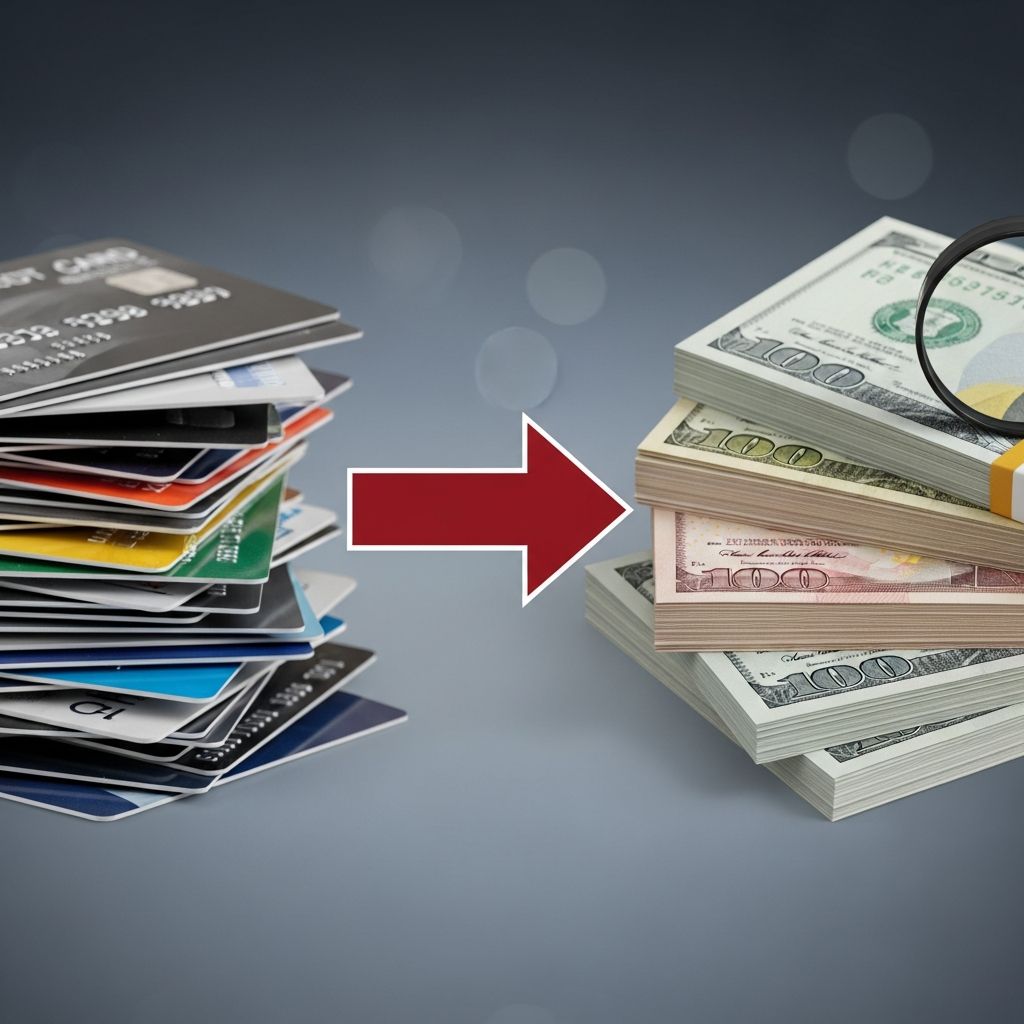
High-interest credit card debt can trap many people in a cycle of mounting balances and minimum payments that barely dent the principal. One strategy gaining attention is using a
personal loan
to consolidate and pay off this debt. This approach can potentially lower interest costs and simplify finances, but it’s not always the best fit. This article dives deep into when it makes sense, the key differences between personal loans and credit cards, real-world calculations, and steps to decide wisely.Understanding Credit Card Debt Challenges
Credit card debt often spirals due to high
annual percentage rates (APRs)
averaging over 20% for many cardholders. Minimum payments primarily cover interest, extending repayment over decades and costing thousands extra. For instance, a $10,000 balance at 24% APR with 2% monthly minimums could take over 30 years to clear, accruing more than $20,000 in interest.Personal loans offer a way out by providing a lump sum at fixed, often lower rates—typically 7% to 36% APR based on creditworthiness. Qualified borrowers with scores above 700 can secure rates under 10%, making consolidation attractive.
Core Differences: Personal Loans vs. Credit Cards
Personal loans and credit cards serve distinct purposes in borrowing. Here’s a breakdown:
| Feature | Personal Loan | Credit Card |
|---|---|---|
| Type of Credit | Installment (lump sum, fixed term) | Revolving (ongoing line of credit) |
| Interest Rate | Fixed (usually 7%-36% APR) | Variable (often 15%-30%+ APR) |
| Repayment | Fixed monthly payments over 1-7 years | Minimum due monthly, flexible |
| Borrowing Limit | Up to $100,000 | Typically $1,000-$40,000 |
| Rewards | None | Cash back, points, miles possible |
| Fees | Origination (1-8%), late fees | Annual, late, balance transfer fees |
Personal loans shine for structured debt payoff, while credit cards suit flexible, short-term spending if paid in full monthly to avoid interest.
Advantages of Using a Personal Loan for Credit Card Payoff
- Lower Interest Savings: Fixed rates often beat credit card APRs. Good-credit borrowers save significantly; a 10% loan rate vs. 25% card rate halves interest on large balances.
- Fixed Payments for Budgeting: Predictable amounts aid planning, unlike variable card minimums that rise with balances.
- Debt Consolidation Simplicity: One payment replaces multiple cards, reducing oversight errors and fees.
- Higher Limits for Big Debts: Ideal for consolidating $20,000+ owed, beyond typical card caps.
- Credit Score Boost Potential: Paying cards to zero lowers utilization (30% of FICO score), though new loan adds installment debt.
Potential Drawbacks to Consider
- Hard Credit Inquiry: Applying dings score 5-10 points temporarily, plus new debt shows on reports.
- Fees Add Costs: Origination fees (up to 8%) upfront increase effective APR.
- No Grace Period or Rewards: Interest starts immediately; no cash back like cards.
- Qualification Hurdles: Poor credit means high rates (30%+), negating benefits vs. cards.
- Temptation Risk: Freed-up card limits may lead to re-accumulating debt without discipline.
Cost Comparison: Real Numbers Breakdown
Let’s compare scenarios for a $15,000 debt payoff.
| Option | APR | Term | Monthly Payment | Total Interest |
|---|---|---|---|---|
| Credit Card (min payments) | 24% | ~25 years | $375 initial | $28,500 |
| Personal Loan | 12% | 5 years | $334 | $5,040 |
| Personal Loan (poor credit) | 30% | 3 years | $580 | $3,880 |
At favorable rates, loans save $20,000+ in interest and clear debt faster. Use online calculators to personalize. Shorter terms save more but raise payments—balance affordability.
When a Personal Loan Makes Sense for Debt Payoff
Opt for this if:
- You have
good credit
(670+ FICO) for low rates. - Debt exceeds $5,000 at high APRs (>20%).
- Stable income covers fixed payments (DTI under 36%).
- Multiple cards complicate tracking.
- Discipline prevents new card spending.
Avoid if planning short-term payoff (under 12 months), seeking rewards, or credit is sub-600—rates may exceed cards.
Steps to Secure a Personal Loan for Consolidation
- Check Credit Report: Free weekly via AnnualCreditReport.com; dispute errors.
- Calculate Affordability: Ensure payments fit budget; aim DTI <36%.
- Pre-Qualify: Soft-check rates from 3-5 lenders (banks, credit unions, online like SoFi, LendingClub).
- Compare Offers: Focus APR, fees, terms; read fine print.
- Apply and Payoff: Use funds directly for cards; request balance statements.
- Monitor Progress: Track score; cut up cards if needed.
Alternatives to Personal Loans
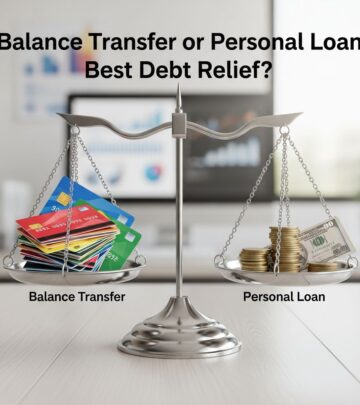
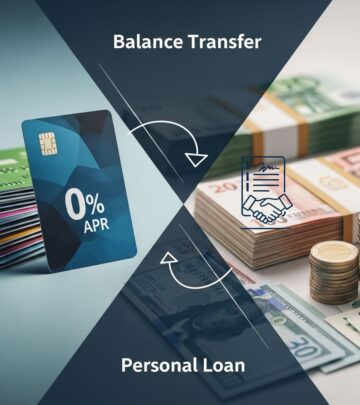
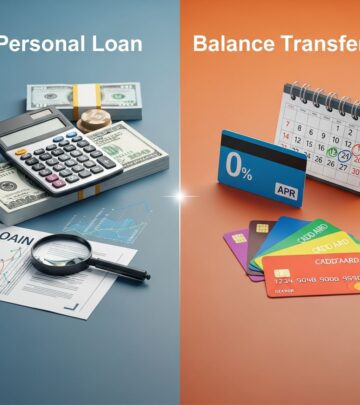
- Balance Transfer Cards: 0% intro APR (12-21 months), 3-5% fee; best for smaller debts.
- Debt Management Plans: Nonprofit counseling lowers rates via negotiation.
- Home Equity Loans: Low rates (8%) but risks foreclosure.
- 0% Installment Plans: Buy-now-pay-later for purchases.
- Increase Income/Cut Expenses: Side gigs, budgeting apps like YNAB.
Credit Score Impacts Explained
Both options affect scores:
- Positive: On-time payments (35% FICO); lower utilization from payoff.
- Negative: New inquiry, higher DTI initially.
Loans diversify mix (10% FICO), helping long-term. Keep utilization <30%; scores recover in months.
FAQs
Will a personal loan hurt my credit score?
Short-term dip from inquiry and new account, but payoff boosts utilization and payment history outweigh it.
What’s a good APR for a personal loan?
Under 12% for excellent credit; 12-18% fair. Compare your offers.
Can I get a personal loan with bad credit?
Yes, but expect 25%+ APRs; consider secured loans or co-signers.
How fast can I get personal loan funds?
Often same/next day from online lenders; banks 3-7 days.
Should I close paid-off cards?
No—keeps utilization low, history long; store securely.
Final Financial Tips
Before borrowing, build emergency fund (3-6 months expenses). Track spending; apps like Mint help. Consult nonprofit credit counselor if overwhelmed. In 2026’s economy, with rates stabilizing post-inflation, timely action preserves wealth.
References
- Personal Loan vs. Credit Card: What’s the Difference? — NerdWallet. 2025-06-15. https://www.nerdwallet.com/personal-loans/learn/personal-loan-vs-credit-card
- Personal Loan vs. Credit Card: What’s the Difference? — Experian. 2025-08-22. https://www.experian.com/blogs/ask-experian/how-to-choose-between-a-personal-loan-and-a-credit-card/
- Personal Loan vs. Credit Card: What’s the Difference? — TD Bank. 2025-04-10. https://www.td.com/us/en/personal-banking/learning/personal-loan-vs-credit-card
- Personal Loans vs Credit Cards: Pros & Cons — Profed Credit Union. 2025-07-01. https://profedcu.org/learn/blog/personal-loans-vs-credit-cards
- Personal Loan vs. Credit Card: Which One’s Right for You? — Discover. 2025-09-12. https://www.discover.com/credit-cards/card-smarts/personal-loan-vs-credit-card/
- Consumer Credit Reports — Federal Trade Commission (FTC.gov). 2024-11-05. https://consumer.ftc.gov/articles/free-credit-reports
Similar Articles








Read full bio of medha deb