Personal Consumption Expenditures: Definition and Impact
Understanding PCE: The key inflation metric shaping monetary policy and economic growth.

Understanding Personal Consumption Expenditures (PCE)
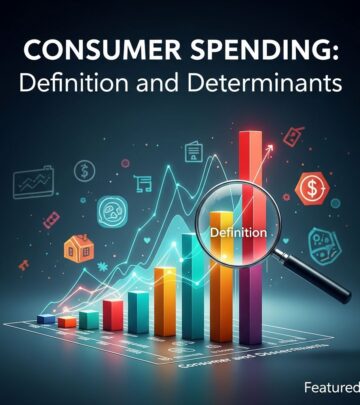
Personal Consumption Expenditures (PCE) represents the total spending by households and nonprofit institutions on goods and services in the United States. As a critical component of the nation’s gross domestic product (GDP), PCE encompasses both durable goods (such as automobiles and appliances), non-durable goods (including food and clothing), and services (ranging from healthcare to entertainment). The Bureau of Economic Analysis (BEA) compiles this data monthly as part of the National Income and Product Accounts (NIPA), making it one of the most closely watched economic indicators by policymakers, investors, and economists.
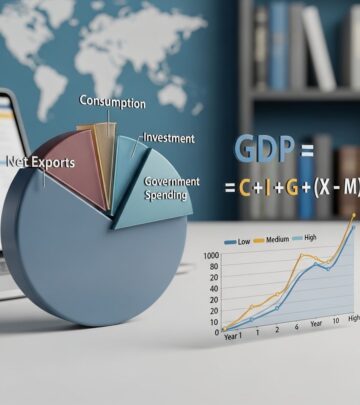
PCE has been tracked systematically since January 1959, providing decades of historical data that illuminate consumer behavior and spending patterns. This measure is particularly significant because consumer spending typically accounts for approximately 70% of total U.S. GDP, making PCE a fundamental indicator of economic health and growth potential. Understanding PCE is essential for anyone seeking to comprehend how the American economy functions and where it might be heading.
The PCE Price Index Explained
The PCE Price Index (PCEPI), also known as the PCE deflator or Implicit Price Deflator for Personal Consumption Expenditures (IPD for PCE), measures the average rate of change in prices paid by consumers for goods and services. Unlike a simple count of items purchased, the PCE price index reflects how much prices have risen or fallen relative to a base year. Currently benchmarked to 2017, this index uses a variety of data sources, including the U.S. Consumer Price Index and Producer Price Index, to create a comprehensive picture of price movements across the entire spectrum of consumer spending.
The Federal Open Market Committee (FOMC) and the BEA refer to this metric using different terminology, sometimes calling it the Chain-type Price Index for Personal Consumption Expenditures (CTPIPCE). Regardless of the name, the purpose remains consistent: to provide an accurate measure of inflation as experienced by American consumers in their daily economic lives.
Core PCE: The Smoother Inflation Measure
While the headline PCE price index captures all consumer price changes, the Core PCE price index offers a less volatile alternative by excluding food and energy prices. Food and energy categories experience significant seasonal fluctuations and sudden price shocks—such as oil price spikes or agricultural disruptions—that can obscure underlying inflation trends. By removing these volatile components, Core PCE provides a clearer picture of persistent inflation pressures in the economy.
Central bankers and economists frequently focus on Core PCE when assessing whether inflation is trending up or down in a meaningful, sustainable way. This measure helps distinguish between temporary price movements and genuine shifts in the inflation trajectory, which is crucial for making informed monetary policy decisions.
PCE vs. Consumer Price Index (CPI): Key Differences
While both PCE and the Consumer Price Index (CPI) measure inflation, important methodological and conceptual differences distinguish them. Understanding these differences is essential for investors and analysts who rely on these metrics for decision-making.
Calculation Methodology
The most fundamental difference lies in their mathematical formulas. The PCE price index uses the Fisher-Ideal formula, which incorporates expenditure data from both the current period and the preceding period. In contrast, the CPI uses a modified Laspeyres formula with fixed expenditure weights for one year (since 2023). The Fisher-Ideal approach is theoretically superior because it accounts for consumer substitution effects—the tendency for consumers to shift purchases away from goods that have become more expensive toward relatively cheaper alternatives.
Additionally, PCE employs a chained index methodology, comparing one quarter’s prices to the previous quarter, while the CPI uses a fixed base year approach. This chaining mechanism allows PCE to better capture how consumer behavior adapts to changing relative prices.
Scope and Coverage
A critical conceptual difference involves what each index actually measures. PCE encompasses spending by and on behalf of the personal sector, including both households and nonprofit institutions serving households. This means PCE captures healthcare services purchased by employers on behalf of employees, even though employees never directly pay for these services themselves. The CPI, by contrast, measures only out-of-pocket spending by households, excluding such employer-provided benefits.
This distinction significantly impacts how the two indexes weight different categories. In the CPI, housing receives substantial weight due to owner-equivalent rent calculations. In PCE, housing has a relatively smaller weight. Conversely, healthcare has significantly greater weight in PCE than in CPI, reflecting the substantial contributions of employer-provided health insurance.
Data Sources
Another important difference stems from their data collection methods. CPI prices and weightings are based on household surveys that ask consumers what they actually spend money on. PCE prices and weightings, however, derive from business surveys—companies report their sales and revenue data to compile the index. This distinction means the two indexes may not always perfectly align, as household recall can differ from actual business transaction data.
Comparison Table: PCE vs. CPI
| Characteristic | PCE Price Index | Consumer Price Index (CPI) |
|---|---|---|
| Formula Used | Fisher-Ideal Formula | Modified Laspeyres Formula |
| Index Type | Chained Index | Fixed Base Year |
| Scope | Spending by and on behalf of households | Out-of-pocket household spending |
| Data Source | Business Surveys | Household Surveys |
| Housing Weight | Smaller | Larger (owner-equivalent rent) |
| Healthcare Weight | Larger (includes employer insurance) | Smaller (out-of-pocket only) |
| Revision Frequency | Three times per quarter plus annual rebasing | Annual updates |
Why PCE Tends to Report Lower Inflation
Historically, PCE has recorded softer inflation readings than the CPI. Several factors explain this consistent pattern. First, the substitution effect captured by the Fisher-Ideal formula allows PCE to reflect consumer behavior more accurately. When prices rise for certain goods, consumers naturally shift toward alternatives, and PCE better captures this dynamic adjustment.
Second, methodological differences in calculating certain components, particularly hospital expenses and airfares, contribute significantly to the divergence. Research by the Bureau of Labor Statistics suggests that most of the difference between PCE and CPI inflation readings stems from these computational variations rather than fundamental measurement philosophy.
The practical advantage of CPI’s simpler Laspeyres formula is that it can be calculated and released more quickly, providing a faster preliminary read on inflation trends. However, this speed comes at the cost of potentially overstating inflation by not accounting for consumer substitution.
How PCE Data Is Published and Revised
The Bureau of Economic Analysis releases PCE data monthly as part of the comprehensive National Income and Product Accounts. These reports provide detailed breakdowns of consumer spending across numerous categories and subcategories. PCE undergoes three significant revisions during the months following the end of each quarter, as more complete data becomes available.
Beyond quarterly revisions, the entire NIPA tables are re-based annually and every five years on a more comprehensive basis. This systematic revision process means that historical PCE figures can change substantially as statisticians incorporate new information and refine methodologies. Analysts must therefore remain flexible in their interpretations and avoid relying too heavily on preliminary readings.
The Importance of PCE for Monetary Policy
The Federal Reserve uses PCE as a crucial benchmark for assessing inflation relative to its two percent target. Because the Federal Reserve operates with a dual mandate to promote maximum employment and price stability, understanding actual inflation trends is essential. PCE’s superior theoretical foundation and closer alignment with consumer behavior make it increasingly attractive to policymakers compared to the CPI.
When inflation, measured by PCE, rises above the Fed’s target, policymakers typically respond by raising interest rates to cool demand and reduce price pressures. Conversely, when PCE inflation falls below target, the Fed may lower rates to stimulate economic activity. The specific components of PCE—particularly Core PCE—receive careful scrutiny as policymakers distinguish between temporary price shocks and persistent inflation trends.
Tracking PCE as an Investor
Investors monitor PCE data closely because it directly influences Federal Reserve policy decisions, which in turn affect bond yields, stock valuations, and currency movements. A PCE reading that comes in hotter than expected might signal the Fed will maintain higher interest rates for longer, benefiting bond holders but potentially pressuring growth stocks. Conversely, softer-than-expected PCE readings can boost equities as they suggest lower borrowing costs ahead.
The detailed nature of PCE data also allows sector-specific analysis. For instance, elevated energy or healthcare component inflation might signal headwinds for certain industries while benefiting others. Sophisticated investors use PCE data alongside other economic indicators to construct more comprehensive investment theses.
Historical Context and Long-Term Trends
With data spanning since 1959, PCE provides a comprehensive historical record of American consumer spending patterns and inflation. Over this extended period, the composition of PCE has shifted significantly, reflecting structural economic changes. The declining share of goods spending relative to services, the growing importance of healthcare, and the increasing prevalence of technology purchases all appear in PCE data.
Long-term PCE trends reveal how technological advancement, demographic shifts, and policy changes have reshaped consumer behavior. Studying these historical patterns helps economists and investors understand current trends and anticipate future developments.
Frequently Asked Questions
Q: What is the primary difference between PCE and GDP?
A: PCE is a component of GDP that specifically measures consumer spending, while GDP represents the total value of all goods and services produced in a country, including government spending, business investment, and net exports.
Q: Why does the Federal Reserve prefer PCE over CPI?
A: The Federal Reserve increasingly uses PCE because it employs the superior Fisher-Ideal formula, better accounts for consumer substitution effects, and includes a broader scope of spending including employer-provided benefits.
Q: How often is PCE data released?
A: PCE data is released monthly by the Bureau of Economic Analysis, with preliminary figures subject to three revisions during the following quarter.
Q: What does Core PCE exclude?
A: Core PCE excludes the more volatile food and energy prices to provide a clearer view of underlying inflation trends, removing temporary price shocks and seasonal fluctuations.
Q: How can individual investors use PCE data?
A: Investors monitor PCE to anticipate Federal Reserve policy decisions, assess inflation pressures on different sectors, and make informed decisions about asset allocation between stocks, bonds, and other investments.
References
- Personal consumption expenditures price index — Wikipedia. 2025. https://en.wikipedia.org/wiki/Personal_consumption_expenditures_price_index
- National Income and Product Accounts (NIPA) — U.S. Bureau of Economic Analysis. 2025. https://www.bea.gov/national/nipaweb/SelectTable.asp
- Consumer Price Index vs. PCE Price Index — U.S. Bureau of Labor Statistics. 2024. https://www.bls.gov/opub/mlr/2019/article/why-does-the-fed-prefer-the-pce-deflator.htm
- Federal Reserve Monetary Policy Framework — Board of Governors of the Federal Reserve System. 2024. https://www.federalreserve.gov/monetarypolicy/monetary-policy-framework.htm
- Understanding Inflation Measures — U.S. Bureau of Economic Analysis. 2025. https://www.bea.gov/sites/default/files/2022-10/understanding-pce-inflation.pdf
Similar Articles








Read full bio of Sneha Tete