Perpetual Inventory System: Real-Time Stock Tracking
Master real-time inventory management with perpetual systems for accurate stock tracking.

What Is a Perpetual Inventory System?
A perpetual inventory system is a method of accounting that continuously tracks and updates inventory records in real-time as transactions occur. Unlike traditional inventory management approaches, a perpetual system automatically records every purchase, sale, and return of goods using point-of-sale (POS) systems and enterprise asset management software. This technology-driven approach ensures that your inventory balance always reflects the actual stock on hand at any given moment, providing an accurate snapshot of inventory quantity and value without waiting for scheduled physical counts.
The perpetual inventory system operates on the principle of immediate transaction recognition. When inventory is purchased or received, warehouse employees scan product codes into the system, which automatically updates the Merchandise Inventory account. Similarly, when a sale occurs, the system records both the revenue from the sale and the cost of goods sold (COGS) in real-time, maintaining up-to-date financial records.
How Perpetual Inventory Systems Work
Perpetual inventory systems function by integrating multiple technologies and processes throughout your supply chain. The system follows the order-to-cash cycle and updates inventory data at critical points, including supply order placement, warehouse receiving, customer sales, and fulfillment. Here’s how the process typically unfolds:
Real-Time Transaction Recording: Each time inventory moves—whether received from suppliers or sold to customers—warehouse staff and sales personnel scan product barcodes into the POS system. This immediate input triggers automatic updates to inventory records within your accounting software, eliminating the lag between actual transactions and recorded data.
Automatic Account Updates: In a perpetual system, the inventory account changes with every transaction. Companies debit their inventory account with the cost of merchandise each time they purchase or produce inventory. When they sell inventory to customers, the perpetual inventory software updates both the inventory account (with a credit) and the COGS account (with a debit).
Multi-Channel Integration: Perpetual systems connect with your sales channels and warehouse management systems (WMS) to automatically synchronize inventory across all touchpoints. This integration ensures that whether customers purchase through physical stores, e-commerce platforms, or other channels, the inventory data remains consistent and accurate.
Key Differences: Perpetual vs. Periodic Inventory Systems
Understanding the distinctions between perpetual and periodic inventory systems is crucial for selecting the right approach for your business. The major difference lies in timing and methodology.
| Feature | Perpetual Inventory System | Periodic Inventory System |
|---|---|---|
| Timing of Updates | Real-time, with each transaction | At scheduled intervals (monthly, quarterly, or annually) |
| Purchase Recording | Direct update to Inventory account | Recorded in Purchases account |
| COGS Recognition | Immediate entry with each sale | Calculated only at period end |
| Physical Counts | Periodic verification only (as needed) | Regular counts at fixed intervals |
| Technology Requirements | POS systems and scanners essential | Manual processes, minimal technology |
| Implementation Cost | Higher initial investment | Lower upfront costs |
A periodic inventory system updates inventory records only at certain scheduled times—typically at the end of the month, quarter, or year. This creates a gap between when transactions actually occur and when they’re recognized in the accounting records. Under a periodic system, purchases are recorded in a separate Purchases account, while the Merchandise Inventory account remains unchanged until the company conducts a physical count and makes adjusting entries at period end.
The perpetual system is more robust because it maintains a continuous flow of accurate inventory information. This real-time visibility allows managers to make informed decisions immediately, whereas periodic systems require waiting until period-end to understand inventory status and financial impact.
Advantages of Perpetual Inventory Systems
Perpetual inventory systems offer numerous strategic benefits that make them increasingly popular among businesses of all sizes.
Real-Time Decision Making: With perpetual systems, decision-makers have access to constant, accurate inventory information. Managers can track exact purchase costs, sales prices, dates, and inventory turnover ratios immediately. This enables faster, more informed decisions regarding inventory purchases, stocking levels, optimal reorder quantities, and demand forecasting.
Reduced Inventory Discrepancies: Perpetual systems minimize phantom inventory (overstatements) and missing inventory (understatements) by maintaining continuous accurate records. By catching discrepancies quickly through real-time tracking, businesses can address issues before they escalate into significant problems affecting financial reporting or customer satisfaction.
Improved Cash Flow Management: Accurate COGS recognition in real-time helps businesses better manage cash flow and working capital. Companies can optimize reorder points and quantities based on actual sales patterns rather than estimates, reducing excess inventory holding costs and freeing up capital for other investments.
Enhanced Customer Service: With perpetual systems, businesses always know what’s in stock. This prevents overselling, reduces backorders, and enables faster order fulfillment. Omnichannel businesses particularly benefit from real-time synchronization across warehouses and sales channels, ensuring customers can shop with confidence.
Fewer Physical Counts Required: While perpetual systems still require periodic physical inventory counts for verification and audit purposes, they may significantly reduce the frequency compared to periodic systems. These counts serve primarily as reconciliation rather than the primary method of inventory valuation.
Disadvantages and Challenges
Despite their advantages, perpetual inventory systems present certain challenges and limitations.
Higher Implementation Costs: Setting up a perpetual inventory system requires significant initial investment in technology infrastructure, including POS systems, scanning equipment, inventory management software, and employee training. This can be prohibitive for small businesses with limited budgets.
Technical Expertise Required: Managing perpetual systems requires ongoing technical support and staff training. Employees must be proficient with scanning equipment and software systems, and IT personnel must maintain and troubleshoot the technology infrastructure.
Record Inaccuracy Risk: While perpetual systems reduce errors, they’re still vulnerable to human mistakes such as incorrect scans, data entry errors, or system failures. Garbage in, garbage out—inaccurate inputs lead to inaccurate perpetual records. Regular physical counts remain necessary to identify and correct discrepancies.
System Integration Complexity: For larger organizations with multiple warehouses or sales channels, integrating all systems to maintain synchronized perpetual records can be complex and time-consuming.
Perpetual Inventory Methods and Cost Flow Assumptions
Businesses using perpetual inventory systems must select a cost flow assumption to determine how inventory costs are assigned when items are sold. The most common methods are:
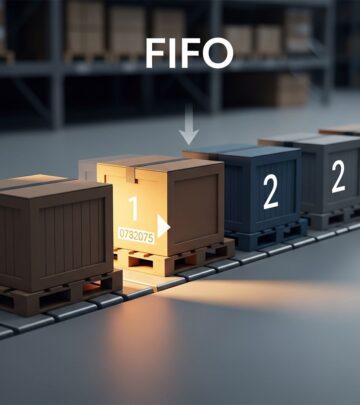
FIFO (First-In, First-Out): Under FIFO, the first items placed in inventory are assumed to be the first items sold. This means the inventory remaining at the end of the period consists of the most recently purchased or produced items. FIFO is particularly suitable for perishable goods and products with expiration dates.
LIFO (Last-In, First-Out): With LIFO, the most recently purchased items are assumed to be sold first. This method can provide tax advantages during inflationary periods, as it assigns higher costs to current period sales, reducing reported profits and taxable income.
Weighted Average Cost: This method assigns an average cost to all items in inventory, updating the average with each purchase. It provides a middle ground between FIFO and LIFO, smoothing cost fluctuations.
Each method produces different inventory values and COGS figures, so the choice significantly impacts financial statements and tax obligations.
Technology and Implementation
Modern perpetual inventory systems rely on several integrated technologies to function effectively.
Point of Sale (POS) Systems: POS systems serve as the frontline technology for perpetual inventory management. At checkout, POS systems automatically record sales transactions and update inventory quantities in real-time. Many modern POS systems also capture detailed information about product attributes, pricing, and promotional activities.
Barcode and RFID Scanning: Barcode scanners remain the most widely used technology for rapid, accurate inventory movement recording. Radio-frequency identification (RFID) technology represents a newer alternative that enables faster, hands-free scanning and better tracking of multiple items simultaneously.
Warehouse Management Systems (WMS): WMS software manages warehouse operations and inventory location tracking. It integrates with perpetual inventory systems to coordinate receiving, put-away, picking, and shipping operations while maintaining real-time inventory records.
Enterprise Resource Planning (ERP) Systems: For larger organizations, ERP systems integrate perpetual inventory management with accounting, finance, supply chain, and other business functions, creating a unified information system across the enterprise.
Industries and Use Cases
Perpetual inventory systems have become increasingly essential across various sectors.
Retail: Retail businesses extensively use perpetual systems to manage multiple store locations, prevent stockouts, and optimize inventory turnover. Grocery stores, department stores, and specialty retailers all depend on perpetual systems for operational efficiency.
E-Commerce: Online retailers particularly benefit from perpetual systems, as they must synchronize inventory across warehouses and multiple sales channels, including their website, marketplaces, and fulfillment partners.
Manufacturing: Manufacturers use perpetual systems with Material Requirements Planning (MRP) systems to track raw materials, work-in-progress, and finished goods, ensuring accurate cost accounting and production planning.
Healthcare and Pharmaceuticals: These industries require perpetual systems to maintain accurate records of controlled substances, track expiration dates, and ensure regulatory compliance.
Frequently Asked Questions
Q: Is a physical inventory count still necessary with a perpetual inventory system?
A: Yes, physical counts remain essential. Although perpetual systems maintain continuous records, periodic physical counts serve as verification and reconciliation mechanisms to identify discrepancies, theft, or data entry errors. These counts occur less frequently than with periodic systems but remain important for maintaining accuracy and meeting audit requirements.
Q: Can small businesses use perpetual inventory systems?
A: Yes, perpetual systems are increasingly accessible to small businesses through affordable cloud-based accounting software and POS systems. Many solutions offer scalability, allowing businesses to start with basic functionality and expand features as they grow.
Q: What happens if the perpetual records don’t match the physical count?
A: Discrepancies indicate errors in the perpetual records. Businesses investigate the difference, identify the source of error (theft, data entry mistakes, scanning errors), make correcting adjustments, and implement preventive measures to avoid future occurrences.
Q: How does a perpetual system handle inventory returns?
A: When customers return inventory, the system records a return transaction that increases inventory quantities and decreases COGS. This maintains the perpetual record accuracy by reflecting the reversal of the original sale.
Q: Can perpetual systems work with multiple warehouses?
A: Absolutely. Modern perpetual systems are designed to synchronize inventory across multiple warehouse locations and sales channels. This centralized visibility prevents overselling and enables efficient inventory allocation across locations based on demand.
References
- Perpetual Inventory System – Definition, Use — Corporate Finance Institute. 2024. https://corporatefinanceinstitute.com/resources/accounting/perpetual-inventory-system/
- Perpetual v. Periodic Inventory Systems — Pennsylvania State University – Accounting 211. 2024. https://psu.pb.unizin.org/acctg211/chapter/perpetual-v-periodic-inventory-systems/
- Perpetual Inventory System: The Key to Streamlined Stock Management — Red Stag Fulfillment. 2024. https://redstagfulfillment.com/perpetual-inventory-system/
- Perpetual Inventory Methods and Formulas — NetSuite. 2024. https://www.netsuite.com/portal/resource/articles/inventory-management/what-is-perpetual-inventory.shtml
- Unlocking the Secrets of the Perpetual Inventory System: A Guide — EC Umbrella. 2024. https://www.ecabrella.com/blog-posts/perpetual-inventory-system
Similar Articles








Read full bio of Sneha Tete