Health Savings Accounts In 2026: 4 New Rules, 3 Tax Benefits
Unlock tax savings, investment growth, and flexible healthcare funding with Health Savings Accounts in 2026 and beyond.

Health Savings Accounts (HSAs) offer powerful financial tools for managing healthcare costs, especially when paired with High-Deductible Health Plans (HDHPs). These accounts provide triple tax advantages, flexible contributions, and long-term savings potential. In 2026, expansions make HSAs accessible to more people, including those with Bronze and Catastrophic plans.
What is a Health Savings Account?
A
Health Savings Account (HSA)
is a tax-advantaged savings account available to individuals enrolled in an HDHP. It allows pre-tax contributions to cover qualified medical expenses like deductibles, copayments, coinsurance, and more, such as acupuncture, ambulance costs, doctor visits, and hearing aids. Unlike Flexible Spending Accounts (FSAs), HSA funds roll over indefinitely and can be invested for growth.HDHPs, required for HSA eligibility, feature higher deductibles—minimum $1,650 for self-only and $3,300 for family in 2026—but often lower premiums. Preventive care is typically covered at 100% before the deductible.
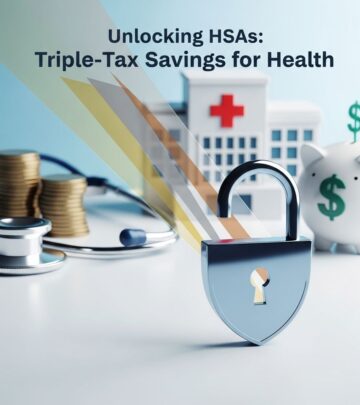
Triple Tax Advantages
HSAs deliver unmatched tax benefits:
- Tax-deductible contributions: Reduce taxable income. Employer contributions are excluded from income.
- Tax-free growth: Earnings on investments grow without taxes.
- Tax-free withdrawals: For qualified medical expenses, no federal income tax applies.
These perks can significantly lower overall healthcare and tax burdens. For non-qualified withdrawals before age 65, a 20% penalty plus taxes apply; after 65, penalty-free for any use.
2026 HSA Contribution Limits
Contributions are capped annually, with catch-up for age 55+:
| Coverage Type | 2026 Limit | 2025 Limit | Catch-Up (55+) |
|---|---|---|---|
| Self-Only | $4,400 | $4,300 | $1,000 |
| Family | $8,750 | $8,550 | $1,000 |
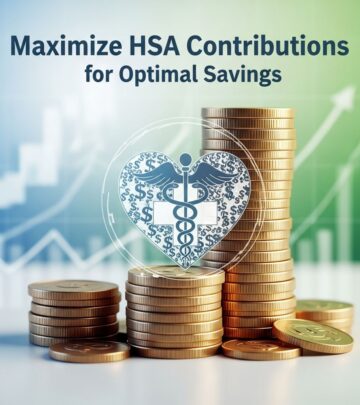
No minimum contribution; funds roll over yearly and earn interest. Contribute until April 15 of the following year.
New in 2026: Expanded HSA Eligibility
Major changes enhance access:
- All Bronze and Catastrophic plans qualify: Previously limited; now compatible nationwide for Bronze, select areas for Catastrophic.
- Catastrophic hardship exemptions: Expanded to those ineligible for premium tax credits or cost-sharing reductions.
- Permanent telehealth coverage: HDHPs cover remote care pre-deductible without affecting HSA status (retroactive to 2025).
- Direct Primary Care (DPC): Fees up to $150 individual/$300 family payable from HSA; no disqualification.
Bronze plans offer low premiums, high out-of-pocket costs, but cover some services pre-deductible. Catastrophic provides 3 primary visits during deductible.
| Feature | Bronze Plans | Catastrophic Plans |
|---|---|---|
| Premiums | Lowest | Low, sometimes higher than Bronze |
| Out-of-Pocket Max 2026 | $10,600 individual/$21,200 family | Same |
| Pre-Deductible Services | Many | 3 primary care visits |
| Premium Tax Credit | Eligible | Not eligible |
Funds Never Expire and Grow
HSA balances carry over indefinitely—no ‘use it or lose it’. Invest in stocks, bonds, or mutual funds for compound growth, tax-free. Healthy individuals can build substantial balances for future needs, like retirement healthcare.
Investment and Growth Potential
Many providers offer investment options once balances reach thresholds (e.g., $1,000-$2,000). Historical returns can outpace traditional savings. Example: $4,400 annual contribution at 5% growth over 20 years exceeds $150,000 tax-free for medical use.
Pay for Family Expenses
Use HSA for spouse/dependents’ qualified expenses, even if not on your HDHP. Covers broad categories: prescriptions, dental, vision, and more.
Portability Across Jobs
HSAs are individually owned—keep them regardless of employer changes, Medicare enrollment (contributions stop, use continues), or other shifts.
Integration with Other Accounts
HSA users qualify for Limited Expense FSA (LEX-FSA) for dental/vision: $3,400 limit in 2026. Avoid general-purpose FSAs, which disqualify HSA contributions.
Qualified Expenses
IRS defines broadly:
- Deductibles, copays, coinsurance
- Prescriptions, over-the-counter meds (with Rx)
- Dental, vision, long-term care premiums
- COBRA premiums, Medicare Parts B/D (post-65)
Track with receipts; reimbursements anytime.
Employer Contributions and FEHB Examples
Employers often seed HSAs. 2026 FEHB/PSHB examples:
- GEHA High Deductible: $1,800 self deductible, $1,000 employer HSA contribution, $6,000 in-network OOP max.
Premium pass-throughs count toward limits.
Who Can’t Contribute?
- Non-HDHP coverage
- Claimed as dependent
- TRICARE/Medicare (except Part A if working)
- General FSA participant
Frequently Asked Questions (FAQs)
What are the 2026 HSA contribution limits?
$4,400 self-only, $8,750 family; +$1,000 catch-up for 55+.
Do HSA funds roll over?
Yes, indefinitely with no expiration.
Can I use HSA for family?
Yes, qualified expenses for spouse/dependents.
What’s new for 2026?
Bronze/Catastrophic eligibility, telehealth/DPC expansions.
HDHP minimum deductibles?
$1,650 self, $3,300 family.
Tax on non-medical withdrawals?
Income tax + 20% penalty if under 65.
Why Choose an HSA?
For cost-conscious individuals, HSAs combine savings, investment, and insurance. With 2026 expansions, more can benefit amid rising costs. Higher earners maximize tax perks; balances grow for retirement. Consult advisors for fit.
References
- New in 2026: More plans now work with Health Savings Accounts — Healthcare.gov. 2026. https://www.healthcare.gov/hsa-options/
- Breaking down new HSA and benefits provisions in the megabill — HealthEquity Blog. 2025. https://blog.healthequity.com/new-hsa-benefits-provisions-megabill
- Policy Changes Bring Renewed Focus on High-Deductible Health Plans — Kaiser Family Foundation (KFF). 2025. https://www.kff.org/patient-consumer-protections/policy-changes-bring-renewed-focus-on-high-deductible-health-plans/
- Just days remain to lock in 2026 health and benefit choices — Government Executive. 2025-12. https://www.govexec.com/pay-benefits/2025/12/just-days-remain-lock-2026-health-and-benefit-choices/409932/
- What’s a Health Savings Account? — Centers for Medicare & Medicaid Services (CMS). 2026. https://www.cms.gov/marketplace/outreach-and-education/health-savings-account.pdf
- HSA contribution limits 2025 and 2026 — Fidelity Investments. 2025. https://www.fidelity.com/learning-center/smart-money/hsa-contribution-limits
Similar Articles








Read full bio of medha deb