Per Capita: What It Means, Calculation & How to Use It
Master per capita calculations: Learn what it means, how to calculate it, and practical applications in economics.

Per Capita: What It Means, Calculation, and How to Use It
Per capita is a fundamental concept in economics, statistics, and business analysis that helps measure and compare data on an individual basis within a population. The term itself comes from Latin, literally meaning “by head,” and it serves as a crucial tool for normalizing data across different population sizes. Understanding per capita is essential for anyone interested in economics, public policy, or comparative analysis of nations, regions, or organizations.
What Does Per Capita Mean?
Per capita is a statistical term used to express a value or average measurement calculated by dividing a total amount by the number of individuals in a specific group or population. This metric translates abstract aggregate numbers into meaningful per-person figures that facilitate comparison and contextualization. The primary purpose of per capita measurements is to provide a clearer understanding of averages across populations, making it easier to compare economic indicators, social statistics, and other demographic data.
The context in which per capita is used determines how it is interpreted and what it measures. In economics, per capita figures often reflect economic output or income. In public health, it might represent disease rates per person. In business, it could indicate revenue per employee. Regardless of the application, the fundamental principle remains the same: dividing a total measurement by population count yields a per-person average.
Why Per Capita Matters
Per capita measurements are particularly valuable when comparing populations of different sizes. For instance, comparing the total GDP of a large nation with a small nation would be misleading without accounting for population differences. Per capita figures normalize these differences, allowing for meaningful comparison. Additionally, per capita information provides a more granular dataset than aggregate information alone, revealing patterns and disparities that might otherwise remain hidden.
How to Calculate Per Capita
The calculation of per capita is straightforward and follows a simple formula applicable to any statistical measurement. Understanding the steps involved ensures accurate calculations across various applications.
The Per Capita Formula
The fundamental formula for calculating per capita is:
Per Capita = Total Measurement / Total Population
This simple formula divides any aggregate value by the population count to yield a per-person average. The versatility of this formula allows it to be applied to virtually any metric requiring per-person analysis.
Step-by-Step Calculation Process
To ensure accurate per capita calculations, follow these systematic steps:
Step 1: Identify the Total Measurement
First, determine the total value or number correlating with what you are trying to calculate. This could be total income, total production, total cases of a disease, or any other aggregate value. For example, if calculating per capita income for a region, you would identify the total income earned by all individuals and businesses in that region.
Step 2: Determine the Total Population
Next, establish the precise population count for the group being measured. This should include all individuals within the defined geographic area or organizational boundary. Accuracy in population counting is critical, as errors directly affect the final calculation. Population figures should align with census data or official statistics for the relevant time period.
Step 3: Divide the Measurement by Population
Perform the division by taking your total measurement and dividing it by the total population. This yields a decimal figure representing the average per person. For example, if 250 people in a neighborhood generate $1,000,000 in annual income, the calculation would be: $1,000,000 / 250 = $4,000 per capita income.
Step 4: Adjust for Scale When Necessary
For measurements producing very small decimal numbers, multiply by an appropriate scale factor such as 100, 1,000, or 100,000 to create more meaningful figures. This is particularly common in public health statistics where rates per 100,000 population are standard. For instance, if disease cases per person calculate to 0.00002, multiplying by 100,000 yields 2 cases per 100,000 people—a more intuitive figure.
Practical Examples of Per Capita Calculations
Example 1: Neighborhood Demographics
Suppose you want to determine how many people with specific characteristics exist per capita in your neighborhood. If four people in a neighborhood of 250 have a particular characteristic, the calculation would be:
4 / 250 = 0.016
To express this more meaningfully, multiply by 100,000: 0.016 × 100,000 = 1,600. This means 1,600 people per every 100,000 in the neighborhood share that characteristic.
Example 2: Business Resource Distribution
A company with 200 office supplies distributed among 20 employees would calculate per capita as:
200 / 20 = 10 supplies per employee
Example 3: Town Income Analysis
Consider a town with total annual income of $5,000,000 and a population of 5,000 people. The per capita income calculation would be:
$5,000,000 / 5,000 = $1,000 per capita income
This indicates that the average income per person in the town is $1,000 annually. It’s important to note that this figure doesn’t mean everyone earns exactly $1,000; rather, it represents the average when all income is divided equally among all residents.
GDP Per Capita: A Primary Application
One of the most common and important uses of per capita measurement is calculating Gross Domestic Product (GDP) per capita. This metric measures a country’s total economic output divided by its population, providing insight into the average economic productivity per person.
Understanding GDP Per Capita
GDP per capita serves as a key economic indicator for comparing living standards and economic development between nations. It reflects the average economic output attributable to each person in a country. While GDP measures total economic output, GDP per capita normalizes this figure for population differences, enabling meaningful international comparisons.
GDP Per Capita Formula
GDP Per Capita = Gross Domestic Product / Population
GDP Per Capita Example
Consider a hypothetical calculation for the United States in 2015. With a total GDP of $20 trillion and a population of 300 million people:
$20,000,000,000,000 / 300,000,000 = $66,666.67 per capita GDP
This means that in 2015, the average economic output per person in the United States was approximately $66,667. While this doesn’t represent actual individual income, it indicates the economic productivity value attributable to each person in the country.
Per Capita Income vs. GDP Per Capita
While these terms are sometimes confused, per capita income and GDP per capita represent different economic measurements, though they follow the same calculation methodology.
| Metric | Definition | Calculation | Purpose |
|---|---|---|---|
| Per Capita Income | Average income earned by individuals in a region | Total Income / Population | Measures average personal earnings and living standards |
| GDP Per Capita | Total economic output divided by population | GDP / Population | Indicates overall economic productivity and development level |
Per capita income focuses specifically on earnings from wages and other income sources, while GDP per capita encompasses all economic production regardless of who receives it. GDP per capita typically yields higher figures because it includes corporate profits, government spending, and other economic activity beyond personal income.
Applications of Per Capita Measurements
Economic Analysis and Comparison
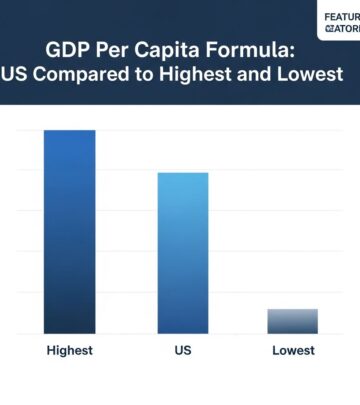
Per capita figures are essential for comparing economic performance between nations with different population sizes. A large country with high aggregate GDP might have lower per capita GDP than a smaller country with more efficient economies. These comparisons reveal true economic development levels rather than merely absolute economic size.
Public Policy Development
Governments use per capita measurements to understand population welfare, identify areas needing intervention, and allocate resources appropriately. Healthcare spending per capita, education funding per student, and infrastructure investment per resident all employ per capita methodology.
Business Operations
Companies calculate per capita metrics to understand operational efficiency. Revenue per employee, customer acquisition cost per person, and production output per worker are all per capita measurements that guide business decisions.
Social Statistics
Public health officials use per capita measurements extensively. Disease incidence rates per 100,000 population, mortality rates per capita, and healthcare access per person all employ this methodology to make epidemiological data meaningful and comparable.
Important Considerations and Limitations
Population Inclusivity
When calculating per capita income or similar metrics, it’s essential to include the entire population in the denominator, including unemployed individuals, children, and retirees. Excluding certain groups skews results and misrepresents true per capita averages. For instance, if a region has 10,000 people but only 5,000 employed, the per capita income calculation should divide total income by 10,000, not 5,000.
Outliers and Distribution
Per capita figures represent averages and can be significantly skewed by outliers. In a region where a few individuals earn extremely high incomes while most earn modest amounts, per capita income might appear healthy despite most residents experiencing economic hardship. Median figures often provide a clearer picture of typical conditions when considering extreme outliers.
Temporal Accuracy
Population figures change constantly through births, deaths, and migration. Using accurate, current population data is essential for meaningful per capita calculations. Using outdated population figures with current economic data produces inaccurate results.
Frequently Asked Questions About Per Capita
Q: What does per capita literally mean?
A: Per capita is Latin for “by head” or “for each person.” It describes a measurement or value calculated by dividing a total amount by the number of individuals in a specific population.
Q: How do I calculate per capita for any measurement?
A: Divide the total measurement by the total population. For example: Total Amount / Total Population = Per Capita Amount. This formula works for any aggregate metric you want to express on a per-person basis.
Q: Why is per capita important in economics?
A: Per capita measurements normalize data across different population sizes, enabling meaningful comparisons between regions and nations. They reveal true economic development levels rather than just absolute size, making them essential for policy decisions and economic analysis.
Q: What’s the difference between per capita income and GDP per capita?
A: Per capita income measures average earnings by individuals, calculated by dividing total personal income by population. GDP per capita measures total economic output per person. GDP per capita is typically higher because it includes all economic production, not just personal income.
Q: Can per capita measurements be misleading?
A: Yes. Per capita figures are averages and can be skewed by extreme outliers. In highly unequal societies, per capita income might appear respectable while most residents earn far less than average. Median figures often provide better representation of typical conditions.
Q: How is per capita used in international comparisons?
A: Per capita GDP and income figures allow countries with vastly different population sizes to be compared fairly. A small wealthy nation might have higher per capita GDP than a large nation with higher aggregate GDP, revealing true economic efficiency differences.
Q: What population should be included in per capita calculations?
A: The entire population within the defined area should be included, encompassing employed and unemployed individuals, children, retirees, and all other residents. Excluding any group skews the calculation and misrepresents true per capita averages.
Conclusion
Per capita is a powerful analytical tool that transforms aggregate data into meaningful per-person measurements. Whether analyzing GDP per capita to compare national economies, calculating per capita income to understand regional prosperity, or applying per capita methodology to business operations and public health statistics, this concept enables informed decision-making and fair comparison across different populations. By understanding both the calculation methodology and the important considerations surrounding per capita analysis, professionals across economics, business, public policy, and statistics can leverage this fundamental metric effectively. The simplicity of the formula—dividing total by population—belies the profound insights per capita measurements provide into economic development, social conditions, and operational efficiency.
References
- Per Capita: Definition, Calculation and Usage — Indeed Career Advice. 2025-07-24. https://www.indeed.com/career-advice/career-development/how-to-calculate-per-capita
- How Per Capita Income Is Calculated: Formula & Examples — CoinSwitch. https://coinswitch.co/switch/personal-finance/per-capita-income/
- Understanding Per Capita Income: How It’s Calculated and What It Indicates — 1Finance. https://1finance.co.in/blog/understanding-per-capita-income-how-its-calculated-and-what-it-indicates/
- Per Capita: Definition, Formula & Examples — FreshBooks. https://www.freshbooks.com/glossary/accounting/per-capita
- What Does Per Capita Mean? — GoCardless. https://gocardless.com/en-us/guides/posts/what-does-per-capita-mean/
Similar Articles








Read full bio of Sneha Tete