Per Capita GDP: Definition, Calculation & Importance
Understand per capita GDP: How nations measure average income and living standards.
What Is Per Capita GDP?
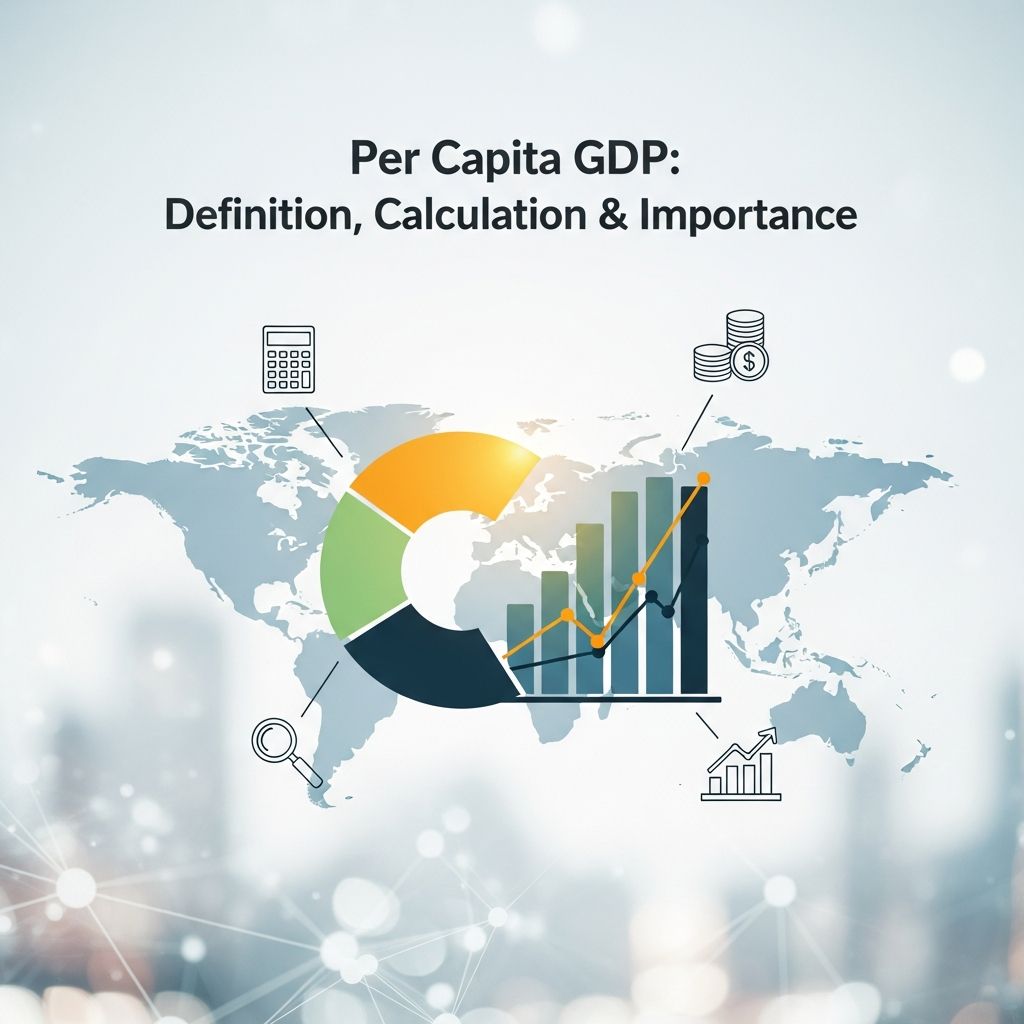
Per capita GDP, also known as gross domestic product per person, is a measure of the total economic output of a country divided by its population. It represents the average amount of income that each person in a nation generates annually through economic activity. This metric provides crucial insights into the average standard of living and economic well-being of individuals within a country. By converting a nation’s total GDP into a per-person figure, economists and policymakers can better understand whether an economy is growing in ways that benefit the average citizen.
The concept is straightforward: if a country produces goods and services worth a certain total value in a year, dividing that total by the number of people living in that country reveals how much economic value is produced per person on average. This simple calculation transforms an abstract national figure into a meaningful personal metric that helps citizens and investors understand economic conditions.
How Per Capita GDP Is Calculated
The calculation of per capita GDP is relatively simple and follows a basic formula. To determine per capita GDP, you divide a country’s gross domestic product by its total population. The formula can be expressed as:
Per Capita GDP = Total GDP ÷ Total Population
For example, if a country has a total GDP of $5 trillion and a population of 250 million people, the per capita GDP would be $20,000. This means that, on average, each person in that country generates $20,000 worth of economic output annually.
The data used in this calculation typically comes from national accounting statistics compiled by government agencies and verified by international organizations such as the World Bank and the International Monetary Fund. GDP figures are usually expressed in the nation’s currency and may be adjusted for inflation to provide more accurate comparisons across different time periods.
Understanding GDP as National Income
To fully grasp per capita GDP, it is essential to understand what GDP represents. Gross Domestic Product is the total market value of all final goods and services produced within a country during a specific time period, typically one year. It serves as a comprehensive measure of national income and economic activity.
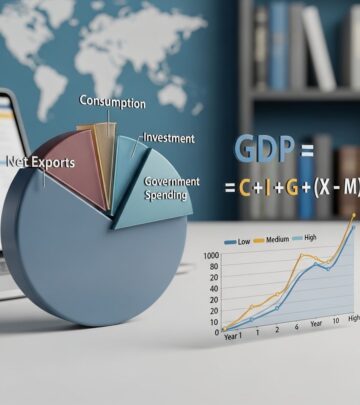
GDP encompasses four main components. The first is consumption, which includes spending by households on goods and services. The second component is investment, which refers to business spending on capital equipment and infrastructure. The third is government spending on public goods and services. Finally, net exports represent the value of exports minus imports, reflecting a nation’s trade balance with other countries.
When economists refer to GDP as “national income,” they are highlighting that all the goods and services produced represent income earned by various economic participants, including workers, investors, and business owners. By dividing this total national income by the population, per capita GDP provides an estimate of how much average income the economy produces per person annually.
Why Per Capita GDP Matters
Per capita GDP serves as a crucial economic indicator for several important reasons. First, it allows for meaningful comparisons of living standards between different countries. A nation with a higher per capita GDP typically has greater resources available per person, suggesting a higher average standard of living.
Second, per capita GDP helps track economic progress over time within a single country. By comparing per capita GDP figures from different years, economists can determine whether an economy is growing in real terms or merely expanding due to population growth. This distinction is vital for understanding whether citizens are becoming wealthier in real terms.
Third, per capita GDP provides context for policy decisions and investment strategies. Investors often examine per capita GDP when deciding where to allocate capital internationally, while policymakers use the metric to assess whether their economic policies are translating into improved living standards for citizens.
Additionally, per capita GDP is measured frequently, widely, and consistently across the globe. Most countries report GDP statistics quarterly, allowing economists to identify trends quickly. Some measure of GDP is available for nearly every country worldwide, enabling comprehensive international comparisons. The technical definition of GDP remains relatively consistent among countries, ensuring that comparisons remain valid and meaningful.
The Pizza Analogy: Understanding Per Capita GDP
A helpful way to visualize the concept of per capita GDP is to imagine two identical pizzas representing economic output. If you divide the first pizza among four people, each person receives a large slice. If you divide an identical second pizza among eight people, each person receives a much smaller slice. The total amount of pizza is the same, but the number of people sharing it dramatically affects how much each individual receives.
Applying this analogy to economics: if GDP represents the pizza and population represents the number of people sharing it, then per capita GDP represents the size of each person’s slice. A country with higher per capita GDP has larger slices available for its citizens, indicating greater average income and presumably better living standards. Countries dividing their economic output among fewer people generally achieve higher per capita GDP figures and can provide more resources to each citizen.
Per Capita GDP vs. Total GDP
An important distinction exists between total GDP and per capita GDP. A country might have an enormous total GDP but a relatively modest per capita GDP if its population is extremely large. Conversely, a nation with a smaller total GDP might have a high per capita GDP if it has a relatively small population.
For example, China and the United States both rank among the world’s largest economies by total GDP. However, the United States typically has a higher per capita GDP because its economic output is divided among a smaller population. This distinction highlights why per capita GDP provides a more accurate measure of average living standards than total GDP alone.
Understanding this difference is crucial for investors and policymakers. A rapidly growing total GDP might suggest economic expansion, but without considering per capita changes, it could mask stagnation or decline in average living standards if population is growing faster than economic output.
Measuring and Adjusting Per Capita GDP
Per capita GDP can be expressed in different ways, each providing different insights. Nominal per capita GDP uses current market prices and exchange rates, making it useful for comparing economies on the international market at a specific point in time. However, nominal figures can be misleading when comparing across time periods or countries with different inflation rates.
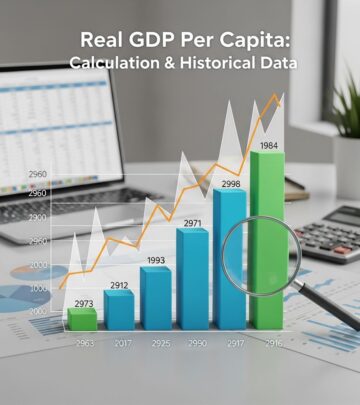
Real per capita GDP adjusts for inflation, allowing meaningful comparisons across different years within the same country. By removing the effects of price changes, real GDP reveals whether an economy is actually producing more goods and services or merely experiencing price increases.
For international comparisons, economists often use purchasing power parity (PPP) adjustments. PPP accounts for differences in living costs and price levels between countries, recognizing that the same amount of money buys different quantities of goods and services in different nations. Per capita GDP adjusted for PPP provides a more accurate comparison of actual living standards between countries, as it reflects what people’s income can actually purchase in their local economies.
International organizations like the World Bank and the OECD maintain their own definitions and calculations of GDP to ensure consistency in international comparisons. These organizations often express per capita GDP in constant international dollars, adjusting for both inflation and purchasing power differences to enable meaningful analysis across time and geography.
Advantages of Per Capita GDP as a Living Standards Indicator
Per capita GDP has become the standard metric for comparing living standards internationally because it offers several significant advantages. The primary advantage is that it is measured frequently, widely, and consistently across virtually all countries worldwide. This universal adoption and frequent measurement enable policymakers and economists to track trends quickly and make meaningful international comparisons.
Furthermore, per capita GDP provides a quantifiable measure for a concept that is difficult to measure directly. While happiness, quality of life, and overall well-being are subjective and difficult to quantify precisely, per capita GDP offers a concrete, numerical measure that most people understand intuitively. The metric correlates reasonably well with various measures of well-being, making it a practical tool for economic analysis and policy evaluation.
The consistency of GDP definitions across countries means that per capita GDP figures are comparable with a high degree of confidence. Investors and policymakers can rely on these statistics to make informed decisions about resource allocation and economic strategy across different nations.
Limitations of Per Capita GDP
Despite its widespread use, per capita GDP has important limitations as a measure of living standards. The metric provides only an average figure, which masks significant income inequality within countries. A nation could have a high per capita GDP while many citizens live in poverty if wealth is highly concentrated among a few individuals.
Per capita GDP also fails to account for non-monetary factors that affect quality of life, such as leisure time, environmental quality, healthcare access, education quality, and political stability. A country could achieve high GDP through manufacturing that creates severe pollution, reducing actual quality of life despite strong economic metrics.
Additionally, per capita GDP does not distinguish between sustainable and unsustainable growth. An economy could boost short-term GDP by depleting natural resources or accumulating debt, compromising long-term prosperity in the process. The metric also ignores the composition of economic output, whether goods and services are distributed fairly, and whether economic growth benefits all segments of society.
Crime rates, health outcomes, educational achievement, and social cohesion also influence actual living standards but do not appear in per capita GDP calculations. These limitations explain why economists often use per capita GDP alongside other indicators when conducting comprehensive assessments of economic well-being.
Global Disparities in Per Capita GDP
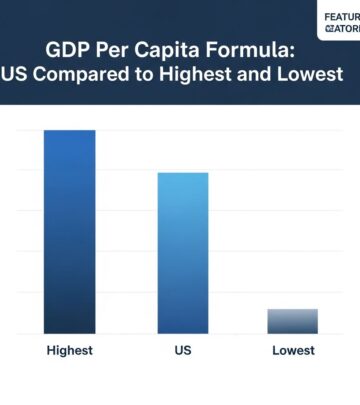
Per capita GDP reveals dramatic inequalities in living standards between nations. In the world’s poorest countries, average per capita GDP falls below $1,000 annually, indicating extreme poverty and limited economic resources. In contrast, wealthy developed nations often exceed $50,000 in per capita GDP, and some exceed $80,000 or higher.
This more than fifty-fold difference in per capita GDP between rich and poor countries illustrates the vast inequality in global living standards. These disparities reflect differences in natural resource availability, human capital development, institutional quality, technological advancement, and historical factors that have shaped economic development paths.
Analyzing these global disparities provides insights into development challenges and opportunities. Countries seeking to improve living standards often focus on policies designed to increase per capita GDP growth, recognizing that raising average income provides resources for education, healthcare, infrastructure, and other quality-of-life improvements.
Frequently Asked Questions
What is the difference between GDP and per capita GDP?
GDP measures the total value of all goods and services produced by a country, while per capita GDP divides that total by the population to show average income per person. A large country might have high total GDP but modest per capita GDP if its population is very large.
Why is per capita GDP important for investors?
Investors use per capita GDP to assess the average purchasing power and economic well-being of consumers in different countries. Higher per capita GDP typically indicates larger markets and greater consumer spending capacity, influencing investment decisions.
How does inflation affect per capita GDP comparisons?
Nominal per capita GDP can be distorted by inflation, making year-to-year or international comparisons misleading. Real per capita GDP adjusts for inflation to show true economic growth, while PPP adjustments account for differences in living costs between countries.
Can per capita GDP accurately reflect quality of life?
While per capita GDP provides a useful measure of average income, it does not capture all aspects of quality of life. Factors like environmental quality, healthcare, education, leisure time, and social cohesion significantly impact living standards but do not appear in GDP calculations.
How frequently is per capita GDP updated?
Most countries report GDP statistics quarterly, making per capita GDP data available multiple times per year. This frequent measurement allows economists to identify economic trends and changes in living standards relatively quickly.
References
- Per Capita GDP — Federal Reserve Education. 2024. https://www.federalreserveeducation.org/teaching-resources/economics/gdp/per-capita-gdp
- Gross Domestic Product — Wikipedia. 2024. https://en.wikipedia.org/wiki/Gross_domestic_product
- GDP per capita — Our World in Data. 2024. https://ourworldindata.org/grapher/gdp-per-capita-worldbank
- National Income and Product Accounts — U.S. Bureau of Economic Analysis. 2024. https://www.bea.gov
Similar Articles








Read full bio of medha deb