Pensions and Annuities: Complete Guide to Retirement Income
Understand the difference between pensions and annuities to plan your retirement income strategy effectively.

Understanding Pensions and Annuities: Your Path to Retirement Income Security
Planning for retirement requires understanding the various income sources available to you. Two of the most important retirement income vehicles are pensions and annuities. While these terms are often used interchangeably, they represent distinct financial products with different structures, funding mechanisms, and flexibility options. Whether you’re approaching retirement or in the early stages of career planning, understanding the differences between pensions and annuities is essential for making informed decisions about your financial future.
Both pensions and annuities serve a critical purpose: converting your accumulated wealth into predictable, reliable income that lasts throughout your retirement years. However, the way they work, who funds them, and how much control you have over them varies significantly. This comprehensive guide will help you navigate these important retirement income options.
What Is a Pension?
A pension is a retirement benefit plan offered by an employer, government agency, or established through the National Pension Scheme (NPS). Traditionally known as a defined benefit plan, a pension guarantees you a specific monthly income amount during retirement, typically beginning at a designated retirement age between 58 and 60 years.
Pensions are primarily funded by your employer, though some plans include employee contributions. The employer or pension fund manager assumes the responsibility for managing the investments and ensuring there are sufficient funds to pay all retirees their promised benefits. This shift of responsibility from the individual to the employer or government represents one of the fundamental characteristics of pension plans.
When you retire with a pension, you typically have two primary options for receiving your benefits: a lump-sum payout or regular monthly payments for life. If you choose the annuity option, your pension becomes a guaranteed income stream that continues regardless of market conditions or how long you live.
What Is an Annuity?
An annuity is a contract you purchase directly from an insurance company to convert your savings into steady retirement income. Unlike pensions, which are employer-sponsored, annuities are personal investment vehicles that you fund entirely on your own. You have significantly more control over the terms of your annuity, including the purchase amount, when payments begin, and how frequently you receive distributions.
With an annuity, you provide a lump-sum payment to an insurance company, which then invests your money and uses a portion of the investment returns to make regular payments back to you. The insurance company assumes the risk of paying you for as long as you live, which is why annuities are particularly valuable for addressing longevity risk—the possibility of outliving your savings.
Key Differences Between Pensions and Annuities
| Aspect | Pension | Annuity |
|---|---|---|
| Funding Source | Employer or government funded | Individually funded with personal savings |
| Who Offers It | Employer, government, or NPS | Insurance companies |
| Risk Management | Managed by employer or pension fund | Individual chooses risk level through annuity type |
| Payment Timing | Begins at retirement age (58-60) | Can begin immediately or be deferred |
| Flexibility | Limited flexibility in payment options | More customizable payment structures |
| Portability | Tied to specific employer | Personal contract, independent of employment |
| Cost Structure | No direct cost to employee | Includes fees, commissions, and other charges |
| Guarantees | Guaranteed by employer or government | Guaranteed by insurance company only |
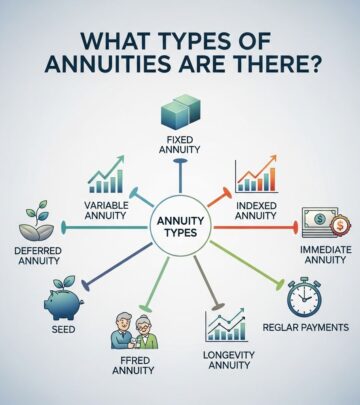
Types of Annuities
Annuities come in several varieties, each with distinct characteristics and risk profiles. Understanding these types helps you select the option that aligns with your retirement goals and risk tolerance.
Immediate Annuities
Immediate annuities begin making payments within one year or less after purchase. This option is ideal if you’re about to retire and want income to start immediately. You receive regular payments right away, providing quick access to retirement income without delay.
Fixed Annuities
Fixed annuities offer guaranteed payout amounts based on a fixed interest rate set at the time of purchase. These annuities provide predictable, stable income that doesn’t fluctuate with market conditions. The trade-off is that fixed annuities may not keep pace with inflation over time, potentially reducing your purchasing power in the future.
Variable Annuities
Variable annuities invest your contributions into sub-accounts similar to mutual funds, allowing exposure to stock market growth. These annuities offer the potential for higher returns compared to fixed options, but they come with corresponding market risk. Your payment amounts will fluctuate based on market performance, and variable annuities typically carry higher fees than fixed alternatives.
Indexed Annuities
Indexed annuities link returns to market indices while providing downside protection. These products offer a middle ground between fixed and variable annuities, allowing you to participate in market gains while limiting potential losses during market downturns.
Joint and Survivor Annuities
Joint and survivor annuities provide income for both you and your spouse, with payments continuing to a surviving spouse (often at a reduced rate) after one partner passes away. This option is valuable for married couples who want to ensure ongoing financial security for the surviving spouse.
Advantages of Pensions
Pensions offer several compelling benefits that make them attractive retirement income sources for eligible employees:
Guaranteed Income Security: Pensions provide a reliable source of income throughout your retirement, regardless of market conditions or economic fluctuations. Your benefit amount is predetermined and protected.
Employer Funding: Your employer bears the cost of the pension plan, meaning you receive valuable retirement benefits without depleting your personal savings.
Professional Management: Pension funds are managed by professional investment managers who handle all investment decisions, removing the burden of managing your retirement portfolio.
Longevity Protection: Pension payments continue for your entire lifetime, eliminating the risk of outliving your retirement income.
Peace of Mind: Knowing you have guaranteed income reduces financial stress and allows you to focus on enjoying your retirement.
Disadvantages of Pensions
While pensions offer significant advantages, they also come with notable limitations:
Limited Flexibility: Pension plans often restrict when you can begin receiving payments and limit your choices regarding payout structure. You may have minimal control over whether to take a lump sum or annuity payments.
Employer Dependency: Pensions are tied to specific employers. Changing jobs may result in reduced benefits or loss of pension eligibility, particularly if you leave before becoming fully vested.
Inflation Risk: Fixed pension payments may not increase with inflation, causing your purchasing power to decline over time.
Limited Survivor Benefits: Traditional pensions may provide limited benefits to surviving spouses or dependents, depending on the plan terms.
Advantages of Annuities
Annuities provide distinct advantages that appeal to many retirees planning their income strategies:
Customizable Structure: You have extensive control over when payments begin, how frequently you receive them, and the duration of payments. This flexibility allows you to tailor the annuity to your specific retirement timeline.
Personal Ownership: Annuities are personal contracts independent of your employment status. You maintain ownership and can make decisions about your annuity regardless of job changes.
Diverse Options: Multiple annuity types allow you to select the risk level and return potential that matches your retirement objectives.
Spousal Protections: Joint and survivor annuity options ensure your spouse continues receiving income after your death.
Tax-Deferred Growth: Annuity earnings grow tax-deferred until you begin taking distributions, maximizing long-term growth potential.
Disadvantages of Annuities
Annuities also present several important drawbacks to consider:
Higher Costs: Annuities sold by insurance companies involve substantial fees, including surrender charges, mortality and expense fees, and administrative costs that can significantly reduce your returns.
Complexity: Annuity products are often complicated with numerous terms, conditions, and fee structures that can be difficult to understand.
Market Risk: Variable annuities expose you to stock market fluctuations, which can impact your income and principal.
Inflation Vulnerability: Fixed annuities may not protect against inflation, reducing your purchasing power over your retirement years.
Insurance Company Risk: Unlike pensions that may be guaranteed by employers or governments, annuities are only as secure as the insurance company providing them.
How Pension Payouts Work
When you’re eligible to receive your pension, you typically have two main distribution options. The first is a lump-sum payment, where you receive your entire accumulated benefit in one single payment. This option gives you maximum control over your money, allowing you to invest it, spend it, or use it as needed.
The second option is to receive your pension as an annuity, meaning you’ll receive regular monthly payments for life. With this approach, you sacrifice immediate access to the full amount but gain the security of guaranteed lifetime income.
Some pension plans offer a period-certain option, where you can receive payments for a fixed period such as 10 or 20 years. Once this period ends, payments cease. This option typically offers higher monthly payments than a lifetime annuity option.
How Annuity Payouts Are Calculated
The payout amount from an annuity depends on several interconnected factors. Your purchase amount—the lump sum you invest in the annuity—directly affects your monthly payments. Generally, the larger your initial investment, the higher your regular payments will be.
Your age significantly influences payout calculations. Younger annuitants receive lower monthly payments due to longer life expectancy, while older individuals receive higher payments since the insurance company expects to make payments for fewer years.
The type of annuity you select impacts your payments. Fixed annuities provide predetermined amounts, while variable annuity payments fluctuate based on investment performance. The interest rate environment at the time of purchase also matters significantly. In higher interest rate environments, fixed annuity payouts tend to be more favorable.
Additional factors include whether you select single-life or joint-survivor benefits, inflation adjustment provisions, and any optional rider features you add to your annuity.
Pension vs. Annuity: Which Is Right for You?
Choosing between a pension and an annuity depends on your personal circumstances, financial needs, and retirement objectives. If your employer offers a pension as part of your compensation package, accepting it provides guaranteed income with minimal personal cost and no investment responsibility.
If you have a lump-sum pension payout option, consider whether you’re comfortable managing a large sum of money or prefer the security and simplicity of guaranteed payments. An annuity purchased with pension funds can provide that guaranteed income while offering more flexibility than your original pension plan.
Consider your longevity expectations, current health status, and family history. If you expect a longer retirement, both pensions and annuities provide valuable protection against outliving your savings. Evaluate your need for flexibility—annuities generally offer more customization options, while pensions provide simplicity and reduced decision-making burden.
Frequently Asked Questions About Pensions and Annuities
Q: Can I convert my pension into an annuity?
A: If your pension plan offers a lump-sum distribution option, you can use that amount to purchase a retail annuity from an insurance company, providing more flexibility over payment terms and options than traditional pension payouts.
Q: What happens to my pension if I change jobs?
A: Pension benefits depend on your employment duration and vesting schedule. Leaving before vesting may result in losing pension benefits, while vested employees typically retain their benefits but may receive a smaller amount if they don’t work until normal retirement age.
Q: Are annuities protected if the insurance company fails?
A: Annuities are guaranteed only by the insurance company that issues them, not by government agencies. However, state insurance guarantee associations provide limited protection if an insurance company becomes insolvent.
Q: Can I withdraw from an annuity before retirement?
A: Most annuities impose surrender charges if you withdraw funds before a specified period ends. These charges can be substantial and significantly reduce your withdrawal amount.
Q: What are the tax implications of annuity distributions?
A: Annuity distributions are typically taxed as ordinary income. If purchased with pre-tax dollars (such as from a traditional IRA or 401k), the entire distribution is taxable. Distributions from annuities purchased with after-tax dollars are partially tax-free.
Q: How do I know what annuity payout rate I’ll receive?
A: Insurance companies calculate annuity rates based on your age, health, interest rates, the annuity type, and payout options selected. You can request a personalized quote to see the specific payout rate for your situation.
Q: Should I take my pension as a lump sum or annuity?
A: This depends on your comfort with investing, need for flexibility, longevity expectations, and financial situation. Those preferring guaranteed income and minimal investment responsibility typically choose annuity payments, while those wanting control may prefer lump sums.
Alternative Retirement Income Strategies
Beyond pensions and annuities, several other retirement income sources can supplement your income strategy. Traditional IRAs and 401(k) plans offer tax-deferred growth on contributions, with withdrawals taxed as income during retirement. Roth IRAs and Roth 401(k)s allow tax-free qualified withdrawals, providing valuable tax diversification in retirement.
Investing in dividend-paying stocks creates a steady income stream through company dividend payments. Social Security benefits provide a guaranteed government-backed income source for eligible retirees. Real estate investments can generate rental income, while part-time work or consulting provides flexible income during early retirement years.
Conclusion: Planning Your Retirement Income
Pensions and annuities both serve the critical purpose of converting accumulated wealth into predictable retirement income. While pensions offer employer-funded security and simplicity, annuities provide flexibility and personal control. The best choice depends on your individual circumstances, preferences, and retirement goals.
Most retirement plans benefit from a diversified income strategy combining multiple sources including pensions, annuities, Social Security, investment accounts, and other income streams. Consulting with a financial advisor can help you develop a comprehensive retirement income strategy tailored to your specific needs and objectives.
References
- What Are Pension Annuities And How Do They Work? — Bankrate. 2024. https://www.bankrate.com/retirement/what-are-pension-annuities/
- Difference between Annuity and Pension Plan – Which is Better? — HDFC Life. 2024. https://www.hdfclife.com/insurance-knowledge-centre/retirement-planning/annuity-vs-pension
- Annuity vs. Pension – Key Differences Between Them — Annuity.org. 2024. https://www.annuity.org/annuities/types/pensions/
- Annuities vs Pensions: What’s the Difference? — Stone Street Capital. 2024. https://www.stonestreet.com/annuities-vs-pensions-whats-the-difference/
- Annuity vs. Pension: Comparing Your Options — Bankers Life. 2024. https://www.bankerslife.com/insights/personal-finance/annuity-vs-pension-comparing-your-options/
- Pension Payouts: Lump Sum vs. Annuity — Charles Schwab. 2024. https://www.schwab.com/learn/story/investing-lump-sum-vs-annuity
- What’s the Difference Between a Pension and an Annuity? — Northwestern Mutual. 2024. https://www.northwesternmutual.com/life-and-money/whats-the-difference-between-a-pension-and-an-annuity/
Similar Articles








Read full bio of medha deb