Peer-to-Peer (P2P) Services: Complete Guide
Understand how P2P services connect borrowers and lenders directly online.

What Are Peer-to-Peer (P2P) Services?
Peer-to-peer (P2P) services represent a revolutionary approach to financial transactions by connecting individuals directly without requiring intermediaries such as banks or traditional financial institutions. These services operate primarily through online platforms that facilitate lending, borrowing, and money transfers between users. P2P services have transformed the financial landscape by democratizing access to credit and enabling individuals to become lenders themselves.
P2P services encompass two main categories: peer-to-peer lending services and peer-to-peer payment services. While P2P lending connects borrowers seeking loans with individual investors willing to provide capital in exchange for interest, P2P payment services enable users to transfer money directly to friends, family, or business associates using digital platforms. Both types of services operate on the principle of direct peer connection, reducing reliance on traditional financial intermediaries.
How Peer-to-Peer Lending Works
Peer-to-peer lending operates through a straightforward but sophisticated process that leverages technology to match lenders with borrowers efficiently. Understanding this mechanism helps both potential borrowers and investors make informed decisions about participating in P2P lending platforms.
The P2P Lending Process
The peer-to-peer lending process begins when a borrower creates an account on a P2P platform and submits a loan application. During this application phase, the platform conducts thorough verification procedures, including identity confirmation, bank account verification, employment validation, and comprehensive credit checks. This underwriting process ensures that the platform can accurately assess borrower risk and determine appropriate interest rates.
Once the application is approved, borrowers receive an interest rate quote from the platform, which reflects their creditworthiness and the level of risk associated with their loan. Borrowers can then accept this rate or explore alternative platforms offering better terms. After acceptance, the loan listing becomes visible to potential investors and lenders on the platform who browse available opportunities and decide whether to fund individual loans based on their investment criteria.
Investors typically consider several factors when evaluating loan opportunities, including the borrower’s credit score, employment status, debt-to-income ratio, loan purpose, and requested loan amount. Many platforms allow investors to diversify their portfolios by funding multiple loans across different risk levels, which helps mitigate overall portfolio risk.
Once a loan receives full funding from one or multiple investors, the borrower receives the loan proceeds minus any origination fees charged by the platform. The borrower then begins making regular repayments directly through the platform, which collects payments and distributes them to investors according to their investment proportions.
Platform Services and Intermediation
P2P lending companies provide comprehensive intermediation services that go far beyond simple matchmaking. These services include developing sophisticated credit models for loan approvals and pricing, processing all payments between borrowers and lenders, and providing ongoing customer service to both parties. Platforms also handle loan servicing, including attempting to collect from delinquent borrowers and managing default situations. Additionally, these companies ensure legal compliance with financial regulations, handle tax reporting requirements, and invest in marketing to attract new borrowers and investors.
How Peer-to-Peer Payment Services Work
Peer-to-peer payment services operate differently from P2P lending platforms, focusing on enabling direct money transfers between individuals rather than facilitating loans. These services have become increasingly popular for everyday transactions, from splitting rent to reimbursing friends for shared expenses.
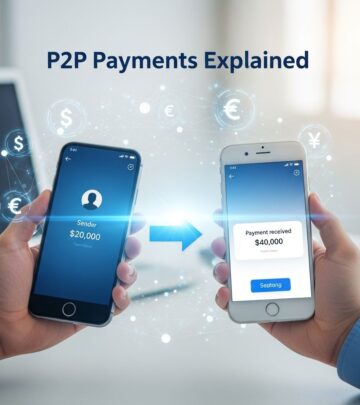
Using a P2P payment service involves several straightforward steps. Users first link their personal bank account, debit card, or credit card to the platform, depending on the service’s requirements. They then identify the recipient using their username, email address, or phone number, depending on which P2P platform they choose. After entering the transfer amount and confirming the transaction, funds are transferred from the user’s linked account to the recipient’s account, typically within minutes or hours.
Popular P2P payment platforms include Venmo, Zelle, and Cash App, each offering varying levels of speed, fees, and integration with banking institutions. Zelle, for example, is integrated directly into many major banking apps and offers same-day transfers at no cost to users. The accessibility and ease of use of these platforms have driven significant adoption among U.S. consumers, with approximately 36 percent of American adults using P2P payment services.
Key Characteristics of P2P Services
Peer-to-peer services share several defining characteristics that distinguish them from traditional financial services:
- Conducted primarily for profit, with platforms charging fees for their intermediation services
- Operate without requiring prior relationships or common bonds between participants
- Facilitate transactions entirely online through digital platforms
- Allow participants to choose counterparties based on available information and preferences
- Typically involve unsecured loans without government insurance protection
- Operate with reduced overhead compared to traditional financial institutions
Advantages of Peer-to-Peer Services
Benefits for Borrowers
Borrowers accessing P2P lending platforms enjoy several significant advantages compared to traditional lending institutions. Most notably, borrowers often qualify for lower interest rates than conventional bank loans, particularly those with good credit scores. This cost advantage results from the reduced overhead expenses of online-only platforms compared to traditional banks with extensive physical branch networks. Additionally, P2P lending provides greater flexibility in loan terms, allowing borrowers to customize loan amounts, repayment periods, and other terms to match their specific financial situations.
P2P lending also benefits borrowers who might not qualify for conventional bank loans due to limited credit history, recent financial difficulties, or other circumstances that traditional lenders view unfavorably. These alternative lending platforms use more sophisticated credit models that may evaluate applicants differently than traditional banks, creating opportunities for borrowers excluded from conventional lending markets.
Benefits for Investors and Lenders
Individual investors using P2P lending platforms can achieve returns significantly higher than those available through traditional savings accounts or conservative investment products. By lending money through these platforms, investors earn interest on their capital while participating directly in the lending process. The ability to diversify investments across multiple loans and risk levels helps manage portfolio risk while maintaining attractive overall returns.
P2P lending democratizes investment opportunities, allowing individuals with relatively modest capital to participate in lending markets previously accessible only to large financial institutions. This democratization increases financial inclusion and enables individuals to generate passive income from their savings.
Risks and Considerations
Risks for Borrowers
While P2P lending offers advantages, borrowers must recognize important risks. Unlike traditional bank loans, P2P loans typically lack protection from government insurance programs such as FDIC insurance. If a P2P platform fails financially, borrowers may face difficulties accessing their accounts or completing loan repayments. Additionally, borrowers with poor credit histories may face higher interest rates through P2P platforms than through traditional lenders, potentially making P2P lending more expensive for riskier borrowers.
Risks for Investors
Investors in P2P lending face significant risks, primarily the possibility of borrower default. Unlike deposits in government-insured bank accounts, P2P investments lack the safety net of federal insurance protection. If borrowers fail to repay their loans, investors may lose their principal investment. While P2P platforms employ credit screening and collection efforts, these measures cannot eliminate default risk entirely.
The relatively nascent nature of the P2P lending industry also introduces regulatory and platform risk. Regulatory changes could significantly impact how platforms operate or what fees they can charge. Additionally, platform failures, though uncommon, could disrupt investor access to their funds or loan repayments.
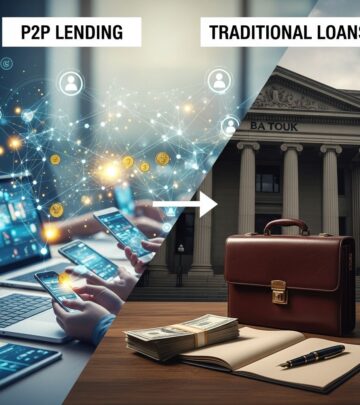
P2P Lending vs. Traditional Banking
| Aspect | P2P Lending Platforms | Traditional Financial Institutions |
|---|---|---|
| Loan Types | Primarily unsecured personal loans | Wide variety including personal, mortgage, auto, and business loans |
| Interest Rates | Often lower for good credit, potentially higher for poor credit | Set by market conditions and bank policy; may reflect overhead costs |
| Processing Speed | Generally faster, often within days | Can take longer due to extensive underwriting |
| Overhead Costs | Lower due to online-only operations | Higher due to physical branches and staff |
| Credit Flexibility | May consider alternative credit factors | Relies heavily on traditional credit scores |
| Insurance Protection | Generally not FDIC insured | Deposits typically FDIC insured up to limits |
The P2P Services Market
The global peer-to-peer lending market has experienced remarkable growth, reaching approximately $200 billion in market value. This expansion reflects increasing consumer and investor confidence in P2P platforms and growing recognition of their benefits as alternatives to traditional financial services. Major P2P lending platforms include LendingClub, Prosper, and Upstart, each serving specific niches within the lending market.
P2P payment services have achieved even broader adoption, with nearly 40 percent of mobile phone users conducting at least one P2P transaction monthly. This widespread adoption demonstrates how thoroughly P2P payment services have integrated into everyday financial practices.
Frequently Asked Questions About P2P Services
What is the difference between P2P lending and P2P payments?
P2P lending involves borrowers obtaining loans from individual investors through online platforms, with interest charged on borrowed amounts. P2P payment services, conversely, enable direct money transfers between individuals without lending components, typically for splitting expenses or reimbursing friends.
Are P2P loans safer than bank loans?
P2P loans carry different risks than bank loans. While P2P platforms may offer competitive rates, they typically lack government insurance protection that bank deposits enjoy. Borrowers should evaluate both options based on their specific financial situations and risk tolerance.
How long does it take to receive P2P loan funding?
Timeline varies by platform but typically ranges from a few days to a couple of weeks. Once applications are approved and loans fully funded by investors, borrowers usually receive funds within 5-10 business days.
Can I invest in multiple P2P loans?
Yes, most P2P platforms encourage portfolio diversification by allowing investors to fund multiple loans across different risk levels. This approach helps manage risk while maintaining exposure to the higher returns P2P lending offers.
What credit score do I need for P2P lending?
Credit score requirements vary by platform, but generally, borrowers with scores above 640 have better approval chances and lower interest rates. However, some platforms serve borrowers with lower credit scores, though at higher rates.
Are P2P payment services safe?
Major P2P payment services employ encryption and security measures to protect user information and transaction integrity. However, users should follow best practices such as using strong passwords, enabling two-factor authentication, and only sending money to trusted recipients.
Conclusion
Peer-to-peer services have fundamentally transformed how individuals access credit and transfer money, offering compelling alternatives to traditional financial institutions. For borrowers, P2P lending platforms provide opportunities to obtain loans at competitive rates, with greater flexibility and potentially easier approval processes for those excluded from conventional lending markets. For investors, these platforms offer attractive returns unavailable through traditional savings vehicles, though with commensurate risks requiring careful consideration.
Understanding how P2P services work, recognizing their advantages and limitations, and carefully evaluating individual circumstances remains essential for anyone considering participation in these platforms. As the P2P services industry continues evolving, technological improvements and regulatory frameworks will likely further enhance safety and accessibility for both borrowers and investors.
References
- Peer-to-peer lending — Wikipedia. Accessed November 2025. https://en.wikipedia.org/wiki/Peer-to-peer_lending
- Peer-to-Peer Lending – Overview, How It Works, Pros & Cons — Corporate Finance Institute. https://corporatefinanceinstitute.com/resources/wealth-management/peer-to-peer-lending/
- What Is Peer-to-Peer Lending? — Experian. https://www.experian.com/blogs/ask-experian/what-is-peer-to-peer-lending/
- What is Peer-to-Peer Lending & How P2P Loans Work — Equifax. https://www.equifax.com/personal/education/personal-finance/articles/-/learn/peer-to-peer-lending/
- What Is Peer-To-Peer (P2P) Lending & How It Works? — EarnIn. https://www.earnin.com/blog/peer-to-peer-lending-definition-and-how-it-works
- What Are Peer-To-Peer (P2P) Payments? — Bankrate. https://www.bankrate.com/banking/checking/what-are-p2p-payments/
- Peer-to-Peer (P2P) Payment Services — Federal Reserve Bank of St. Louis. 2020. https://www.stlouisfed.org/publications/page-one-economics/2020/04/01/peer-to-peer-p2p-payment-services
Similar Articles








Read full bio of Sneha Tete