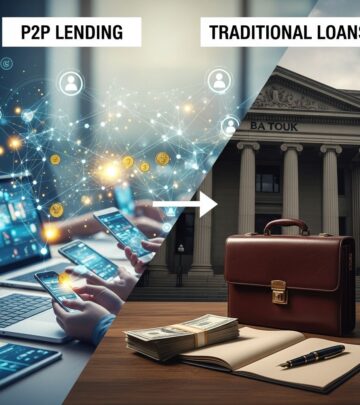
Peer-to-Peer Lending: How P2P Loans Work
Explore peer-to-peer lending as an alternative to traditional banking solutions for borrowers and investors.

What Is Peer-to-Peer Lending?
Peer-to-peer (P2P) lending, also known as social or crowd lending, is a modern financial approach that allows borrowers to obtain loans directly from individual investors rather than traditional banks or other established financial institutions. This innovative lending model has transformed how people access credit and create investment opportunities by eliminating intermediaries and facilitating direct connections between those seeking funds and those willing to lend them.
P2P lending operates through specialized websites and platforms that serve as marketplaces, bringing together borrowers who need money and individual lenders seeking investment returns. These platforms have democratized the lending process, making it possible for people with varying credit histories to access funds while providing everyday investors with alternative investment vehicles beyond traditional savings accounts and bonds.
How Does P2P Lending Work?
The P2P lending process involves multiple steps for both borrowers and lenders, each designed to facilitate a smooth transaction while managing risk. Understanding how these systems operate can help you determine whether P2P lending aligns with your financial goals.
The Borrower’s Journey
For borrowers, the P2P lending process begins by selecting a platform that meets their specific needs. Different P2P platforms often specialize in particular lending niches, such as personal loans for medical expenses, home improvements, debt consolidation, or small business loans. Once a suitable platform is identified, borrowers submit an application providing detailed financial information.
The review process varies depending on the platform but typically involves both automated systems and potential lenders evaluating the borrower’s creditworthiness, income, employment status, and existing debt obligations. Like traditional loan applications, this review process may trigger a hard inquiry on your credit reports, which temporarily impacts your credit score.
After the application review is complete, borrowers learn what interest rate they will receive for their loan. Potential investors then review the loan listing and decide whether they want to fund it. In some cases, borrowers and investors may negotiate to adjust certain loan terms before reaching an agreement. Once matched with an investor or group of investors, the loan is funded, and the borrower begins receiving funds and making repayments according to the agreed-upon schedule.
The Lender’s Perspective
For investors interested in P2P lending, the process begins by opening an account on a compatible P2P platform. Investors deposit money into an investment account that will be used to fund loans to borrowers. Many platforms allow investors to review loan listings before deciding which borrowers to fund, enabling a personalized investment approach.
When a loan is fully funded and the borrower makes repayments, investors receive their principal back plus interest earned over the loan term. If a borrower repays the loan quickly, however, investors have less time to accumulate interest, resulting in lower overall returns. Many sophisticated investors diversify their investments across multiple borrowers to spread risk and increase the likelihood of consistent returns.
Despite these strategies, investors in P2P lending face significant risks. Borrowers using P2P platforms are statistically more likely to default on their loans compared to those who pursue traditional bank financing. When defaults occur, P2P platforms may escalate collection efforts by raising interest rates, assessing additional fees, or sending the loan to a collection agency—sometimes within as little as 30 days. Unlike traditional banks, which often provide more flexible options and resources for struggling borrowers, P2P platforms typically have stricter enforcement policies.
Advantages of Peer-to-Peer Lending
P2P lending offers several compelling benefits for both borrowers and lenders, making it an attractive alternative to traditional financing options.
- Faster Approval Process: Because P2P platforms operate primarily online, loan approvals are typically handled through automated systems rather than manual review processes. This automation can significantly accelerate the lending timeline, with some loans approved in just a few days compared to the weeks often required by traditional banks.
- Lower Eligibility Requirements: P2P lending platforms generally have more flexible credit requirements than traditional lenders. If you have limited credit history, are rebuilding your credit, or have lower credit scores, you may find it easier to qualify for a P2P loan than a conventional bank loan. This inclusivity opens lending opportunities to borrowers who might otherwise face rejection from traditional institutions.
- Competitive Interest Rates: While interest rates vary based on creditworthiness and platform policies, P2P lending can offer competitive rates, particularly for borrowers with good credit. The elimination of traditional banking overhead costs can result in more favorable pricing for qualified borrowers.
- Flexible Repayment Terms: Unlike traditional banks that operate under strict regulatory frameworks, P2P platforms often provide more customizable repayment options. Borrowers may have greater flexibility in choosing loan terms that align with their financial situations and cash flow patterns.
Disadvantages of Peer-to-Peer Lending
Despite the advantages, P2P lending carries notable drawbacks that borrowers and investors should carefully consider before proceeding.
- Higher Interest Rates for Riskier Borrowers: Borrowers with lower credit scores or thinner credit histories may face significantly higher interest rates with P2P lenders compared to traditional financial institutions. Lenders demand higher rates to compensate for increased default risk, making loans more expensive for those who can least afford it.
- Additional Fees: Beyond interest payments, P2P borrowers may encounter various service and maintenance fees that increase the total cost of borrowing. These fees can add substantial amounts to the overall loan expense and should be carefully reviewed before commitment.
- Limited Customer Support: Because P2P lending operates primarily through online platforms, borrowers may struggle to develop meaningful relationships with their lenders or access personalized guidance during financial difficulties. The impersonal nature of digital-only platforms can make it challenging to negotiate modifications or discuss hardship situations.
- Default Risk for Investors: Individual investors in P2P lending face considerable default risk, as P2P borrowers are statistically more likely to miss payments than traditional loan borrowers. Without the diversification and risk management resources available to institutional lenders, individual investors may experience significant losses.
- Regulatory Uncertainty: P2P lending operates in a complex and evolving regulatory environment that varies by jurisdiction. Changes in regulations could impact platform operations, borrower protections, or investor returns.
Key Differences Between P2P Lending and Traditional Lending
| Factor | P2P Lending | Traditional Bank Lending |
|---|---|---|
| Approval Timeline | 2-7 days (often automated) | 1-4 weeks (manual review) |
| Credit Score Requirements | Lower; more flexible | Higher; stricter standards |
| Interest Rates | Variable; can be higher for poor credit | Generally lower for qualified borrowers |
| Borrower Support | Limited; primarily online | Extensive; personal relationships |
| Default Handling | Rapid escalation; strict enforcement | More flexibility; restructuring options |
| Regulatory Protection | Limited; evolving rules | Comprehensive; established standards |
Is P2P Lending Right for You?
Determining whether P2P lending is appropriate depends on your specific financial circumstances, borrowing needs, and risk tolerance. For borrowers with good credit and access to traditional financing, the benefits of P2P lending may be limited, as conventional banks likely offer lower interest rates and more comprehensive protections. However, for individuals with credit challenges, those seeking fast funding, or those needing flexible repayment terms, P2P lending can provide valuable alternatives.
Investors considering P2P lending should understand that this investment class carries higher risk than bonds or savings accounts. Diversifying investments across multiple borrowers can help mitigate losses, but investors must accept the possibility of significant default rates. Those seeking stable, predictable returns may find traditional investments more suitable.
Important Considerations Before Applying
Before pursuing P2P lending, whether as a borrower or investor, several important steps can protect your financial interests. Borrowers should check their credit reports and credit scores before applying, as this information helps identify any errors that could affect loan terms and allows you to understand what interest rates you might expect. Reviewing your credit reports also provides insight into your creditworthiness from a lender’s perspective.
Both borrowers and investors should thoroughly research P2P platforms, comparing fee structures, default rates, customer reviews, and available loan or investment options. Understanding the specific rules, practices, and protections offered by different platforms enables more informed decision-making. Additionally, reviewing the terms and conditions carefully ensures you understand all costs, obligations, and risks before committing.
Frequently Asked Questions About Peer-to-Peer Lending
Q: What is the main advantage of P2P lending?
A: The primary advantage is faster approval and more flexible eligibility requirements. P2P lending can be an excellent option for borrowers with lower credit scores or limited credit history who might not qualify for traditional bank loans.
Q: How risky is investing in P2P lending?
A: P2P lending carries considerable risk, as borrowers are statistically more likely to default compared to traditional bank borrowers. Investors should diversify across multiple borrowers and be prepared for potential losses. This investment vehicle is generally suitable only for investors who can afford to lose their investment.
Q: Can I get a P2P loan if I have bad credit?
A: Yes, P2P lending platforms typically have lower credit requirements than traditional banks, making it possible to qualify with poor credit. However, expect to pay higher interest rates to compensate lenders for increased default risk.
Q: What fees should I expect with a P2P loan?
A: Beyond interest payments, P2P borrowers commonly encounter origination fees, service fees, and maintenance fees. The specific fees vary by platform, so it’s crucial to review all costs before applying.
Q: How long does P2P loan approval typically take?
A: P2P loans are often approved in 2-7 days, significantly faster than the 1-4 weeks typical for traditional bank loans. The exact timeline depends on the platform and how quickly they assess your application.
Q: What happens if a P2P borrower defaults?
A: When a borrower defaults, the P2P platform may increase interest rates, charge additional fees, or send the loan to a collection agency, sometimes within 30 days. Unlike traditional banks, P2P platforms offer limited workout options for struggling borrowers.
Q: Can I diversify my P2P investments?
A: Yes, most P2P platforms allow investors to spread their funds across multiple borrowers, which helps diversify risk and potentially increases the likelihood of consistent returns. However, diversification does not eliminate default risk.
Q: Are P2P loans regulated?
A: P2P lending operates in an evolving regulatory environment that varies by jurisdiction. While some regulations exist, P2P lending typically has fewer protections than traditional bank lending, which means borrowers and investors should be more cautious.
Conclusion
Peer-to-peer lending has emerged as a significant alternative to traditional banking, offering borrowers faster access to credit with lower eligibility requirements and investors new opportunities to generate returns. However, both borrowers and lenders must carefully weigh the benefits against the substantial risks involved. Before applying for a P2P loan or investing in P2P platforms, review your financial situation, check your credit reports, research platforms thoroughly, and understand all terms, fees, and conditions. While P2P lending can be a valuable financial tool for the right person in the right situation, it requires careful consideration and informed decision-making to protect your financial interests.
References
- What Is Peer-to-Peer Lending & How P2P Loans Work — Equifax. 2025. https://www.equifax.com/personal/education/personal-finance/articles/-/learn/peer-to-peer-lending/
- The Ultimate Guide To Peer To Peer Lending — RateSetter. 2024. https://members.ratesetter.com/static/images/the-ultimate-guide-to-peer-to-peer-lending.pdf
- The Ultimate Guide to P2P Lending — LenderKit. 2024. https://lenderkit.com/blog/the-ultimate-guide-to-p2p-lending/
Similar Articles








Read full bio of Sneha Tete