Peer-To-Peer Lending: What Investors Need To Know In 2025
Discover how P2P lending revolutionizes borrowing and investing with lower costs, higher returns, and direct connections between individuals.

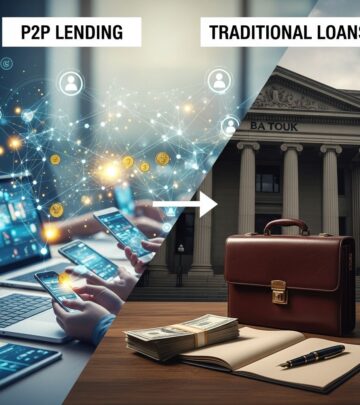
Peer-to-peer (P2P) lending represents a transformative shift in personal and business finance, enabling individuals to lend money directly to other individuals or companies through digital platforms, bypassing traditional banks. This model leverages technology to create efficient marketplaces where lenders seek higher yields and borrowers access funds at competitive rates.
The Rise of Direct Lending Marketplaces
Emerging in the early 2000s amid financial disruptions, P2P lending gained traction as banks tightened credit post-2008 crisis. Platforms now facilitate billions in loans annually by matching savers with those needing capital for personal expenses, business growth, or real estate ventures. Unlike banks, these services operate with minimal overhead, passing savings to users via reduced fees and attractive terms.
The core appeal lies in disintermediation: lenders earn interest rates often surpassing savings accounts, while borrowers benefit from streamlined approvals and potentially lower costs. In the UK, for instance, platforms authorized by the Financial Conduct Authority (FCA) ensure a regulated environment, promoting trust and stability.
Core Mechanics of P2P Platforms
P2P lending operates on a ‘many-to-many’ principle. Borrowers apply online, submitting details like loan purpose, amount, and repayment term. Platforms assess creditworthiness using algorithms, income verification, and identity checks before listing loans to potential investors.
Lenders browse listings, often filtered by risk profiles or interest rates, and fund portions of loans—sometimes as little as $25 per slice—to diversify exposure. Once fully funded, funds transfer to the borrower, who repays principal plus interest over time. Platforms handle collections, distributions, and defaults, charging fees from both sides.
- Borrower Application: Online form with financial details and loan needs.
- Platform Review: Credit scoring, verification of employment and bank accounts.
- Investor Matching: Loans listed for bidding or auto-assignment based on preferences.
- Funding and Repayment: Collective funding followed by automated monthly payments.
Loan Types and Customization Options
P2P platforms offer diverse products beyond standard personal loans. Unsecured options dominate for individuals, while secured loans use collateral like vehicles or property for businesses. Specialized categories include student debt refinancing, short-term payday alternatives, and commercial factoring.
| Loan Type | Typical Use | Security | Average Term |
|---|---|---|---|
| Personal | Debt consolidation, emergencies | Unsecured | 1-5 years |
| Business | Expansion, inventory | Often secured | 6 months-5 years |
| Real Estate | Property flips, rentals | Secured by asset | 1-10 years |
| Student | Refinancing education debt | Unsecured | 5-15 years |
Interest rates vary by borrower risk: prime profiles might see 5-8%, while higher-risk loans offer 15%+ to attract investors. Some platforms use auctions where lenders bid down rates, fostering competition.
Advantages for Lenders and Investors
For those with idle cash, P2P provides yields often 4-10% annually, outpacing bank CDs or bonds amid low-interest eras. Diversification across hundreds of loans mitigates individual defaults, with platforms providing risk ratings akin to bond grades.
Additional perks include monthly passive income, customizable portfolios via auto-invest tools, and secondary markets for liquidity on some sites—allowing loan sales before maturity. UK investors benefit from Innovative Finance ISAs (IFISAs), shielding returns from taxes.
- Higher returns than traditional savings.
- Granular control over investments.
- Steady income from repayments.
Benefits Tailored for Borrowers
Borrowers often qualify despite bank rejections, as platforms weigh factors like steady income over perfect credit. Rates can undercut banks by 1-3%, especially for fair-credit applicants, with faster funding—sometimes same-day.
Transparency shines: full fee breakdowns upfront, no hidden charges, and flexible terms from 3 months to a decade. Businesses access capital without collateral-heavy bank processes, ideal for startups or seasonal needs.
Navigating Risks and Challenges
No model is risk-free. Lenders face defaults, with historical rates 3-10% depending on platform and vintage. Economic downturns amplify losses, and unlike banks, no FDIC-like insurance protects principal.
Borrowers risk higher rates if credit dips and potential platform fees eroding savings. Illiquidity persists: funds lock until repaid or sold, with secondary markets charging premiums. Regulatory shifts, like FCA rules tightening post-2019 scandals, underscore due diligence needs.
To counter risks:
- Lenders: Diversify across 50+ loans; stick to lower-risk tranches.
- Borrowers: Compare platforms; read terms meticulously.
Regulatory Landscape and Consumer Protections
P2P platforms must register as securities brokers in the US via SEC, while UK’s FCA mandates authorization, capital reserves, and wind-down plans. Australia’s ASIC oversees similar operations, emphasizing investor suitability checks.
Post-2020 reforms addressed past failures like Lendy, requiring platforms to segregate client funds and provide clear risk warnings. Globally, growth continues, with $100B+ originated yearly, but compliance ensures safer participation.
Choosing the Right P2P Platform
Evaluate track records: seek 5+ years operation, audited financials, and low delinquency rates under 5%. Check fees (1-2% servicing typical), minimums ($10K+ for some), and withdrawal policies.
Top criteria include:
- Regulatory status (FCA/SEC verified).
- Historical returns vs. defaults.
- User reviews and transparency reports.
- Provision funds protection.
Future Trends in P2P Lending
AI-driven credit scoring and blockchain for secure transactions promise efficiency gains. ESG-focused loans and crypto integrations emerge, while embedded finance integrates P2P into apps. Expect 15-20% annual growth through 2030, per industry forecasts.
Despite volatility, P2P suits balanced portfolios at 5-10% allocation, blending yield with caution.
Frequently Asked Questions
What is the minimum investment for P2P lending?
Typically $25-$100 per loan slice, enabling broad diversification without large sums.
Are P2P loans reported to credit bureaus?
Yes, timely repayments boost scores; defaults harm them, mirroring traditional loans.
Can I withdraw funds early?
Some platforms offer secondary markets; others require full-term holds.
Is P2P lending safe?
Regulated platforms reduce risks, but diversification and research are key—no guarantees exist.
How do taxes work on P2P earnings?
Interest is taxable as income; UK IFISAs offer tax-free options.
References
- Peer-to-peer lending – Wikipedia — Wikipedia Contributors. 2026-02-01. https://en.wikipedia.org/wiki/Peer-to-peer_lending
- Peer to peer lending – GOV.UK — UK Government. 2025-10-15. https://www.gov.uk/guidance/peer-to-peer-lending
- Peer-to-Peer Lending – Overview, How It Works, Pros & Cons — Corporate Finance Institute. 2025-08-20. https://corporatefinanceinstitute.com/resources/wealth-management/peer-to-peer-lending/
- Peer-to-peer lending | British Business Bank — British Business Bank. 2025-11-12. https://www.british-business-bank.co.uk/business-guidance/guidance-articles/finance/peer-to-peer-lending
- What Is Peer-to-Peer Lending? – Experian — Experian. 2025-09-05. https://www.experian.com/blogs/ask-experian/what-is-peer-to-peer-lending/
- Peer to peer lending – Moneysmart.gov.au — Australian Government Moneysmart. 2025-07-18. https://moneysmart.gov.au/managed-funds-and-etfs/peer-to-peer-lending
Similar Articles








Read full bio of medha deb