Peak Debt: 6 Common Causes And How To Escape
Understanding the mechanics of peak debt and how everyday spending limits reveal the path to financial freedom.
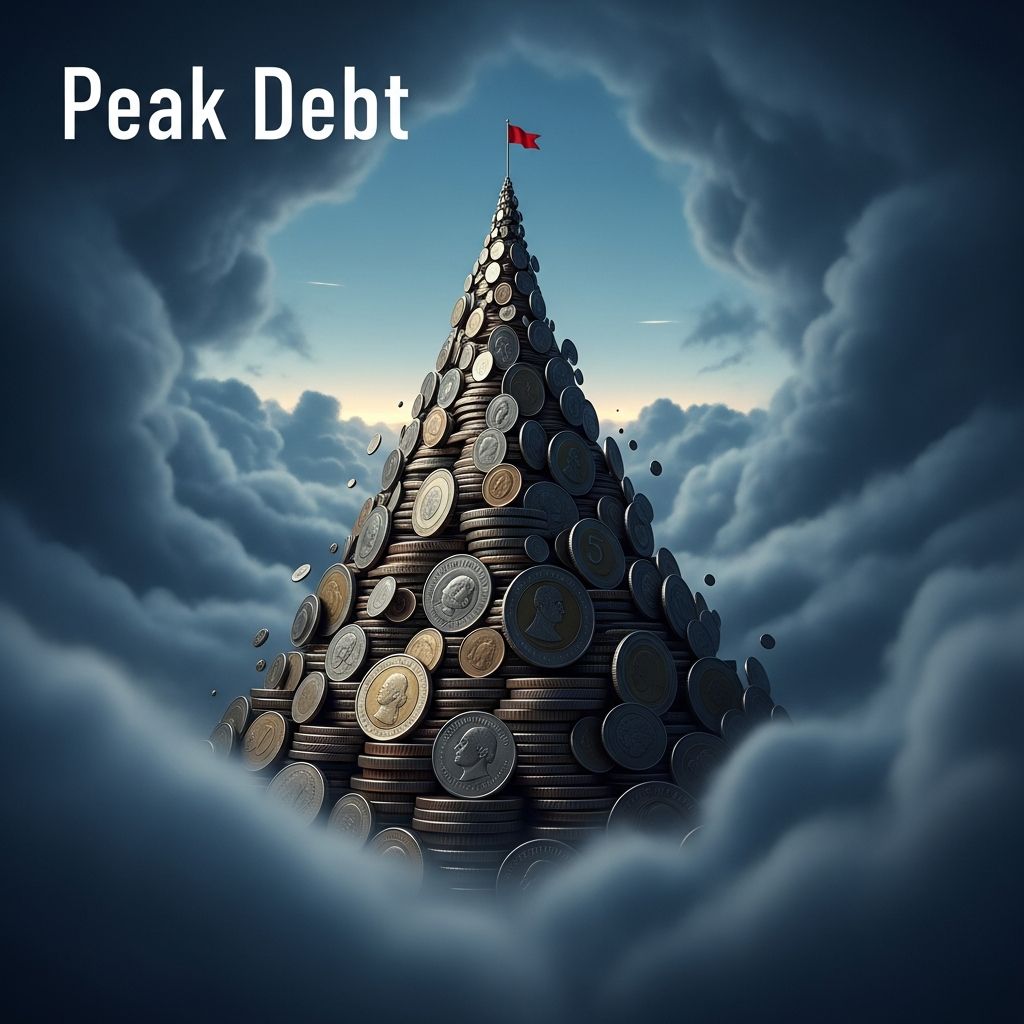
Debt has become a pervasive force in modern households, often reaching what economists call “peak debt”—the maximum level of borrowing sustainable before financial strain becomes unbearable. This phenomenon occurs when households push spending to the absolute limit defined by their income, savings habits, debt obligations, and new borrowing capacity. Understanding peak debt is crucial for anyone seeking to regain control over their finances and avoid the traps that keep millions in perpetual indebtedness.
The core equation governing peak debt is simple yet profound: spending limit = income – savings – debt service + new debt. This formula, highlighted by financial analyst Robert Laszewski, reveals how every dollar earned is allocated, leaving little room for error when unexpected expenses arise or income falters. At peak debt, households are maxed out, with new debt barely covering essential spending, signaling a precarious financial position.
What Is Peak Debt?
Peak debt represents the tipping point where a household’s debt burden peaks relative to its ability to service it. It’s not just about total debt accumulated but the dynamic balance where adding more debt is the only way to maintain lifestyle. According to analyses from financial education resources, this state often stems from spending exceeding earnings over time, exacerbated by life’s unpredictabilities.
Imagine a family earning $5,000 monthly. If they save $500, service $1,500 in existing debts (mortgage, car loans, credit cards), and can borrow $1,000 more, their spending limit is $4,000. Any desire to spend beyond this forces either reduced savings (risky) or more debt, pushing toward peak. Over years, this compounds: average U.S. household debt hit record levels, with medical and student loans accelerating the climb.
Robert Laszewski’s breakdown transforms the basic spending limit into a diagnostic tool. By tracking these components monthly, individuals spot when they’re approaching peak—often when savings drop to zero and new debt fills the gap. This insight empowers proactive adjustments before crisis hits.
The Spending Limit Equation Explained
Breaking down the equation:
- Income: Your total earnings from wages, investments, or side hustles. Stagnant wages, as seen in recent decades, squeeze this variable.
- Savings: Money set aside for emergencies or future goals. At peak debt, this often vanishes first.
- Debt Service: Minimum payments on loans and cards. High interest rates amplify this, trapping borrowers.
- New Debt: Fresh borrowing via cards or loans. This is the ‘extend and pretend’ phase, unsustainable long-term.
A table illustrates typical household scenarios:
| Scenario | Income | Savings | Debt Service | New Debt | Spending Limit |
|---|---|---|---|---|---|
| Healthy | $6,000 | $600 | $800 | $0 | $4,600 |
| Strained | $5,000 | $200 | $1,500 | $500 | $3,800 |
| Peak Debt | $5,000 | $0 | $1,800 | $1,200 | $4,400 |
In the peak debt row, spending matches needs only through maxed borrowing, leaving no buffer.
Common Causes Pushing Households to Peak Debt
Several factors drive families to this brink, mirroring the eight common debt causes identified in financial guides.
1. Medical Expenses
Medical costs top bankruptcy causes in the U.S. Even insured individuals face bills wiping savings; 30% report trouble paying, with 58% severely impacted. Over 60% exhaust savings, 37% turn to cards. Kaiser Family Foundation data underscores vulnerability: chronic conditions or accidents balloon costs rapidly.
2. Loss of Income
Layoffs, business downturns, or caregiving force income drops. Without buffers, bills overwhelm, leading to debt spirals. Living below means during good times helps, but many don’t.
3. College Costs
Graduates exit with $37,000+ in loans (2016 avg.), constraining early careers and prompting more borrowing. Rising tuition outpaces wage growth.
4. Emergency Breakdowns
Roof failures, car crashes, or appliance deaths demand cash. Anticipating via funds or insurance prevents debt.
5. Lifestyle Inflation
Social media fuels envy: neighbors’ cars, vacations push frivolous spending on credit. This ‘keeping up’ erodes finances fast.
6. Gambling and Addiction
4 million have gambling disorders; 23 million incurred debt averaging $55,000. Casual bets escalate risks.
Other contributors include overspending on luxuries or business risks without planning.
Signs You’re Approaching Peak Debt
- Savings balance near zero monthly.
- Reliance on credit for basics like groceries.
- Minimum payments consuming >20% income.
- Increasing balances despite payments.
- Anxiety over unexpected bills.
Consumer behavior studies show preference for ‘pay now’ when possible, but credit availability empowers overspending, hastening peak.
How to Avoid and Escape Peak Debt
Prevention and recovery share strategies:
- Build Emergency Fund: Aim 3-6 months expenses. Start small: $1,000, then grow.
- Live Below Means: Track spending; cut wants. Use 50/30/20 rule: 50% needs, 30% wants, 20% savings/debt.
- Prioritize High-Interest Debt: Debt snowball or avalanche methods. Pay minimums on all, extra on highest rate.
- Boost Income: Side gigs, raises, rentals.
- Secure Insurance: Health, auto, home to cap emergencies.
- Budget Religiously: Apps or spreadsheets enforce equation discipline.
For recovery, distinguish secured (home/car) vs. unsecured debt; prioritize to avoid losses. Cambridge Credit’s guide stresses bill prioritization: housing, utilities, secured first.
Case Studies: Real-Life Peak Debt
Consider ‘Jane,’ earning $4,500/mo. Savings: $0, debt service: $2,000, new debt: $800 → spending $3,300. Medical bill hits; she maxes cards, peaks. Recovery: cut subscriptions ($200), side hustle ($500), avalanche payoff in 18 months.
‘Mike’s’ business loss dropped income 40%; lifestyle held via debt until intervention. These echo Occupy Wall Street concerns on wage stagnation vs. debt.
Frequently Asked Questions (FAQs)
Q: What exactly is peak debt?
A: Peak debt is when household spending hits the max sustainable level via income minus savings/debt service plus new borrowing, often unsustainable.
Q: How do I know if I’m at peak debt?
A: Signs include zero savings, using credit for essentials, rising balances, high payment-to-income ratio.
Q: Can peak debt lead to bankruptcy?
A: Yes, especially via medical costs or income loss; it’s a common precursor.
Q: What’s the fastest way to escape peak debt?
A: Build emergency fund, cut spending, increase income, aggressively pay high-interest debt.
Q: Does everyone reach peak debt?
A: No, but stagnant wages and rising costs push many close, per economic analyses.
Long-Term Strategies for Financial Freedom
Beyond avoidance, cultivate habits: automate savings, review insurance yearly, avoid lifestyle creep with raises. Track net worth quarterly. Financial education, as in ‘Learn Now or Pay Later,’ equips for control. Millennials should watch rates, fees, balances.
Peak debt isn’t inevitable. By mastering the equation, households reclaim spending power, building wealth over obligation.
References
- 8 Common Causes of Debt — And How to Avoid Them — Wise Bread. 2016 (approx., enduring relevance as debt causes stable). https://www.wisebread.com/8-common-causes-of-debt-and-how-to-avoid-them
- Recent Comments on Wise Bread — Wise Bread. Ongoing. https://www.wisebread.com/comments/feed?page=4050
- Peak Debt — Wise Bread. N/A. https://www.wisebread.com/peak-debt
- Learn Now or Pay Later: Financial Education for Adults — Cambridge Credit Counseling. 2021-01-06. https://www.cambridge-credit.org/pdfs/learn-now-or-pay-later-financial-education-adult.pdf
- The Millennials Guide to Avoiding Credit Card Debt — Wise Bread. N/A. https://www.wisebread.com/the-millennials-guide-to-avoiding-credit-card-debt
Similar Articles








Read full bio of Sneha Tete