Understanding Payment Processing Costs for U.S. Merchants
Complete breakdown of how credit card fees impact American business finances
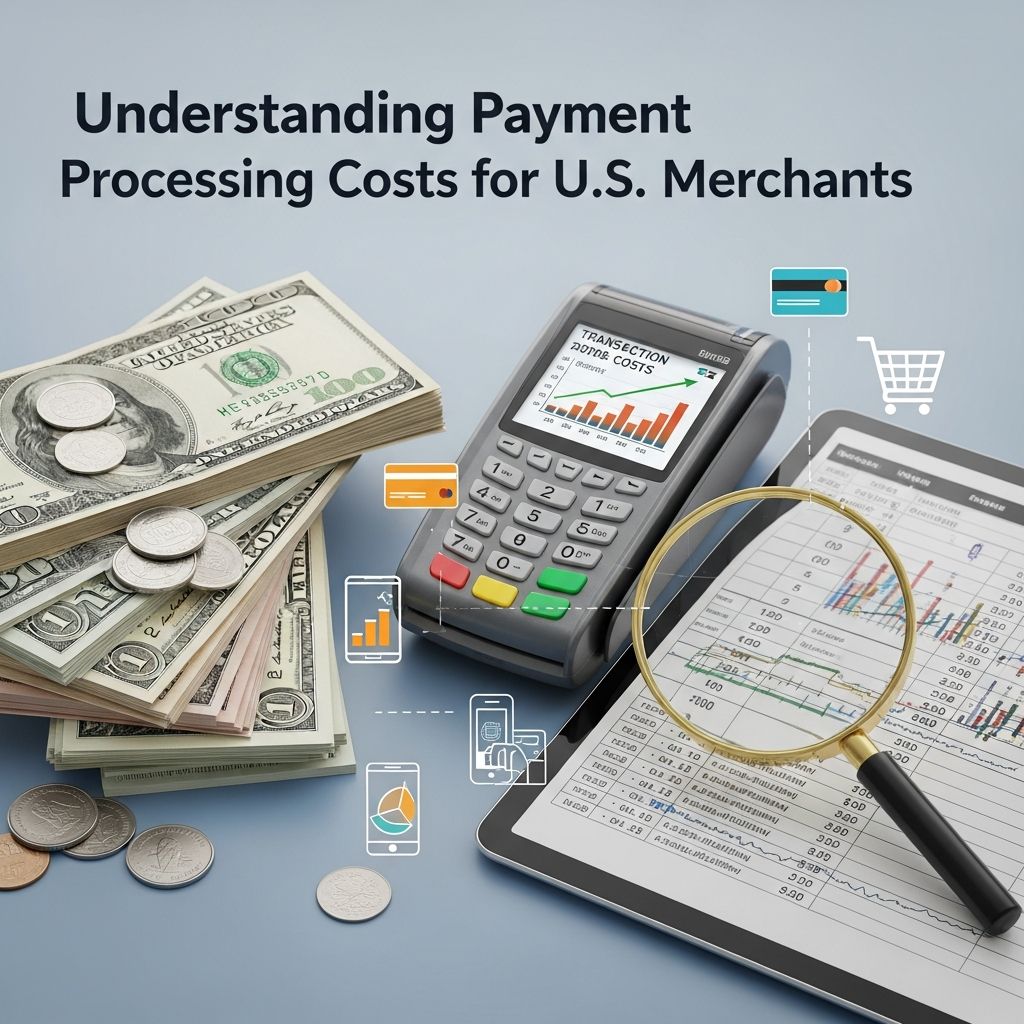
Credit card processing fees represent a substantial operational expense for American merchants across all industries. From small retail shops to large e-commerce platforms, businesses encounter a complex structure of charges whenever customers pay with credit cards. Understanding these costs—how they’re calculated, what components comprise them, and where they flow—is essential for business owners seeking to optimize their bottom line.
The Scope of Payment Processing Expenses
Merchants in the United States typically invest between 1.5% and 3.5% of each transaction total in credit card processing fees. This translates to tangible costs: a $100 transaction might generate $1.50 to $3.50 in fees that reduce merchant revenue. When aggregated across millions of daily transactions nationwide, these percentages accumulate into billions of dollars annually. By the end of 2025, U.S. merchants paid an estimated $172 billion in processing fees, representing a 20% increase since 2021.
These costs vary significantly based on transaction characteristics, the specific card used for payment, and the payment processor selected. Understanding this variation helps merchants make informed decisions about their payment infrastructure.
Deconstructing the Fee Structure
Credit card processing fees aren’t monolithic charges. Instead, they comprise several distinct components, each serving different functions within the payment ecosystem:
Interchange Fees
Interchange fees represent the largest component of processing costs and flow directly to the issuing bank managing the customer’s credit card. Banks such as Chase, Citi, and Bank of America collect these fees, which compensate them for credit risk, fraud prevention, and cardholder support services. Interchange fees typically range from 1.50% plus $0.10 for card-present retail transactions using EMV or contactless technology, to 1.80% plus $0.10 for e-commerce card-not-present transactions.
These rates vary considerably based on card tier. Premium and commercial cards carry higher interchange rates than standard consumer cards, meaning merchants processing a higher proportion of premium cards face elevated overall costs. Card categories also influence rates—different merchant types pay different interchange percentages for the same card type.
Network Assessment and Authorization Fees
Card networks including Visa, Mastercard, Discover, and American Express charge assessment and authorization fees to maintain their operating infrastructure. These fees cover system maintenance, fraud monitoring, dispute resolution, and regulatory compliance. Assessment fees typically range from 0.12% to 0.13% of transaction values and are set by the networks themselves.
Processor Markup and Service Charges
Payment processors—the companies merchants contract with to handle transactions—add their own markup to cover gateway access, PCI compliance tools, fraud screening, customer support, and settlement services. Processor markups typically range from 0.20% to 0.35% plus per-transaction fees of $0.05 to $0.30, depending on transaction type and processor.
Ancillary and Miscellaneous Charges
Beyond the primary components, merchants encounter additional fees that quietly accumulate:
- Monthly account maintenance fees
- PCI (Payment Card Industry) compliance fees
- Statement and reporting fees
- Chargeback fees for disputed transactions
- PCI non-compliance penalties
- Gateway and terminal fees for hardware or software
- Cross-border and currency conversion fees
These charges, while individually modest, can significantly increase effective processing rates when combined.
Calculating Your Effective Processing Rate
The true cost of payment processing is revealed through the effective rate—the total fees paid divided by total card volume over a specific period. This metric unifies all fee components into a single percentage, providing clarity on actual costs.
To calculate your baseline effective rate:
- Gather 90 days of transaction data
- Sum total card volume across all transactions
- Sum all processing fees (interchange, assessments, processor markup, per-transaction fees, and monthly charges)
- Divide total fees by total volume
Breaking fees into distinct buckets—interchange, assessments, processor markup, per-item fees, and miscellaneous charges—reveals which components drive costs highest. This analysis identifies optimization opportunities.
Transaction-Type Variations in Processing Costs
Different transaction methods incur different fee structures:
| Transaction Type | Interchange Rate | Assessment Fee | Processor Markup | Effective Rate Range |
|---|---|---|---|---|
| Card-present (EMV/contactless) | 1.50% + $0.10 | 0.12% | 0.20% + $0.05 | 1.97%–2.25% |
| E-commerce (card-not-present) | 1.80% + $0.10 | 0.13% | 0.35% + $0.05 | 2.30%–3.00% |
| Manually keyed entries | Varies (typically higher) | 0.13% | 0.35%+ (highest) | 2.50%–3.50%+ |
| International transactions | Standard + markup | 0.13% | 0.50%+ (highest) | 3.50%–4.50%+ |
Card-present transactions with encrypted chip or contactless payment generate lower fees than online transactions because fraud risk decreases when the card is physically verified. E-commerce transactions carry elevated risk, reflected in higher interchange rates. Manually entered transactions—where card data is typed rather than scanned—incur the highest rates due to increased fraud susceptibility. International transactions add currency conversion and cross-border complexity, pushing costs even higher.
Comparing Payment Processor Options
Merchants can choose between flat-rate and interchange-plus pricing models, each offering distinct advantages:
Flat-Rate Processors
Flat-rate providers combine interchange, assessment, and processor markup into a single, predictable percentage plus per-transaction fee. This simplicity aids budgeting, though rates may exceed the actual cost for high-volume merchants.
Representative flat-rate pricing in 2026:
- PayPal: 2.29% plus $0.09 for in-person transactions; 2.99% plus $0.49 for online payments
- Square: 2.6% plus $0.15 for in-person (Free plan); 3.3% plus $0.30 for online
- Stripe: 2.7% plus $0.05 for in-person; 2.9% plus $0.30 for online
- Shopify: 2.4%–2.6% plus $0.10 for in-person; 2.5%–2.9% plus $0.30 for online
Interchange-Plus Processors
Interchange-plus models charge a consistent markup atop the actual interchange rate, passing through real costs to merchants. This transparency benefits high-volume merchants but introduces rate variability based on actual card mix and transaction types.
Representative interchange-plus pricing:
- Helcim: Interchange plus 0.4% and $0.08 for in-person transactions (under $50,000 monthly volume)
- Finix: Interchange plus $0.08 for card-present; plus $0.15 for card-not-present
Flat-rate simplicity appeals to small merchants with unpredictable transaction mixes. Interchange-plus transparency benefits established merchants processing high volumes or diverse card types, as the lower base markup often results in reduced effective rates.
Strategic Approaches to Reduce Processing Costs
Merchants possess multiple levers to optimize payment processing expenses:
Establish Your Baseline and Isolate Drivers
Before implementing changes, calculate your current effective rate across 90 days of data. Identify which components—interchange, assessments, markup, or ancillary fees—drive the highest costs. This data-driven foundation prevents guesswork and focuses optimization efforts on highest-impact areas.
Evaluate Processor Alternatives
Competitive rates vary substantially among processors. Comparing flat-rate versus interchange-plus options relative to your specific transaction profile reveals potential savings. High-volume retailers often benefit from interchange-plus arrangements, while seasonal or low-volume businesses may prefer flat-rate predictability.
Optimize Transaction Processing Methods
Encouraging card-present transactions over online payments, when operationally feasible, reduces interchange costs. Implementing tokenization for recurring transactions can lower rates for subscription or membership businesses.
Challenge Unexplained Fees
Monthly statements often contain fees that merchants fail to scrutinize. If you cannot explain a charge in one sentence, request clarification from your processor. Unnecessary or duplicative fees sometimes persist simply because merchants don’t question them.
Monitor Cross-Border and Currency Costs
For merchants accepting international payments or settling in multiple currencies, cross-border network fees can accumulate. Reviewing these charges and comparing processor handling of international transactions identifies potential savings for globally-oriented businesses.
Surcharging and Cost Recovery Considerations
Some merchants offset processing costs by surcharging customers, though this practice faces regulatory constraints. As of 2026, Visa and Mastercard enforce a maximum 3% surcharge cap—reduced from 4% in April 2023 to align with actual processing costs. Merchants must provide 30-day written notice before implementing surcharges, display signage in at least 14-point font at point-of-sale locations, and ensure surcharge amounts don’t exceed actual processing costs incurred.
Exceeding the 3% cap or charging surcharges exceeding actual processor rates triggers non-compliance penalties from merchant banks.
Future Considerations and 2026 Updates
Payment processing continues evolving. Visa scheduled interchange updates effective April 18, 2026, for consumer credit categories, potentially altering established cost structures. Merchants should monitor these changes and reassess processor relationships accordingly.
Regulatory scrutiny of swipe fees persists, with policymakers examining whether merchants bear disproportionate costs. While no major federal changes have materialized, continued advocacy for fee reform suggests future regulatory possibilities.
Frequently Asked Questions
What percentage of my sales will credit card processing consume?
Typical effective rates range from 1.97% for optimized in-person card-present retail to 3.00%+ for e-commerce transactions. Your specific rate depends on card mix, transaction types, processor selection, and ancillary charges.
Should I switch to a different payment processor?
Evaluate potential switches by comparing your current baseline effective rate against alternative processor pricing for your specific transaction mix. High-volume merchants often benefit from interchange-plus transparency, while lower-volume businesses may prefer flat-rate simplicity.
Can I pass credit card fees to customers?
Yes, but with limitations. You may surcharge up to 3% maximum, provided you give 30 days’ notice, display signage, and don’t exceed your actual processing costs.
Why do online transactions cost more than in-person payments?
Online card-not-present transactions carry higher fraud risk than verified in-person card-present payments. Card networks and banks reflect this risk through higher interchange rates for e-commerce transactions.
What are interchange fees and why do they exist?
Interchange fees compensate issuing banks for credit risk, fraud prevention, cardholder services, and regulatory compliance. They incentivize banks to issue credit cards and absorb fraud losses.
References
- Credit Card Processing Fees: A 2026 Guide for Businesses — NerdWallet. 2026. https://www.nerdwallet.com/business/software/learn/credit-card-processing-fees
- 2026 Guide to Merchant Processing Fees — Sekure Payment Experts. 2026. https://sekuremerchants.com/blog/merchant-processing-fees-what-business-owners-should-focus-on-most-in-2026
- How to Lower Your Credit Card Processing Fees in 2026 — Clearly Payments. 2026. https://www.clearlypayments.com/blog/lower-credit-card-processing-fees-2026/
- Passing on Credit Card Fees to Customers: The 2026 Merchant Guide to Compliant Surcharging — Strictly Zero. 2026. https://strictlyzero.com/announcements/payments-announcements/passing-on-credit-card-fees-to-customers-the-2026-merchant-guide-to-compliant-surcharging/
- Trump Takes on Swipe Fees: What He Said and Why It Matters — Consumer Finance Monitor. January 16, 2026. https://www.consumerfinancemonitor.com/2026/01/16/trump-takes-on-swipe-fees-what-he-said-and-why-it-matters/
- B2B Credit Card Surcharges in 2026: State-by-State Rules and How to Pass Fees to Customers Without Damaging Relationships — Centime. 2026. https://www.centime.com/posts/b2b-credit-card-surcharges-in-2026-state-by-state-rules-and-how-to-pass-fees-to-customers-without-damaging-relationships
Similar Articles








Read full bio of Sneha Tete