Pay Yourself First: Build Wealth Effortlessly
Master the pay yourself first strategy to prioritize savings, automate wealth building, and achieve financial freedom with simple, proven steps.

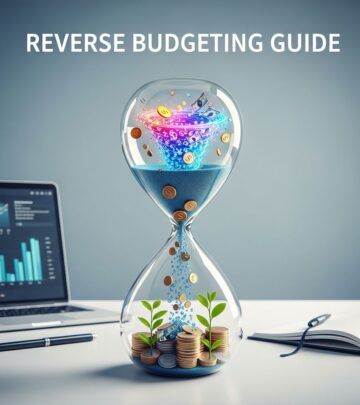
The pay yourself first approach revolutionizes personal finance by making savings the top priority right when income arrives. This method ensures consistent wealth accumulation without relying on willpower alone.
Understanding the Core Principle of Prioritizing Savings
At its heart, paying yourself first means allocating a fixed portion of your income directly to savings or investments immediately upon receipt, treating it like an essential obligation. Unlike conventional spending patterns where expenses consume funds first, this flips the script: savings occur automatically, forcing expenditures to fit within the remainder.
This mindset shift views your future self as the primary creditor. Financial experts emphasize that by designating savings as non-negotiable—much like rent or utilities—you eliminate the risk of zero leftovers at month’s end. It fosters discipline, as spending adapts naturally to available resources rather than dictating them.
Why This Strategy Outperforms Traditional Budgeting
Traditional budgets often track expenses post-spending, leading to inconsistent savings. In contrast, pay yourself first enforces proactive allocation. Psychological benefits include reduced decision fatigue; once savings transfer, daily choices feel less burdensome since future security is secured.
- Behavioral alignment: Automates good habits, bypassing temptation.
- Compound growth potential: Early deposits harness interest over time.
- Lifestyle adjustment: Curbs inflation by limiting spendable income.
Data from financial institutions shows adherents build emergency funds faster, with many reaching 3-6 months’ expenses within a year.
Step-by-Step Guide to Implementing the Method
Getting started requires minimal effort but yields lifelong rewards. Begin by assessing your net income and selecting a realistic savings rate.
- Calculate your savings target: Aim for 10-20% of take-home pay. Start small if needed—5% builds momentum.
- Set up automation: Use bank tools for payday transfers to high-yield savings or investment accounts.
- Separate accounts: Keep savings isolated to prevent casual access.
- Review and scale: Quarterly, increase contributions as income rises.
For example, earning $4,000 monthly, transfer $400 (10%) instantly. Live on $3,600, adjusting habits accordingly.
Real-World Examples Across Income Levels
Consider Sarah, a mid-level professional with $5,500 monthly income. She automates 15% ($825) to a retirement account. Remaining funds cover essentials and fun, yielding a $10,000 emergency fund in 12 months.
| Income Level | Savings % | Monthly Save | 1-Year Projection (3% APY) |
|---|---|---|---|
| $3,000 | 10% | $300 | $3,690 |
| $6,000 | 15% | $900 | $11,070 |
| $10,000 | 20% | $2,000 | $24,600 |
These projections assume conservative compounding, highlighting scalability.
Key Benefits for Long-Term Financial Health
This strategy delivers multifaceted advantages, from immediate security to retirement readiness.
- Emergency preparedness: Rapidly funds buffers against job loss or repairs.
- Debt avoidance: Less reliance on high-interest credit.
- Goal acceleration: Vacations, homes, or education become attainable.
- Wealth compounding: Investments grow exponentially untouched.
Studies indicate consistent savers achieve financial independence 10-15 years sooner.
Potential Challenges and Practical Solutions
While powerful, hurdles exist. Irregular income or high fixed costs can strain implementation.
| Challenge | Solution |
|---|---|
| Variable paychecks | Base on lowest expected amount; average over time. |
| Tight budgets | Start at 1-3%; trim subscriptions first. |
| Temptation to withdraw | Use accounts with withdrawal penalties. |
| Forgetting increases | Schedule annual reviews tied to raises. |
Address these proactively for sustained success.
Integrating with Popular Budget Frameworks
Combine with 50/30/20 (needs/wants/savings) by front-loading the 20% savings portion. Or adapt zero-based budgeting post-transfer. This hybrid maximizes efficiency.
Advanced Tactics for Maximizing Impact
Elevate your practice with employer matches, high-yield accounts (4-5% APY), or index funds. Tax-advantaged vehicles like 401(k)s amplify returns—contribute pre-tax for immediate savings.
- Match employer 401(k) up to 6% for free money.
- High-yield savings over 4% vs. 0.01% traditional.
- Invest remainders in low-fee ETFs for growth.
Common Myths Debunked
Myth 1: Only for high earners. Reality: Percentage-based, viable at any level.
Myth 2: Requires perfect budgeting. Reality: Automation handles it.
Myth 3: Limits enjoyment. Reality: Frees mental space for mindful spending.
Measuring Progress and Staying Motivated
Track via apps showing net worth growth. Celebrate milestones like $5,000 saved. Visualize goals with tools mapping contributions to purchases (e.g., $200/month = car in 3 years).
Frequently Asked Questions
What if I can’t afford 10%?
Begin with 1% and increment monthly. Consistency trumps amount.
Does this work for freelancers?
Yes—transfer upon invoicing, using conservative estimates.
Should I pay debt first?
Prioritize high-interest debt alongside minimal savings; balance both.
How soon will I see results?
Emergency fund in 6-12 months; investments compound over years.
Best accounts to use?
High-yield savings for liquidity, retirement accounts for growth.
Transform Your Finances Today
Adopting pay yourself first builds unshakeable financial foundations. Automate today for tomorrow’s freedom—your future self will thank you.
References
- What Does It Mean to Pay Yourself First? — PNC Insights. 2023. https://www.pnc.com/insights/personal-finance/save/pay-yourself-first.html
- Pay Yourself First Explained: Meaning, Benefits, and Example — HeyGoTrade. 2024. https://www.heygotrade.com/en/blog/pay-yourself-first-explained
- Pay Yourself First: Definition, How It Works, and Pros and Cons — PocketGuard. 2024. https://pocketguard.com/blog/pay-yourself-first-definition-how-it-works-and-pros-and-cons/
- Understanding the Pay Yourself First Budgeting Method — Citizens Bank. 2023. https://www.citizensbank.com/learning/pay-yourself-first-budget.aspx
- What Does “Pay Yourself First” Mean in Personal Finance? — Remitly. 2024. https://www.remitly.com/blog/finance/what-does-pay-yourself-first-mean/
- The 3 Most Important Words of 2024 – Pay Yourself First — CIBC Wood Gundy Advisors. 2024. https://woodgundyadvisors.cibc.com/theapplegathgroup/blog/33170139-The-3-Most-Important-Words-of-2024–Pay-Yourself-First
- Pay Yourself First: What Does it Really Mean? — RBC Direct Investing. 2024. https://www.rbcdirectinvesting.com/learn/en/di/hubs/ideas-and-motivation/article/what-it-means-to-pay-yourself-first/j7sfxcyi
Similar Articles








Read full bio of Sneha Tete