Pay One Card with Another: Smart or Risky?
Explore if using one credit card to settle another is viable, plus safer debt consolidation alternatives to regain financial control.
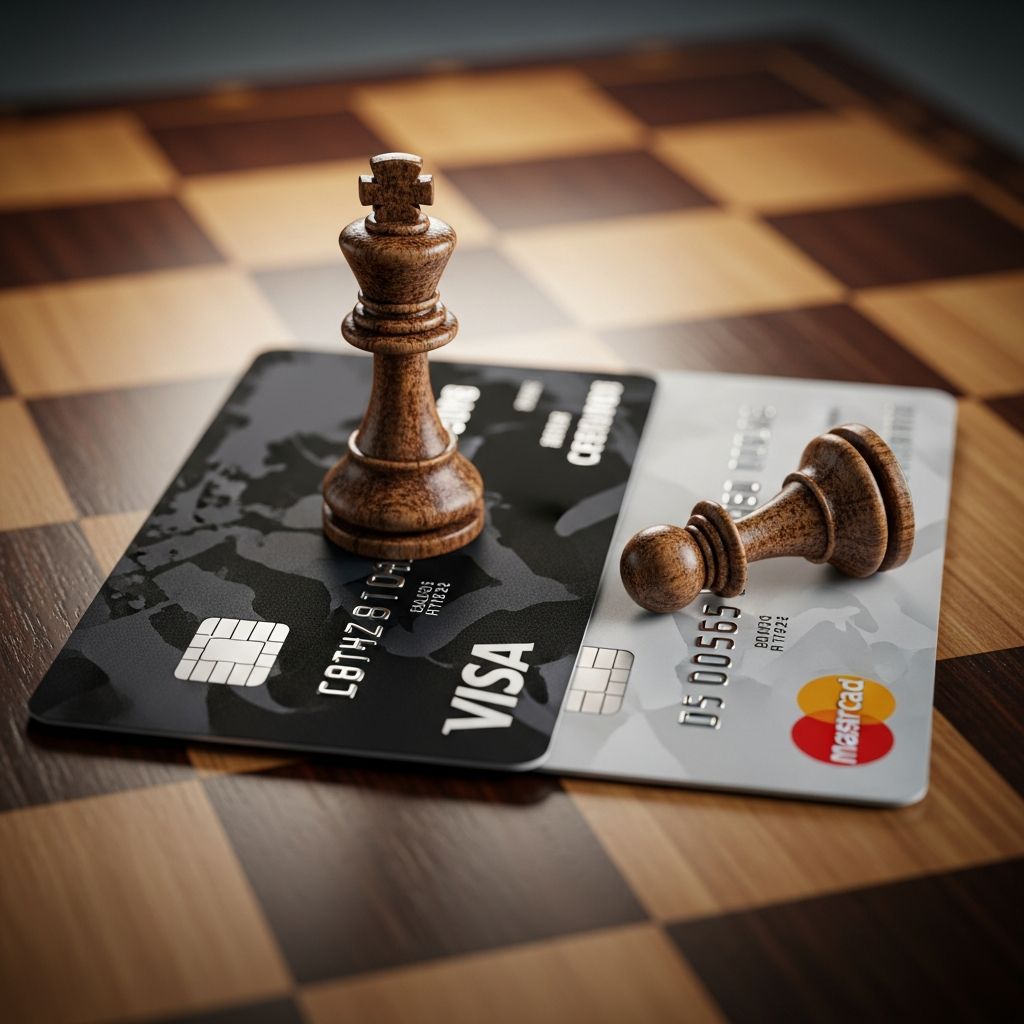
Attempting to use one credit card to directly pay off the balance on another is a common idea among those overwhelmed by revolving debt, but financial institutions generally prohibit this practice to prevent circular debt cycles. Instead, viable paths exist through structured consolidation methods that can lower interest costs and streamline payments.
Why Direct Card-to-Card Payments Are Blocked
Issuers like Visa, Mastercard, and individual banks structure their systems to avoid cash advances or direct transfers between cards from the same or affiliated networks. This policy stems from the risk of endless debt looping, where payments merely shuffle balances without reducing principal. A cash advance from Card A to pay Card B incurs immediate fees—often 3-5% plus high APR from day one—and counts as new debt on Card A.
Regulatory oversight from bodies like the Consumer Financial Protection Bureau (CFPB) emphasizes transparency in such transactions. Banks monitor for suspicious activity, potentially flagging or declining attempts as potential fraud. This safeguard protects consumers from digging deeper holes while maintaining system integrity.
Understanding Credit Card Debt Dynamics
Credit card debt averages over $6,000 per U.S. household, with APRs frequently exceeding 20%. Minimum payments primarily cover interest, extending payoff timelines to decades. High utilization—balances over 30% of limits—dents FICO scores, creating a vicious cycle of higher rates and denied relief options.
Key metrics to track include debt-to-income (DTI) ratio, ideally under 36%, and total revolving debt. Tools from free credit monitoring services reveal these figures without impacting scores via soft inquiries.
Proven Alternatives to Consolidate Credit Card Balances
Rather than risky direct payments, consider these vetted strategies, each suited to different credit profiles and timelines.
Balance Transfer Credit Cards
For those with good credit (FICO 670+), balance transfer cards offer 0% introductory APR for 12-21 months. Transfer existing balances to the new card, directing every payment to principal reduction. Savings can exceed thousands; for example, $9,000 at 18% APR over 88 months with minimums costs $7,400 in interest, versus $1,700 on a 7% loan over 60 months.
Expect 3-5% transfer fees, and pay off before promo ends to avoid penalty rates up to 29%. Ideal for short-term payoff plans.
Personal Debt Consolidation Loans
Unsecured personal loans from banks, credit unions, or online lenders provide lump sums at fixed rates (7-36% based on credit). Repayment spans 2-7 years with predictable monthly amounts, simplifying budgeting. No collateral required, preserving assets like homes.
Pre-qualify with multiple lenders using soft pulls. For fair credit (580+), rates beat card APRs, accelerating payoff.
Home Equity Options for Homeowners
With substantial equity, home equity loans or HELOCs yield rates of 7-10%. Fixed loans offer lump sums; HELOCs provide draw lines. Closing costs (2-5%) apply, and default risks foreclosure—transforming unsecured card debt into secured obligations.
Best for stable incomes and debts over $20,000, confident in on-time payments.
Debt Management Plans via Counseling
Nonprofit credit counseling agencies negotiate reduced rates (0-8%) with creditors. One monthly payment to the agency distributes funds, freezing cards for 3-5 years. Fees: $25-50/month. No credit check needed, suitable for all scores.
Comparing Consolidation Methods
| Method | Typical APR | Min Credit Score | Timeline | Fees | Risk |
|---|---|---|---|---|---|
| Balance Transfer | 0% promo | 670+ | 15-21 months | 3-5% | Low if paid timely |
| Personal Loan | 7-36% | 580+ | 2-7 years | 1-8% | Low-moderate |
| Home Equity/HELOC | 7-10% | 620+ | 5-20 years | 2-5% | High (collateral) |
| Debt Management | 0-8% | None | 3-5 years | $25-50/mo | Low |
Step-by-Step Guide to Debt Consolidation
- Inventory Debts: List balances, APRs, minimums for total owed.
- Assess Credit: Pull free score from bank or Credit Karma equivalent.
- Compute DTI: Monthly debts divided by gross income; aim under 40%.
- Shop Offers: Pre-qualify 3-5 options; compare rates, terms.
- Execute: Fund pays off cards directly; confirm zero balances.
- Prevent Relapse: Autopay new obligation; secure old cards.
Impact on Your Credit Profile
Consolidation can boost scores by lowering utilization below 30% and diversifying credit mix. Temporary dips occur from hard inquiries (5-10 points, recovers in months). Closing paid cards shortens history, harming scores—keep open with zero balances.
Positive payment history from fixed loans outweighs minor hits, per FICO models.
Common Pitfalls and How to Avoid Them
- Promo Cliff: Plan full payoff pre-expiration; build emergency fund first.
- New Spending: Freeze cards in ice or apps blocking purchases.
- Fee Overlooks: Factor all costs into savings math.
- Scams: Verify lenders via BBB; avoid upfront fees.
Long-Term Financial Wellness Strategies
Beyond consolidation, adopt 50/30/20 budgeting: 50% needs, 30% wants, 20% savings/debt. Build 3-6 months’ expenses in high-yield savings. Track via apps like Mint. Consider side hustles or expense audits for surplus cash flow.
Financial education via CFPB resources empowers sustained habits.
Frequently Asked Questions
Can I pay off a credit card with another card’s cash advance?
No, this triggers fees and high APR immediately, worsening debt without issuer approval.
What’s the best option for bad credit?
Debt management plans through nonprofits offer relief without credit checks.
How soon does consolidation improve my score?
Within 1-2 months as utilization drops; full benefits in 6-12 months.
Is debt consolidation a loan?
Often yes, via personal or secured loans; balance transfers use credit lines.
Does consolidation forgive debt?
No, it reorganizes for easier repayment; forgiveness requires separate programs like settlements.
References
- What do I need to know if I’m thinking about consolidating my credit card debt? — Consumer Financial Protection Bureau. 2023-10-01. https://www.consumerfinance.gov/ask-cfpb/what-do-i-need-to-know-if-im-thinking-about-consolidating-my-credit-card-debt-en-1861/
- Debt Consolidation Options — MyCreditUnion.gov (National Credit Union Administration). 2024-05-15. https://mycreditunion.gov/manage-your-money/dealing-debt/debt-consolidation-options
- How to Consolidate Credit Card Debt: 4 Options — National Council on Aging. 2025-02-20. https://www.ncoa.org/article/how-to-consolidate-credit-card-debt-4-options/
- How To Consolidate Credit Card Debt And Protect Your Score — Overnight Legal Group (financial education page). 2025-01-10. https://www.ovlg.com/debt-consolidation/credit-card.html
- Best Debt Consolidation Loans for 2026 — Experian. 2026-03-01. https://www.experian.com/loans/debt-consolidation/
Similar Articles








Read full bio of medha deb