Past Recessions: Historical Economic Downturns Analysis
Explore major recessions in U.S. history and their lasting economic impact.

Economic recessions are inevitable cycles in the modern economy, characterized by declining gross domestic product (GDP), rising unemployment, and reduced consumer spending. Understanding past recessions provides valuable insights into economic patterns, potential warning signs, and policy responses that can help economists, policymakers, and investors navigate future downturns. Throughout American economic history, several significant recessions have shaped the nation’s financial landscape and influenced how governments approach economic management.
Understanding Recessions and Economic Cycles
A recession is officially defined as a period of temporary economic decline during which overall economic activity, measured by real GDP, contracts for at least two consecutive quarters. Recessions are characterized by several key indicators: declining gross domestic product, rising unemployment rates, reduced consumer confidence, lower business investment, and decreased retail sales. These downturns are a natural part of the business cycle, which includes periods of expansion and contraction.
The National Bureau of Economic Research (NBER) is the official arbiter of recession dates in the United States, determining when recessions officially begin and end. Economic cycles are influenced by various factors including monetary policy decisions by the Federal Reserve, changes in consumer and business confidence, technological disruptions, geopolitical events, and external shocks to the economy.
The Great Depression (1929-1939)
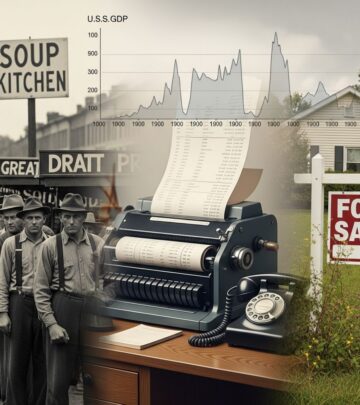
The Great Depression represents the most severe and prolonged recession in American economic history. Beginning with the stock market crash on October 29, 1929—known as Black Tuesday—the depression devastated the U.S. economy and had worldwide repercussions. The crash wiped out billions in wealth and shattered consumer confidence almost instantaneously.
Causes and Triggers
- Stock market speculation: Excessive speculation and inflated stock prices created an unsustainable bubble
- Lack of regulation: Minimal oversight of banking and securities markets allowed risky behavior
- Bank failures: Thousands of banks collapsed, wiping out depositors’ savings and destroying credit availability
- Drought conditions: The Dust Bowl reduced agricultural production and devastated rural economies
- Tight monetary policy: The Federal Reserve’s decision to raise interest rates worsened the downturn
Economic Impact
During the Great Depression, unemployment reached approximately 25%, and real GDP fell by roughly 30%. Industrial production declined sharply, international trade collapsed due to protectionist tariffs like the Smoot-Hawley Tariff, and consumer spending plummeted. The depression lasted nearly a decade, fundamentally transforming American society and government’s role in the economy. It led to the creation of Social Security, unemployment insurance, and the Securities and Exchange Commission (SEC) to prevent future market abuses.
The Stagflation Crisis (1970s)
The 1970s presented a unique economic challenge: stagflation, a combination of stagnant economic growth and high inflation occurring simultaneously. This period challenged conventional economic theory and forced policymakers to reconsider their approach to managing the economy.
Key Causes
- Oil embargoes: The 1973 and 1979 OPEC oil embargoes caused energy prices to spike dramatically
- Vietnam War spending: Heavy military expenditures fueled inflation without corresponding economic growth
- Wage-price spiral: Workers demanded higher wages to compensate for inflation, which increased business costs and prices
- Productivity decline: American manufacturing competitiveness weakened relative to international competitors
- Loose monetary policy: The Federal Reserve’s accommodative policies initially attempted to combat unemployment but fueled inflation
Notable Statistics
During the 1970s, inflation rates reached double digits, with the Consumer Price Index rising over 13% in 1980. Unemployment also climbed to around 9%, creating the worst of both economic worlds. Interest rates soared as the Federal Reserve under Paul Volcker implemented aggressive tightening policies to combat inflation, reaching over 20% by the early 1980s. This created severe challenges for borrowers but eventually broke the back of inflation by the mid-1980s.
The Savings and Loan Crisis (1980s)
The 1980s witnessed the collapse of hundreds of savings and loan institutions, resulting in one of the costliest financial crises in American history up to that point. The crisis exposed weaknesses in financial regulation and had lasting implications for banking oversight.
Contributing Factors
- Deregulation: The Depository Institutions Deregulation and Monetary Control Act of 1980 removed interest rate caps and expanded lending powers
- Rising interest rates: Savings and loans, which primarily held long-term, fixed-rate mortgages, suffered as they had to pay higher rates on deposits
- Real estate speculation: Deregulation encouraged risky real estate ventures and construction projects
- Weak regulatory oversight: Insufficient supervision allowed fraud and excessive risk-taking
- Economic downturn: A recession in the early 1980s reduced real estate values and increased loan defaults
The Resolution Trust Corporation was established to manage the cleanup, which ultimately cost taxpayers an estimated $124 billion. The crisis led to stricter capital requirements and regulatory frameworks for financial institutions.
The Early 1990s Recession
A mild recession in 1990-1991 resulted from a combination of factors including the savings and loan crisis aftereffects, a spike in oil prices following Iraq’s invasion of Kuwait, and tight monetary policy from the Federal Reserve. Though brief, this recession increased unemployment to around 7.8% and reduced economic growth temporarily.
The Dot-Com Bubble and 2001 Recession
The late 1990s witnessed explosive growth in internet and technology companies, many with unproven business models and no profits. When investors realized many of these companies would never become profitable, the bubble burst spectacularly.
Characteristics of the Tech Bubble
- Venture capitalists and retail investors funded companies with minimal revenue or earnings potential
- Stock valuations reached irrational levels based on user numbers rather than profitability
- Companies engaged in massive spending to gain market share at any cost
- The NASDAQ composite index lost approximately 78% of its value from peak to trough
- Combined with the September 11, 2001 terrorist attacks, the recession lasted through 2001
The 2001 recession was relatively mild by historical standards, but it erased significant wealth from retirement accounts and technology sector investments. It demonstrated the dangers of speculative bubbles and the importance of fundamental valuation metrics.
The 2008 Financial Crisis and Great Recession
The 2008 financial crisis represented the most severe recession since the Great Depression, triggering a worldwide economic downturn and fundamentally reshaping the financial system and regulatory landscape.
Root Causes
- Subprime mortgage lending: Banks issued mortgages to borrowers with poor credit and limited ability to repay
- Mortgage-backed securities: Financial institutions bundled mortgages into complex securities that obscured underlying risks
- Lack of regulation: Derivatives and exotic financial instruments operated in regulatory blind spots
- Excessive leverage: Financial institutions used massive amounts of debt relative to capital reserves
- Credit rating agency failures: Agencies assigned high ratings to risky securities, misleading investors
- Housing bubble: Speculative buying and loose lending created unsustainable home price appreciation
Economic Consequences
The Great Recession lasted from December 2007 to June 2009, with unemployment peaking at 10%. Real GDP fell by approximately 4.3%, and millions of Americans lost their homes to foreclosure. The stock market declined sharply, with the S&P 500 losing nearly 57% from peak to trough. Housing prices plummeted, destroying trillions in household wealth. Financial institutions received government bailouts totaling hundreds of billions of dollars.
Government Response
The Federal Reserve implemented unprecedented monetary stimulus, including near-zero interest rates and quantitative easing programs. The federal government passed the American Recovery and Reinvestment Act, a $787 billion stimulus package, and implemented various programs to support the financial system, housing market, and employment. These interventions prevented a depression but were controversial regarding their long-term effects on the federal deficit and inflation.
Common Recession Patterns and Indicators
Analyzing past recessions reveals common patterns and warning signs:
- Inverted yield curve: When short-term interest rates exceed long-term rates, often signals an approaching recession
- Rising unemployment: Job losses accelerate and wage growth slows
- Consumer confidence decline: People reduce spending and increase savings
- Credit contraction: Banks tighten lending standards and reduce credit availability
- Asset bubble deflation: Overvalued stocks, real estate, or commodities correct sharply
- External shocks: Oil price spikes, geopolitical crises, or pandemic disruptions can trigger recessions
Lessons from Historical Recessions
Past recessions have provided crucial lessons that shape modern economic policy:
Monetary Policy Importance
The Federal Reserve’s response to recessions significantly influences severity and duration. Aggressive rate cuts and liquidity injection can mitigate downturns, while tight policies can worsen them.
Regulatory Oversight
Insufficient regulation contributed to multiple recessions. Post-2008, regulations like Dodd-Frank increased oversight of financial institutions, though debates continue about regulatory effectiveness and burden.
Asset Bubble Prevention
Identifying and addressing speculative bubbles early can prevent severe recessions. However, determining when assets are genuinely overvalued remains challenging.
Social Safety Nets
Unemployment insurance, food assistance, and other social programs proved critical in reducing hardship during recessions, leading to their expansion and strengthening.
Frequently Asked Questions
Q: What is the difference between a recession and a depression?
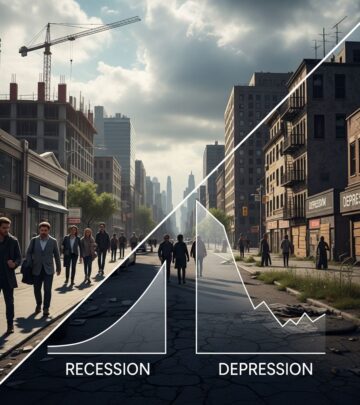
A: A recession is a decline in economic activity lasting at least two consecutive quarters, while a depression is a more severe, prolonged downturn with much higher unemployment and greater economic contraction. The Great Depression lasted nearly a decade with unemployment exceeding 25%, far exceeding typical recessions.
Q: How long do recessions typically last?
A: Most recessions last between 6-18 months. The Great Recession lasted 18 months, the stagflation crisis of the 1970s involved multiple downturns spanning years, while the 2001 recession lasted 8 months. The Great Depression was exceptional, lasting nearly a decade.
Q: Can recessions be prevented?
A: Complete prevention is unlikely, as business cycles are inherent to modern economies. However, prudent monetary policy, financial regulation, addressing speculative bubbles, and maintaining strong financial institutions can reduce recession frequency and severity.
Q: What should investors do during recessions?
A: Historical evidence suggests maintaining diversified portfolios, avoiding panic selling, and viewing downturns as buying opportunities for long-term investors. Those nearing retirement may reduce stock exposure. Dollar-cost averaging helps reduce the impact of market timing errors.
Q: How do recessions affect employment?
A: Recessions typically cause significant job losses as businesses reduce operations and hiring. Unemployment rates rise, sometimes taking years to return to pre-recession levels. Certain sectors like construction and retail suffer more severely than others.
Q: What triggers most recessions?
A: Common triggers include asset price bubbles bursting, external shocks (like oil embargoes), tight monetary policy, credit crunches, geopolitical crises, and speculative excess. Most recessions result from combinations of these factors rather than single causes.
References
- Business Cycle Dating — National Bureau of Economic Research (NBER). 2024. https://www.nber.org/research/business-cycle-dating
- The Great Depression and the Dust Bowl — U.S. Department of the Interior, U.S. Geological Survey. 2024. https://www.usgs.gov/
- Historical Data and Statistics: Unemployment Rates — U.S. Bureau of Labor Statistics. 2024. https://www.bls.gov/data/
- The Financial Crisis of 2008: Year in Review — Federal Reserve History. 2024. https://www.federalreservehistory.org/
- Savings and Loan Crisis: A Regulatory Perspective — U.S. Government Accountability Office (GAO). 2023. https://www.gao.gov/
- Stagflation in the 1970s: Causes and Consequences — Federal Reserve Bank of St. Louis. 2024. https://www.stlouisfed.org/
Similar Articles








Read full bio of medha deb