Partnership: Definition, Types, and Business Structure
Understand partnerships: A comprehensive guide to business structures, liability, and taxation.

Understanding Business Partnerships
A partnership is a formal arrangement between two or more parties to manage and operate a business enterprise while sharing its profits and losses. This business structure represents one of the most fundamental ways entrepreneurs can establish their ventures, offering flexibility and relative ease of formation compared to more complex corporate structures. Partnerships have been a cornerstone of commerce for centuries, enabling individuals to pool resources, expertise, and capital to achieve common business objectives.
The concept of a partnership extends beyond mere financial collaboration; it represents a legal relationship where partners assume specific roles, responsibilities, and liabilities. Understanding the nuances of different partnership types is essential for entrepreneurs deciding on the most appropriate business structure for their needs. Each partnership type offers distinct advantages and challenges that directly impact personal liability, tax obligations, and operational flexibility.
Key Characteristics of Partnerships
Partnerships share several defining characteristics that distinguish them from other business structures such as corporations or sole proprietorships. These fundamental features shape how partnerships operate and how partners interact within the business framework.
Ease of Formation
One of the most attractive features of partnerships is their relative ease of establishment. Unlike corporations and limited liability companies (LLCs), partnerships generally require minimal formal registration processes in many jurisdictions. In many states, a partnership can operate under an implied agreement without extensive documentation, though formal partnership agreements are highly recommended to clarify roles, responsibilities, and profit-sharing arrangements.
Pass-Through Taxation
Partnerships are classified as pass-through entities for tax purposes. This means the partnership itself does not pay income taxes; instead, profits and losses flow through to the individual partners’ personal tax returns. Each partner reports their share of the partnership’s income, deductions, gains, and losses on their individual tax documents. However, partnerships must file an annual information return with the IRS to report the business’s deductions, gains, losses, and other operational details.
Shared Ownership and Management
In most partnership structures, partners collectively own and manage the business. This shared approach to governance can facilitate collaborative decision-making, though it also requires clear communication and aligned business visions among all partners.
Types of Partnerships
The partnership landscape includes several distinct structures, each designed to address specific business needs and liability concerns. Understanding these variations helps entrepreneurs select the most suitable arrangement for their circumstances.
General Partnership (GP)
A general partnership represents the most straightforward partnership structure. In this arrangement, all partners share equal responsibility for managing the business and share proportional liability for debts and legal obligations. This means each general partner can bind the entire partnership to contracts and agreements.
Liability Implications: General partnerships do not provide limited liability protection. If the partnership faces legal action or accumulates debt, creditors may pursue partners’ personal assets to satisfy claims. This unlimited personal liability extends to each partner individually, creating significant financial risk.
Formation Requirements: Most jurisdictions impose minimal formal requirements for establishing general partnerships. Unlike LLCs or corporations, general partnerships typically do not require filing formation documents with the state. However, partners should verify that their chosen business name is not already in use by checking available business entity records.
Best For: General partnerships work well for small professional practices or collaborative ventures where partners have complementary skills and high trust levels. However, the unlimited liability exposure makes this structure riskier for capital-intensive businesses.
Limited Partnership (LP)
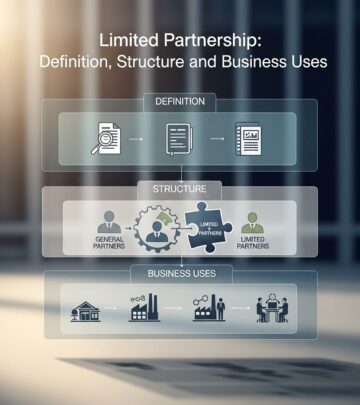
A limited partnership employs a hybrid structure combining characteristics of partnerships and investments. This structure includes two distinct types of partners with different roles and liability exposure.
General Partner: At least one general partner maintains full operational control and complete liability for the partnership’s debts and obligations. This partner actively manages day-to-day business operations.
Limited Partner: One or more limited (or silent) partners contribute capital and share in profits but have minimal involvement in business operations. Critically, their liability is limited to the amount they invested in the partnership. Limited partners cannot engage in management decisions without risking their limited liability status.
Formation Requirements: Limited partnerships typically require less documentation than LLCs or corporations, though specific requirements vary by state. Partners should file a Name Reservation Request Form and verify business name availability through official business entity records.
Best For: Limited partnerships suit situations where some parties want to invest capital without operational involvement, such as real estate ventures, film productions, or investment funds.
Limited Liability Partnership (LLP)
Limited liability partnerships have become increasingly popular among professional service providers. These structures offer protection for partners’ personal assets while maintaining the flexibility of partnership arrangements.
Liability Protection: LLPs shield partners’ personal assets from liability for the negligence or misconduct of other partners. If one partner faces legal action, the other partners’ personal and business assets remain protected. However, each partner typically remains liable for their own professional negligence and misconduct.
Common Among Professionals: LLPs are particularly prevalent among accountants, lawyers, architects, and other licensed professionals. This structure accommodates professional licensing requirements while limiting personal exposure.
Pass-Through Taxation: Like general partnerships and limited partnerships, LLPs utilize pass-through taxation, with income flowing directly to partners’ personal tax returns.
Formation Requirements: Establishing an LLP generally requires filing a Domestic Limited Liability Partnership Statement with the state and county. The partnership name must include the designation “Limited Liability Partnership” or the abbreviations “L.L.P.” or “LLP.” Additionally, partners must file a name reservation form to ensure their chosen name is available.
Best For: LLPs are ideal for professional service firms seeking to balance liability protection with operational flexibility and favorable tax treatment.
Limited Liability Limited Partnership (LLLP)
The limited liability limited partnership represents the most comprehensive liability protection available within the partnership structure category. This sophisticated arrangement combines limited partnership benefits with additional protective layers for general partners.
Enhanced Protection: An LLLP provides greater liability shielding for general partners compared to traditional limited partnerships. General partners in LLLPs receive similar liability protection to limited partners, with exposure limited to their investment level.
Complex Structure: The LLLP structure involves both general and limited partners, similar to limited partnerships, but with modified liability provisions for general partners. This complexity requires careful legal and administrative attention.
Formation Requirements: Creating an LLLP involves filing a Domestic Limited Liability Limited Partnership Certificate of Formation with both county and state authorities. The business name must include “Limited Liability Limited Partnership” or the abbreviations “L.L.L.P.” or “LLLP.” Partners must also file a name reservation form before establishing the partnership.
Best For: LLLPs suit complex business ventures requiring maximum liability protection for all partners while maintaining partnership flexibility and tax advantages.
Partnership Advantages and Disadvantages
Advantages
Simplified Formation: Establishing a partnership requires less paperwork and fewer regulatory requirements than forming a corporation or LLC. This lower barrier to entry makes partnerships accessible for entrepreneurs with limited startup budgets.
Pass-Through Taxation: Partnerships avoid double taxation by utilizing pass-through tax structures. Business income flows directly to partners’ personal tax returns, eliminating the corporate tax burden.
Shared Resources: Partnerships enable entrepreneurs to combine financial resources, expertise, equipment, and networks, creating more robust business capabilities than individual entrepreneurs could achieve alone.
Flexible Management: Partnerships offer operational flexibility, allowing partners to make decisions quickly without extensive bureaucratic procedures required in corporate structures.
Disadvantages
Unlimited Liability (in GP structures): General partnerships expose partners’ personal assets to business debts and legal judgments, creating significant financial risk.
Joint and Several Liability: Each partner can bind the entire partnership to contracts and agreements, potentially committing other partners without their consent.
Limited Access to Capital: Partnerships may struggle to raise large amounts of capital compared to corporations, which can issue stock.
Dissolution Complexity: Partnership dissolution can become complicated, particularly if partners disagree or if one partner departs, potentially triggering business disruption.
Operational Disagreements: Without clear operating agreements, partners may face conflicts regarding management decisions, profit distribution, and business direction.
Operating Agreements and Documentation
Despite minimal formation requirements, all partnerships benefit significantly from comprehensive operating agreements. An operating agreement establishes the framework governing partnership operations, including profit-sharing arrangements, management responsibilities, decision-making procedures, and dispute resolution mechanisms. These agreements reduce ambiguity and help prevent conflicts between partners regarding business direction and financial distribution.
Operating agreements should address capital contributions, capital account management, profit and loss allocation, distribution policies, management roles and responsibilities, decision-making procedures, amendment processes, and exit strategies for departing partners. Clear documentation proves invaluable if disputes arise or if partners contemplate the business’s future.
Tax Considerations for Partnerships
Understanding partnership taxation is crucial for financial planning and compliance. While partnerships themselves do not pay corporate income taxes, they must file information returns documenting business operations. Each partner then reports their proportional share of partnership income or losses on their personal tax returns.
Self-employment taxes represent another important consideration. Partners typically pay self-employment taxes on partnership income, which covers Social Security and Medicare contributions. The specific tax treatment varies based on partnership structure and each partner’s role, making professional tax consultation advisable.
Choosing the Right Partnership Structure
Selecting an appropriate partnership type depends on several factors including the number of partners, desired liability protection, tax implications, capital requirements, and operational complexity. Entrepreneurs with limited liability concerns might prefer LLPs or LLLPs, while those prioritizing simplicity and lower costs might select general partnerships if liability concerns are minimal.
Professional service providers often gravitate toward LLPs, which offer necessary liability protection while maintaining favorable tax treatment. Investment-oriented arrangements frequently utilize limited partnerships, enabling passive investors to participate in profitable ventures without operational involvement.
Frequently Asked Questions
Q: What is the primary difference between a general partnership and a limited partnership?
A: The primary distinction involves liability exposure and management involvement. General partnerships provide no liability protection for any partner, while limited partnerships restrict limited partners’ liability to their investment amount but also prevent them from participating in management.
Q: Do partnerships pay income taxes?
A: Partnerships themselves do not pay income taxes. Instead, they file information returns, and partners report their proportional share of profits or losses on personal tax returns. This pass-through taxation structure avoids double taxation.
Q: What is the difference between an LLP and an LLLP?
A: LLPs protect partners’ assets from the negligence of other partners but may not shield them from their own professional misconduct. LLLPs provide enhanced protection for general partners, limiting their liability exposure similar to limited partners.
Q: Is an operating agreement required for partnerships?
A: While not legally mandated in most jurisdictions, operating agreements are highly recommended. They clarify each partner’s rights, responsibilities, profit-sharing arrangements, and dispute resolution procedures, reducing potential conflicts.
Q: Can partners sell their partnership interest?
A: Partnership interests can often be sold or transferred, but operating agreements typically outline specific procedures and restrictions. Some agreements require other partners to approve transfers or grant them first refusal rights.
Q: What happens if a partner wants to leave the partnership?
A: Operating agreements should address partner withdrawal procedures, including buyout mechanisms, profit distribution, and potential business dissolution scenarios. Without clear procedures, departing partners may face complications.
References
- Limited Liability Partnerships — Investopedia. https://www.investopedia.com/terms/l/llp.asp
- General Partnership Definition and Tax Implications — Internal Revenue Service. https://www.irs.gov/businesses/small-businesses-self-employed/partnerships
- Limited Partnership: Structure and Formation — U.S. Small Business Administration. https://www.sba.gov/business-guide/launch-your-business/choose-a-business-structure
- Pass-Through Entity Taxation Requirements — Internal Revenue Service. https://www.irs.gov/businesses/partnerships
- Partnership Operating Agreements and Best Practices — National Federation of Independent Business. https://www.nfib.com/
Similar Articles








Read full bio of medha deb