Parent PLUS Loans Explained
Discover how Parent PLUS loans help fund college, eligibility rules, repayment choices, and smart strategies for families.
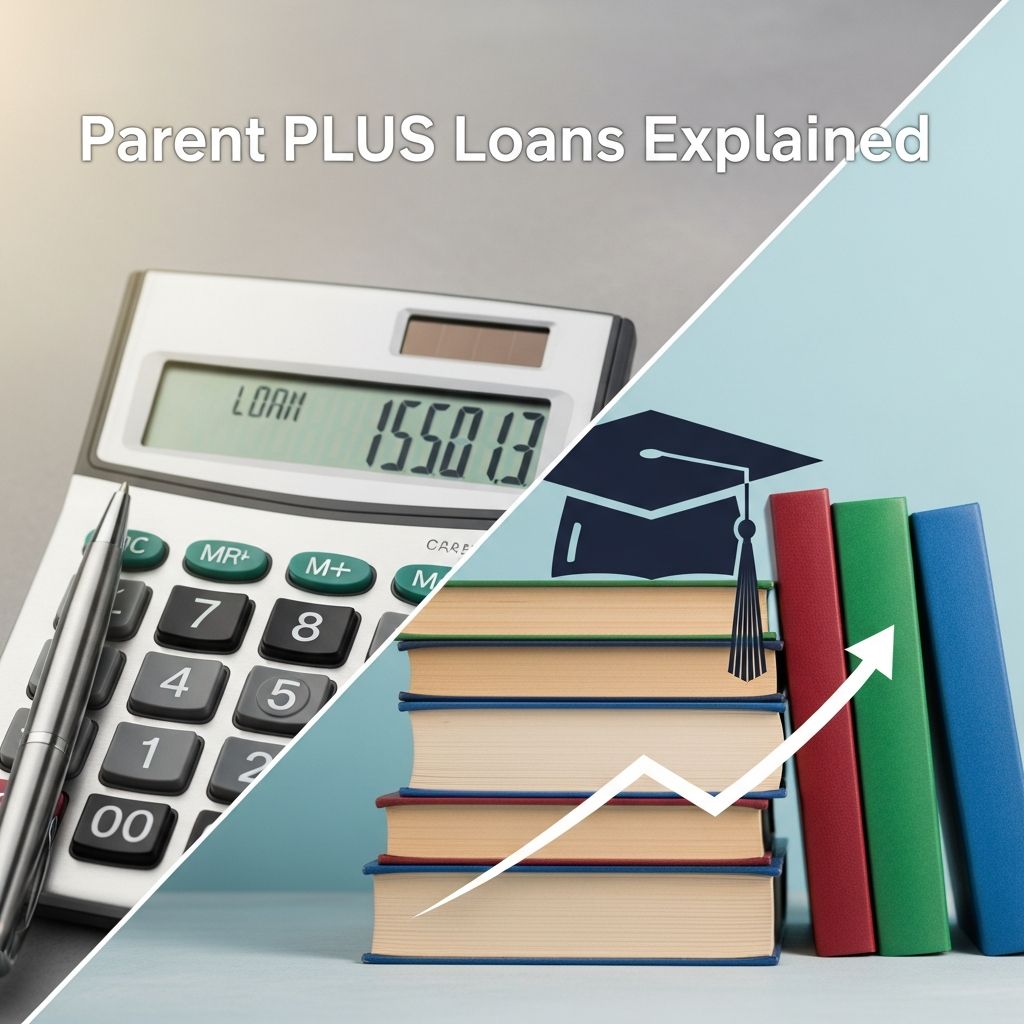
Parent PLUS loans offer a federal financing option for families covering college costs when other aid falls short. These loans enable parents to borrow directly for their dependent undergraduate child’s education, providing flexibility beyond standard student loan caps.
Understanding the Fundamentals of Parent PLUS Loans
Federal Direct PLUS Loans for parents, commonly called Parent PLUS loans, are unsecured loans issued by the U.S. Department of Education. Unlike loans in the student’s name, parents assume full responsibility for repayment, regardless of the child’s future income or employment status. This structure shifts the borrowing burden to creditworthy adults, helping preserve the student’s debt-free start after graduation.
Funds disburse directly to the school to cover tuition, fees, housing, and supplies. Any excess returns to the parent or student with permission, usable for additional education-related expenses like textbooks or transportation.
Who Qualifies as a Borrower?
Eligibility centers on the parent’s relationship to the student and credit standing. Biological or adoptive parents of dependent undergraduates enrolled at least half-time in eligible programs qualify. Stepparents may apply if listed on the FAFSA as the parent. Grandparents, foster parents, or legal guardians do not, unless they have legally adopted the student.
- Parent requirements: U.S. citizen or eligible non-citizen, no adverse credit history (e.g., recent defaults, foreclosures, or delinquencies over 90 days).
- Student requirements: Enrolled at least half-time in a degree or certificate program at a participating school, meeting general federal aid criteria.
- Credit check: Simple review; adverse history triggers endorser (co-signer) option or documentation of extenuating circumstances.
Both parents can apply independently, maximizing aid potential. Approval hinges on the FAFSA submission, establishing financial need context.
Borrowing Limits and Application Process
Parent PLUS loans cover up to the school’s cost of attendance minus all other aid, with no fixed annual or lifetime caps currently—offering substantial flexibility. Starting July 1, 2026, new rules limit borrowing to $20,000 annually per child and $65,000 lifetime per student, after the dependent maxes unsubsidized loans.
To apply:
- Complete the FAFSA to unlock federal aid options.
- Submit the PLUS application via StudentAid.gov, including a credit check.
- Sign a Master Promissory Note (MPN) if approved; separate MPNs needed per child.
- The school certifies the amount based on costs and prior aid.
Multiple children require distinct applications. Funds arrive per academic term, applied first to billed charges.
Interest Rates, Fees, and Costs
| Academic Year | Interest Rate | Origination Fee |
|---|---|---|
| 2024-2025 | 9.08% fixed | 4.228% |
| Post-2026 (projected) | Variable by year | Similar fees |
Rates are fixed for the loan’s life, higher than undergraduate Direct Loans (e.g., 6.53% for 2024-2025). Interest accrues from disbursement, even during deferment. A $20,000 loan at 9.08% over 10 years could accrue over $10,000 in interest.
Repayment Strategies and Flexibility
Repayment begins 60 days post-full disbursement, but parents can request deferment during the student’s half-time enrollment plus six months grace. Interest capitalizes upon deferment end, increasing principal.
Available plans include:
- Standard: Fixed payments over 10 years.
- Graduated: Lower initial payments rising over 10 years.
- Extended: Fixed or graduated over 25 years (needs $30,000+ outstanding).
- Income-Contingent Repayment (ICR): Via Direct Consolidation, 20% of discretionary income or 12-year fixed, whichever lower.
Federal benefits like forbearance (up to 3 years), forgiveness after 25 years (PSLF for public service), and no prepayment penalties enhance manageability. Private loans often lack these.
Advantages of Choosing Parent PLUS Loans
Key strengths make them appealing:
- No borrowing caps: Fill any funding gap up to full cost of attendance.
- Federal protections: Deferment, income-driven plans, potential forgiveness.
- Fixed rates: Predictable costs vs. variable private options.
- Easy access: Minimal paperwork post-FAFSA, broad eligibility.
Ideal for families exhausting grants, scholarships, and student loans first.
Potential Drawbacks and Risks
Despite benefits, consider:
- High costs: Elevated rates and fees inflate total repayment.
- Parent liability: Debt persists independently of child’s success.
- Credit impact: Affects parent’s borrowing power for home or other loans.
- Immediate accrual: Interest grows during school years.
Private loans might offer lower rates for excellent credit but fewer protections.
Comparing Parent PLUS to Alternatives
| Feature | Parent PLUS | Private Parent Loans | Student Direct Loans |
|---|---|---|---|
| Borrower | Parent | Parent | Student |
| Rate | Fixed 9.08% (2024-25) | Variable/fixed, credit-based | Fixed 6.53% |
| Limits | Cost of attendance | Similar, lender varies | $5,500-$7,500/year |
| Repayment Start | Immediate (deferrable) | Immediate/deferred | 6 months post-grad |
| Federal Benefits | Yes | No | Yes |
Favor federal first; use private only if better rates outweigh lost benefits.
Strategic Tips for Families
Minimize debt wisely:
- Prioritize free aid: scholarships, grants, work-study.
- Compare 529 plans or home equity before PLUS.
- Borrow conservatively; use school payment plans.
- Plan repayment: Consolidate for ICR if income-limited.
- Monitor 2026 changes for multi-year planning.
Encourage student contributions via part-time work or their loans.
Frequently Asked Questions
Can both parents borrow Parent PLUS loans?
Yes, each can apply separately if eligible.
What if I have an adverse credit history?
Obtain an endorser or document extenuating circumstances.
Does the student need to repay?
No, it’s the parent’s obligation.
Are there forgiveness options?
Yes, via PSLF or ICR after consolidation.
How do 2026 changes affect borrowing?
New caps: $20k/year, $65k lifetime per student post-unsubsidized max.
Final Thoughts on Managing Parent PLUS Debt
Parent PLUS loans bridge critical gaps but demand careful evaluation of long-term affordability. Consult financial aid offices and advisors to align with family goals, ensuring education investment yields without overwhelming debt.
References
- Federal Student Aid: Parent PLUS Loan — U.S. Department of Education. 2026. https://studentaid.gov/understand-aid/types/loans/plus/parent
- Beginner’s Guide to Parent PLUS Loans — College Ave. 2024. https://www.collegeave.com/articles/beginners-guide-to-parent-plus-loans/
- What is a Parent PLUS Loan? — Sallie Mae. 2024. https://www.salliemae.com/blog/what-is-a-parent-plus-loan/
- Student Loan vs Parent Loan: What’s the Difference? — Comerica. 2024. https://www.comerica.com/insights/personal/assorted-finance/student-loan-vs-parent-loan.html
- What is a Parent PLUS Loan and How Does it Work? — Citizens Bank. 2024. https://www.citizensbank.com/learning/how-does-a-parent-plus-loan-work.aspx
Similar Articles








Read full bio of Sneha Tete