Parent PLUS Loans with Existing Debt
Discover if existing student loans block Parent PLUS eligibility and explore smart borrowing strategies for college funding.

Parents seeking to fund their child’s college education through federal Parent PLUS loans can typically do so even if they already carry student loan debt, as long as they pass a basic credit evaluation. This federal program offers flexible borrowing up to the school’s cost of attendance minus other aid, providing a reliable safety net for higher education expenses.
Understanding Parent PLUS Loan Basics
Federal Direct PLUS Loans for parents, commonly called Parent PLUS loans, enable biological or adoptive parents of dependent undergraduate students to borrow for tuition, room, board, and related costs. Unlike student Direct loans, these are unsubsidized, meaning interest accrues from disbursement. The key appeal lies in federal perks like income-driven repayment and potential forgiveness, unavailable in most private options.
Eligibility hinges on the student’s enrollment at least half-time in an eligible program and the parent’s U.S. citizenship or permanent residency. Most critically, parents must not have an adverse credit history, defined by the Department of Education as recent bankruptcy, foreclosure, default, or similar issues within specific timeframes.
Does Existing Student Loan Debt Disqualify You?
Having outstanding student loans—whether federal or private—does not automatically bar parents from new Parent PLUS loans. The credit check focuses on delinquency or severe derogatory marks, not total debt load. For instance, parents with loans in good standing, even high balances, routinely qualify.
However, large existing debts can indirectly affect approval if they contribute to high debt-to-income ratios signaling repayment risk, though this is assessed qualitatively rather than via strict formulas. Data shows millions of parents hold multiple PLUS loans alongside prior student debt without issue.
- Credit Approval Process: Simple yes/no check; no minimum score required.
- Impact of Prior Loans: Neutral if current; problematic only if delinquent.
- Endorser Option: If denied due to credit, a creditworthy endorser (not the student) can co-sign.
Credit Evaluation Nuances for Repeat Borrowers
The PLUS credit review is less stringent than private lender underwriting, prioritizing recent financial behavior over FICO scores. Parents with past student loans in repayment or deferment pass easily. Adverse history includes:
- Default on federal debt in the last five years.
- Bankruptcy discharge within five years or ongoing.
- Foreclosure, repossession, or charged-off accounts within five years.
- 90+ day delinquencies on any debt within specified periods.
Counseling is mandatory for those denied, offering paths to future eligibility via rehabilitation or endorsers. Existing PLUS borrowers face the same check for additional loans, ensuring ongoing creditworthiness.
Borrowing Limits and Aggregate Debt Considerations
Unlike Direct student loans with annual and lifetime caps, Parent PLUS has no cumulative limit. Parents can borrow repeatedly up to the full cost of attendance (COA) minus grants, scholarships, and student loans each year. For multiple children or years, total debt can exceed $100,000 without restriction.
| Loan Type | Annual Limit | Cumulative Limit |
|---|---|---|
| Parent PLUS | COA minus aid | None |
| Direct Subsidized/Unsubsidized (Student) | $5,500–$7,500 (freshman) | $31,000–$57,500 |
| Private Parent Loans | COA minus aid (varies) | Varies by lender |
This flexibility suits families with escalating college costs, but encourages prudent borrowing to avoid overwhelming repayment.
Current Rates, Fees, and Repayment Structures
For loans disbursed July 1, 2025–June 30, 2026, Parent PLUS carries a fixed 8.94% interest rate and 4.228% origination fee, deducted upfront (e.g., $422.80 on $10,000). Repayment begins 60 days post-disbursement but can be deferred until six months after graduation.
Options include:
- Standard: 10 years fixed.
- Extended/Graduated: Up to 25 years, separate or consolidated.
- Income-Contingent (via consolidation): 10–25% of discretionary income.
Auto-pay yields a 0.25% rate reduction. Total costs rise with deferment due to accruing interest.
Parent PLUS vs. Private Parent Loans: Key Trade-offs
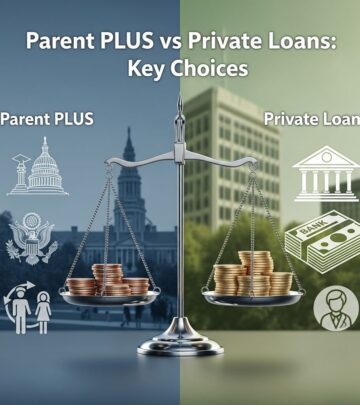
Private loans may appeal for lower rates (3.19%–25.96% based on credit) and no FAFSA need, but lack federal protections.
| Feature | Parent PLUS | Private Parent Loans |
|---|---|---|
| Interest Rate | Fixed 8.94% | Fixed/Variable, credit-based |
| Fees | 4.228% | 0–5%, often lower |
| Repayment Options | Lender-specific | |
| Forgiveness/Discharge | Yes (PSLF, death, disability) | Rare |
| Cosigner | Endorser if denied | Often required for best rates |
Strong-credit parents might save via private loans; others benefit from PLUS reliability.
Strategic Tips for Managing Multiple Loans
Parents with existing debt should:
- Maximize student aid via FAFSA first.
- Compare total costs using loan calculators.
- Consider consolidation for simplified payments.
- Explore work-study or 529 plans as alternatives.
- Monitor debt-to-income for long-term retirement impacts.
Average PLUS loan: $5,225; many families blend federal/private for optimization.
Potential Risks of Accumulating Parent Debt
High balances strain budgets, with 10-year $20,000 loan payments ~$264/month at 8.94%, totaling $11,680 interest. Unlike student loans, no broad forgiveness applies directly, though PSLF aids public workers. Delinquency risks credit damage affecting family finances broadly.
Frequently Asked Questions
Can I take multiple Parent PLUS loans for different children?
Yes, each dependent qualifies separately up to their COA minus aid.
What if my credit is poor but I have student loans in good standing?
Denial triggers endorser option or credit counseling; existing good loans help indirectly.
Are Parent PLUS loans eligible for Biden-era forgiveness?
Limited; SAVE plan offers relief via consolidation, but not automatic.
Should I refinance existing PLUS loans privately?
Possible for rate savings if credit improved, but loses federal benefits.
Can students cosign Parent PLUS?
No, endorsers cannot be the aided student.
Planning Ahead: Sustainable College Funding
Prioritize free money (grants/scholarships), then federal loans, then private. Tools like the Federal Student Aid Loan Simulator aid projections. Consult financial advisors for personalized strategies balancing current support with parental retirement security.
References
- Parent PLUS Loans vs Private Student Loans — Edvisors. 2025. https://www.edvisors.com/student-loans/parent-student-loans/compare/
- Parent PLUS loans vs. private student loans for parents — Bankrate. 2025. https://www.bankrate.com/loans/student-loans/parent-student-loans/
- Student Loan vs Parent Loan: What’s the Difference? — Comerica. 2024. https://www.comerica.com/insights/personal/assorted-finance/student-loan-vs-parent-loan.html
- Parent vs. Student Loans for College: Which to Pick? — CollegeVine Blog. 2022. https://blog.collegevine.com/parent-loan-vs-student-loan
- Parent PLUS Loans vs Cosigning Private Student Loans — ELFI. 2025. https://www.elfi.com/parent-plus-loans-vs-cosigning-education-loans-difference/
- Federal Direct PLUS Loan or Private Student Loan for Parents? — Citizens Bank. 2024. https://www.citizensbank.com/learning/parent-plus-loan-vs-private-loan.aspx
- Parent PLUS Loan vs Private Parent Loans: How to Compare — VSAC. 2024. https://www.vsac.org/parent-plus-loan-vs-private-parent-loans-compare
Similar Articles








Read full bio of Sneha Tete