Parent PLUS Loans and Credit Score Effects
Understand how federal Parent PLUS loans influence your credit profile, from application checks to long-term payment impacts.
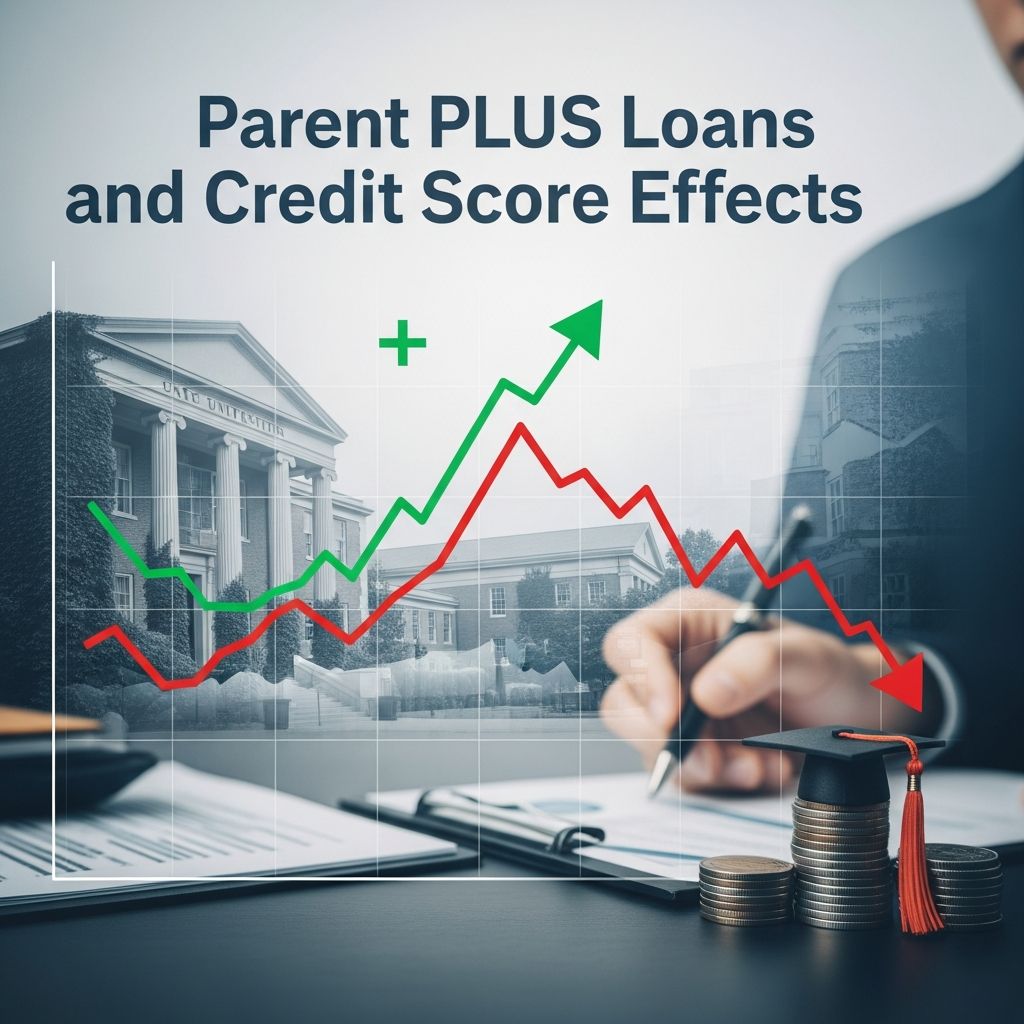
Federal Parent PLUS loans enable parents to finance their child’s undergraduate education, but they carry significant implications for the borrower’s credit profile. These loans appear on credit reports much like other installment debts, influencing scores based on application processes, account management, and repayment behavior.
Understanding Parent PLUS Loans
Parent PLUS loans, offered through the U.S. Department of Education, allow parents of dependent undergraduate students to borrow up to the full cost of attendance minus other aid. Unlike Direct Subsidized or Unsubsidized loans for students, these are credit-based and solely the parent’s responsibility. The loan balance, interest, and payments report directly to the three major credit bureaus: Equifax, Experian, and TransUnion.12
Key features include fixed interest rates set annually (recently around 8.05% for new loans) and origination fees of about 4.228%. Repayment typically begins 60 days after full disbursement, though deferment until six months post-graduation is available. These elements contribute to how the loan integrates into a parent’s financial picture.
The Application Process and Initial Credit Hit
Applying for a Parent PLUS loan triggers a credit review by the Department of Education. This is not a traditional credit score evaluation but a check for “adverse credit history.” A hard inquiry appears on your credit report, potentially lowering your score by fewer than five points temporarily, with no effect after 12 months.13
- Hard Inquiry Details: Lenders pull your full credit file, visible for two years but scoring-relevant for one year.
- Adverse History Triggers: Includes debts over $2,085 delinquent 90+ days, collections, charge-offs (past 2 years); or bankruptcy, foreclosure, repossession, tax liens, wage garnishments, federal loan defaults (past 5 years).26
If denied due to adverse history, options include documenting extenuating circumstances for appeal or obtaining an endorser (not the student) with clean credit, plus completing credit counseling.
How Loans Build or Harm Your Credit Profile
Once approved and disbursed, the loan creates a new tradeline on your credit report. This affects multiple FICO score factors: payment history (35%), amounts owed (30%), length of credit history (15%), new credit (10%), and credit mix (10%).
| FICO Factor | Impact from Parent PLUS | Potential Effect |
|---|---|---|
| Payment History | On-time payments build positive history; 30+ day lates reported negatively. | Positive: Boosts score; Negative: Major drop. |
| Amounts Owed | Loan balance factors into credit utilization for revolving debt, but as installment, affects debt totals. | May lower score if high balances. |
| Length of History | New account reduces average age of accounts. | Temporary dip. |
| New Credit | Hard pull and new account. | Short-term reduction. |
| Credit Mix | Adds installment loan diversity. | Slight positive. |
Consistent on-time payments can strengthen your score over time, demonstrating reliability. However, the parent alone bears reporting consequences, even if the child informally contributes.12
Repayment Options and Their Credit Implications
Parent PLUS loans offer flexible plans, each with credit reporting nuances:
- Standard (10 years): Fixed payments; predictable for credit stability.
- Graduated (10 years): Starts low, rises; requires discipline to avoid future lates.
- Extended (25 years): For $30,000+ aggregate; lower payments but longer reporting period.5
- Income-Contingent (ICR): After consolidation; 20% of discretionary income, forgiveness after 25 years. Affects debt-to-income ratios long-term.
Delinquency (30+ days late) harms scores severely, as payment history dominates. Default leads to collections, wage garnishment, and credit damage lasting seven years.
Risks Beyond Credit Scores
While credit impact is direct, indirect effects loom large. High loan payments elevate debt-to-income (DTI) ratios, complicating mortgage or auto loan approvals. Rates exceed undergraduate loans (8.05% vs. 5.50%), amplifying costs near retirement.1
Parents cannot release themselves from liability; loans aren’t transferable. This binds finances long-term, potentially delaying savings goals.
Qualifying Despite Credit Challenges
No minimum score is required, broadening access. Adverse history denials can be overturned via:
- Appeal: Submit documentation of resolved issues (e.g., paid collections).
- Endorser: Creditworthy individual (excluding student) co-signs; their credit then shares risk.26
- Counseling: Mandatory 20-minute online course on loan management.
Post-qualification, PLUS loans convert to Direct Consolidation for income-driven plans.
Alternatives to Minimize Credit Risks
Weigh options before committing:
- Maximize Child’s Aid: Increase student’s Direct loans (no parent credit check, lower rates).
- Private Loans: May require cosigner but offer variable rates; shop competitively.
- 529 Plans/Grants: Tax-advantaged savings or free money reduce borrowing needs.
- Employer Aid: Tuition reimbursement programs.
Parents contributing to child’s loans avoid personal credit hits while aiding repayment.
Strategies for Positive Credit Outcomes
To leverage Parent PLUS loans beneficially:
- Automate Payments: Ensures timeliness.
- Monitor Reports: Check annually via AnnualCreditReport.com.
- Refinance if Eligible: Private options for better rates post-graduation (forfeit federal protections).
- Build Emergency Fund: Covers payments during hardships.
Proactive management turns potential liability into credit-building asset.
Frequently Asked Questions
Do both parents’ credit scores matter?
Each parent applies separately; only the borrower’s credit is checked. Joint borrowing isn’t allowed.2
Can my child see the loan on their credit?
No, it reports only under the parent’s name and SSN.
What if I retire before payoff?
Loans persist; income-driven plans adjust, but forgiveness is taxable.
Does loan forgiveness affect credit?
Forgiven balances may appear as settlements, potentially negative.
How long do late payments haunt my score?
Up to seven years, though impact fades over time.
References
- Do Parent PLUS Student Loans Affect Your Credit Score? — ELFI. 2023. https://www.elfi.com/how-do-parent-plus-loans-impact-your-credit-score/
- Do Parent PLUS Loans Affect Your Credit Score? — Experian. 2023. https://www.experian.com/blogs/ask-experian/do-parent-plus-loans-affect-your-credit-score/
- Here’s What to Know About Parent Student Loans — myFICO. 2023. https://www.myfico.com/credit-education/blog/know-about-parent-student-loans
- Loans: What to Do if You’re Denied Based on Adverse Credit History — Federal Student Aid (studentaid.gov). 2024-01-15. https://studentaid.gov/articles/plus-loans-denied-adverse-credit/
- How to Get a Federal Parent PLUS Loan with Bad Credit — Savingforcollege.com. 2023. https://www.savingforcollege.com/article/how-to-get-a-federal-parent-plus-loan-with-bad-credit
- Parent PLUS Loans with Bad Credit: How to Qualify — Credible. 2023. https://www.credible.com/student-loans/parents-with-bad-credit
Similar Articles








Read full bio of Sneha Tete